
435 views ·
4 replies
435 views
4 replies
How do I best repair plaster detachment on a basement interior wall in a 40s house
Hello
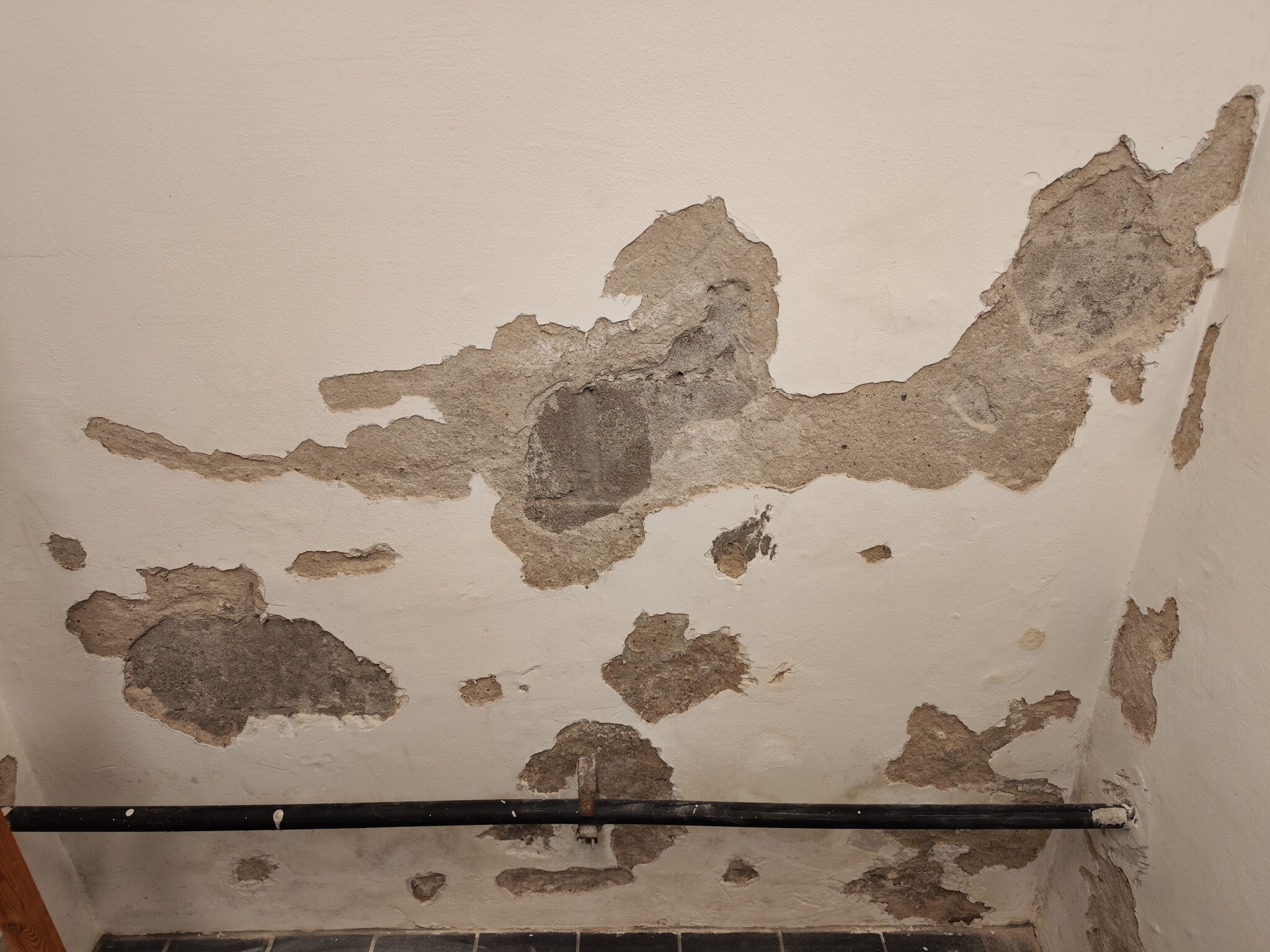
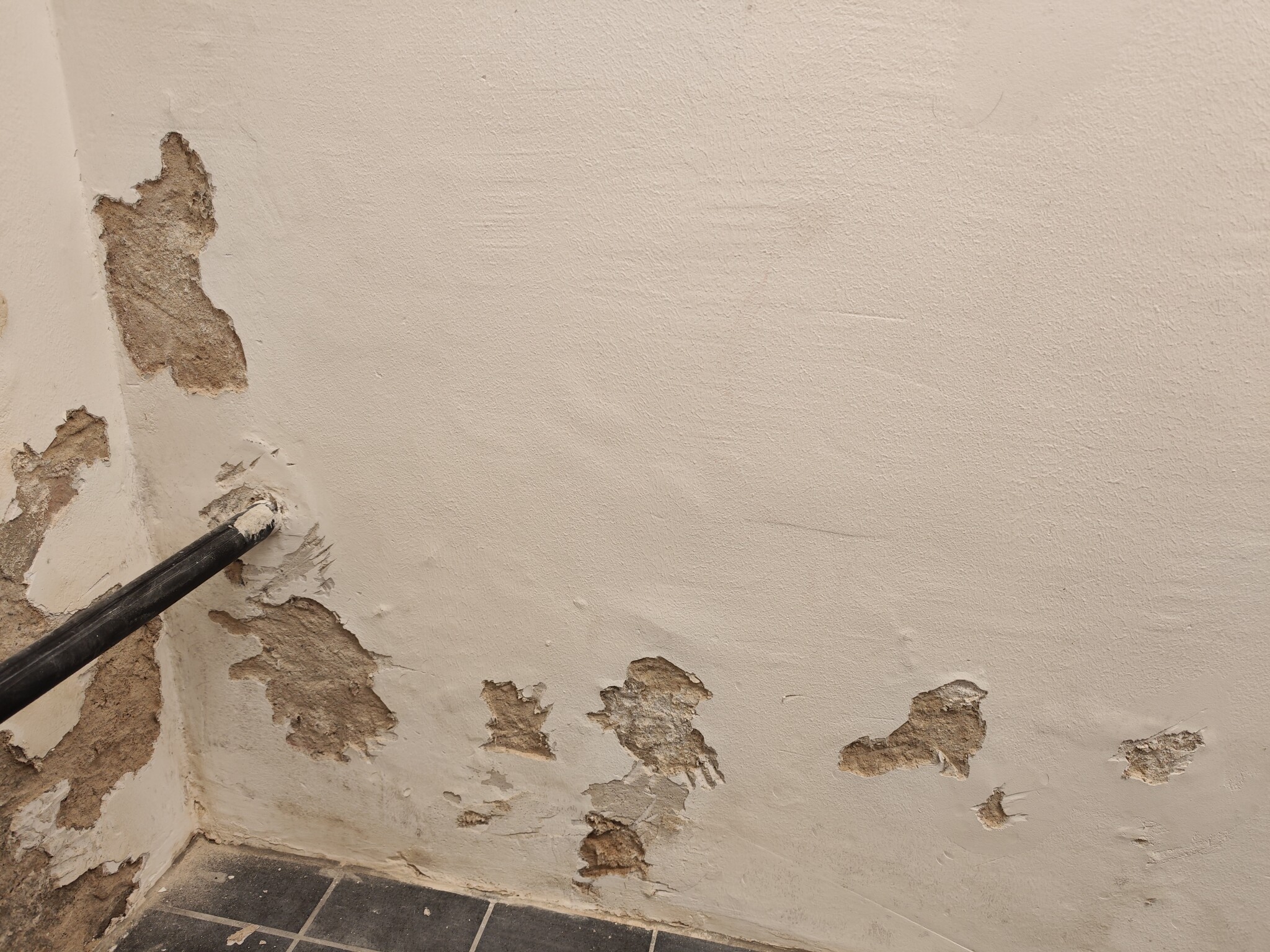
I have read many threads here on Byggahus and advice/tips from other places, but I still feel unsure about the best repair for a basement interior wall where the plaster has come off. Other walls in the basement also have some plaster issues, but to a much lesser extent. The wall with the most problems is an exterior wall in the sense that on the other side of the wall there is soil. The house was drained about 10-15 years ago, but since there's a garage on the other side of this wall, they couldn't drain that part, which is why it lets through more moisture than the other walls.
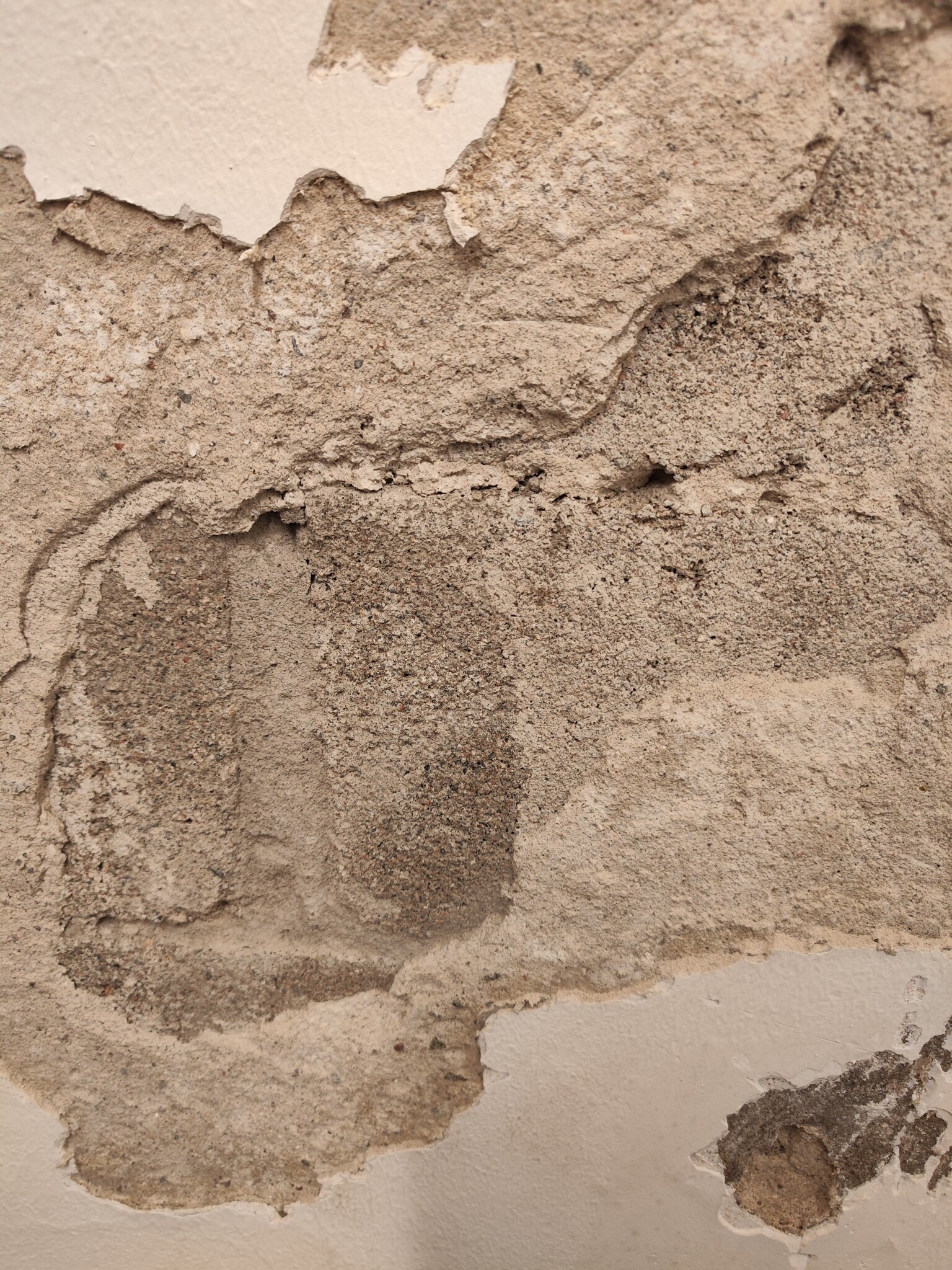
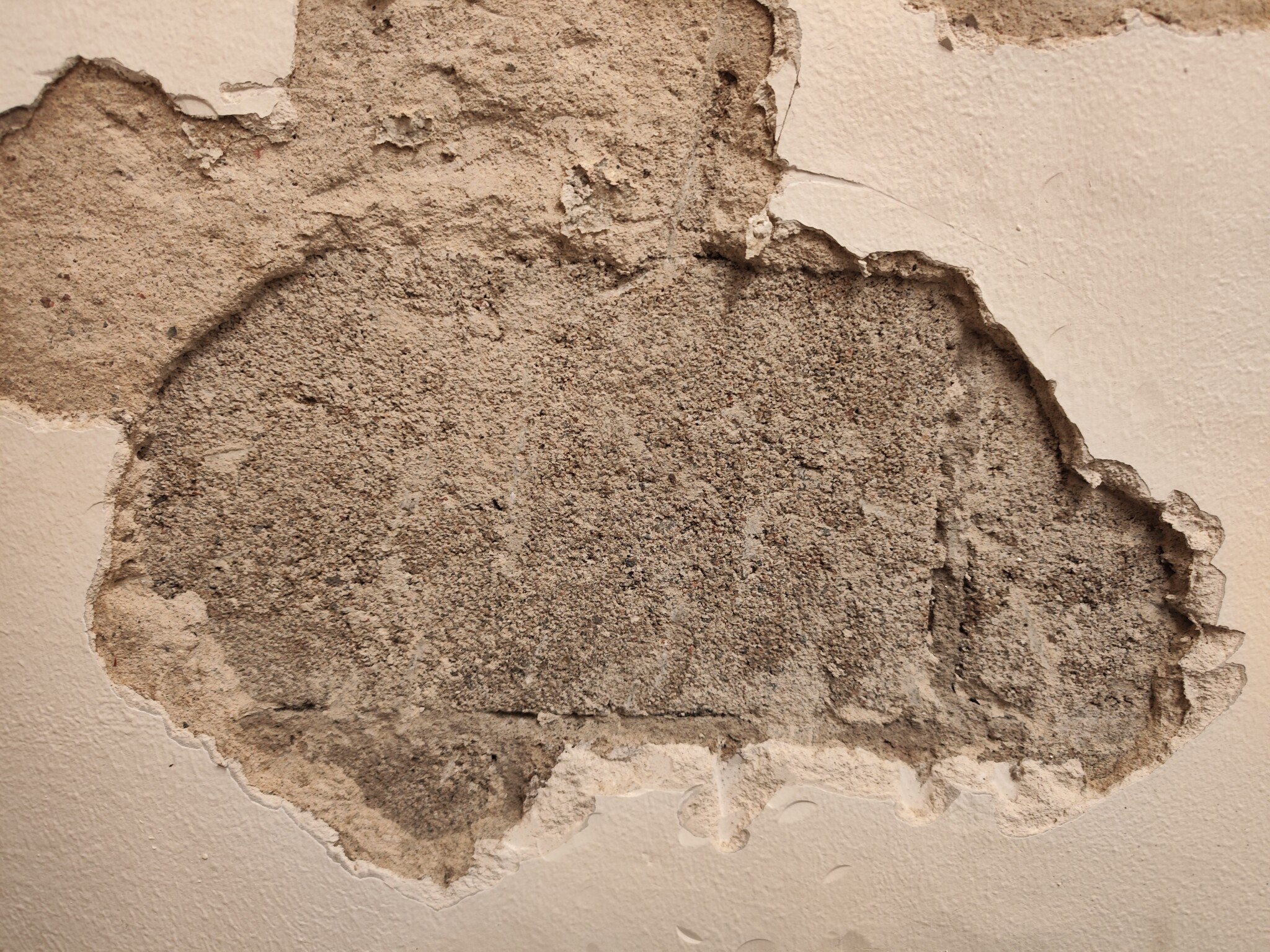
The moisture level fluctuates but is normally between 50-60%, which is why I know it lets through some moisture because behind where the plaster has come off there are salt deposits, which have decreased now that autumn has arrived. I have knocked off some loose plaster, as you can see, and in some areas, it has come off all the way to the concrete blocks, while in some places it adheres well (firmly), so the question is whether I should still remove everything and "start over" with just lime mortar. I have understood that it is best for letting through moisture, which feels appropriate since I can't get rid of the extra moisture. Considering that the moisture level still remains at a good level, I think the ventilation works satisfactorily, and then there shouldn't be any problems letting the moisture through—better that than trapping it and having more plaster come off? The room will be used as, among other things, a wine cellar, so there shouldn't be items blocking the wall, allowing it to breathe well.
I then plan to paint with lime paint, but I need to get rid of the paint that's there today (this will be easy if removing the entire wall is the best solution); the previous owners report that they last painted with silicate paint, but I also read in the logbook from the owner before that they painted once with regular plastic paint, which they discovered bubbled and didn't work, hence the silicate paint later. I'm just wondering if they used bad silicate paint or if they painted the silicate paint over the plastic paint because certain parts where I've peeled off the paint resemble plastic paint incredibly much, making the silicate paint less effective. I've read that some have sanded it off, but that sounds like an inefficient solution and would create an incredible amount of dust? On the other hand, I already have a giraffe sander with a connection to a shop vacuum, so that might be an option.
There is tiled flooring throughout the basement with water-based underfloor heating, but in the room with the worst plaster issues, there are only tiles, no underfloor heating.
I have read many threads here on Byggahus and advice/tips from other places, but I still feel unsure about the best repair for a basement interior wall where the plaster has come off. Other walls in the basement also have some plaster issues, but to a much lesser extent. The wall with the most problems is an exterior wall in the sense that on the other side of the wall there is soil. The house was drained about 10-15 years ago, but since there's a garage on the other side of this wall, they couldn't drain that part, which is why it lets through more moisture than the other walls.
The moisture level fluctuates but is normally between 50-60%, which is why I know it lets through some moisture because behind where the plaster has come off there are salt deposits, which have decreased now that autumn has arrived. I have knocked off some loose plaster, as you can see, and in some areas, it has come off all the way to the concrete blocks, while in some places it adheres well (firmly), so the question is whether I should still remove everything and "start over" with just lime mortar. I have understood that it is best for letting through moisture, which feels appropriate since I can't get rid of the extra moisture. Considering that the moisture level still remains at a good level, I think the ventilation works satisfactorily, and then there shouldn't be any problems letting the moisture through—better that than trapping it and having more plaster come off? The room will be used as, among other things, a wine cellar, so there shouldn't be items blocking the wall, allowing it to breathe well.
I then plan to paint with lime paint, but I need to get rid of the paint that's there today (this will be easy if removing the entire wall is the best solution); the previous owners report that they last painted with silicate paint, but I also read in the logbook from the owner before that they painted once with regular plastic paint, which they discovered bubbled and didn't work, hence the silicate paint later. I'm just wondering if they used bad silicate paint or if they painted the silicate paint over the plastic paint because certain parts where I've peeled off the paint resemble plastic paint incredibly much, making the silicate paint less effective. I've read that some have sanded it off, but that sounds like an inefficient solution and would create an incredible amount of dust? On the other hand, I already have a giraffe sander with a connection to a shop vacuum, so that might be an option.
There is tiled flooring throughout the basement with water-based underfloor heating, but in the room with the worst plaster issues, there are only tiles, no underfloor heating.

How has the room been used up until today?
I have the same phenomenon in our drying room. The funny thing is that on the "same" wall in the adjacent room, where the wall has been framed with moisture-proof chipboard (bathroom), the plaster was in tip-top condition. And no signs of moisture damage on the chipboard either. So in my case, one can't help but think that the damage is largely connected to moisture from the inside.
As a little experiment, I've tried repairing parts with both render mortar C and lime plaster to see if there is any practical difference in behavior, but honestly, it probably won't show any difference within my time frame. But I share your thought about taking everything down and replastering it with maximally diffusion-open materials.
That being said, lime plaster/paint also weathers over time, so it won't be an eternal repair anyway.
I have the same phenomenon in our drying room. The funny thing is that on the "same" wall in the adjacent room, where the wall has been framed with moisture-proof chipboard (bathroom), the plaster was in tip-top condition. And no signs of moisture damage on the chipboard either. So in my case, one can't help but think that the damage is largely connected to moisture from the inside.
As a little experiment, I've tried repairing parts with both render mortar C and lime plaster to see if there is any practical difference in behavior, but honestly, it probably won't show any difference within my time frame. But I share your thought about taking everything down and replastering it with maximally diffusion-open materials.
That being said, lime plaster/paint also weathers over time, so it won't be an eternal repair anyway.
It has been used as storage, at least it was so during the viewing, and it may have been used for something else earlier. However, there's nothing in there, no power outlets for example, but you could have plugged in an extension socket of course.C cpalm said:How has the room been used up to today?
I have the same phenomenon in our drying room. The funny thing is that on the "same" wall in the adjacent room, where the wall has been framed with moisture-proof chipboard (bathroom), the plaster was in tip-top shape. And there were also no signs of moisture damage on the chipboard. So in my case, you can't help but think that the damage is largely related to moisture from the inside.
As a small experiment, I've tried repairing in parts with both mortar C and air lime to see if there is any practical difference in behavior, but honestly, there probably won't be any noticeable difference within my timeframe. But I share your idea of taking everything down and plastering it again with maximally diffusion-open materials.
That said, even lime plaster/paint weathers over time, so it’s hardly an eternal repair.
Interesting aspect from your side, if yours has been used as a drying room, that could very well be the case, and it would explain why it is unaffected in the bathroom which is moisture-proofed?
I fully agree that you may need to come back and repair again, and that's why I'm hesitating whether it's more worthwhile to take everything down, no matter how well it’s in place and ensuring that the new can last at least 10 years? without needing maintenance. If I fix what’s bad now and then need to touch up a little each year, I'd rather make an effort now.
Yes, on the other hand, the moisture barrier means that no moisture is "released" on the inside either.S Solmyr said:
Another wild theory might be that the damage actually occurs due to moisture transport. That is, when the inside is kept dry, it drives continuous moisture transport from the moist side to the dry side, depleting the material in the wall. Unlike the wall that has had waterproofing on the inside, where a moisture balance has developed between the inside and the outside.
There's surely some professor in material physics who has answers to these questions, which unfortunately do not reach the general understanding of these constructions. 🙂
You're right, interesting thoughts and not entirely unlikely. That's probably how it was when it was built as well, i.e., more humid in the room since it also acted as a food cellar.
One thing I'm really uncertain about is if I now take the "shortcut" and repair the spots, should I use a harder mortar first and then a layer of softer one? I'm thinking if I start with c-mortar and then go over it with lime mortar. Why this question? Because it looks like one type of mortar has been used and then a thinner layer of another mortar. Since I don't know which mortar has been used, I've understood that it's a "safe bet" to plaster with lime mortar, but as I said, that's just what I've managed to read up on.
One thing I'm really uncertain about is if I now take the "shortcut" and repair the spots, should I use a harder mortar first and then a layer of softer one? I'm thinking if I start with c-mortar and then go over it with lime mortar. Why this question? Because it looks like one type of mortar has been used and then a thinner layer of another mortar. Since I don't know which mortar has been used, I've understood that it's a "safe bet" to plaster with lime mortar, but as I said, that's just what I've managed to read up on.
Click here to reply
Similar threads
-
Skärpta lagar mot ip-tv kan bli verklighet
Artikelkommentarer -
Hur lagar man vingen på luftvärmepumpen?
Värmepumpar -
Hur lagar man sprucken baksida på Cronspisen?
Värme allmänt -
Hur lagar jag trappan?
Byggnadsvård -
Hur lagar jag grundsockeln vid hörnet på källartrappen på bästa sätt?
Grund & Markarbeten