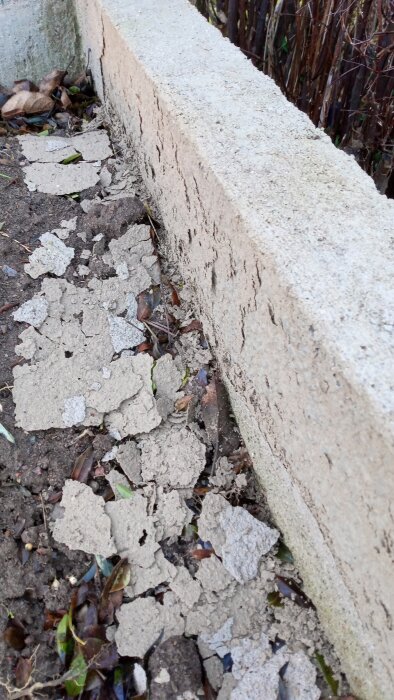
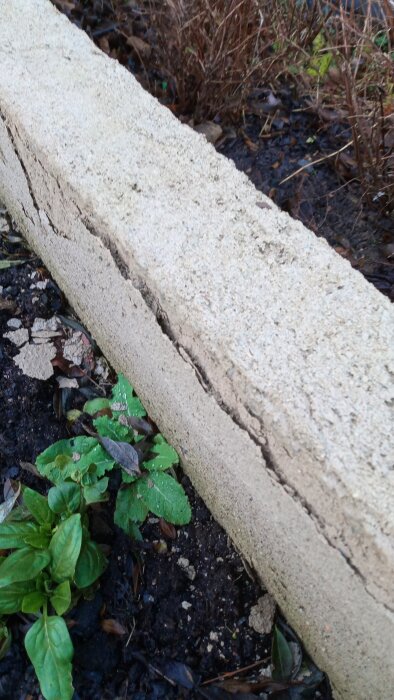
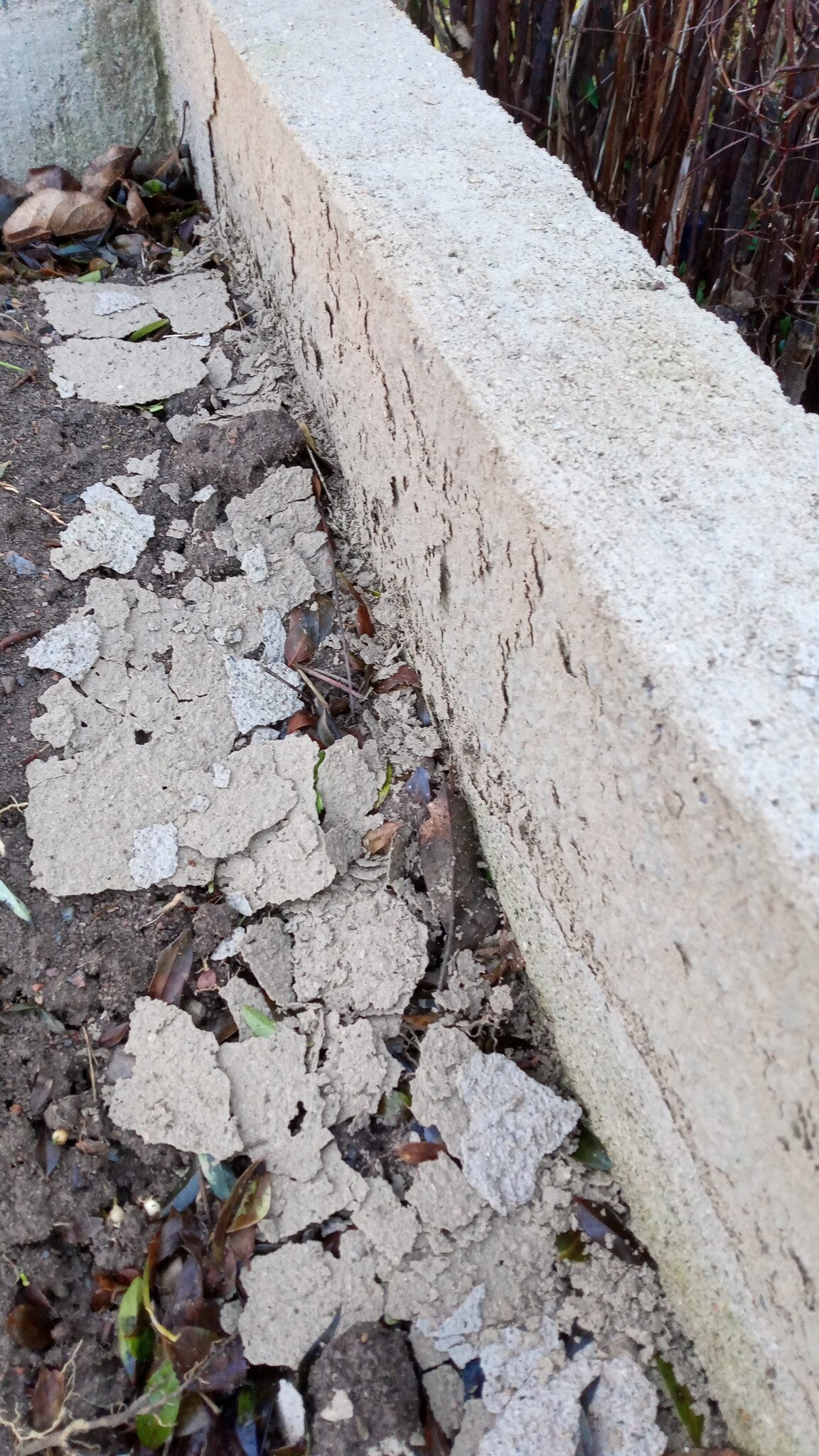
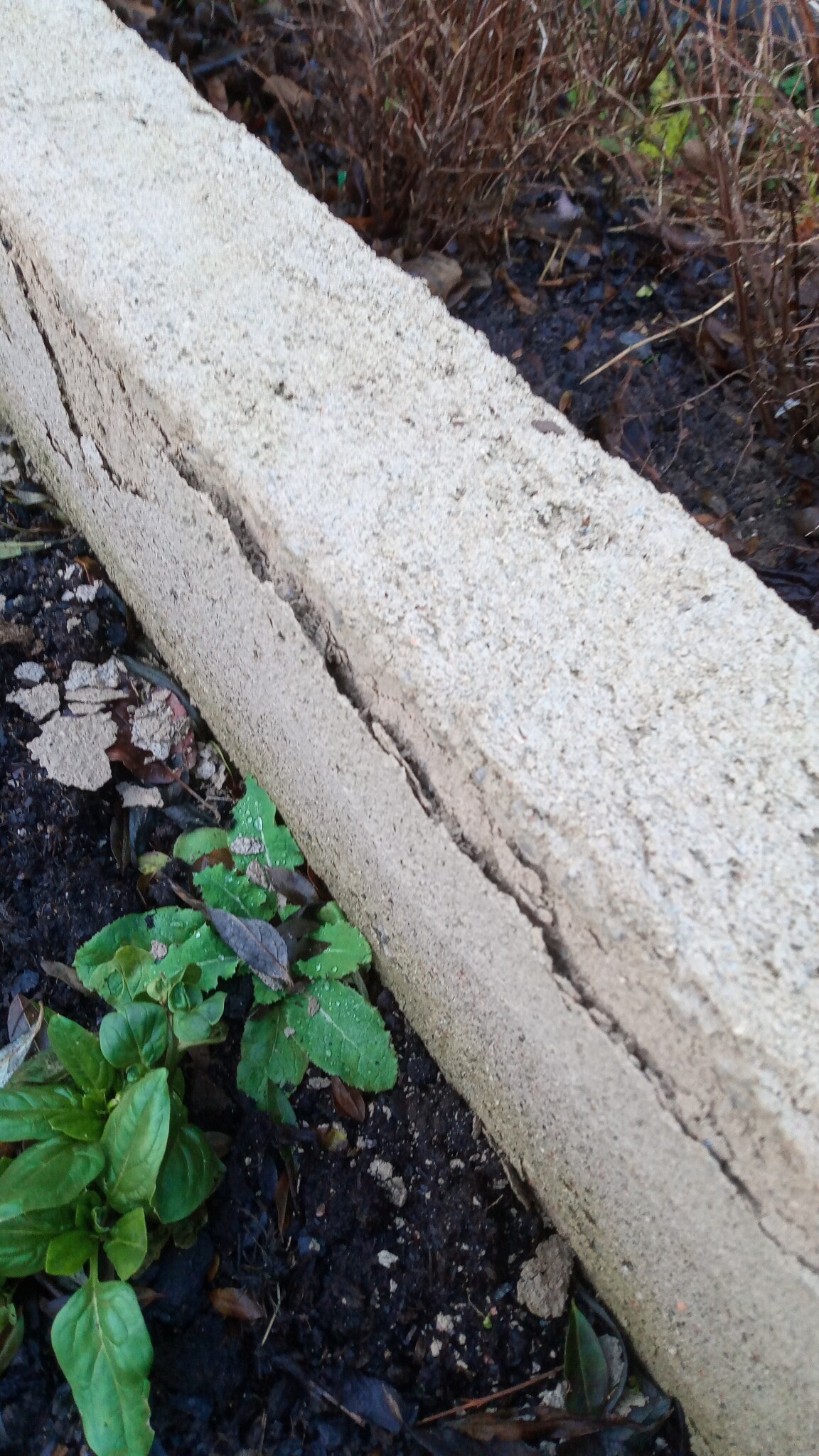
Recently discovered that the plaster has started to fall off from the Lecablock.
Surely I have done something wrong, but what?
I plastered this year and used Finja plaster mortar C.
Render C will not work so close to the ground. Especially not without protection from above. It absorbs too much water, and then there's frost bursting as shown in the picture.
Did you prime the wall with water glass before plastering?
If the wall has its base in damp soil, it can be damp a bit up.
The wall is on soil that is likely to be/get damp.
I only moistened the Lecablocks with water during the plastering.
Water glass priming sounds interesting. Are there any links on how to proceed?
Putsbruk C will not work so close to the ground. Especially not without protection from above. It absorbs too much water, which leads to frost damage as shown in the picture.
Probably incorrect usage. I have no roof over the wall and have no damage after almost 20 years. Wall height 30 cm up to 110 cm at the highest. One side of the wall covered with soil.
You need to remove the old mortar,
and of course, no primer should be used.
Replaster with cement mortar A
Sheet metal is good as a roof.
Or lay paving stones in A mortar.
Not as good, but works. https://www.byggmax.se/marksten-hel-grå-350x350x50mm
Did you prime the wall with waterglass before plastering?
If the wall's base is standing in damp soil, it can be moist a bit up.
Why the hell would anyone use waterglass before plastering?
Not that it matters if you do it, or a little.
The adhesion on leca gets worse.
But it serves no purpose at all.
Did you plaster now in late autumn? too much water in the mix?
Leca usually does well with regular plaster C, as long as it has time to dry properly & is protected a bit from above for precipitation.
The capillary action in leca stops around 12-13 cm, meaning Leca does not get wet higher up, and does not absorb ground moisture higher up.
The capillary action in leca ceases around 12-13 cm, meaning Leca does not get wet higher up and does not absorb ground moisture higher up.
Leca may not absorb, but the plaster does. It doesn't matter if you're plastering on pure natural stone with zero absorption capability, it still doesn't work with plaster mortar C.
It is water from above that causes frost damage. C-render works if you keep the water away. Add metal sheeting on top or try plastering the top with A-mortar, alternatively mix in a good amount of cement into a bag of C-render.
Lecan might not suck, but the plaster does. It doesn't matter if you plaster on pure natural stone with zero absorption capacity, it still doesn't work with plaster mortar C.
But to get such severe frost heave as the thread starter has, something "was done wrong." If you have a thick plaster and it constantly stands in water, it still doesn't absorb much anymore, because the capillary action also stops in C mortar.
You ONLY get such damage as in the picture from precipitation/rain from above "saturating" the whole construction, which then freezes. If there had been good drainage under the masonry, the damages would have been significantly lesser, and you must have some form of "roof" on such a wall, as using A mortar alone does not solve the entire problem for the thread starter.
A lot of speculation, no industry recommendations or manufacturers allow C-use against the ground.. It's wrong in all respects and if you haven't provided protection against precipitation either, then you've achieved the worst possible with modern use..
Vi vill skicka notiser för ämnen du bevakar och händelser som berör dig.