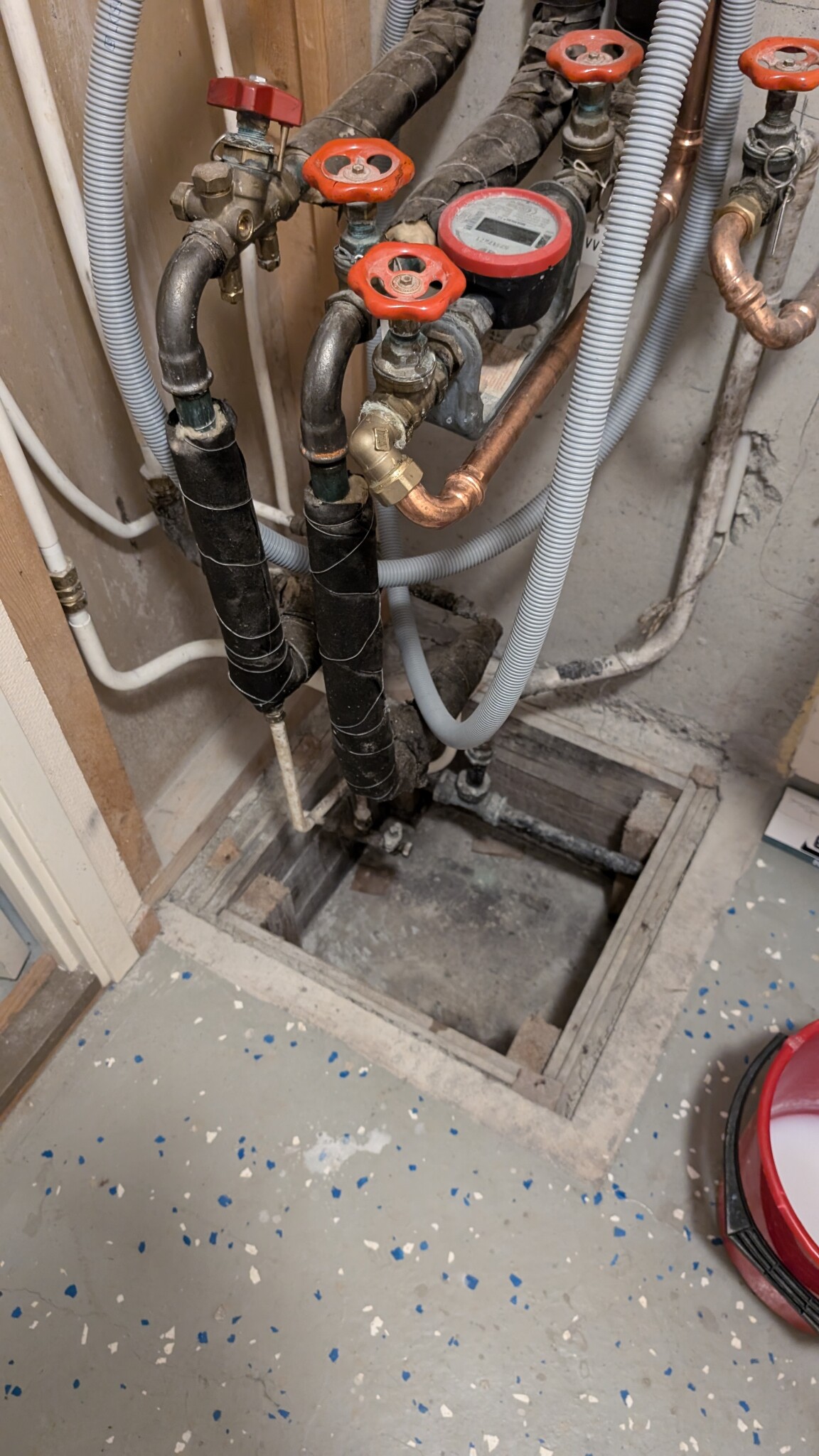
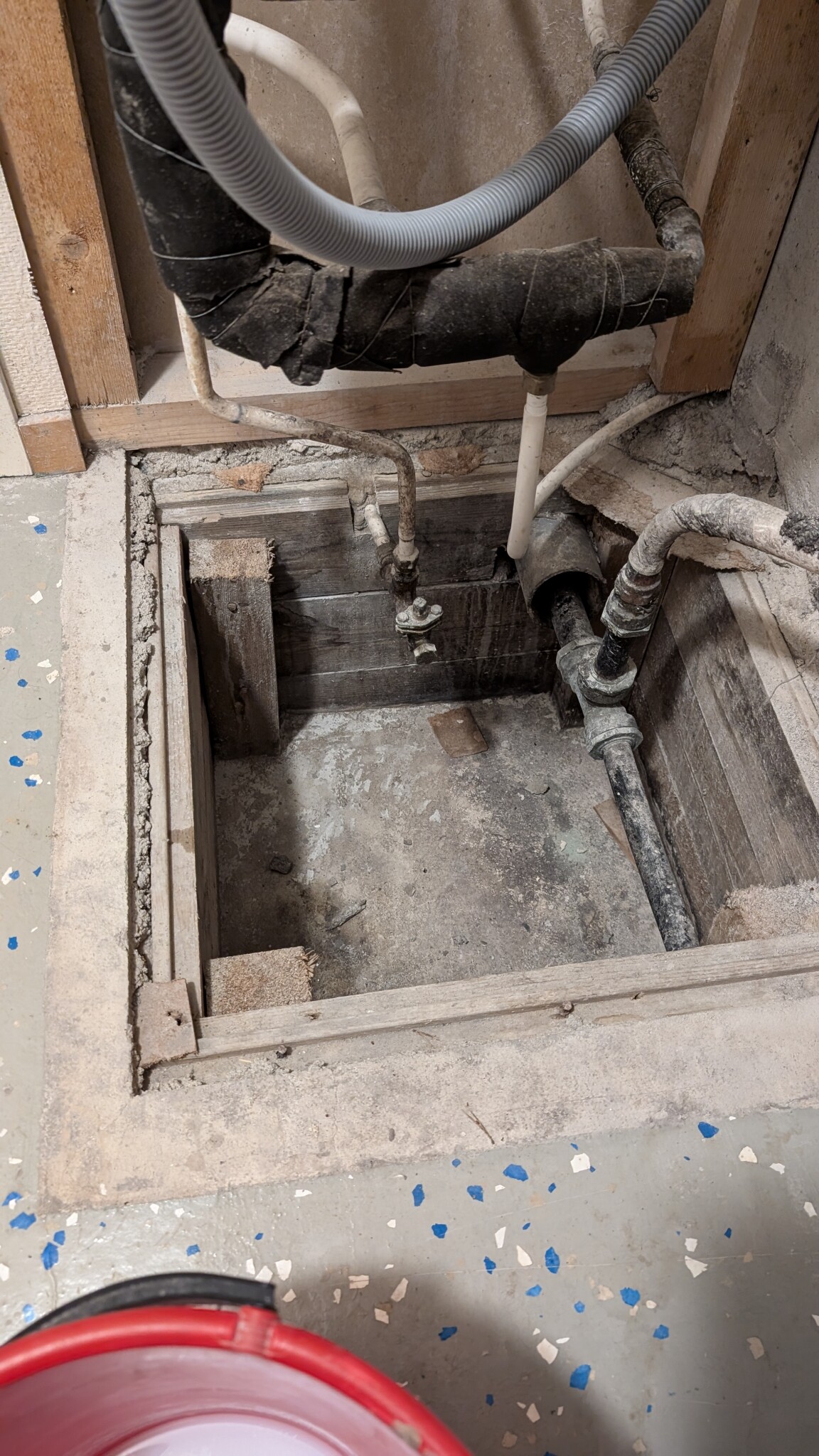
I have a townhouse from 1978 with a basement and down in the basement where all the water and heat come in, we have a hole in the slab where old pressure-treated wood remains.
I have seen at another neighbor's house that when the small concrete plug was removed, there was gravel underneath.
I wonder what I should do about this?
I want to remove the wood but don't want it open under the house.
I thought pressure-treated wood in the home was a no-no.
The only downside I can think of is that it smells, and I believe it comes from the pit.
The ventilation is apparently adjusted, but still, there is a smell.
I thought pressure-treated wood in the home was a no-no.
The only downside I can think of is that it smells, and I believe it comes from the pit. The ventilation is supposedly adjusted, yet the smell still comes through.
Ok, yes old pressure-treated wood that gets damp can smell terrible. But that's just what we see in the picture? Then it's just a matter of tearing it out and replacing it with something else? I don't quite understand the problem.
Spontaneous timber that is printed, 1978, I don't believe in that. I agree that it's probably just a mold.
Remove the timber if you don't want it there, place a ground cover at the bottom and then cast to the desired level. Drill a hole or two (or insert a pipe before casting) so that any leakage water drains downwards.
Sponted timber that is pressed, 1978, I don't believe that. I agree that it's probably just a mold.
Remove the timber if you don't want it there, lay a ground cloth at the bottom and then cast to the desired level. Drill a hole or two (or put in a pipe before you cast) so any leakage water drains downwards.
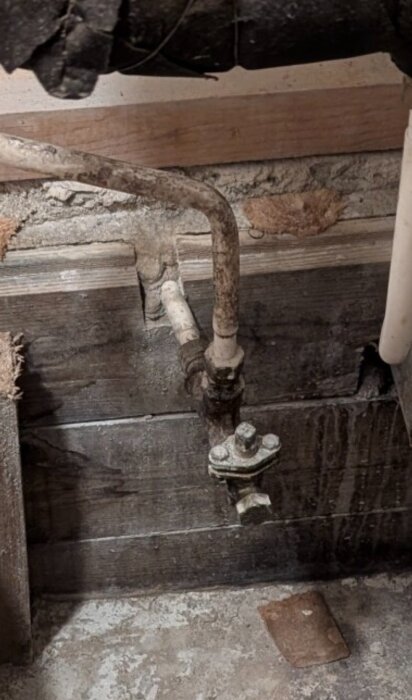
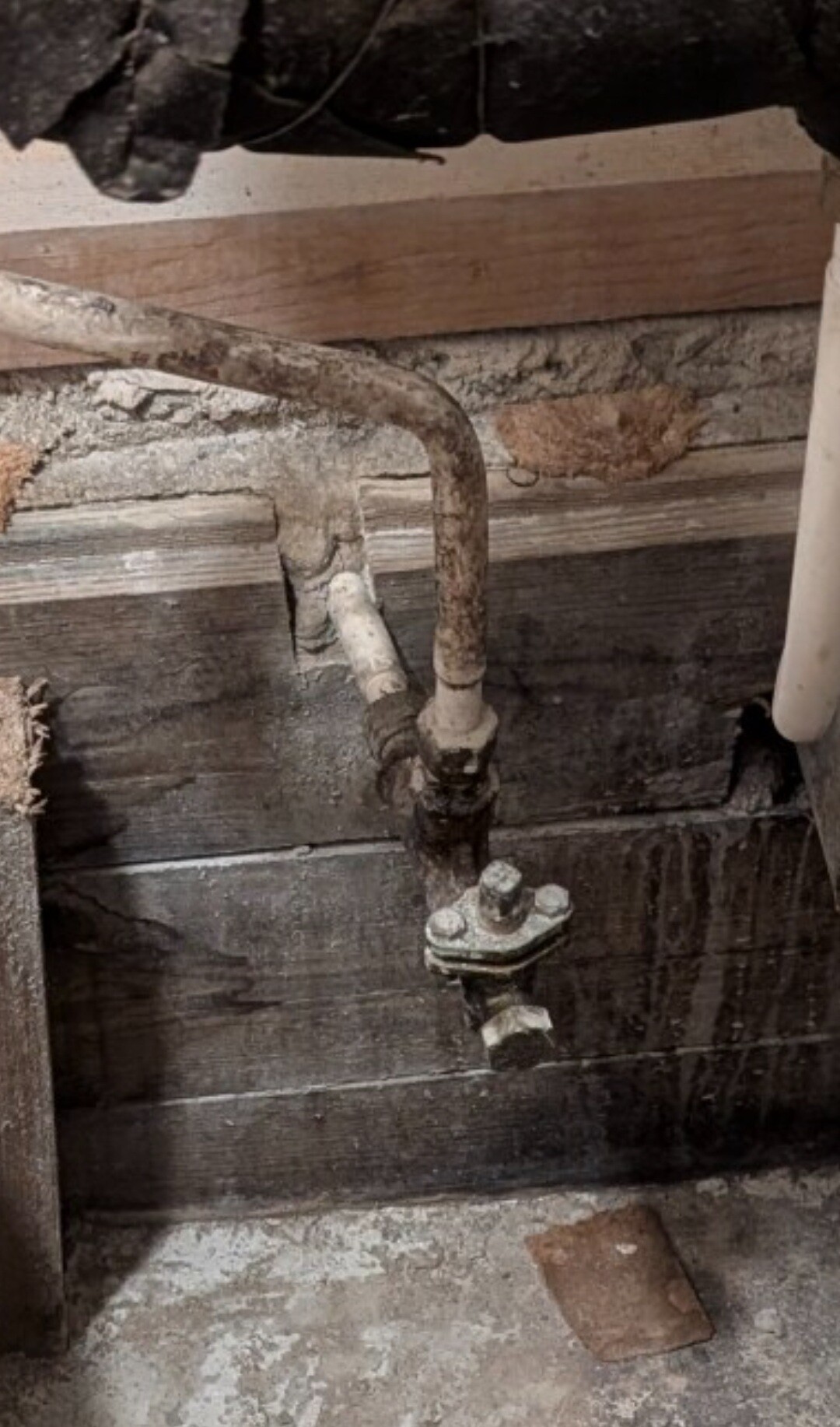
I tore some of the timber and only then noticed that the timber was tongued and grooved. I've been looking at this hole often but totally missed that it was tongued and grooved timber. Good observation by you.
Thanks for the tip.
I'll remove the rest later and fill the holes with concrete. We have silverfish in our basement and it feels like they come from this hole as they started moving around quite a bit when I broke a little with the crowbar. It's damp down there, some of the boards were a bit damp. Maybe a sign that the drainage needs to be checked? I'll open it up this weekend and take a closer look.
I have no idea how I'm going to seal all the holes so the silverfish can't come in from there.





MathiasS said:
Sponted timber that is pressed, 1978, I don't believe that. I agree that it's probably just a mold.