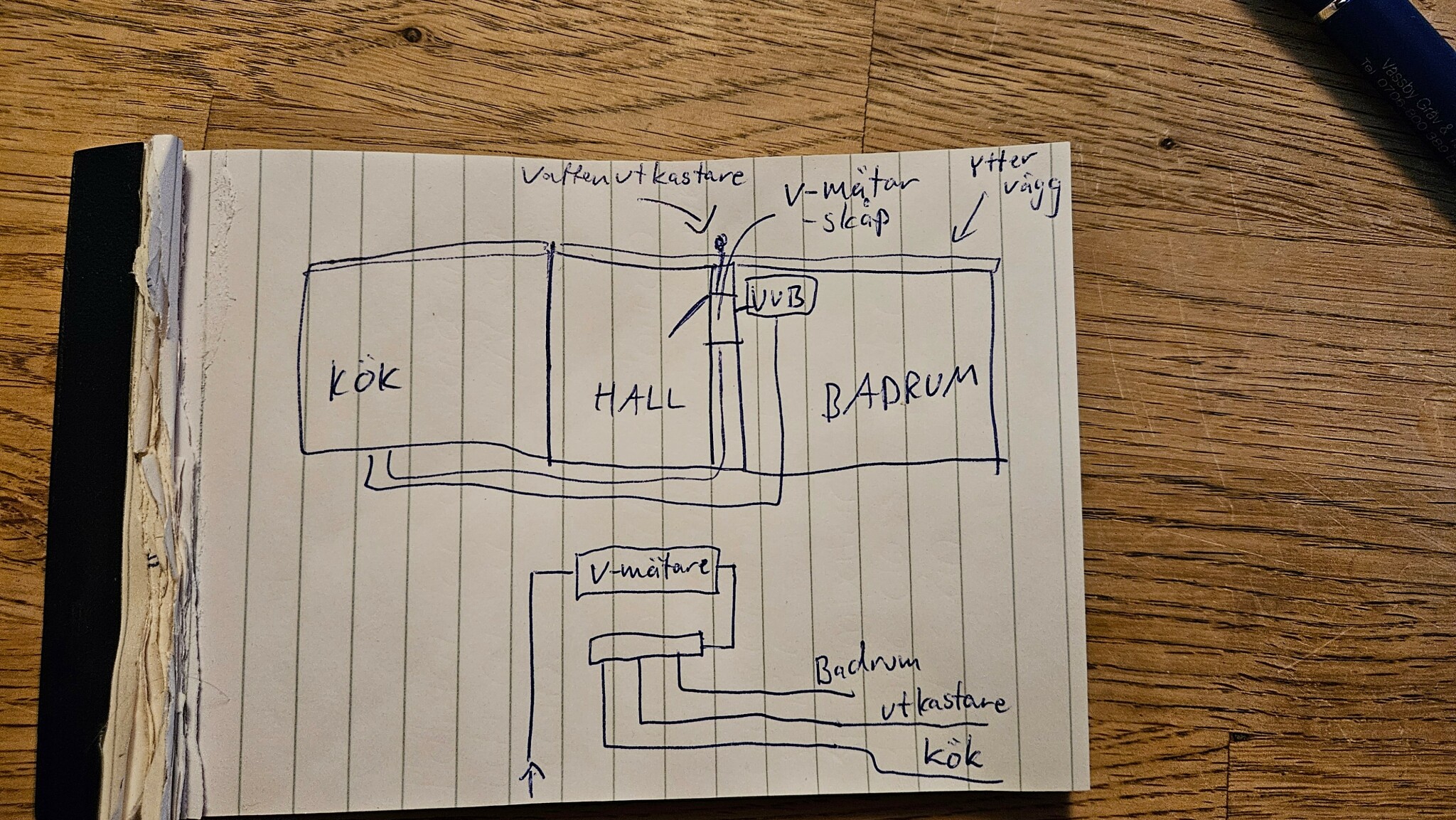
Hello, I have bought a cabin from 1960 where I will redo all the water. It currently has iron pipes, and the water meter is located in a closet. Municipal water was newly installed a few years ago, so the incoming water is a PEM pipe in the crawl space.
I will also be renovating the bathroom, so it will be a comprehensive project.
One of the problems is that there aren't many financial resources to invest large amounts of money, so it will be somewhat of a low-budget project. It should, however, be done well and correctly.
In short, I will bring the incoming water up in a new interior wall, where I will place a water meter cabinet. The water meter will be there, and I only need 3 cold water outlets.
1 to an outdoor tap
1 to the kitchen
1 to the bathroom.
In the bathroom, the water heater will be located, so hot water is already there. I also think warm water from the bathroom can be directed to the kitchen via a T-connection.
It seems very strange to me to go from the water heater in the bathroom into the distribution cabinet and then back to the bathroom?
In the bathroom, all water will be surface-mounted.
So in the distribution cabinet, not many things are needed, and when I look at ready-made cabinets, they typically have about 10 connections for cold and 10 for hot. And they cost around 10,000 SEK.
Considering the little I need, I think it feels smarter (and cheaper) to buy the cabinet separately and then a small distributor for the cold water.
But here's the problem, I have no idea what I should have, what fits in what, if there are specific guidelines, etc., etc.
Can someone kick me in the right direction? The cabinet should be recessed in an interior wall that I will build. How deep should it be to fit a cabinet with space for a meter?
Buy a genuine LK water meter cabinet if you're going to redo everything; it's not cheap, but it's necessary to be able to make an installation that is approved by both the water supplier/municipality and the insurance companies.
Click here to reply
Vi vill skicka notiser för ämnen du bevakar och händelser som berör dig.