
2,350 views ·
16 replies
2k views
16 replies
Help with reading drawing. Load-bearing wall?
Hello forum.
We recently bought a new house. A villa from 1967.
The kitchen and living room are separated by a wall with a door that we would like to remove. The wall is thin and doesn't feel particularly stable, so we are wondering if the wall is load-bearing. I am attaching the drawing and asking for your expertise.
The wall in question is marked with a red arrow.
We recently bought a new house. A villa from 1967.
The kitchen and living room are separated by a wall with a door that we would like to remove. The wall is thin and doesn't feel particularly stable, so we are wondering if the wall is load-bearing. I am attaching the drawing and asking for your expertise.
The wall in question is marked with a red arrow.
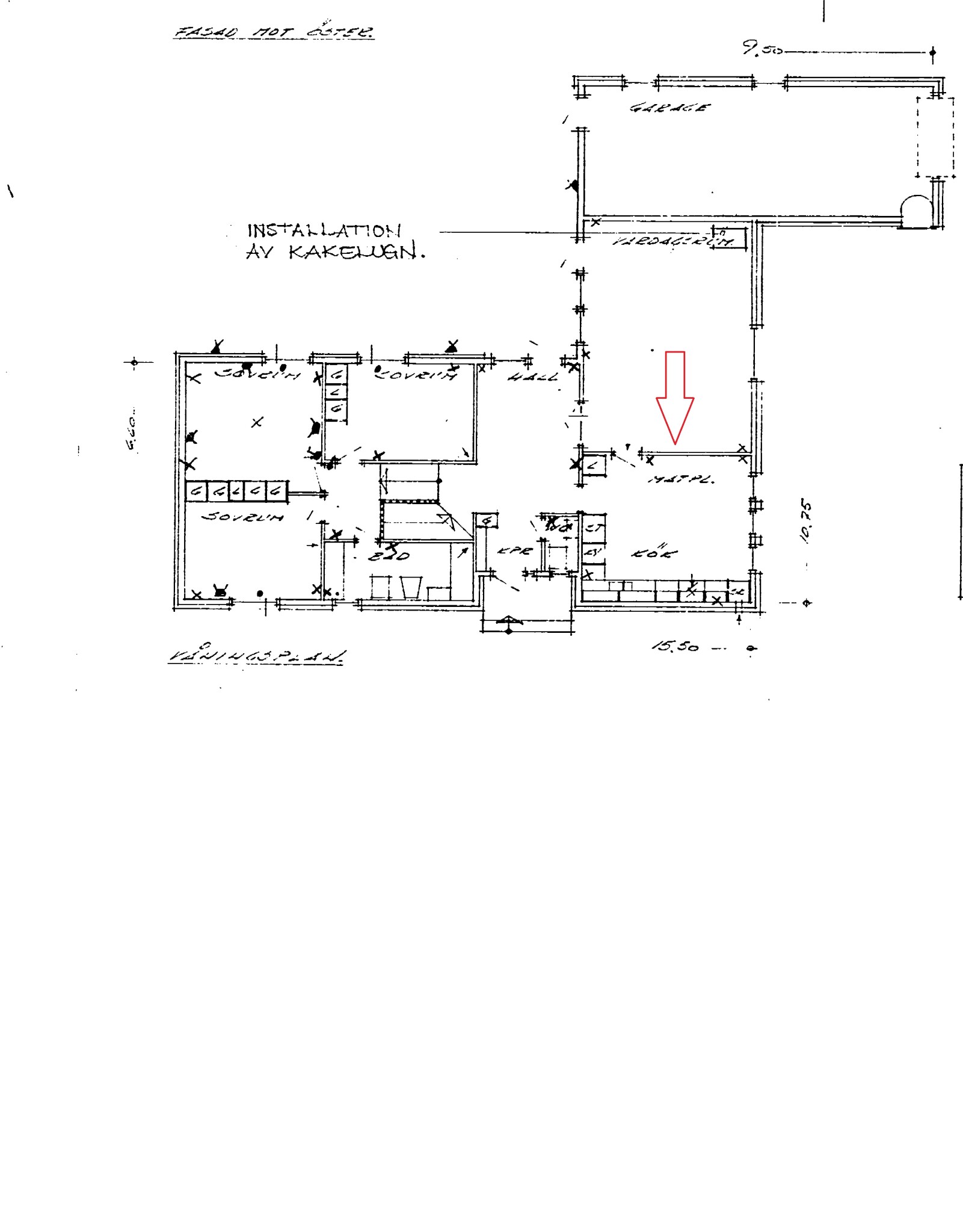
It is a one-story house, so no upstairs and (almost) flat roof. My thought is that the trusses should go from long side to long side to avoid a super long span. That should mean that the wall follows the same direction as the trusses and therefore should not be load-bearing. Am I thinking correctly?H Håbbe01 said:
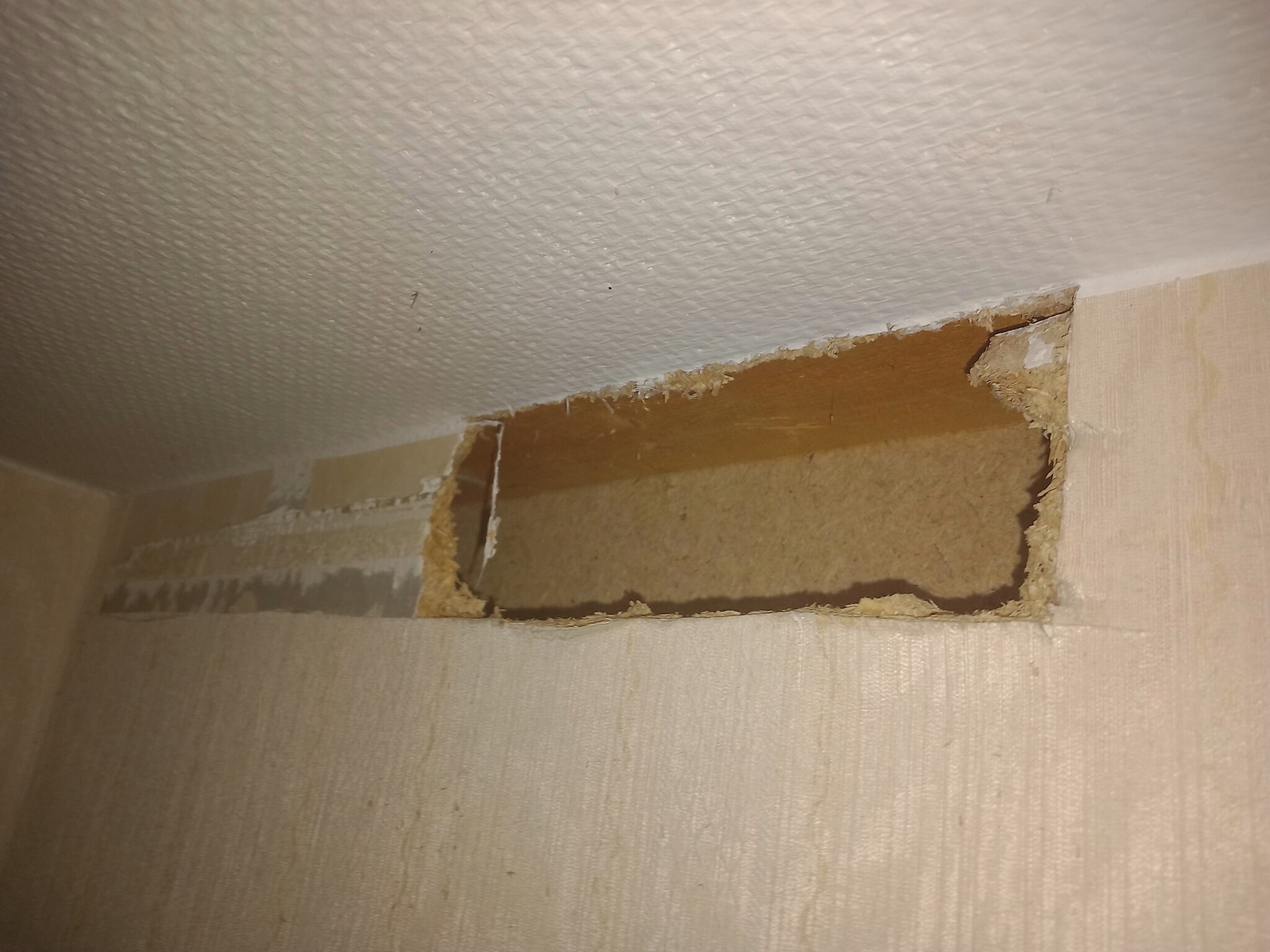
Far-fetched but check the spacing of the framework to verify it's 70mm and the framework spacing is 60cm. A load-bearing one is usually at least 90mm framework cc 60cm or tighter plus OSB board, planks, etc. before gypsum.
Non-load-bearing, I would say
The studs are 70 mm, with a stud spacing of 600. The wall is built in three sections instead of continuously. Why is this?
Now that I've demolished more, I also see the wall was built before the ceiling and floor, which must be the approach for a load-bearing wall? That is, first construction, then aesthetics? What do you think?
Now that I've demolished more, I also see the wall was built before the ceiling and floor, which must be the approach for a load-bearing wall? That is, first construction, then aesthetics? What do you think?
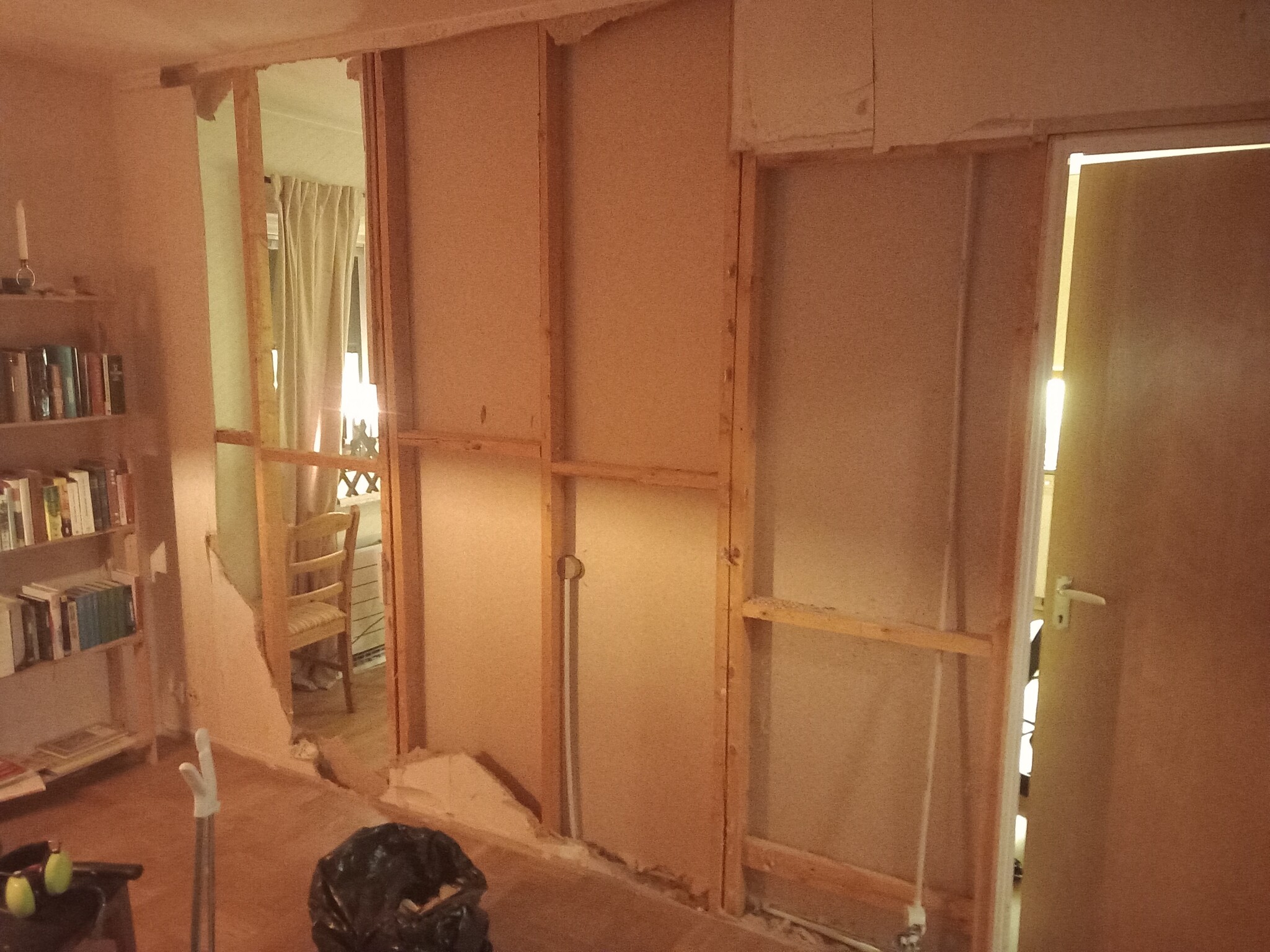


Since the wall is studded in three sections, it results in double studs in places, or it might have been built in sections specifically to have double studs.H Håbbe01 said:
I have difficulty determining if the rule in the ceiling is a ceiling joist or a regular stud set to put up the wall.
"But then it should be possible to alternate between the two for the opening" What do you mean?
