I have a condo that is going to be completely renovated before moving in. I usually tinker with cars and have zero experience with any kind of home renovation. Luckily, I have help from my dad and other relatives who are knowledgeable, but there are still some question marks that need to be addressed
The apartment has concrete ceilings. The ceiling is ugly and might need painting, etc., while we also want recessed spotlights in some rooms. Therefore, we have decided to lower the ceiling.
Since we don't feel like dealing with drywall, plastering, painting, etc., the easiest option seems to be furring strips 28x70, and on the furring strips nail up these,
Normally, a smaller framework (e.g., standing 45x95 mm) is constructed in which the sparse paneling is attached.
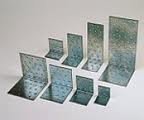
The framework can be secured with, for example, building brackets that are plugged into the concrete ceiling/wall.
Don't forget to check the installation dimensions required for the spotlights.
Start by checking how much air gap the spotlights need and if you need "pottor".
I did something similar a few years ago but installed drywall. I then framed the ceiling which I then attached the drywall to. In your case, you need to set joists with max c/c 1200mm, possibly with blocks if you need to drop down from the existing ceiling. Then install sparse paneling 28 × 70, c/c 300 mm. Good luck!
Thank you for your responses! I have a general idea of how to place studs/furring strips, but it's the attachment to the ceiling that I'm concerned about. What type of construction fasteners do you recommend? Is there any type of screw that can be used without a plug in concrete? It would make things a bit easier
I'll probably go with LED since I don't want to lower the ceiling too much. With a 45x95mm stud, 28x70 furring strip, and 18mm ceiling panel, it totals 141mm, which is too much. Can the studs be placed on their width? In that case, it would be 45 + 28 + 18 = 91, which seems reasonable for the lowering in my opinion.
Angle brackets on each side of the stud.
I wouldn't attach a framework to the ceiling with any other solution than plugs. You don’t want it to come down...
The framework and thin panels also weigh something.
I looked at the assembly instructions, and it was also possible to mount without thin panels directly across studs at c/c600.
Plan the electrical wiring carefully. Transformers for LEDs often have limitations on cable length. Also, don’t forget that they need to be accessible for replacement.
Angle iron on each side of the stud.
I wouldn't attach a framework to the ceiling with any solution other than plugs. You obviously don't want it to fall down...
Framework and sparse paneling also have weight.
I looked at the assembly instructions, and it was indeed possible to mount without sparse paneling directly across the studs on c/c600.
Plan the electrical wiring carefully. Transformers for LEDs often have limitations on cable length. Don't forget that they must also be accessible for replacement.
I also saw that one could mount directly on studs c/c600, but how does that affect the cable routing for the spotlights? Almost requires sparse paneling underneath for running everything, right?
What do you think about this spotlight? Halogen with a recess depth of 19mm + 5mm air gap. Can that really be accurate? Previously, when I've read about halogen spots, it's been recommended to have a fairly substantial air gap.
That is a so-called furniture spotlight, mainly intended for installation in furnishings and such.
Limited power and poor heat dissipation that usually limits the lifespan of the light sources.
If you want halogen, you should choose a fixture with a GU10 or MR16 light source.
Pottors are needed if you have loose flammable material above, for example, insulation, concrete can probably be considered quite solid and quite non-flammable..
Now, I'm not a carpenter... but why not just fasten the beams with expansion nails?
Fewer brackets and screws and plugs to keep track of...
What should you use for spotlights if you can't lower the ceiling that much? 8-9cm is the max for me. Fixtures with GU10 or MR16 often have installation dimensions of over 100mm.
Yes, I considered using expansion nails after I read in another thread about plastic plugs that can melt in a fire = the ceiling collapses. But if I use expansion nails, I still have to use brackets, right?
Should the spotlight only add coziness, or should it be the main light source in the room?
Clas Ohlson has ex this, dimmable LED downlight. Powered by 230 V, so no transformers and issues with cable lengths.
Requires a 90 mm installation depth. Standing rule 45x70 + sparse panel 28x70..
And forget the expansion spike and sleep peacefully..
The spotlights are intended to be the main light source in the room. If I use 45x70 standing joists + 28x70 spaced panel + 18mm ceiling, the total lowering is 116mm; I would like to keep it around 90mm max since in some rooms I have ventilation grilles on the walls. These start 10cm down from the wall. Lowering the ceiling by 11.6 cm would place the ceiling in the middle of these grilles :/
Does it work to use 45x45 or 45x70 lying down joists? If so, I'll lower the ceiling by 91mm, which should be enough for slightly stronger LED spotlights