We have just started renovating our single-story house with a basement. We are at a stage where we want to remove a wall that is 370cm long and is a supporting wall.
I have checked the XL Bygg table, but it is for 1 1/2 story houses, and there I found that a glulam beam that is 4m long and has the dimension 115x315 is sufficient. But I'm wondering if I can reduce its height since I only have an attic.
We have just started renovating our single-story house with a basement. We are in a position where we want to remove a wall that is 370cm long, which is a load-bearing wall.
I have looked at XL Bygg's table, but it is for 1 1/2 story houses, and from there I find that a laminated beam that is 4m long and has the dimension 115x315 is sufficient. But I'm wondering if I can reduce the height of it since I only have an attic.
The rafters are placed at about 120cc.
Grateful for answers.
Best regards, Kalle
Otherwise, put an IPE200 beam instead, it easily holds, we have one that is +4m in our 1 1/2 story house, so 3.7m is fine.
Okay, that sounds good. I only have a one-story, so maybe I can reduce the dimensions to save some money? What do you use as pillars?
Not 100% sure, but I think it's double 95x45 placed about 100 mm apart, with a 95x45 reinforcement on top that the beam rests on. I'm a bit unclear because the beam rests on our heart wall and I'm not entirely sure how it looks inside.
Okay, but if I buy a glulam pillar at 90x90 and place the steel beam on it, it should hold, I suppose. I plan to attach the pillars to both the outer wall and the chimney breast.
A 115x315 glulam beam can be replaced with a 190x270 without losing load capacity. An IPE 200 is in the same range. However, when it is clad with studs and gypsum for fire insulation, it does not significantly decrease in height. Additionally, it is always problematic to combine a steel beam with wooden columns. If you think that 115x315 is over-dimensioned, this is easy to verify.
A 115x315 glulam beam can be replaced with a 190x270 without losing load-bearing capacity. An IPE 200 is in the same vicinity. However, once clad with studs and plasterboard for fire insulation, it doesn't become significantly lower. Additionally, it's always problematic to combine a steel beam with wooden posts. If you believe that 115x315 is over-dimensioned, this is easy to verify.
How nice that you chose to respond
I have seen other posts where you've answered that you have a lot of experience and knowledge about most things.
I actually prefer to use wood. However, there has been a minor change. The missus wants kitchen cabinets exactly where the beam will go, so now we're considering placing it in the attic and attaching it down with 45x45 studs on each side of the rafters. Possibly a glulam post in the outer wall under the wall plate if the post lands in the middle of a 60 module. Then a post next to the chimney. You can't attach a glulam beam to the chimney, right?
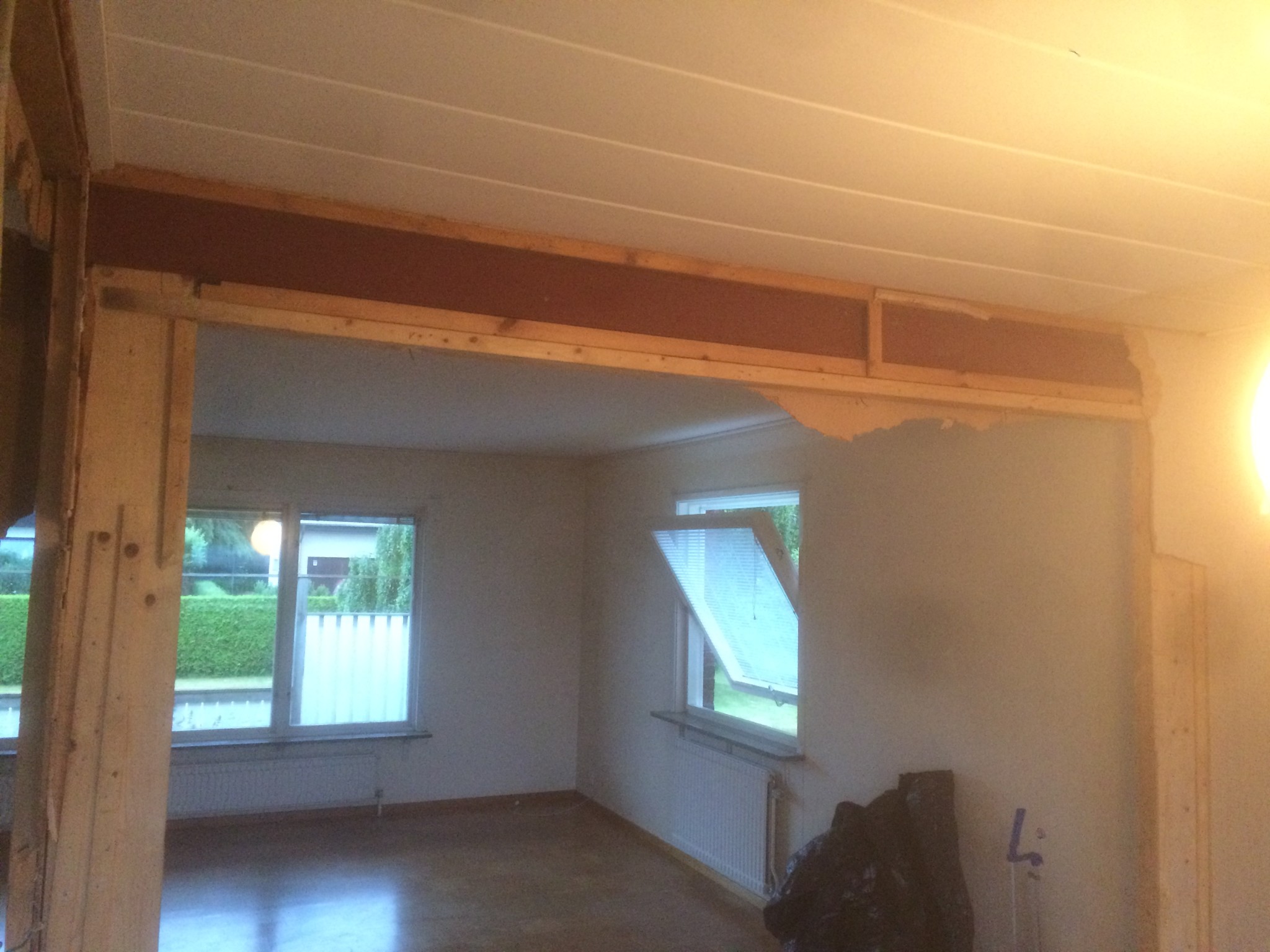
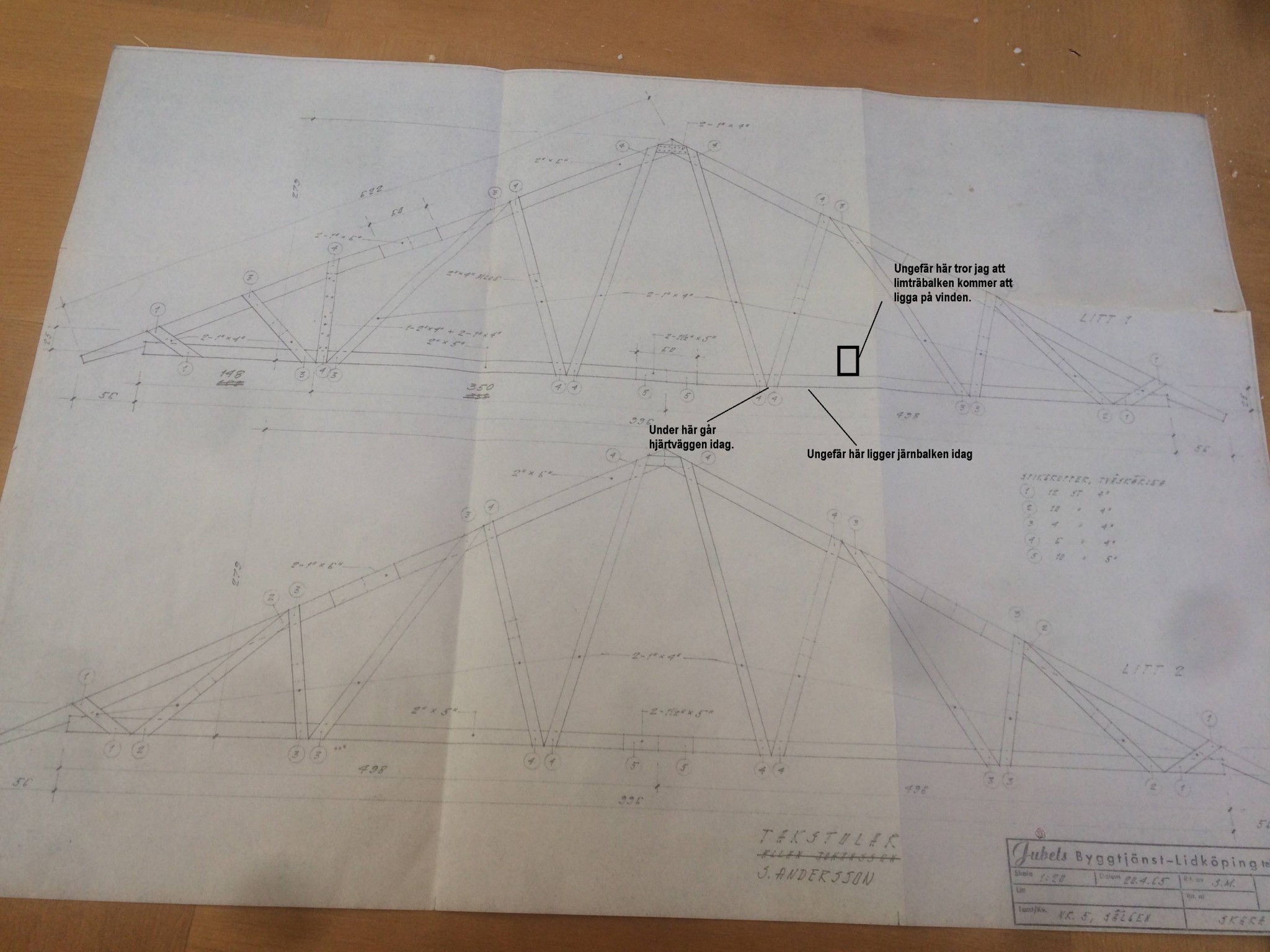
But the strangest thing of all is that it's truss rafters, but when building, they prepared with a steel beam in a wall between a bedroom and living room in case one wanted to open up. But I don't understand the point when it's self-supporting rafters. The other studs in the "heart wall" are 3"2" to be exact.
Maybe you have a good answer as to why it was done this way with studs and a steel beam with truss rafters?
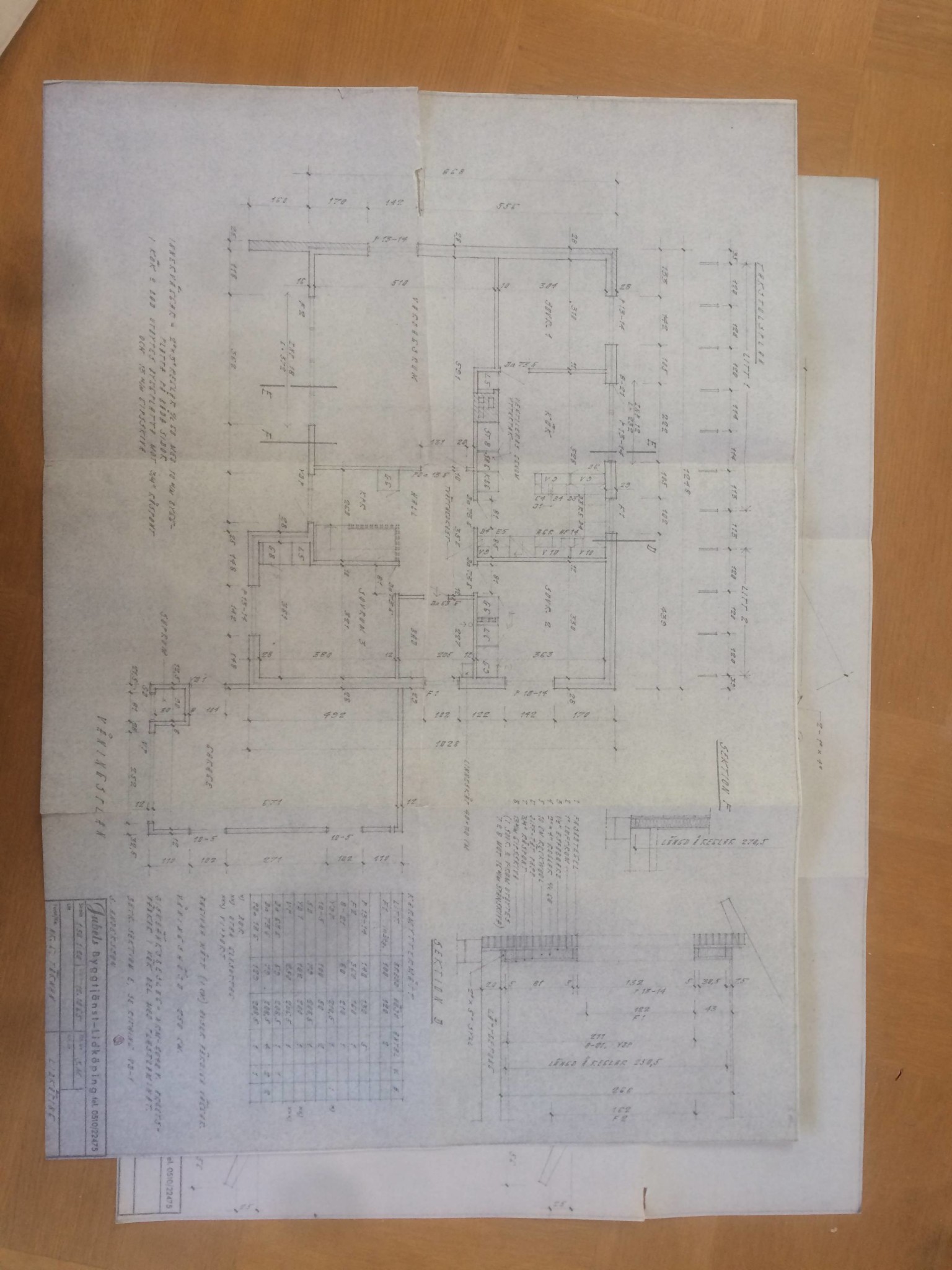
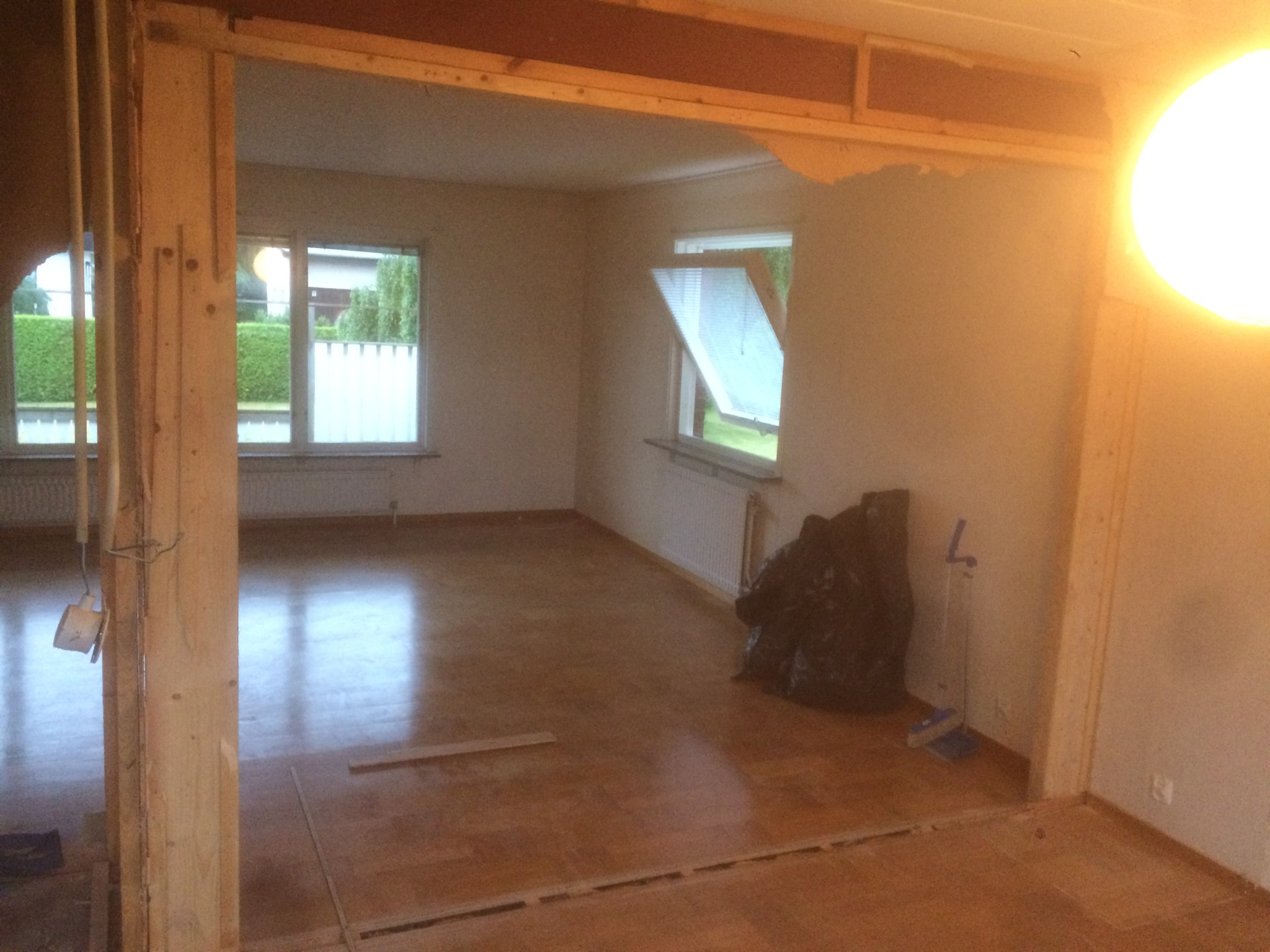
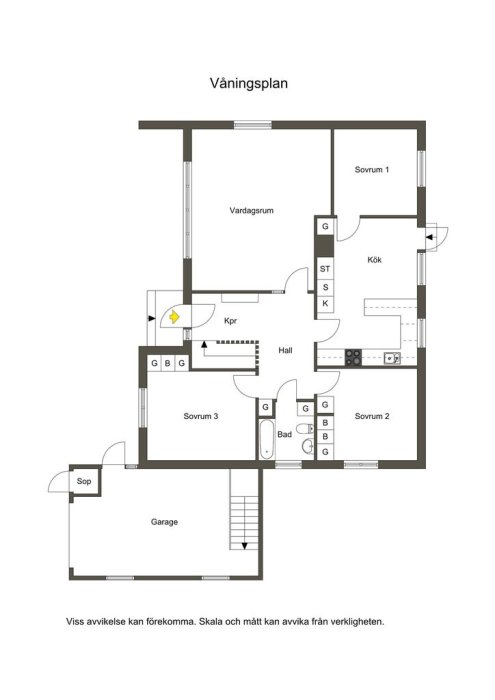
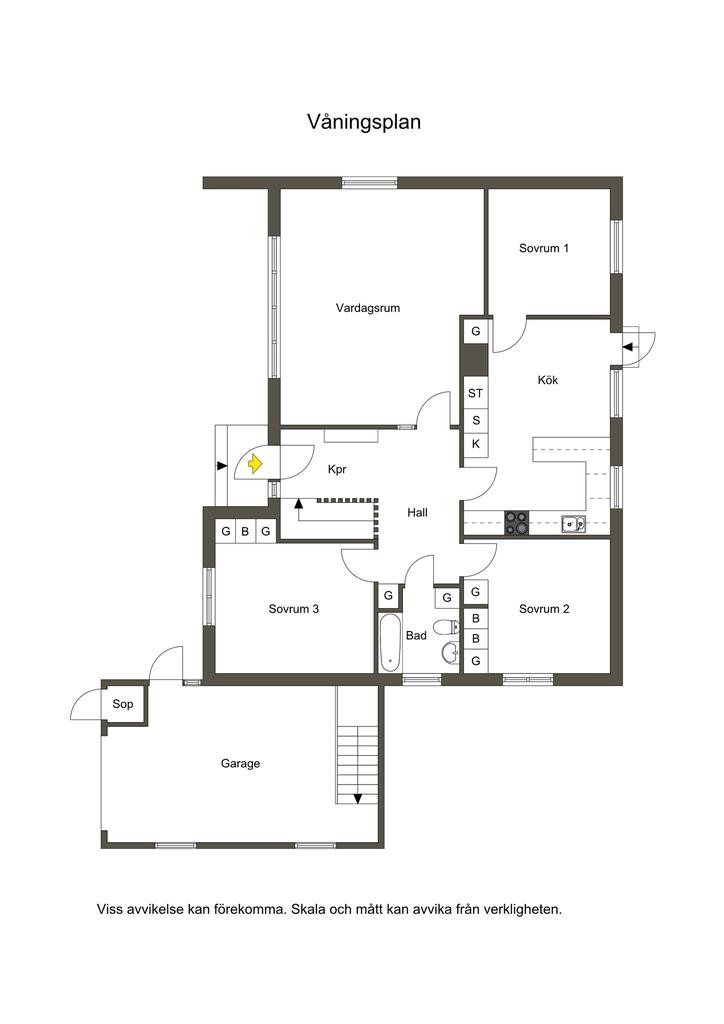
The wall to be removed is the one between bedroom 1 and the living room. It's already supported though with two posts, one of which ends up in the middle of the kitchen counter. Then there's a wish to open to the chimney. So, about 70 cm more.
The house is from 1966 with a concrete slab and a wooden slab on top. Built with bricks up to the gable peak.
The exterior walls are made with 2"4" with 15mm chipboard on the inside.
Tongue and groove on the outer and inner roof.
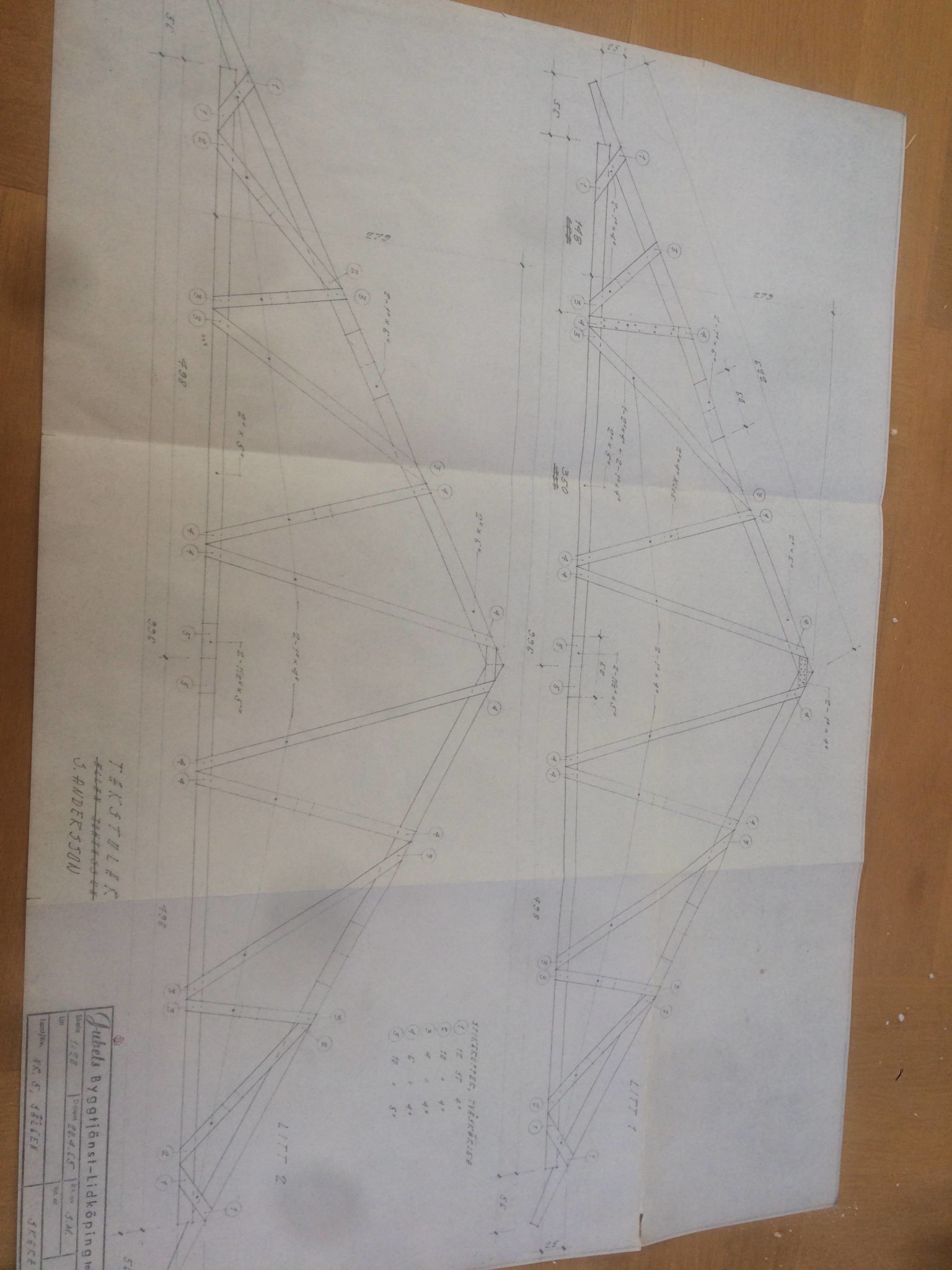
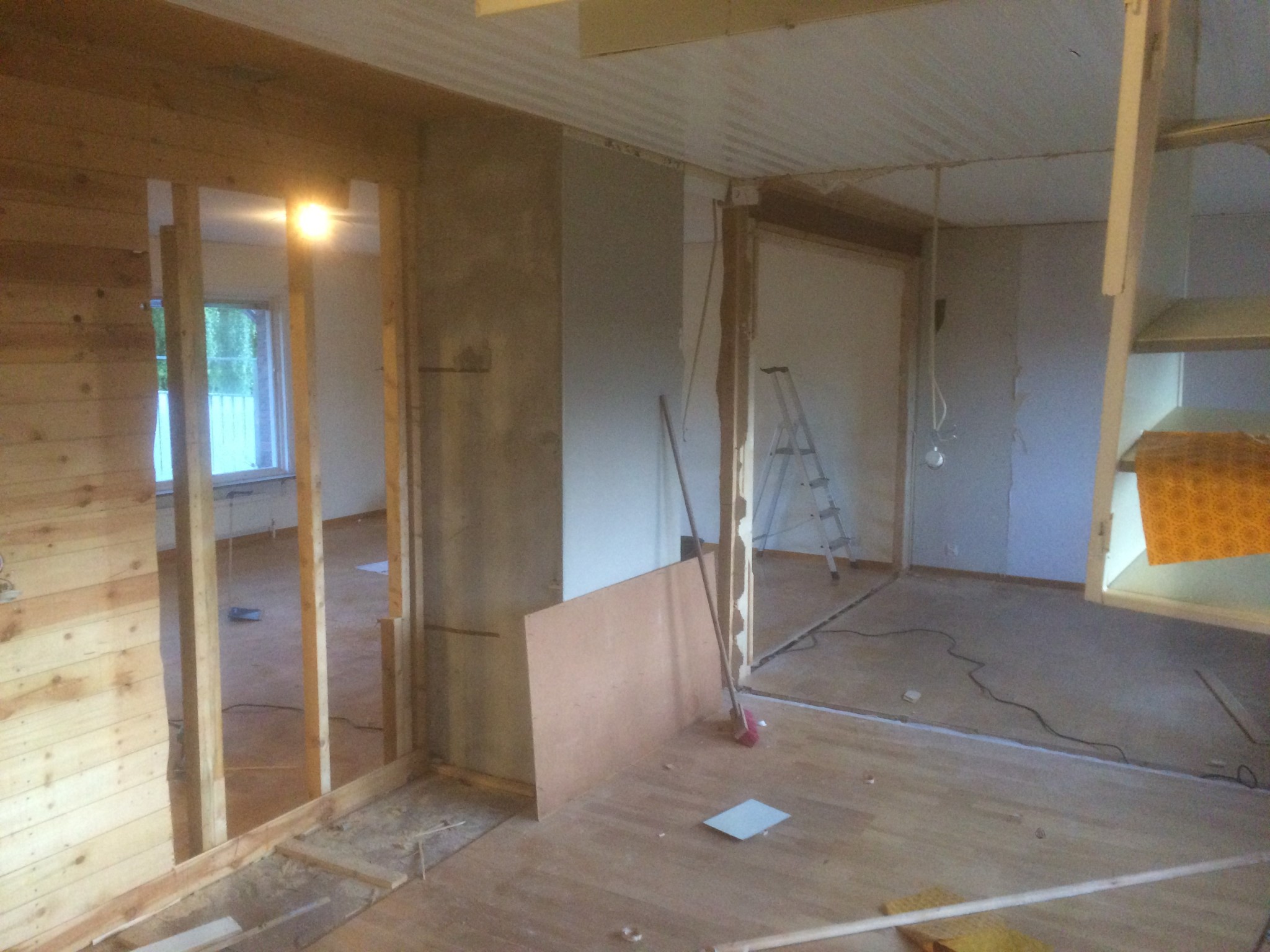
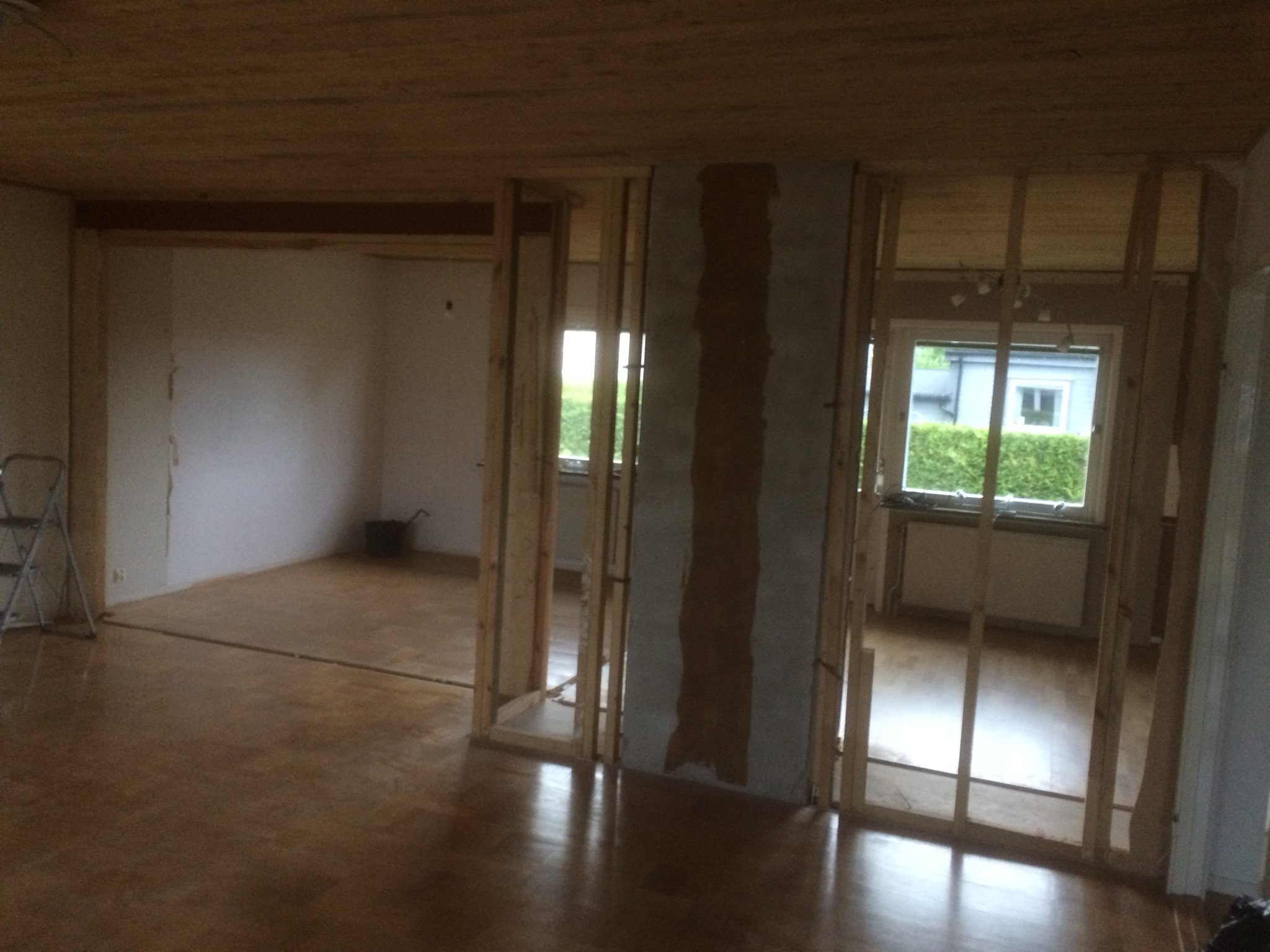
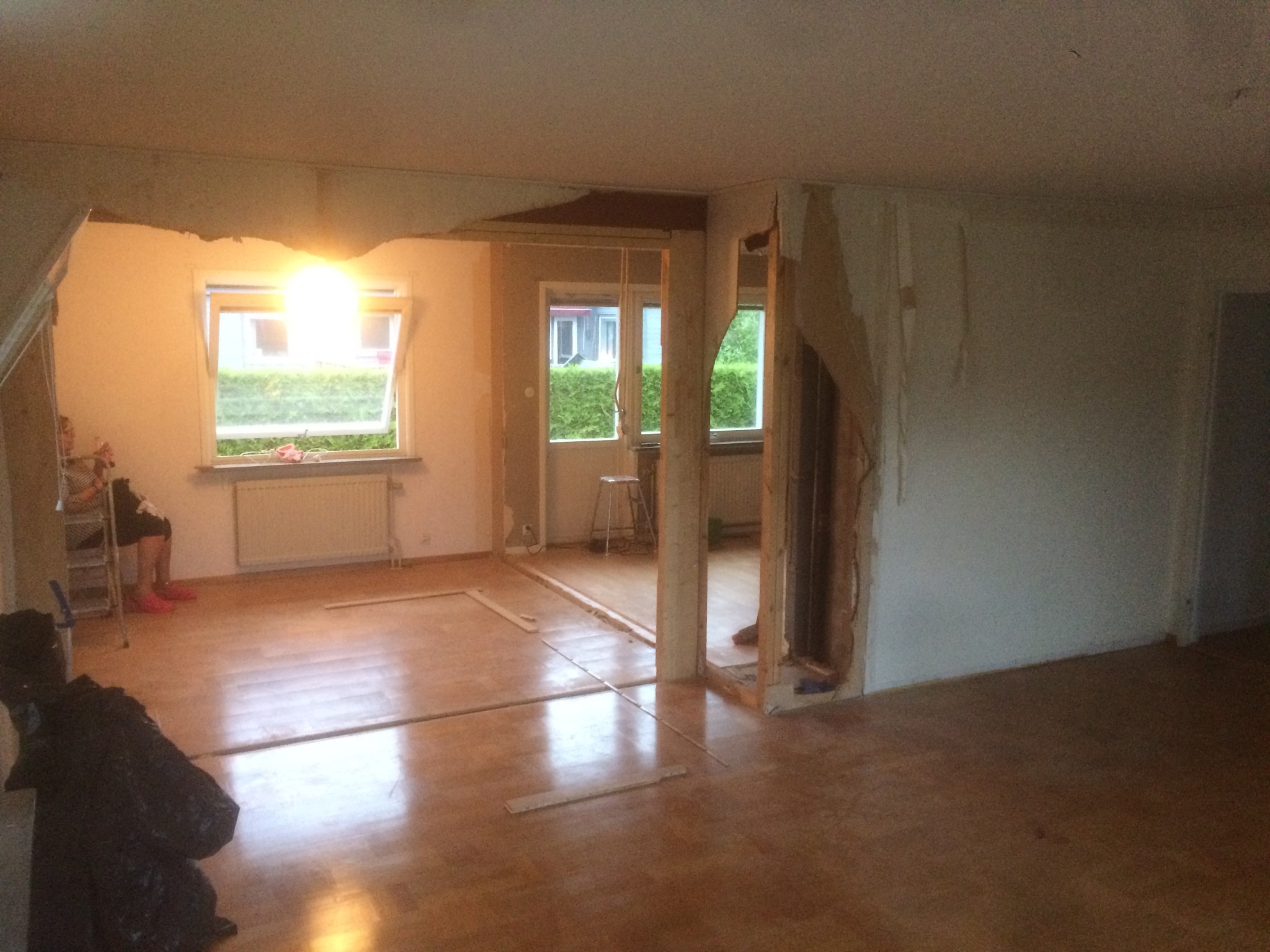
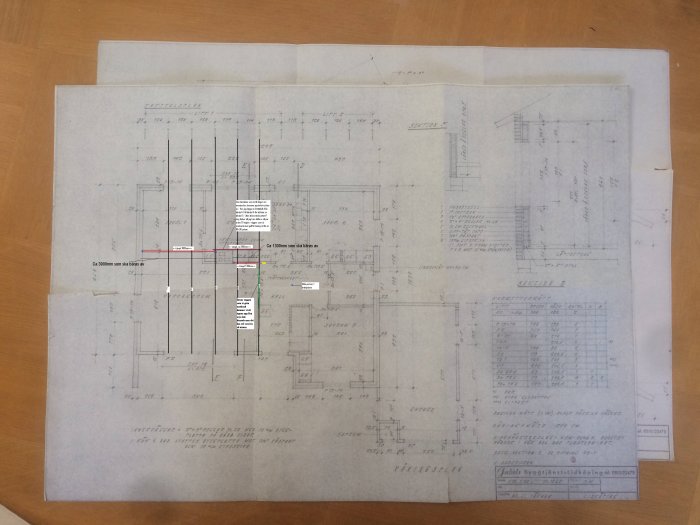
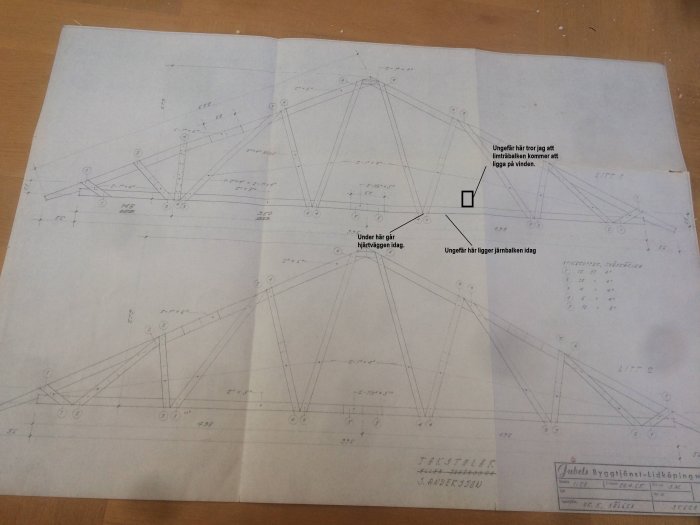
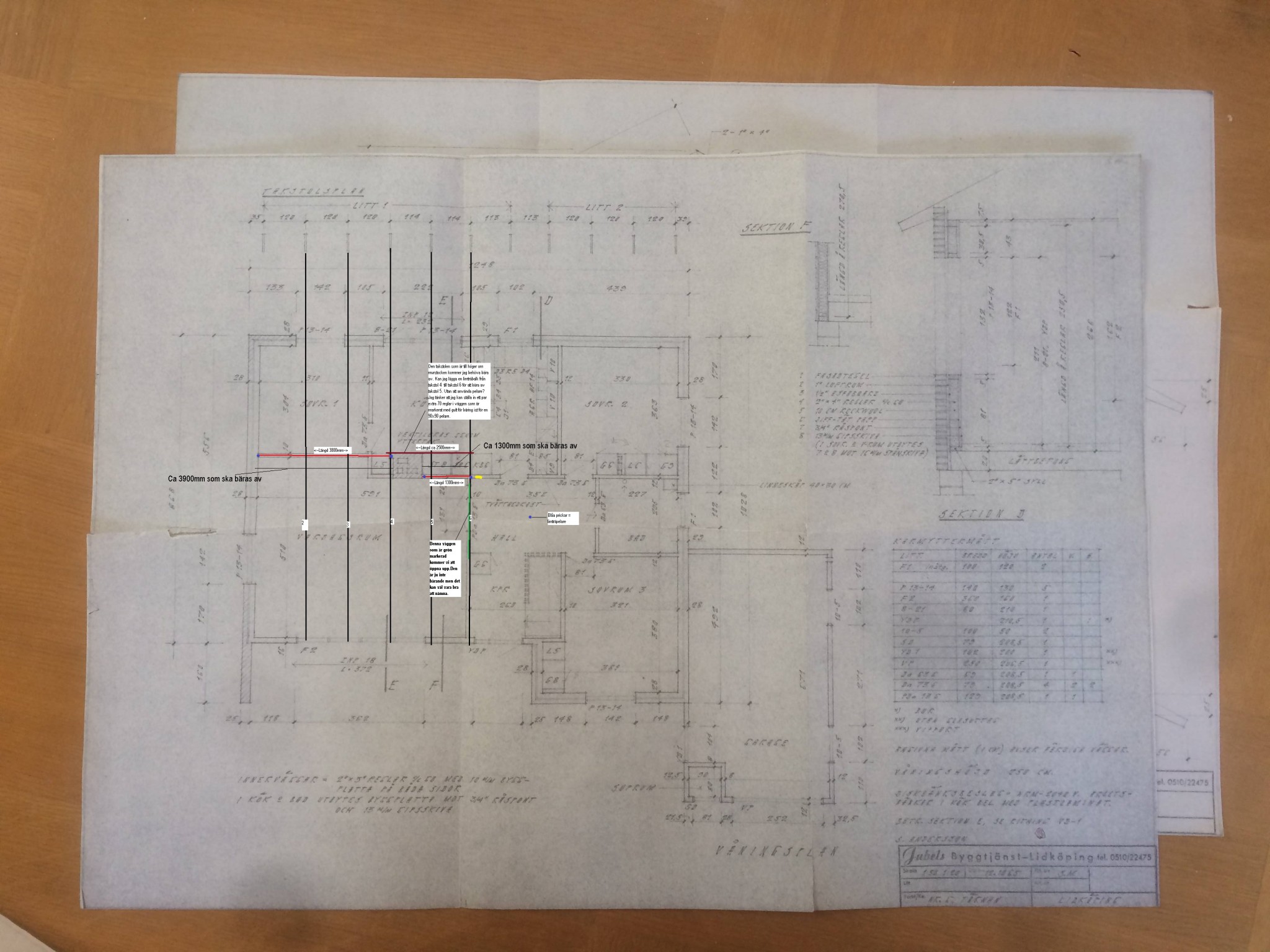
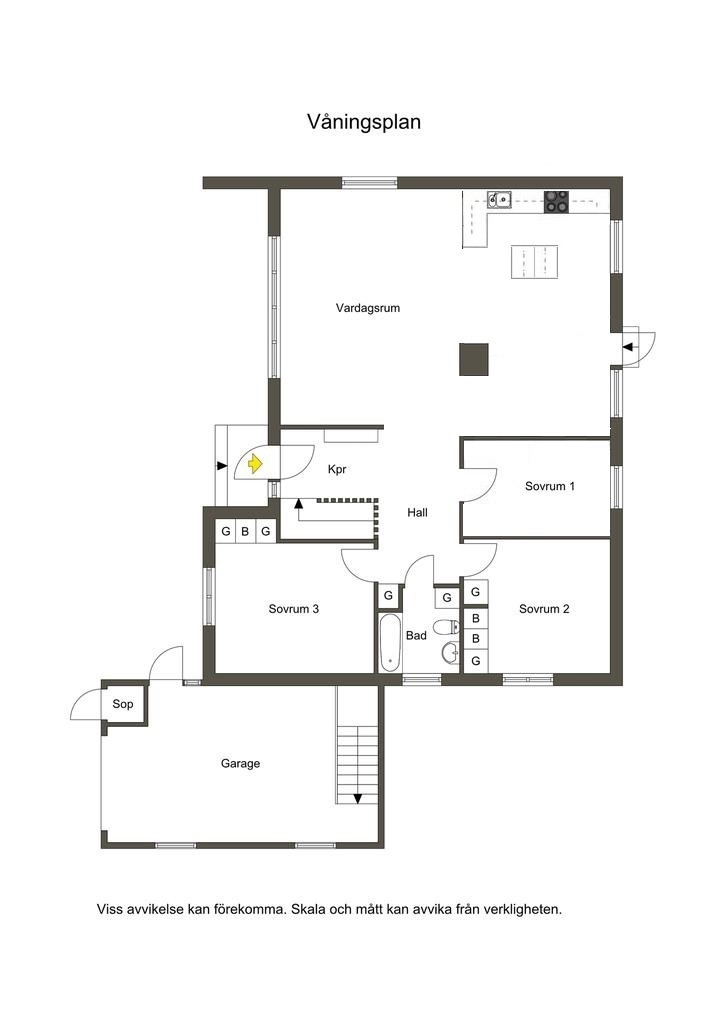
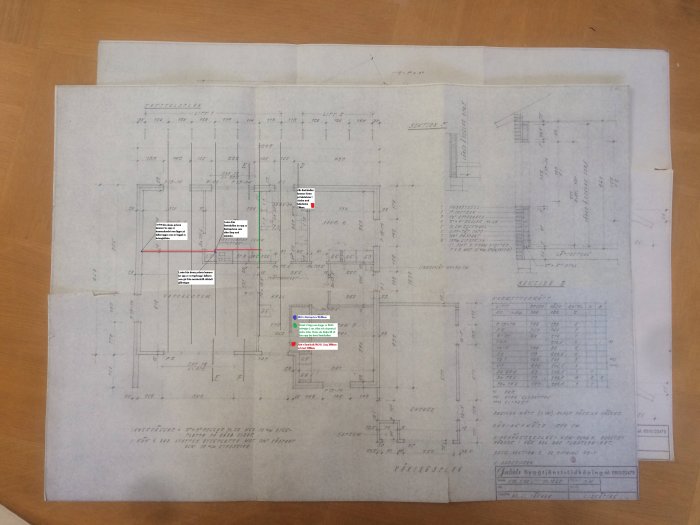
Here are two drawings. One of the rafters and an overview of the floor plan. And then some decent pictures after the demolition. Hoping for some good advice. Regards, Kalle
No, you are not allowed to attach anything to the chimney. Regardless of where in height you place the glulam beam, it must have proper supports to transfer the loads, preferably in the form of glulam columns if they get some length. If you place the beam in the attic, you should use solid steel fittings to attach "hanging" building parts. Steel can withstand tensile forces much better than wood. The question is whether you need a glulam beam at all? When I look at the truss design, I think the dimensions are a bit weak considering the large span and today's snow loads. It should be remembered that the baseline snow load in the Lidköping area has doubled since 1966. Therefore, I think it is wise to consider a heart wall or beam in the middle of the house. The steel beam that exists between the living room and the adjacent bedroom is actually not on the drawing. It must be the builder who for some reason decided it was necessary.
When you are figuring out suitable placements of columns and beams, remember that no support is actually needed between two trusses. So, it's possible to create a "drop" if it facilitates the planning.
No, you must not attach anything to the chimney. Regardless of the height at which you place the glulam beam, it must have proper supports to transfer the loads down, preferably in the form of glulam columns if they get some length. If you place the beam in the attic, you should use sturdy steel fittings to attach "hanging" building parts. Steel withstands tensile forces much better than wood. The question is whether you need a glulam beam? When I look at the truss drawing, I think the dimensions are a bit too weak given the large span and today's snow loads. One should remember that the basic value of snow load in the Lidköping area has doubled since 1966. I therefore think it's wise to consider a loadbearing wall or beam in the middle of the house. The steel beam between the living room and the adjacent bedroom is actually not on the drawing. It must be the builder who for some reason deemed it necessary.
When planning the suitable placement of columns and beams, keep in mind that between two rafters, no support is needed. It's possible to make a "break" if it facilitates planning.
Thank you so much for the answers! They help me immensely!
But there are more questions.
Question 1
Can I join together 5-6 pieces of 220x45 studs and use them as support instead of the long support beam? Mostly because it's easier to get them up in the attic.
Question 2
I will make two supports, one on each side of the chimney, as you might have seen in the pictures. One is a shorter support about 130cm, but for two rafters. What dimension do you recommend I use for the glulam there?
Question 3
Under the glulam column that will be on the long support, the wall in the cellar is made of brick. Can a brick wall handle those loads? (It's the fireplace in the recreation room that the column will be on)
Question 4
How many screws per steel fitting and how many fittings per rafter should there be?
Question 5
The idea that two rafters don't need any support so you can make a break.
Do you mean, for example, the short support by the chimney? There are two rafters where the wall will be taken down. Is it enough to place a glulam column under the rafter next to the chimney and skip supporting the other one?
Or do you mean that instead of buying a long glulam beam that extends past the chimney and further past the small support, it can be divided into two as I planned? I believe you mean the latter.
Question 6
What dimensions are suitable for the long glulam beam?
First, you have to decide which load from the trusses you should consider. I think it's reasonable to assume that half of the truss load is on the central wall. It might be an overestimation, but it represents some sort of maximum limit that you can always justify. After examining the dimensions of the trusses, I conclude that each truss represents a point load of about 20 kN (20 kilonewtons is just over 2000 kg). The dimensions of the central beam depend entirely on how long it needs to be, i.e., how many trusses it must support, but essentially it is necessary to use glulam. The best way is to mark on a floor plan where the trusses are located and where you do not want any beams.
(I meant to say I made a mistake in the last post. The short wall we want to take down only affects one roof truss above it.)
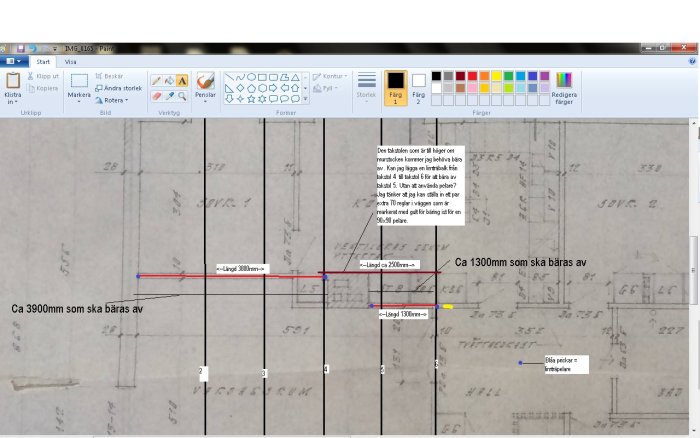
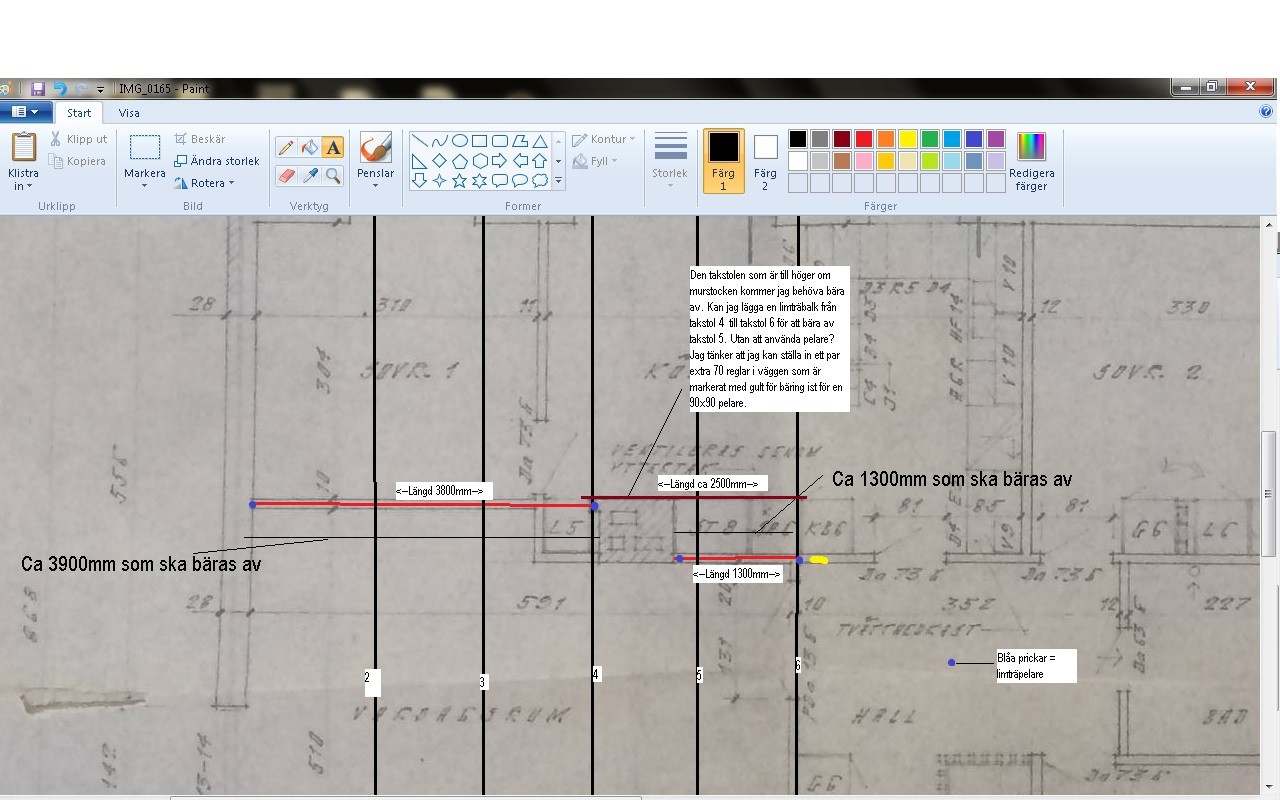
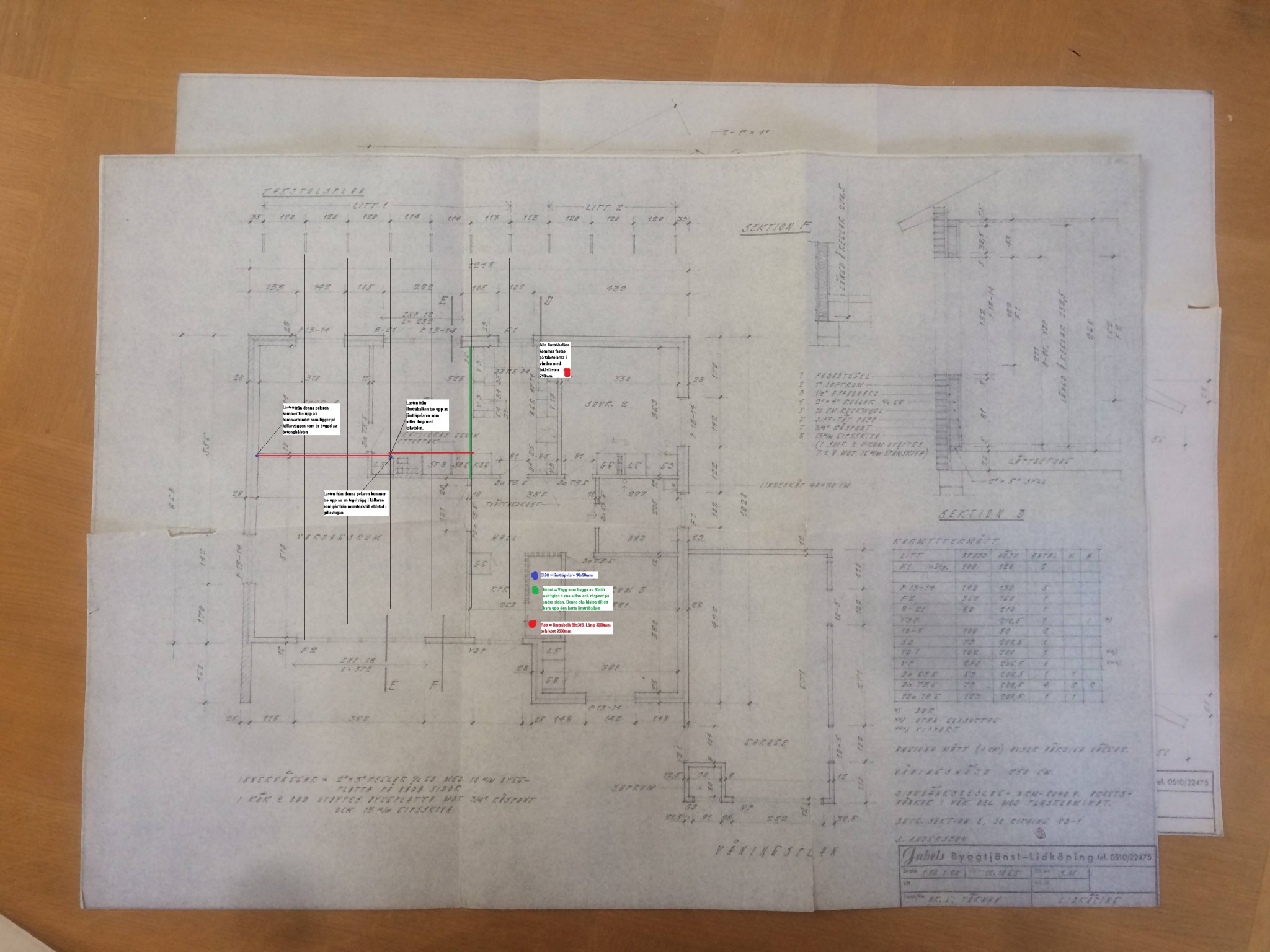
Okay. I’ve drawn some lines in paint on where I want the beams to go. At the small opening, I'm hoping we can avoid putting glue-laminated columns and let the two roof trusses on either side of the one (truss 5) that needs support handle the weight with the help of a glue-laminated beam. Roof truss number 6 has a parallel wall running underneath it. However, we want to remove the double doors and open up about 1m more. So I’m not sure how much it helps if it’s a parallel wall. And roof truss number 4 will have a glue-laminated column under it.
Then there is an extension from the chimney made of blåbetongplattor, about 100mm thick and 400x400 mm in size. They are on the entire one long side and extend outside the chimney as a wing about 100mm. I wonder why this was done and if we can remove them? Could it be to insulate the heat? You can see the wing on the previous floor plan I sent.
Thank you for your involvement, this helps us incredibly much!
This is a slightly awkward way to communicate. It would have been infinitely easier if we could sit down together... The loads from the trusses can be managed either by posts or beams. Posts and beams can be shifted sideways without major consequences. I think you would benefit from someone with expertise in the field if you can consult concretely.
I completely understand you. But I'm going to contact one of my old supervisors who is quite knowledgeable in this area. Now I have at least tried on my own to gather information.
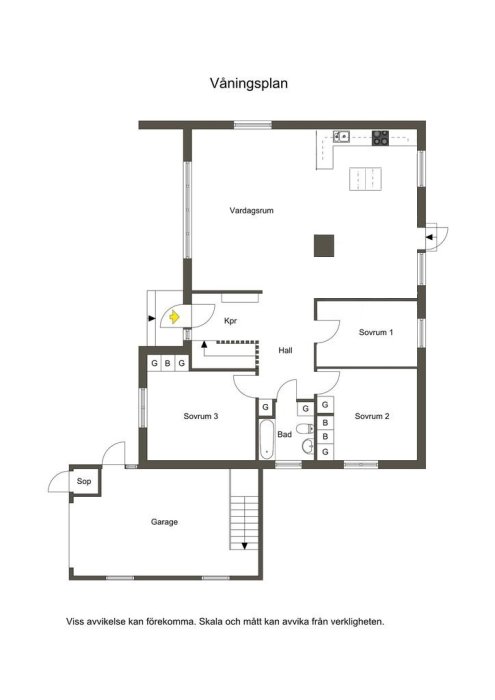
But to bring some material to him to start from, I have used construction guide's dimensioning tool. However, you could only choose 1 1/2 house. So I chose that and that the second floor was unfurnished. Then I found that I could use a 90x315mm glulam beam with a utilization rate of 42%. And 90x90mm glulam columns with a utilization rate of 24%. We'll see what he has to say, but I feel confident about this. I have also redone a drawing in paint that I will take as a basis.
The span is an important variable when calculating the dimensions of a beam. For a uniformly loaded beam resting on two supports, the torque (which causes bending) increases with the square of the span. A two-meter beam is thus subjected to four times the torque of a one-meter beam.
The 3.8 m long space next to the chimney (where you have a steel beam today) needs a 90x315 mm glulam beam, provided it is supported by a glulam column next to the chimney. This beam can be placed where the steel beam currently is, but it can also be moved to the other corner of the chimney if it gets sufficient support in the outer wall. (Perhaps it's unwise to change it, but it is possible.)
The 1.3 m long space can be supported with a 90x225 mm glulam beam, which also needs the support of a column next to the chimney. Check with the chimney sweep on the fire protection insulation requirements in your case.
The type of building you have used as a template when using construction description programs has entirely different conditions than your house, yet probably delivers approximately the same loads.
Lidköping is a very pleasant town with a nice center that other cities should be envious of. And several nice cafes.
Okay, but can I replace the glued timber beam that is 90x225 with one that is 66x315? That dimension is available at Byggmax here in town.
You mention that I only need glued timber pillars next to the chimney on the long beam. Is no pillar needed in the outer wall? Admittedly, the roof truss lies on the outer wall. And I plan to lay my glued timber beam on the roof truss on the outer wall, so maybe it's not needed?
For the short one, you write that it's enough with one next to the chimney there as well. But that's because when I put up my wall with 95x45, the roof truss that goes over will get support, which in turn will give support to my beam that I will lay on. I assume this is what you mean. Just want to be completely sure and double-check to understand everything correctly
Oh, so you know Lidköping that well? We really enjoy living in this town. It's a bit dull in the winter, but the summers make up for it! It's nice being close to Vänern too.
Last edited:
Vi vill skicka notiser för ämnen du bevakar och händelser som berör dig.


kalle_lidköping said:
Hello everyone!