6,502 views ·
21 replies
7k views
21 replies
Help me with my staircase!
I feel it's time to consult the experts regarding my stairs. Long story is now going to be somewhat short. When we moved into our new house, we discovered a light mold damage in the basement, right at the foot of the stairs. The floor in the basement was floating and superb, but right by the stairs, a slightly elevated platform had been built. However, this was not floating but with joists and insulation directly against the concrete slab. Anyway, the platform was demolished, and I have now begun building a new one. All good. Chipboard is in place, and now I'll lay a solid pine floor on top of this. That's when I realize the stairs need help. And so do I. See images and comments below:
The first image shows an overview of the situation.
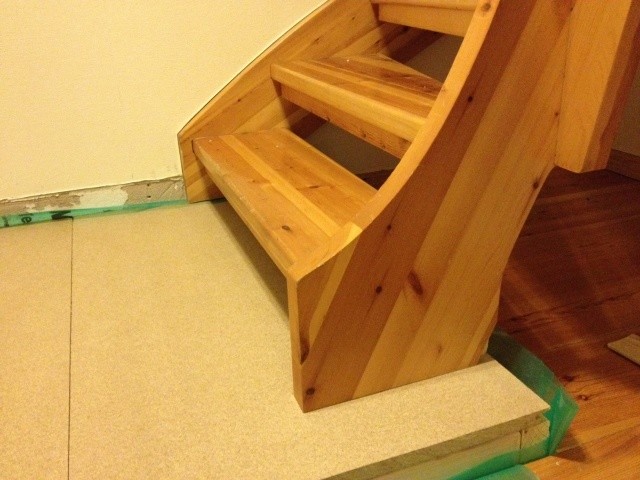
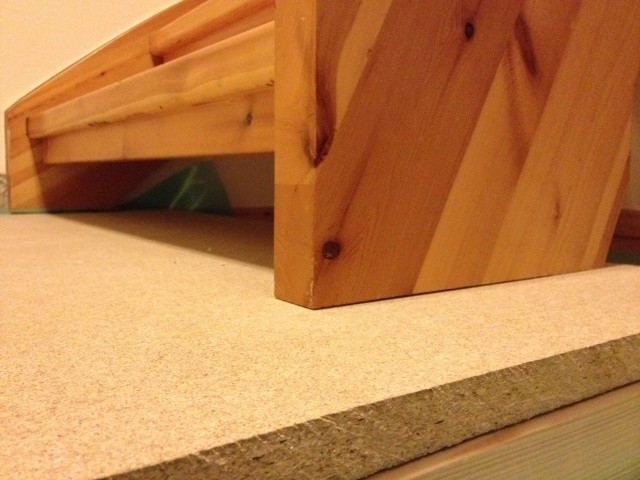
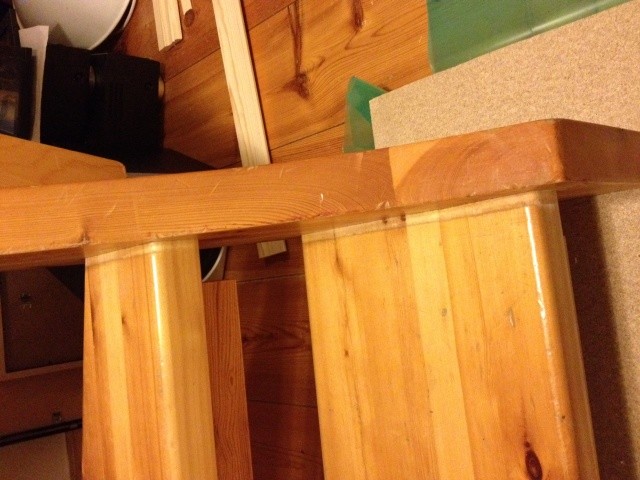
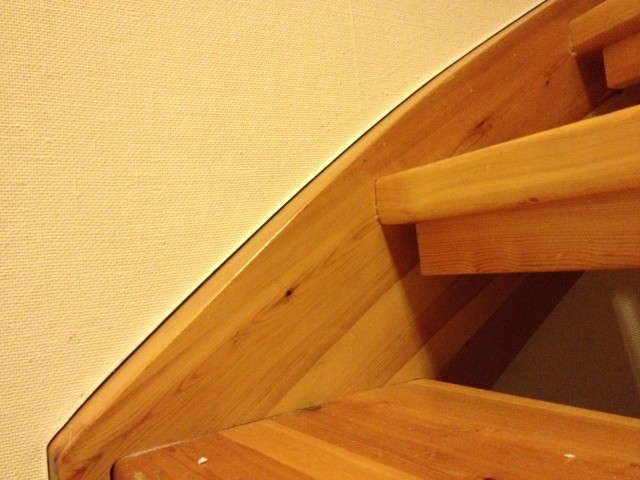
The second image shows a problem with the stairs currently hovering above the platform. It looks like some millimeters in the picture. This has led to what's visible in image three, i.e., the stringer has slipped apart, and the steps are about to come out. Image four also shows that the stairs have sunk a few millimeters from their original position. Although the stairs are fastened with two or three screws/bolts to the outer wall right here.
My question is, what do I do now? The idea was to lay the pine floor on the chipboard and cut out for the stringers, so the stairs rest against the chipboard. But the pine floor alone won't hold the stringer in place. A new idea is to wedge something under the stringers and thus lift the stairs (if I lift the stairs by hand, they rise an additional 3-5 mm). Then install some form of angle iron in the chipboard against the stringer to keep it in place?
Or should I screw in the steps that are about to come out? Jeez, this stair stuff is certainly giving me gray hair.
Anyone who might have some advice?
The first image shows an overview of the situation.
The second image shows a problem with the stairs currently hovering above the platform. It looks like some millimeters in the picture. This has led to what's visible in image three, i.e., the stringer has slipped apart, and the steps are about to come out. Image four also shows that the stairs have sunk a few millimeters from their original position. Although the stairs are fastened with two or three screws/bolts to the outer wall right here.
My question is, what do I do now? The idea was to lay the pine floor on the chipboard and cut out for the stringers, so the stairs rest against the chipboard. But the pine floor alone won't hold the stringer in place. A new idea is to wedge something under the stringers and thus lift the stairs (if I lift the stairs by hand, they rise an additional 3-5 mm). Then install some form of angle iron in the chipboard against the stringer to keep it in place?
Or should I screw in the steps that are about to come out? Jeez, this stair stuff is certainly giving me gray hair.
Anyone who might have some advice?
So should one also glue the steps? May I also ask the perhaps strange question - why aren't the steps screwed from the beginning? It seems to be the best, I mean. Or is there a risk that by screwing/gluing you prevent the wood from moving (expanding/contracting) naturally?

If the staircase doesn't creak disturbingly now, I see no reason to dismantle it.
Angle brackets might not be very attractive, though practical, I would screw-glue the stringers to the floor with a wedge underneath so you get support under the entire staircase and then plug the holes. Preferably, the screw should hit an (extra) joist under the floorboard.
It’s the same material throughout the staircase, so any movements that may occur happen in the entire structure. Hence, there's no such risk.
The question is whether you can access and screw the steps to the stringer facing the wall?
Angle brackets might not be very attractive, though practical, I would screw-glue the stringers to the floor with a wedge underneath so you get support under the entire staircase and then plug the holes. Preferably, the screw should hit an (extra) joist under the floorboard.
It’s the same material throughout the staircase, so any movements that may occur happen in the entire structure. Hence, there's no such risk.
The question is whether you can access and screw the steps to the stringer facing the wall?
It creaks a little, of course, but it did that even before my renovation of the "platform," so we can probably live with it. Apologies from a new homeowner and thus also a fresh carpenter, but your solution sounds interesting; the problem is I'm not sure I understand how it all works? Screw-glue the stringers with a wedge underneath. It sounds great, but I can't quite visualize it?
The steps facing the wall will be difficult to screw, at least on the lower part of the stairs where the outer wall is. However, I can access half of it where the stringer runs in the air, without anchoring.
The steps facing the wall will be difficult to screw, at least on the lower part of the stairs where the outer wall is. However, I can access half of it where the stringer runs in the air, without anchoring.
A staircase that doesn't creak doesn't give the right feeling  . But a staircase that creaks so the kids wake up drives you crazy
I would think it will creak less when you fix the stringers better too, but you can't be sure. If you have the energy, it wouldn't hurt to glue all the treads, but it's a bit of work - especially if you have to take down the railing too.
What I meant was that you should make sure you have a stud under the subfloor in line with/under the stringers - so there's something for the screw to grip into more than the subfloor, which doesn't hold particularly well. Then shim under the staircase and glue the shim both to the stringer and the floor. Get screws long enough to screw diagonally into the stringer down into the stud under the subfloor, from both the front and back of the stringers. Alternatively, maybe it's possible with really long screws straight from above, but it's not easy to drill straight that far. Make sure to pre-drill the hole and countersink the screw head a centimeter or so.
Ps. Now I'm wondering if your new platform is floating too? The staircase should be firmly attached to both the wall and the floor if it's going to be good.
Ds.
. But a staircase that creaks so the kids wake up drives you crazy I would think it will creak less when you fix the stringers better too, but you can't be sure. If you have the energy, it wouldn't hurt to glue all the treads, but it's a bit of work - especially if you have to take down the railing too.
What I meant was that you should make sure you have a stud under the subfloor in line with/under the stringers - so there's something for the screw to grip into more than the subfloor, which doesn't hold particularly well. Then shim under the staircase and glue the shim both to the stringer and the floor. Get screws long enough to screw diagonally into the stringer down into the stud under the subfloor, from both the front and back of the stringers. Alternatively, maybe it's possible with really long screws straight from above, but it's not easy to drill straight that far. Make sure to pre-drill the hole and countersink the screw head a centimeter or so.
Ps. Now I'm wondering if your new platform is floating too? The staircase should be firmly attached to both the wall and the floor if it's going to be good.
Ds.
Now I'm starting to understand, but I hope you'll keep following the thread if I come back later with more strange musings. Really, a big thank you for taking the time!
The platform is made of 45x95 studs in a square. In this square, two inner studs are mounted. Then there is flooring chipboard on top. Luckily, I haven't fixed the chipboard yet, so I can open it up and add extra studs under the vangstyckena. I hope I've explained somewhat understandably in my own beginner's lingo
The platform is made of 45x95 studs in a square. In this square, two inner studs are mounted. Then there is flooring chipboard on top. Luckily, I haven't fixed the chipboard yet, so I can open it up and add extra studs under the vangstyckena. I hope I've explained somewhat understandably in my own beginner's lingo
Now the problem is just to find some form of wood piece that is exactly thick enough to fit under the vangstycket, and of the right size otherwise. This is without having a large machinery park at home. Well well, one takes what one has. I assume that by wedge you do not necessarily mean wedge-shaped, but rather a wood piece that should fit under the entire vangstycket?

BigGitt: Probably it happened when the house was built. The staircase was installed first and attached to a platform. When they later installed the flooring, it ended up clearly lower than the platform. Maybe someone didn’t think it through carefully from the beginning, that’s my theory. However, the mistake is already made, so I'll simply have to replicate the platform construction if I don’t want to redo the entire staircase and the floor down in the basement den. I do want to, but not this year!
Oleg: As previously mentioned, I am quite a novice at this. How and where do I drive in the decking screw? From the inside stringer up through the step?
All tips are, of course, interesting.
Oleg: As previously mentioned, I am quite a novice at this. How and where do I drive in the decking screw? From the inside stringer up through the step?
All tips are, of course, interesting.
Just screws, reinforces the staircase but does not remove the creak.
If you use decking screws, pre-drill and create space with a countersink. These are driven from underneath in each step about 15 mm from the stringer and angled outward, but not so angled that they end up outside the stringer.
Personally, I would discard the platform and only saw feet for the stringers.
If you use decking screws, pre-drill and create space with a countersink. These are driven from underneath in each step about 15 mm from the stringer and angled outward, but not so angled that they end up outside the stringer.
Personally, I would discard the platform and only saw feet for the stringers.
Last edited:
Mexibrick: Forgot to ask you a question as well. Could it help further to screw the step into the stringer from the outside stringer into the step, directly from the side? Or is there a risk that this might instead pull the step out from the stringer that is against the outer wall? Otherwise, I thought this might pull the stringer towards the step again, after which you can later implement the solution you suggested? But you don't want to worsen the situation by pulling out the step on the other end instead