Hello! New member since today and I need help with a question I can't get out of my mind. My partner and I have just bought a house. The upper floor "has settled", according to the inspector, probably because it's located in ale/western Götaland and is built on blue clay. The settlement is said to have happened a very long time ago. The house was built in 1943 and is an old bakery. The oven is no longer there. However, I have obtained the original drawings of the house and have a nagging feeling that a load-bearing wall must have been removed on the entrance floor and I am now terrified that the settlement is due to that. Equally terrified of what it means going forward. Please help a total novice!
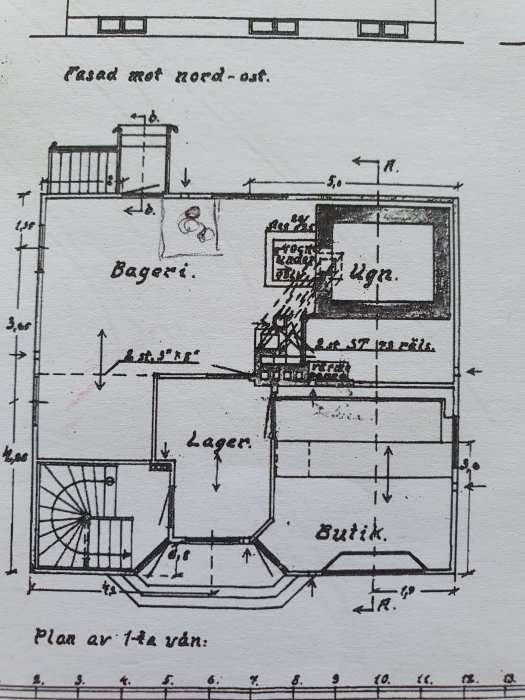
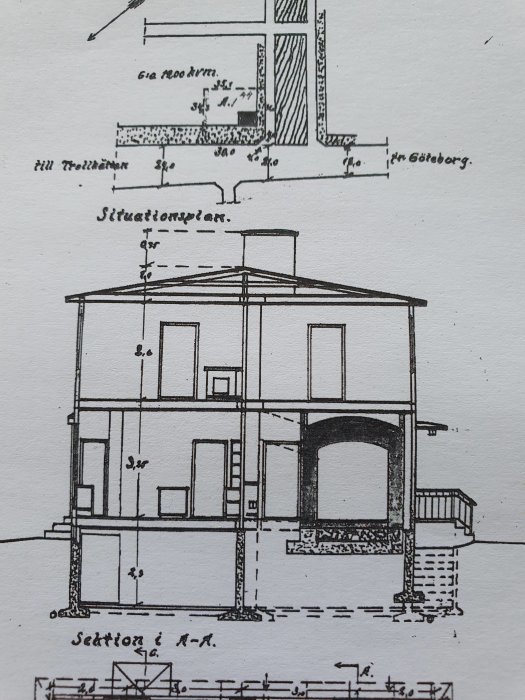
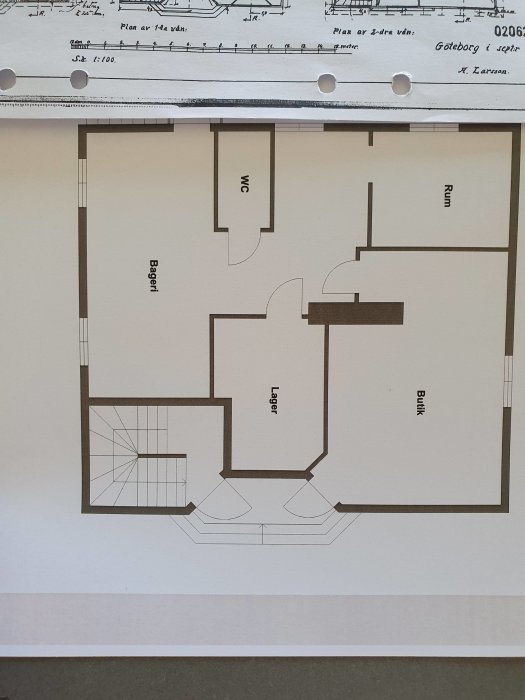
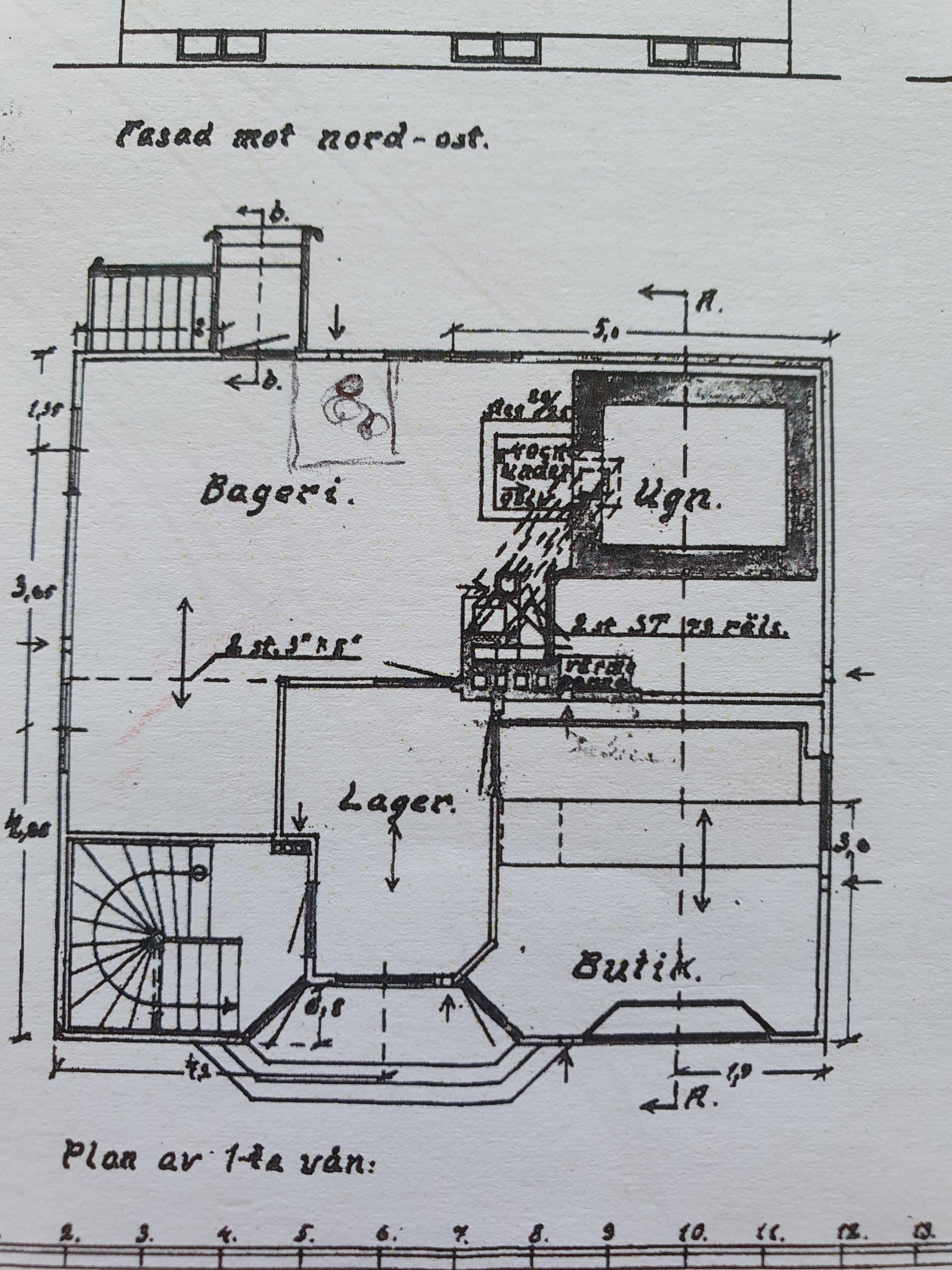
Attaching the pictures I have.
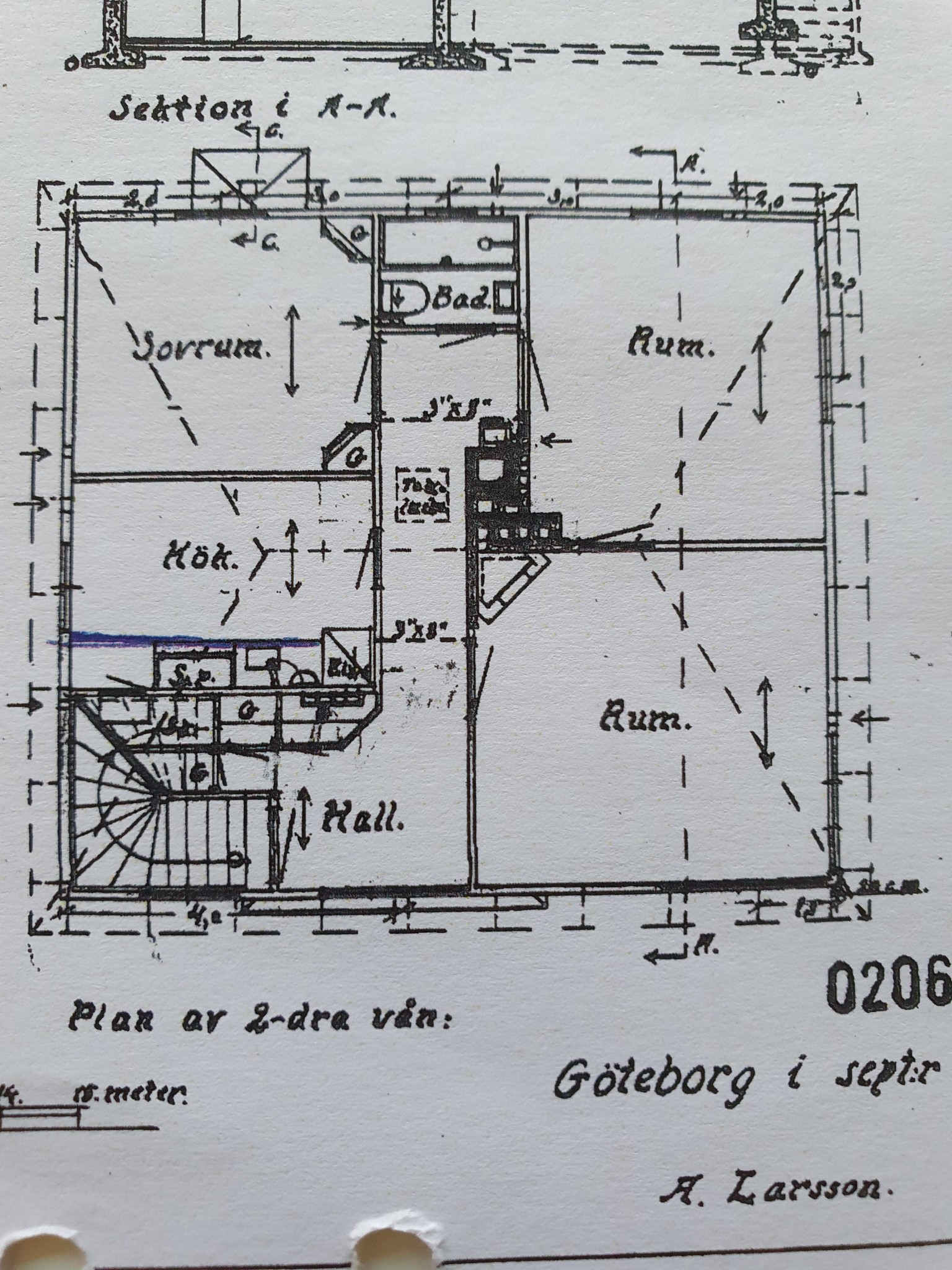
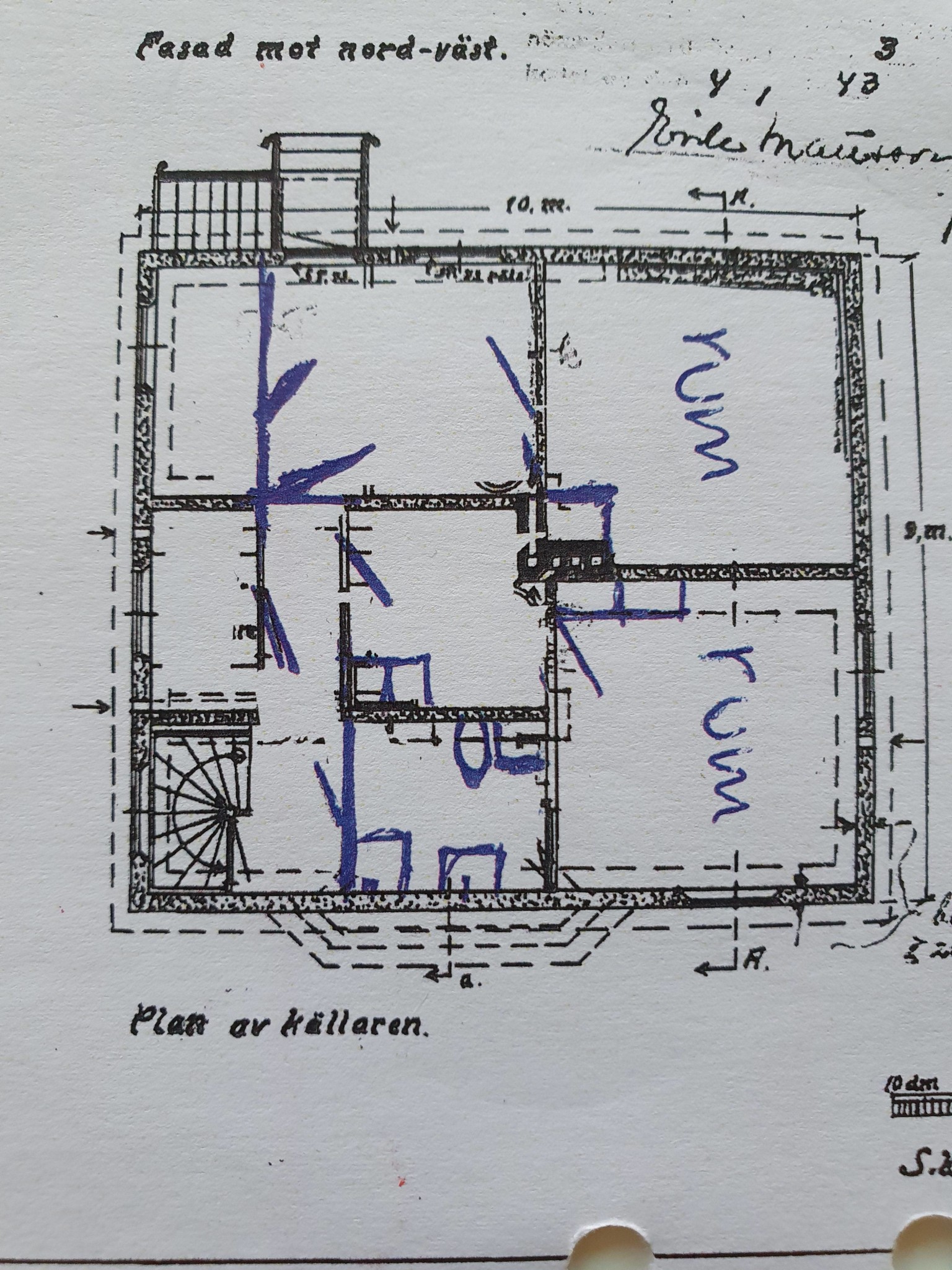
1. Entrance floor before
2. Picture that might be needed?
3. Picture of what the entrance floor looks like today. The wall that went by the chimney seems to have been moved?
Yes, it does not look good if the wall that according to the original drawings is an accent wall in the shop has been removed without being replaced by a beam. In wooden houses from that time, the floor joists often overlap for quite long stretches. It's not always immediately noticeable that a load-bearing wall has been taken down. Have you measured the settlements?
Yes, it doesn't look good if the wall that on the original drawing is the feature wall in the shop has been removed without being replaced by a beam. In houses from that time, the floor joists are often overlapping over quite long distances. It's not always noticeable immediately when a load-bearing wall has been taken down. Have you measured the settlements?
Jjustusandersson said:
Hello and welcome to Byggahus forum!
Yes, it doesn't look good if the wall that on the original drawing is the feature wall in the shop has been removed without being replaced by a beam. In houses from that time, the floor joists are often overlapping over quite long distances. It's not always noticeable immediately when a load-bearing wall has been taken down. Have you measured the settlements?
⁶
Jjustusandersson said:
Hello and welcome to Byggahus forum!
Yes, it doesn't look good if the wall that on the original drawing is the feature wall in the shop has been removed without being replaced by a beam. In houses from that time, the floor joists are often overlapping over quite long distances. It's not always noticeable immediately when a load-bearing wall has been taken down. Have you measured the settlements?
Thank you! Exactly the person I hoped would see my post. Hmm.. no, I don't think so. We haven't moved in yet and I don't know what "measured the settlements" means either. We will have to examine how it looks with the joists and bring in someone who knows more than we do. But do you think that was the only load-bearing wall?
Jjustusandersson said:
Hello and welcome to Byggahus forum!
Yes, it doesn't look good if the wall that on the original drawing is the feature wall in the shop has been removed without being replaced by a beam. In houses from that time, the floor joists are often overlapping over quite long distances. It's not always noticeable immediately when a load-bearing wall has been taken down. Have you measured the settlements?
What has settled?
The foundation wall? The intermediate floor?
Huddingebo said:
What has settled?
The foundation wall? The intermediate floor?
Yes, that's a question one should have asked, of course.. The floors slope towards the chimney breast in two of the rooms on the upper floor. And there is a crack about 1 meter long on an exterior wall, visible from the inside - not the outside. If that helps you determine?
In the extension of the removed wall, in what was the bakery, there is a beam in the ceiling from the beginning. I don't think there are any other load-bearing walls on the ground floor. With the help of a laser, one can get a pretty good idea of the height differences in a floor.
Yes, that's a question one should have asked themselves, of course.. The floors slope towards the chimney in two of the rooms upstairs. And there's a crack about 1 meter long on an outer wall, visible from the inside - not outside. If that helps you to assess?
That houses built on clay settle is to be expected.
But start by measuring the house to be able to determine exactly what has settled.
Doesn't sound entirely impossible that a wall is actually missing there.
In the extension of the removed wall, in what was the bakery, there is already a beam in the ceiling from the start. I don't think there are any other load-bearing walls on the ground floor. With the help of a laser, you can get a pretty good idea of the height differences of a floor.
It is to be expected that houses built on clay will settle.
But start by measuring the house to determine exactly what has settled.
It doesn't sound completely impossible that a wall is actually missing there.
Okay, yes, we'll have to get someone who knows more than us. Thank you for your response and your time!
Click here to reply
Vi vill skicka notiser för ämnen du bevakar och händelser som berör dig.




Huddingebo said:
Emst said: