
3,119 views ·
15 replies
3k views
15 replies
Rubber pipes from 1968 in water-based heating system. Need replacing?
Living in a single-story house with a basement. Geothermal heating with a single-pipe system where the water flows in exposed rubber pipes from the construction year 1968.
They have never leaked. Must they be replaced immediately or can they last for several more years?
My spouse insists on replacing them due to the risk of leakage and water damage. I argue that there's a bigger risk with the electricity from the construction year and the drainage from the construction year.
What priorities should be made?
They have never leaked. Must they be replaced immediately or can they last for several more years?
My spouse insists on replacing them due to the risk of leakage and water damage. I argue that there's a bigger risk with the electricity from the construction year and the drainage from the construction year.
What priorities should be made?



The electricity is not a problem, only based on age. Wiring from that time is often still in new condition. They switched to PVC insulation in the 50s (except for some types of conduit for surface mounting).
Of course, there may be outlets and other things that have been damaged or worn out over the years. But the age itself is not a problem.
Is it really rubber in the pipes for radiator water? I haven't heard of that. However, PEX pipes came around that time. If they are such, they can be perfectly fine today. PEX is the material most used for pipes today.
Of course, there may be outlets and other things that have been damaged or worn out over the years. But the age itself is not a problem.
Is it really rubber in the pipes for radiator water? I haven't heard of that. However, PEX pipes came around that time. If they are such, they can be perfectly fine today. PEX is the material most used for pipes today.

Electricity from 1968 is rarely a problem, except for old loose wall sockets, possibly with shallow boxes. These can easily be replaced by yourself. There may be issues in the installation due to previous poor work, but this can usually be fixed without needing to replace everything.
Rubber pipes sound very strange in a heating installation. Is it not that they are prisol pipes? These have a plastic layer over a copper pipe.
Picture?
Drainage is addressed if there are problems, or possibly before undertaking larger garden projects that are a hassle to redo.
Welcome to the forum!
Rubber pipes sound very strange in a heating installation. Is it not that they are prisol pipes? These have a plastic layer over a copper pipe.
Picture?
Drainage is addressed if there are problems, or possibly before undertaking larger garden projects that are a hassle to redo.
Welcome to the forum!
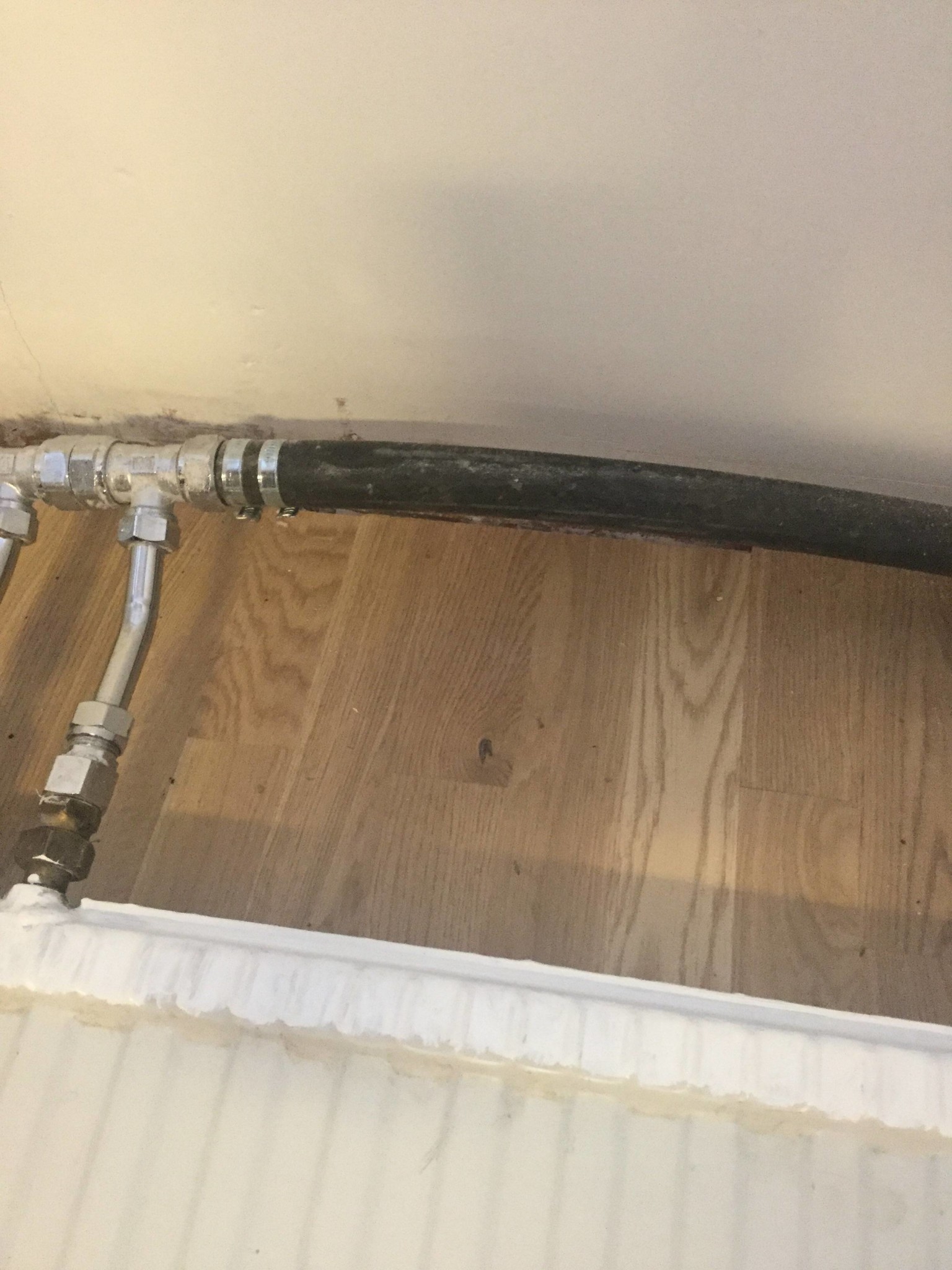
Yes, that has never been professional. Should probably be replaced as soon as possible.
Hose clamp in a fixed pipe connection...
Almost makes you think we should have a "worst plumbing connection" thread just like "worst electrical connection"
Such an old rubber hose, it could break with the slightest impact.
Hose clamp in a fixed pipe connection...
Almost makes you think we should have a "worst plumbing connection" thread just like "worst electrical connection"
Such an old rubber hose, it could break with the slightest impact.

Never seen it!
But if they show no signs of cracking and they are soft and nice, I wouldn't rush with a replacement. Just keep them under observation. Especially at the connections.
Obviously, the house builder had access to hose of good quality and low price .
.
Staffan
But if they show no signs of cracking and they are soft and nice, I wouldn't rush with a replacement. Just keep them under observation. Especially at the connections.
Obviously, the house builder had access to hose of good quality and low price
.Staffan
I would definitely plan for an imminent replacement. It is significantly more important to arrange that than the electricity (unless there is a direct danger to life with exposed live wires).
The quick fix is to replace the rubber hoses with PEX pipes directly, but since you're going to make changes anyway, I would plan for something neater. This direct replacement might be a plan in case of an urgent leak. Start inventorying the system now and see how you will section it if it fails.
The quick fix is to replace the rubber hoses with PEX pipes directly, but since you're going to make changes anyway, I would plan for something neater. This direct replacement might be a plan in case of an urgent leak. Start inventorying the system now and see how you will section it if it fails.
now the wife has decided that the system should be replaced
but should one settle for keeping the single-pipe system and retain the old radiators, or is there an advantage in the significantly more expensive option of a two-pipe system and also replacing the radiators?
but should one settle for keeping the single-pipe system and retain the old radiators, or is there an advantage in the significantly more expensive option of a two-pipe system and also replacing the radiators?