
9,678 views ·
20 replies
10k views
20 replies
Ground moisture has turned concrete into sand?
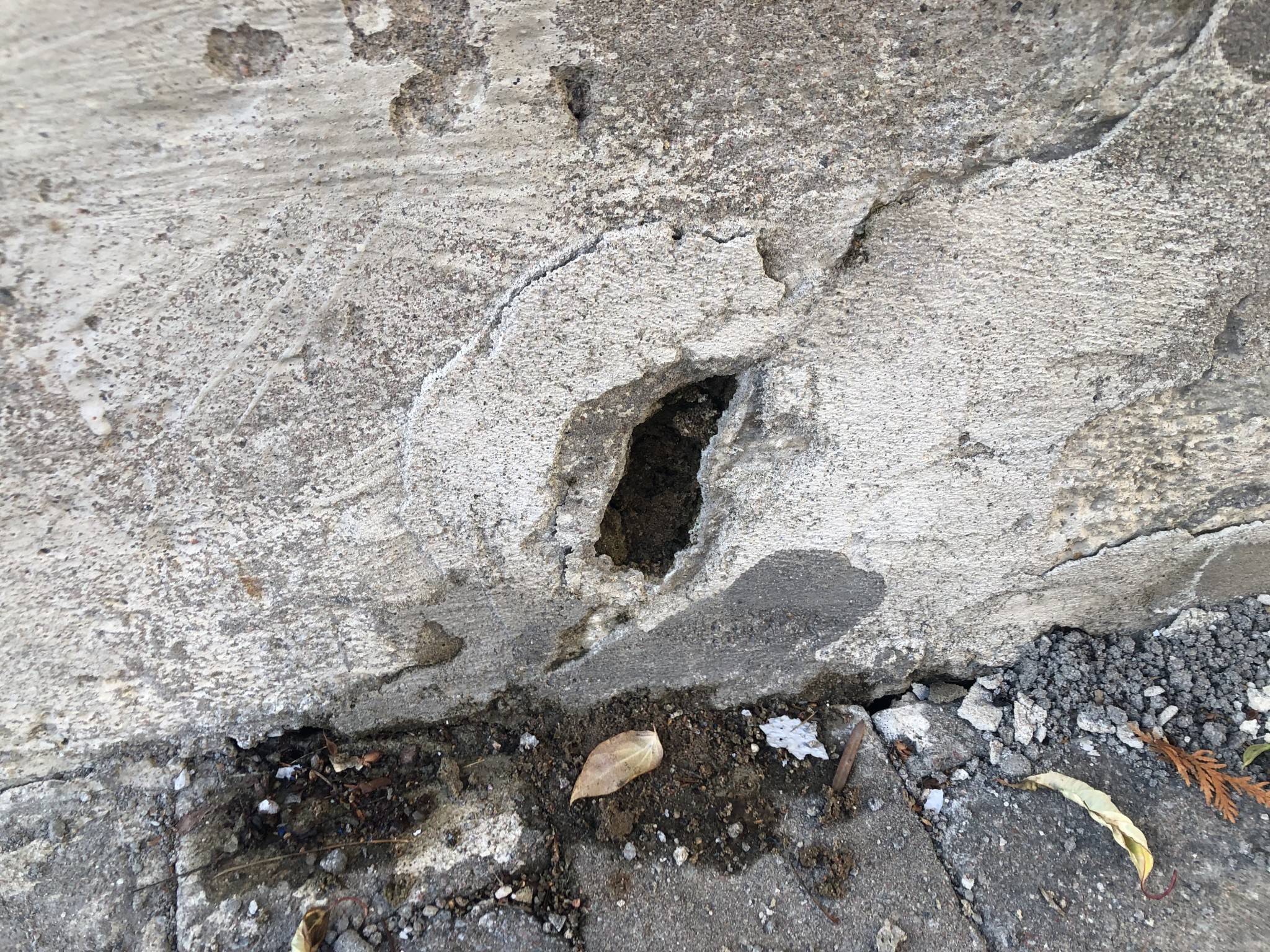
This morning I discovered a hole in my concrete stairs. The hole was damp and below it was a substantial amount of wet "sand." What has happened? Can moisture penetration like this transform concrete into sand?
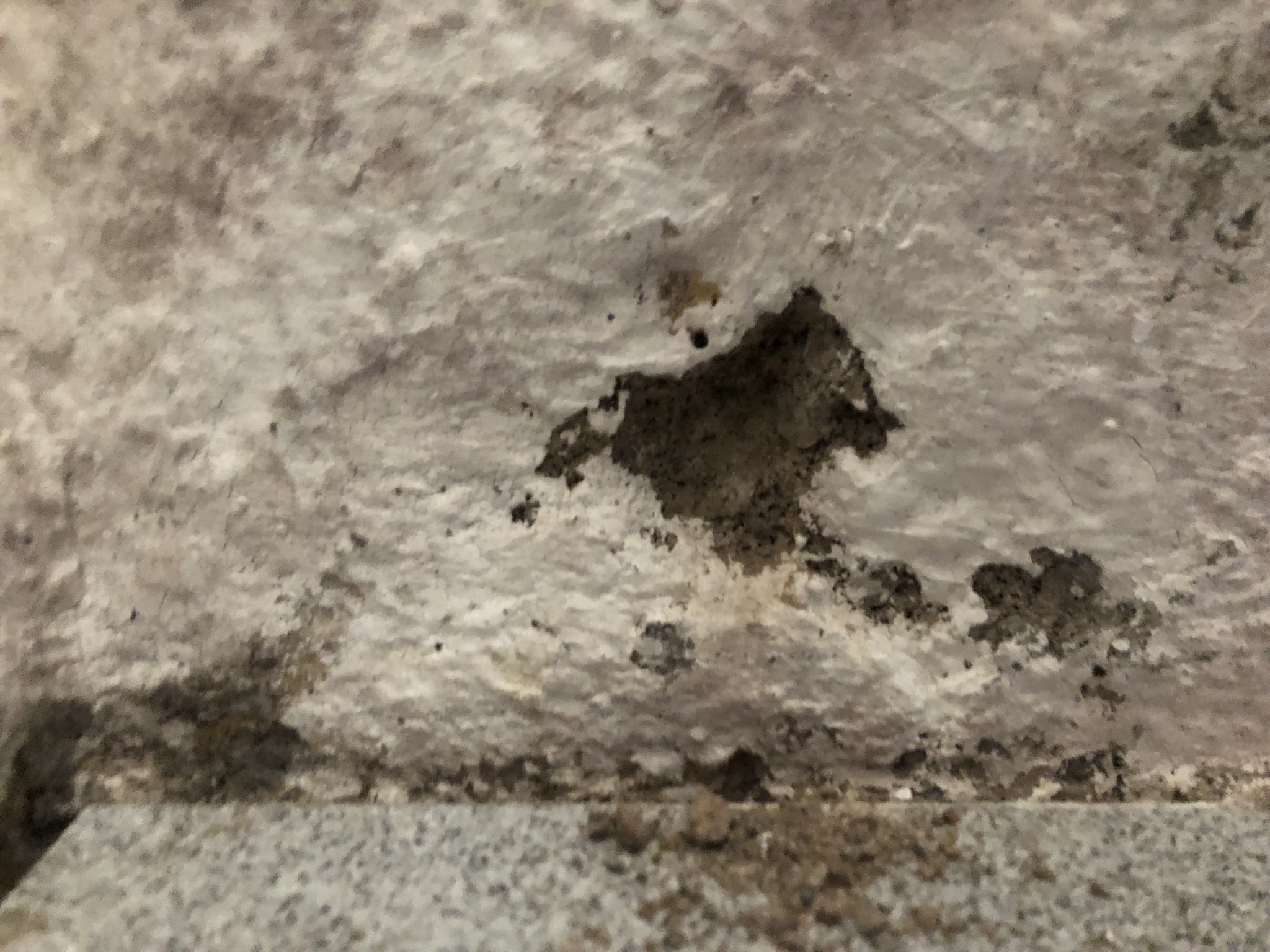
I've seen another similar hole (but smaller) in my basement wall down by the floor. Should I be worried about the wall's stability? Could the concrete behind the plaster be about to give way?
The basement is from '37 and is not drained, only fitted with tiles and silicate paint and heated. There are some discolorations and moisture ingress at the bottom part of the basement wall against the floor.
I've seen another similar hole (but smaller) in my basement wall down by the floor. Should I be worried about the wall's stability? Could the concrete behind the plaster be about to give way?
The basement is from '37 and is not drained, only fitted with tiles and silicate paint and heated. There are some discolorations and moisture ingress at the bottom part of the basement wall against the floor.

I have an exactly similar sandy hole (with wet sand below) on the inside of my basement wall which I know is made of concrete.-RB- said:
Are the stairs and basement really made of concrete? I'm speculating now, but Platsjournalen walls despite I thought was a later invention and that most of the time they were built and plastered.
I would bet my money that it's the mortar between the stones that has dissolved.
I would bet my money that it's the mortar between the stones that has dissolved.

The staircase is probably not cast in solid concrete but consists of a thin shell of concrete around an interior of stone, sand, and gravel to save money...

It is correct that the staircase has not been cast straight again. But how should I understand the corresponding hole in the basement wall? I have quite large sections where the plaster is gone and no seams are visible (which should be present between the lightweight concrete blocks), however, I have what seems to look like rebar.
Adding a picture of the basement hole. However, the "sand" has dried somewhat and turned more into gravel.
Adding a picture of the basement hole. However, the "sand" has dried somewhat and turned more into gravel.
The war started in 1939, so no war concrete 1937.
Our former barn from 1927 is constructed with an inner and outer layer of standing cement plates, approximately 50x300x500 mm. To connect the outer and inner layers to each other, iron rods are embedded. Then the cavity is filled with sawdust, so where the wall has cracked, the sawdust seeps out.
I know of a basement floor that is built in the same way but where the wall is filled with coal dust.
Could your basement also be built similarly but with the wall filled with regular sand instead?
Our former barn from 1927 is constructed with an inner and outer layer of standing cement plates, approximately 50x300x500 mm. To connect the outer and inner layers to each other, iron rods are embedded. Then the cavity is filled with sawdust, so where the wall has cracked, the sawdust seeps out.
I know of a basement floor that is built in the same way but where the wall is filled with coal dust.
Could your basement also be built similarly but with the wall filled with regular sand instead?

Despite the year, it may be that the builder was thrifty and skimped on the materials. I was going to fix an uneven concrete slab, and instead of breaking it up, it was fine to just use an industrial vacuum and tap the vacuum pipe on the slab to loosen everything. The concrete was more like sand than solid.
Member
· Västra Götalands län
· 109 posts
What was the solution in the end?
Brought in a condition assessor who noted that it was wartime concrete. Found that there was no threat to structural integrity and recommended tidying up with regular repair concrete. To be done when the weather becomes more stable.