
9,337 views ·
8 replies
9k views
8 replies
Glue plywood to aerated concrete??
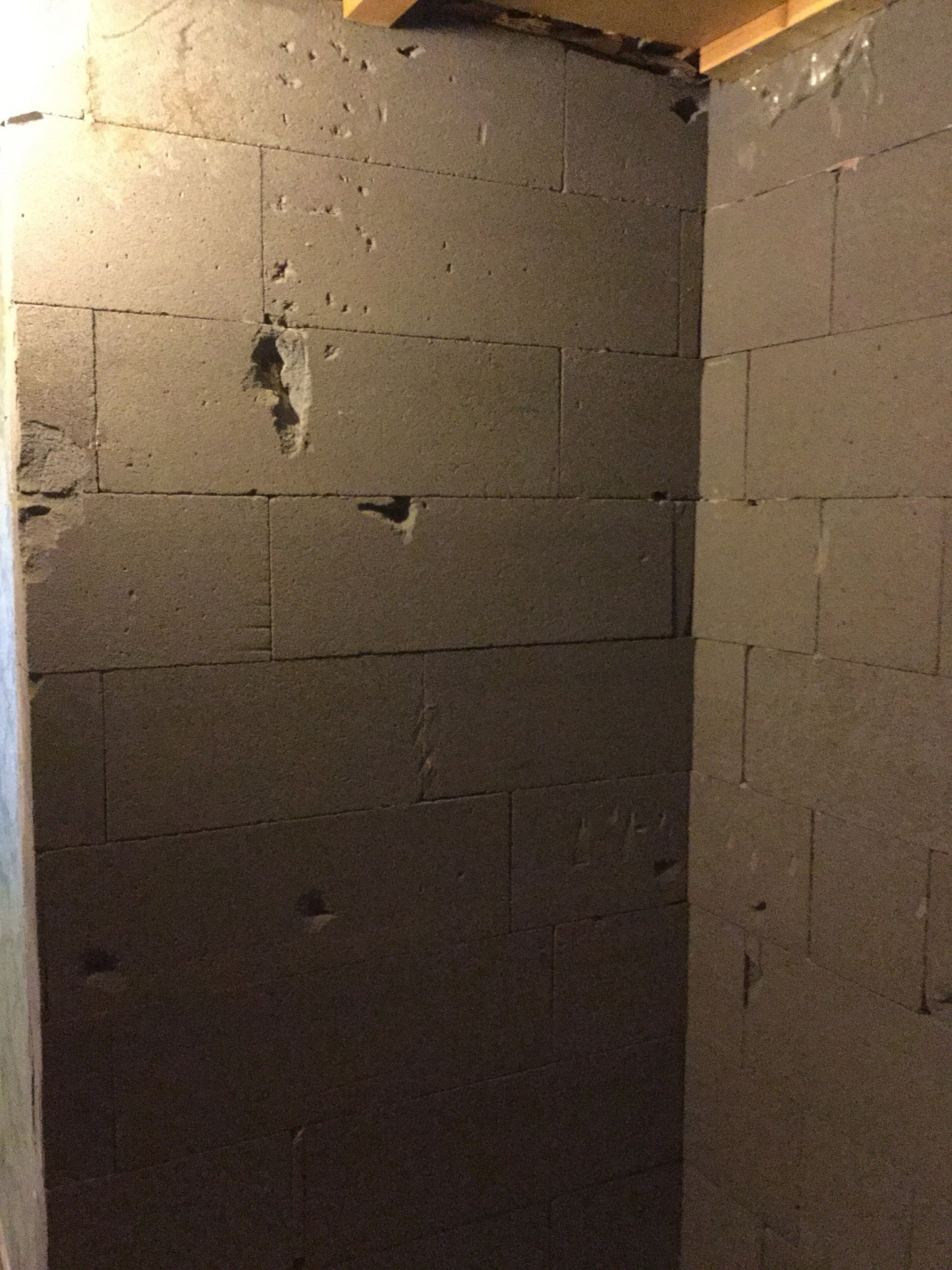
I am in the process of organizing a storage room in the house. The walls currently consist of lightweight concrete blocks, see picture below (the walls are about 10 cm thick). I plan to attach plasterboards to these. The storage room will then be furnished with wall-mounted shelves, like ELFA.
However, I have a part of the wall where I have the electrical panel on the other side of the wall. Since I will need fairly long screws to hang the shelves on the lightweight concrete wall, it doesn't feel right with the wall full of electrical wires! Therefore, I'm considering the following:
Glue 12 mm plywood directly on the lightweight concrete (with, for example, PL600). Then I attach the shelves to the wall with screws that only go through the plywood, i.e., that don't go far into the lightweight concrete wall.
Will this work??
Can I attach the plywood completely without screws?
Will the shelves hold if they are only screwed into the plywood, with relatively short screws?
Grateful for any opinions on this, or other suggestions on how I can solve it!
However, I have a part of the wall where I have the electrical panel on the other side of the wall. Since I will need fairly long screws to hang the shelves on the lightweight concrete wall, it doesn't feel right with the wall full of electrical wires! Therefore, I'm considering the following:
Glue 12 mm plywood directly on the lightweight concrete (with, for example, PL600). Then I attach the shelves to the wall with screws that only go through the plywood, i.e., that don't go far into the lightweight concrete wall.
Will this work??
Can I attach the plywood completely without screws?
Will the shelves hold if they are only screwed into the plywood, with relatively short screws?
Grateful for any opinions on this, or other suggestions on how I can solve it!

Diversearbetare
· Göteborg
· 11 359 posts
There are special aerated concrete screws that hold very tightly if done correctly. They can't be loosened and retightened in the same hole. I've also seen short ones around 80mm. In combination with PL400, it should hold well enough for what you're going to do. The important thing is that it is strong at the top. The screws for what you are going to fasten should go all the way through the plywood board. Pre-drill a bit, maybe half the diameter, because the screw will grip well without splitting. It doesn't matter if they dig a little into the aerated concrete behind.
Against the outer wall, it might be a bit tricky with moisture migration since the plywood board is waterproof.
Against the outer wall, it might be a bit tricky with moisture migration since the plywood board is waterproof.
Thank you Johan!
I plan to be satisfied with just plastering the outer wall.
The plywood was intended for the wall that has the electrical panel on the other side of the wall (so it is not an outer wall). Therefore, 80 mm screws feel risky to attach the plywood with. There are lots of electrical conduits in the wall, and I don't know exactly where... I don't want to risk driving a screw straight through a wire!
I plan to be satisfied with just plastering the outer wall.
The plywood was intended for the wall that has the electrical panel on the other side of the wall (so it is not an outer wall). Therefore, 80 mm screws feel risky to attach the plywood with. There are lots of electrical conduits in the wall, and I don't know exactly where... I don't want to risk driving a screw straight through a wire!

One alternative might be, as you are considering, to glue plywood to the wall but in double layers. Then screw a strip or suitably thick beam against the plywood but into the ceiling joists.
This way, you get 24 mm of plywood to screw shelves into, and the strip/beam in the ceiling prevents the construction from coming loose and falling off the wall. A strip against the floor is probably not a disadvantage either.
//Ronnie
This way, you get 24 mm of plywood to screw shelves into, and the strip/beam in the ceiling prevents the construction from coming loose and falling off the wall. A strip against the floor is probably not a disadvantage either.
//Ronnie

Click here to reply