
7,335 views ·
20 replies
7k views
20 replies
Gypsum plaster cracks while drying
Hello everyone,
Completely new to the forum and have been searching around for issues with plaster. I find Swedish channels (even producers like Finja etc.) are terrible at providing information on handling plaster. According to producers, it's the best thing since sliced bread.
I have just had to fill in proper holes left by a lazy carpenter. I followed the recommendations to keep the thickness within 50mm and did thorough prep work with primer, etc.
The problem is that the larger joints are now on day 2 of drying time (2-3 hours regardless of thickness, my r-v, Finja concrete) and they have started to crack. Maybe the weight of the plaster affects the frame and presses on it? But it is supported behind and there is plenty of other attachment surfaces from old reeds (the house is from 1937).
1. How the heck do I save this (see picture)? I will need to do another round to smooth out smaller uneven areas (the plaster was surprisingly easy to work with).
2. What are your thoughts on plaster as a filling material and what are your insights that the producers didn't want to convey?
Link to the plaster I’m using: https://www.hornbach.se/p/gipsputs-baumit-25kg/7196557/
Have a great day!
Andreas
Completely new to the forum and have been searching around for issues with plaster. I find Swedish channels (even producers like Finja etc.) are terrible at providing information on handling plaster. According to producers, it's the best thing since sliced bread.
I have just had to fill in proper holes left by a lazy carpenter. I followed the recommendations to keep the thickness within 50mm and did thorough prep work with primer, etc.
The problem is that the larger joints are now on day 2 of drying time (2-3 hours regardless of thickness, my r-v, Finja concrete) and they have started to crack. Maybe the weight of the plaster affects the frame and presses on it? But it is supported behind and there is plenty of other attachment surfaces from old reeds (the house is from 1937).
1. How the heck do I save this (see picture)? I will need to do another round to smooth out smaller uneven areas (the plaster was surprisingly easy to work with).
2. What are your thoughts on plaster as a filling material and what are your insights that the producers didn't want to convey?
Link to the plaster I’m using: https://www.hornbach.se/p/gipsputs-baumit-25kg/7196557/
Have a great day!
Andreas
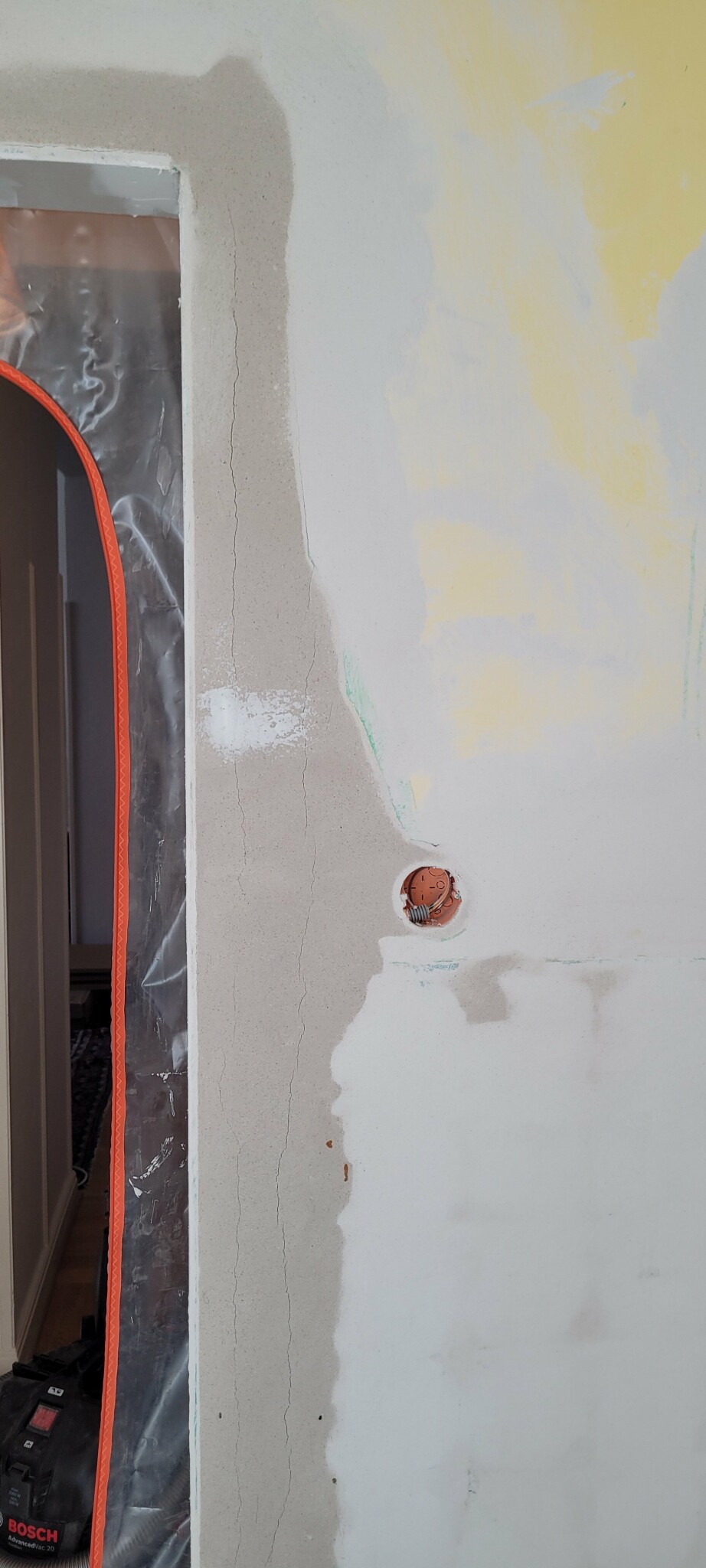
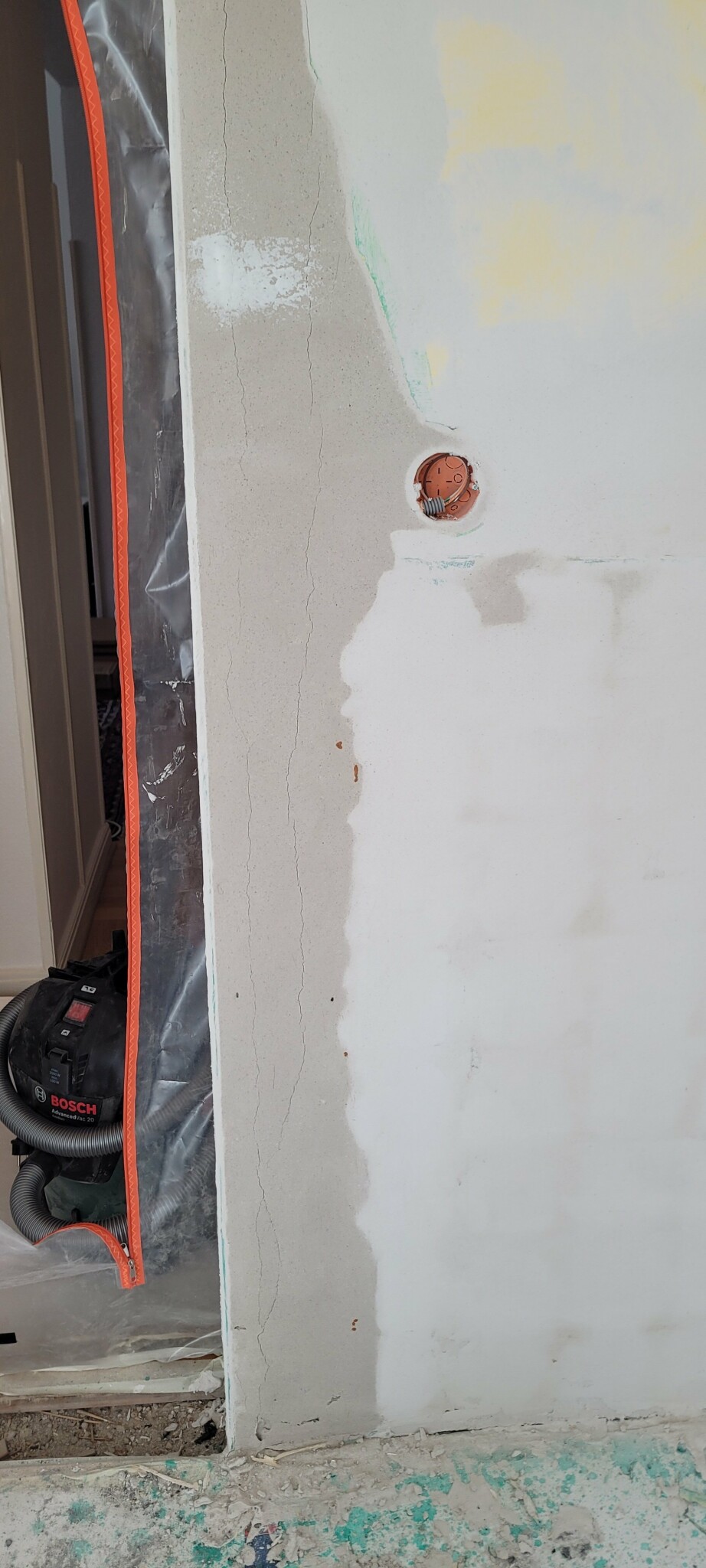
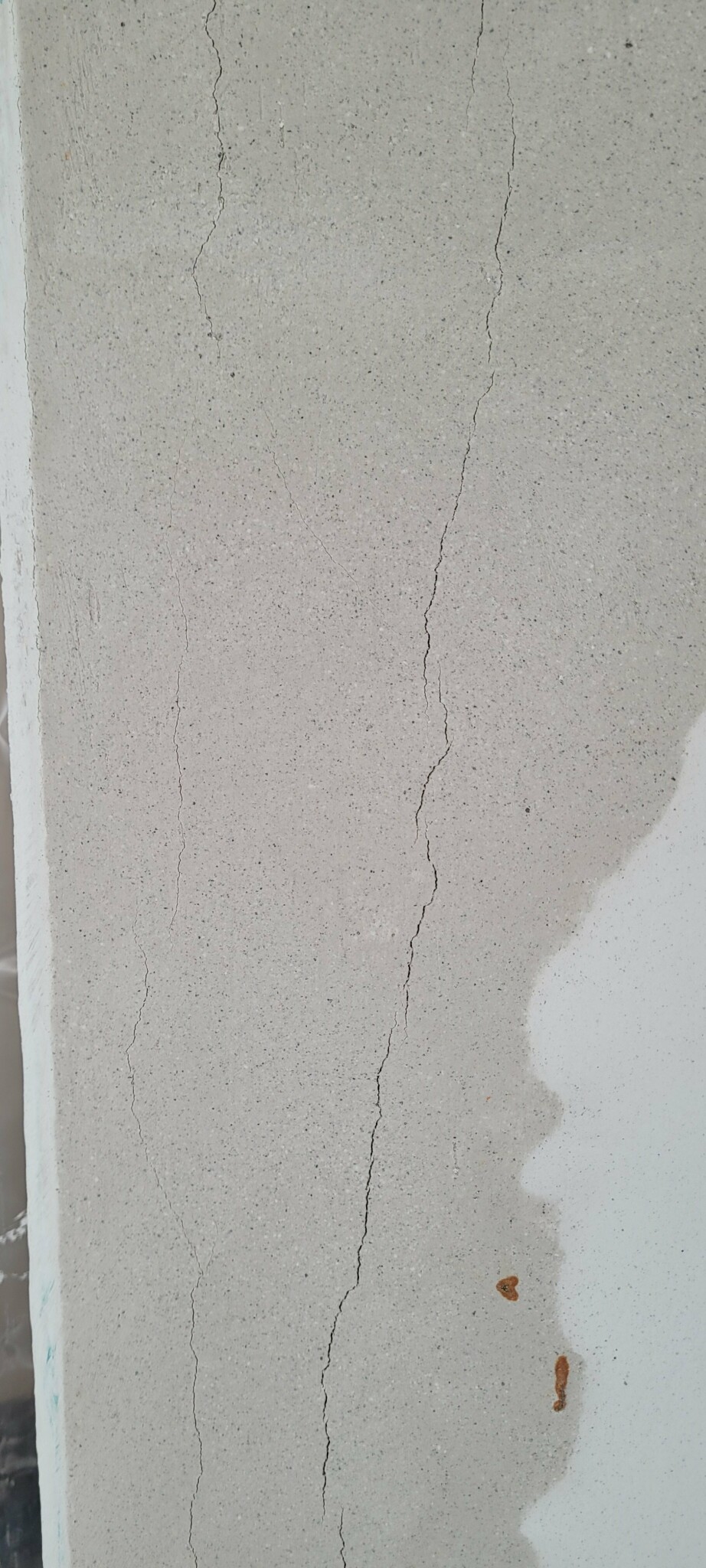
Last edited:
Why it cracks, I can't answer, but are you sure it's really gypsum plaster you're using? It looks more like some kind of mortar. My experience with gypsum plaster is very positive, I've never encountered cracks like the ones in the pictures you posted. I've repaired large holes with gypsum plaster on old plastered walls without them sinking or cracking.
Thanks for your answer. This is the material I am using: https://www.hornbach.se/p/gipsputs-baumit-25kg/7196557/T Trafikverket1 said:Why it cracks, I can't answer, but are you really using gypsum plaster? Looks more like some kind of mortar. My experience with gypsum plaster is very positive, I have never encountered cracks like the ones in the pictures you posted. I have repaired large holes with gypsum plaster on old plastered walls without them sinking or cracking.
I had tried sanding and then leveling off with https://www.hornbach.se/p/gipsspackel-casco-wallfiller-3kg/10140300/
Used Casco with good results. Not as long working time, so don't mix too much.
Used Casco with good results. Not as long working time, so don't mix too much.
Thanks! Will have to wait until the stuff decides to dry, then I'll sand down and even out, and then glue the cracks with the wallfiller you sent.T Trafikverket1 said:
Have tested something similar to what you linked (might have been the same now that I think about it) and it wasn't at all what I thought gypsum plaster should be. It was very grainy and the surface was not smooth at all like other gypsum plasters I've used, felt more like sandpaper. It also sounds strange that it hasn't dried, gypsum plaster usually dries very quickly.
So these are rotbands you bought and you write yourself "within 50mm" even though the manufacturer specifies max 15mm:
https://www.baumit-selbermachen.de/mauer-verputzen/gipshaftputz-rot-30-kg_pid_3_8540.html
https://www.baumit-selbermachen.de/mauer-verputzen/gipshaftputz-rot-30-kg_pid_3_8540.html

Was on the same line as previously wrote. Too thick a layer at the same time. Let it dry and add another round.
I just noticed that Hornbach's German site listed the layer thickness, but the Swedish one didn't. I was following general gypsum plaster recommendations. Thanks for the information!MrJay said:
A
Yes, you are absolutely right because it felt much grittier than it was described. But as someone further down wrote, it is a different form of gypsum plaster with significantly narrower tolerances. Well, everyday you learn.T Trafikverket1 said:Have tested something similar to what you linked (it may have been the same when I think about it) and it was not at all what I thought gypsum plaster should be. It was very gritty, and the surface was not at all smooth like other gypsum plasters I've used, felt more like sandpaper. It also sounds strange that it hasn't dried; gypsum plaster usually dries very quickly.

Gypsum plaster is grainy and tricky. I would recommend gypsum mortar or Arden for similar jobs... unless you specifically want that grainy texture, that is.paulssona said: