We have a Myresjö one-story house with a basement from '67. Currently, there is a renovation ongoing where the floor, walls, and ceiling will get new surfaces in the entrance and living room. We have encountered a couple of obstacles along the way and have a new decision to make.
Floor chipboards were supposed to be placed on the existing joists, but the existing joists were condemned by the builder, who wanted to lay new joists. Now the joists have been torn out, and when they looked at laying the new ones, they concluded it would be too time-consuming to do it well due to larger level differences in the concrete beams. Then, we received the suggestion, at no extra cost, to bring in a company to fix about 15 cm of foam concrete + 3 cm of self-leveling compound instead of joisting and chipboards. In total, it's about 80-100 kg/sqm.
We have spoken with the HVAC and electrician, and they say there's no danger in casting the pipes according to them. Ideally, we would have liked to replace the existing pipes, but the budget has already run away... We thought we could gather more opinions on this. If something happens in the future, we'll have to tear up the floor, but on the other hand, there are no organic materials, and the water doesn't spread as easily.
We are also a bit worried about the weight, as it totals 4-5 tons on 35 sqm. We are in contact with a structural engineer but lack drawings of the floor slab. Awaiting response at the moment.
We have talked with the flooring contractor about fixing joists and chipboards, but it will be more expensive. The contractor seems okay with this option too, as this project has also become a headache for him. The question is what is best in the long term, joisting + chipboards or foam concrete + self-leveling compound?
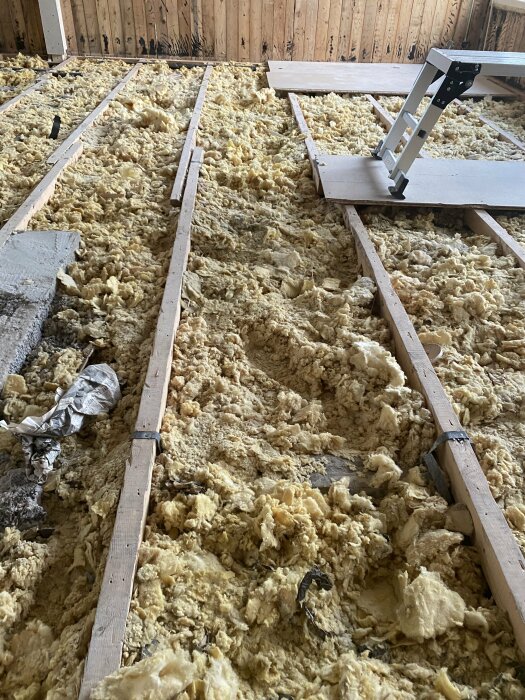
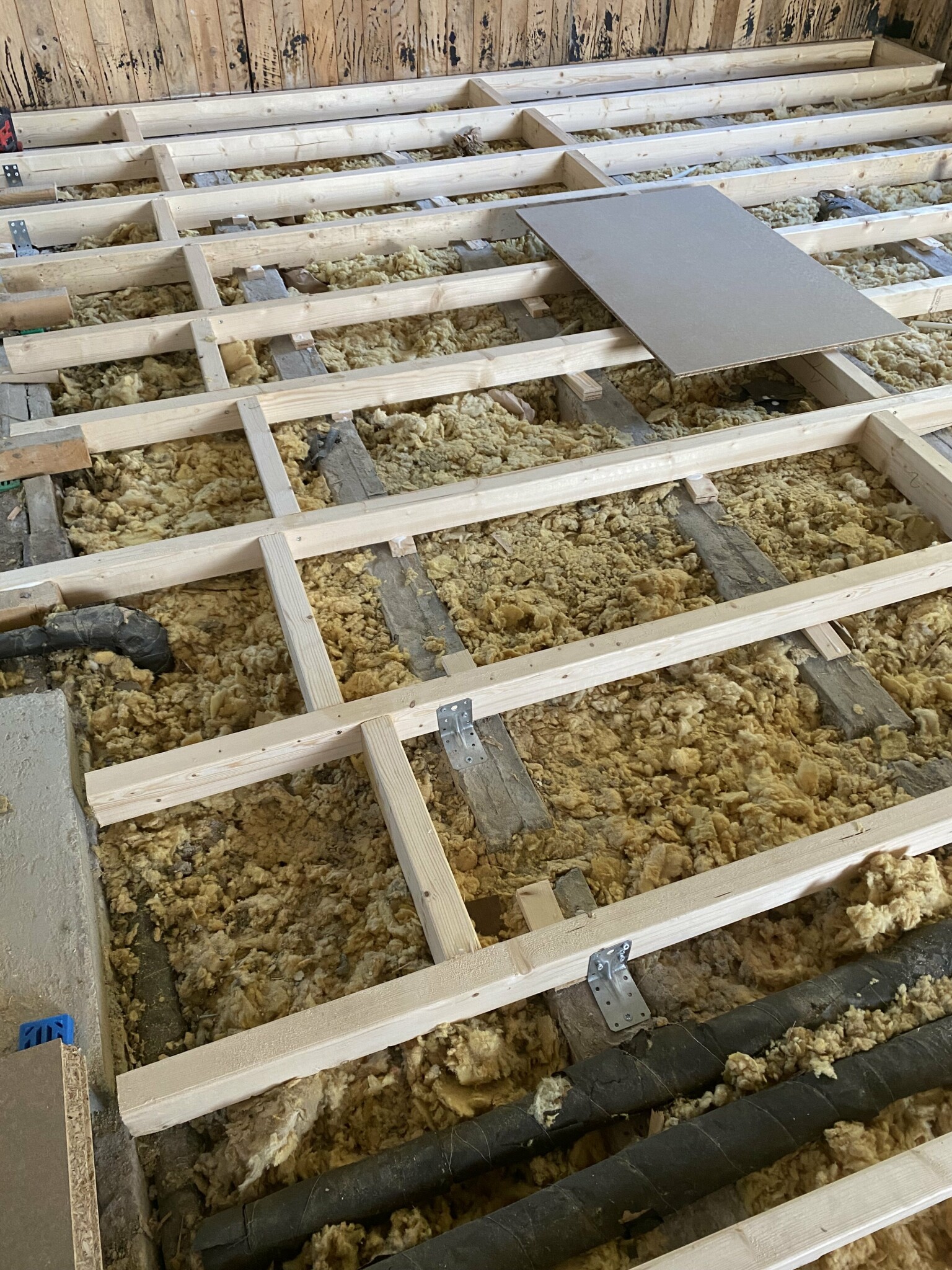
Old joists remain:
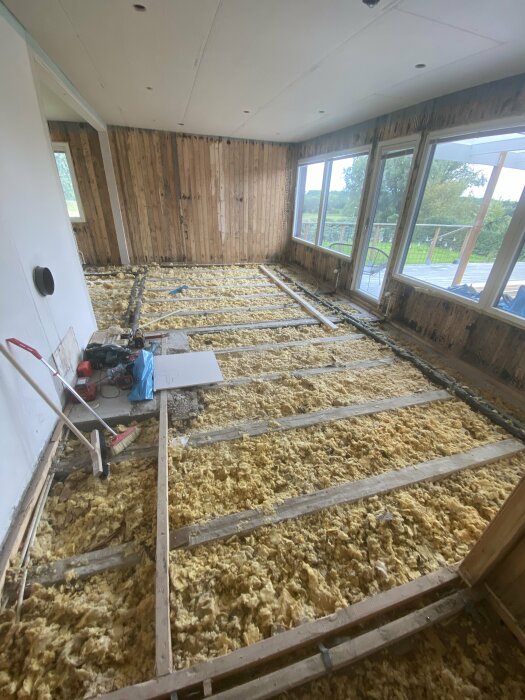
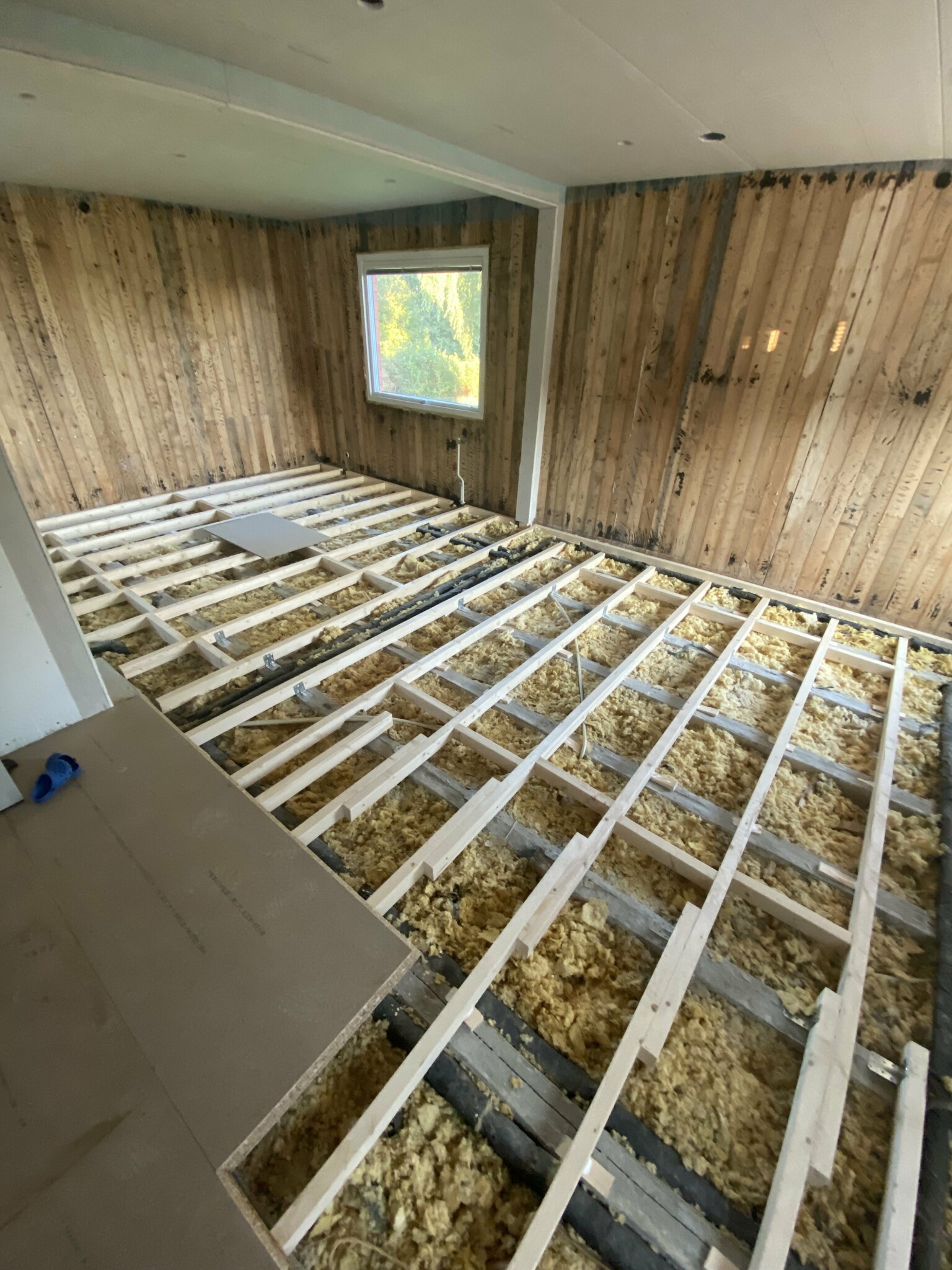
Joists removed plus some insulation:
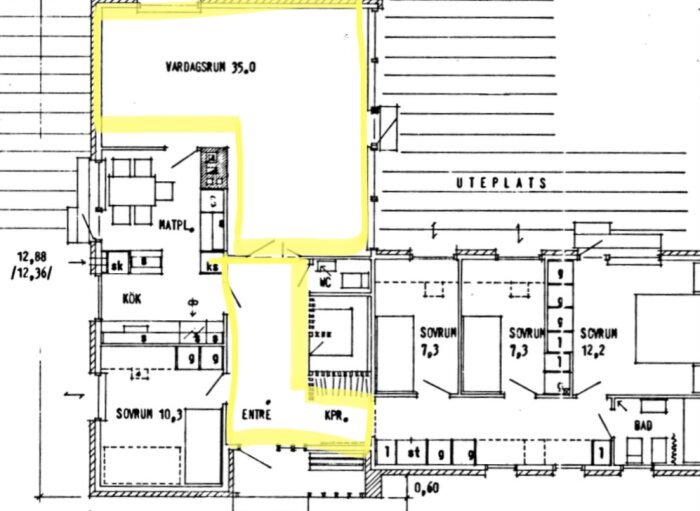
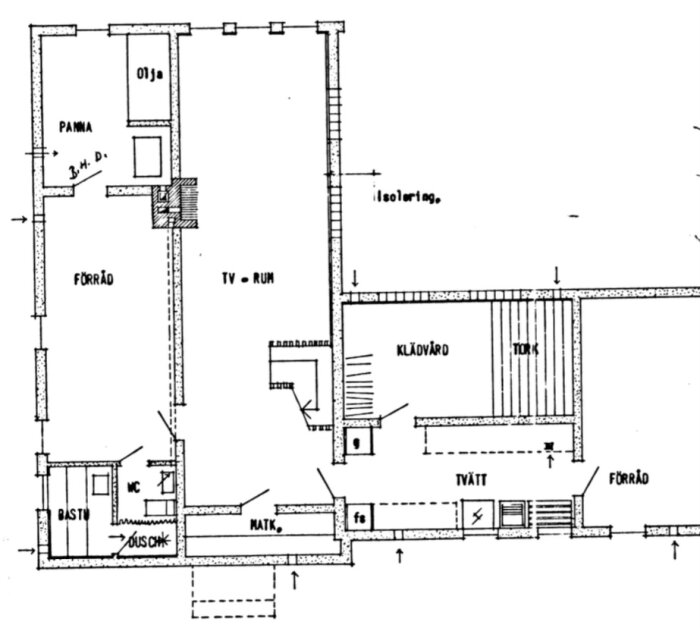
Floor plan where the yellow is the area being renovated. There is a load-bearing wall underneath where the living room is at its widest. The floor plan is still according to the original.
Then I understand, and skumbetong sounds like a good alternative! If K approves it, make sure to tape and plastic against the outer wall and not cast directly against it.
Vi har ett Myresjö enplanshus med källare från -67. För tillfället pågår renovering där golv, vägg och tak ska få nya ytskikt i entré och vardagsrum. Vi har stött på ett par hinder på vägen och har ett nytt beslut att ta.
Det skulle sättas golvspånskivor på befintliga reglar men befintliga reglar dömdes ut av byggaren och ville lägga nya reglar. Nu är reglarna bortrivna och när de kollade på att lägga de nya så kommer de fram till att det blir för tidskrävande att få det bra pga större nivåskillnader i betongbalkarna. Då får vi förslaget, till ingen extra kostnad, att ta in företag som fixar ca 15 cm skumbetong + 3 cm flytspackel istället för att regla och spånskivor. Totalt blir det ca 80-100 kg/kvm.
Har pratat med VVS och elektriker och det ska inte var någon fara att gjuta in rör enligt dem. Helst hade vi velat byta ut befintliga rör men budgeten har redan sprungit iväg... Tänkte vi kunde ta in fler åsikter om detta. Om något händer framöver så blir det att bila upp golvet men å andra sidan så finns det då inga organiska material och vattnet sprids inte lika lätt.
Sedan är vi lite oroliga med vikten då det totalt är 4-5 ton på 35 kvm. Vi har kontakt med konstruktör men saknar ritningar på golvbjälklaget. Väntar svar för tillfället.
Vi har pratat med golvläggare om att fixa reglar och spånskivor men det blir dyrare. Anlitad byggare verkar ok med detta alternativ också då detta projekt har blivit ett huvudbry för honom med. Frågan är vad som är bäst långsiktigt, regla + spånskivor eller skumbetong + flytspackel?
Gamla reglar kvar:
[image]
Reglar bortplockade plus en del isolering:
[image]
Planritning där gult är ytan som renoveras. Finns bärande vägg under där vardagsrummet blir som bredast. Planlösningen är fortfarande enligt ursprung.
[image]
[image]
Kan ni inte lägga lite cellplast innan ett tunt lager skumbetong?
Realized I hadn't updated on how it turned out in the end. We ended up hiring another company that put up the studs and laid the chipboard flooring. The original company then continued with the rest of the work.
Click here to reply
Vi vill skicka notiser för ämnen du bevakar och händelser som berör dig.