NOTE NOTE!! You don't need to point out that this is a risky construction regarding flooding as we are aware of the risks and have taken them into account, the likelihood of something like this happening is minimal, and it's the worst rainfall in 25 years. In the future, we will be more prepared with drain sealing and door sealing which we hadn't received yet. But now to the problem.
When the rain god decided to dump all of Sweden's precipitation right above our city last night in just a few hours, the basement flooded, naturally 1 week after we finished furnishing one of the rooms.
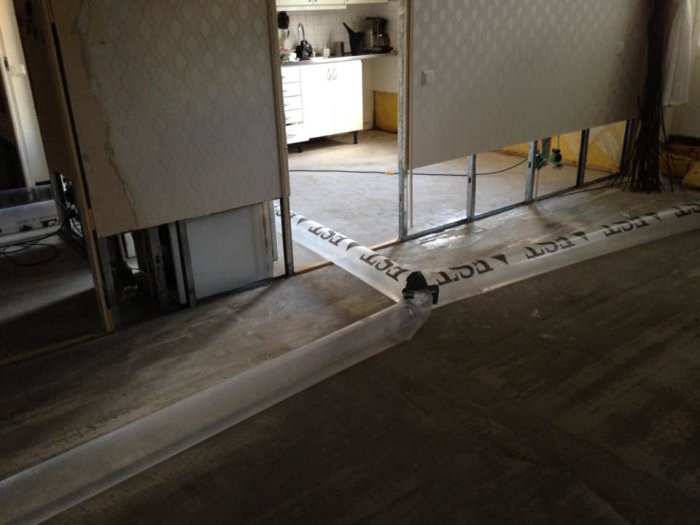
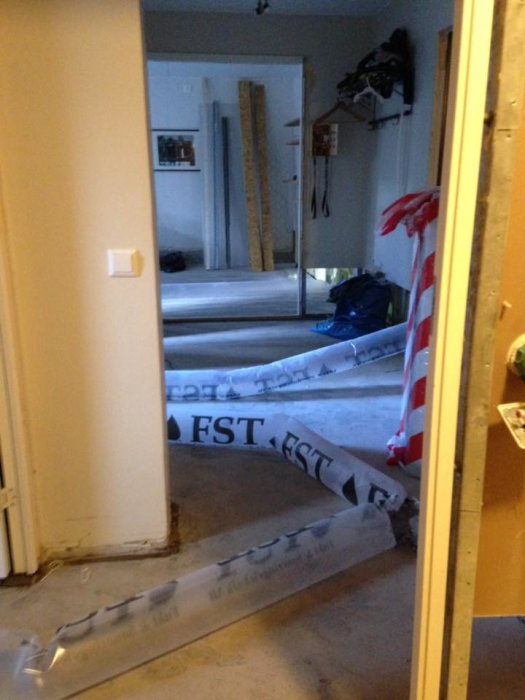
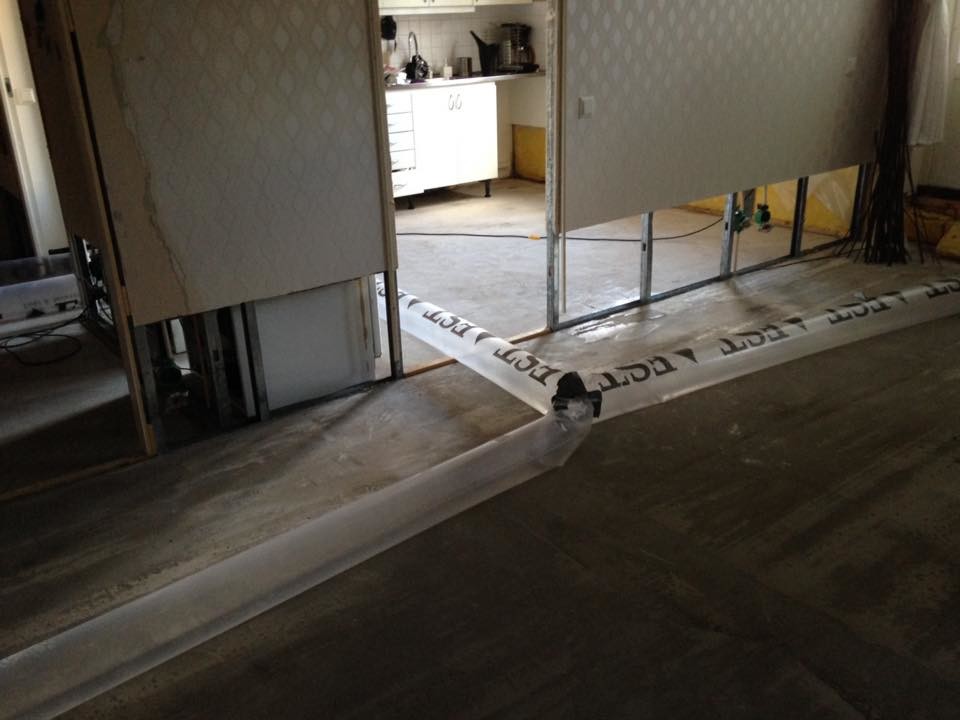
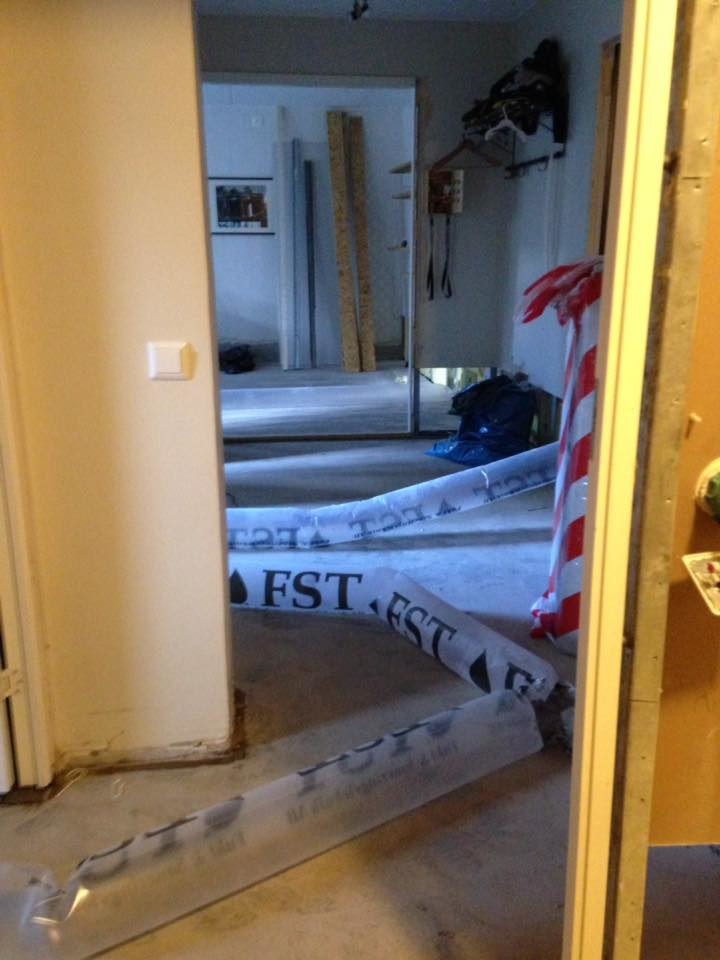
In the room, it's framed with steel studs and then 2 layers of plasterboard, and on the floor, there is a textile carpet that can handle basement floors as it breathes. A claim has been initiated with the insurance company, and we are currently emptying water as fast as we can. About 10 cm reached the plasterboard walls and it remained like that for about 18 hours before we had the opportunity to pump out the water. The problem now is that we won't be able to get hold of a heater/dehumidifier as all of Gävleborg has been chasing these throughout the day, so it will stay damp for a while going forward.
What needs to be done with the plasterboard and carpet when it has been like this for so long? I personally feel that it must be replaced as the risk of mold growth on the back of the boards will be very high and probably not possible to sanitize this to 100%, or what do you experts say about this? The same question applies to the carpet on the floor which I won't be able to get dry for a while, just superficially scraped but will remain damp throughout anyway.
I'm waiting for the insurance company's claims adjuster to contact me, but I'd like to have some ammunition when it's time to decide what needs to be replaced, so that one doesn't just stand helplessly agreeing to something that in the long run will give me even more problems.
Is it just a matter of drying up with a fan and it will work fine, or do the walls need to be torn down and rebuilt?
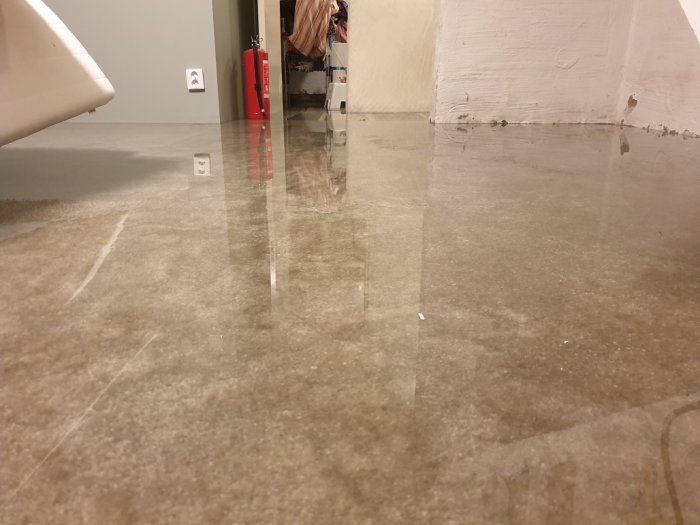
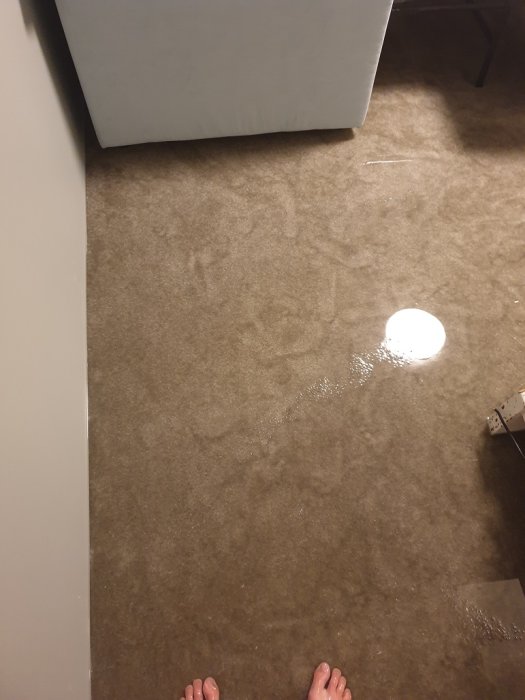
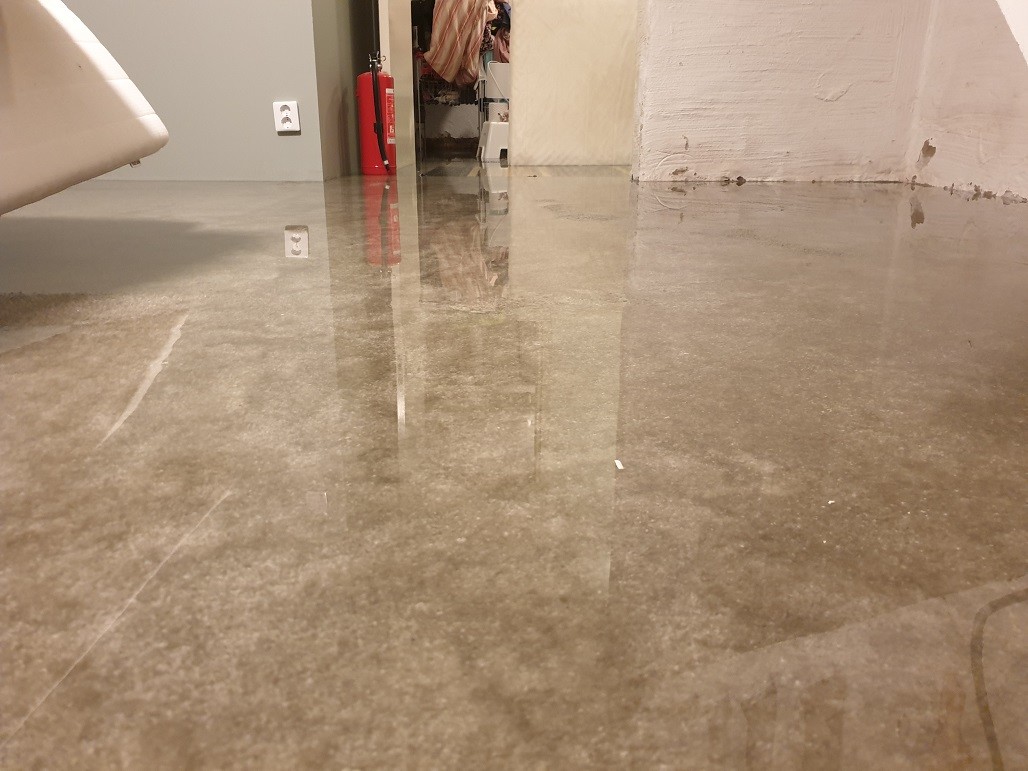
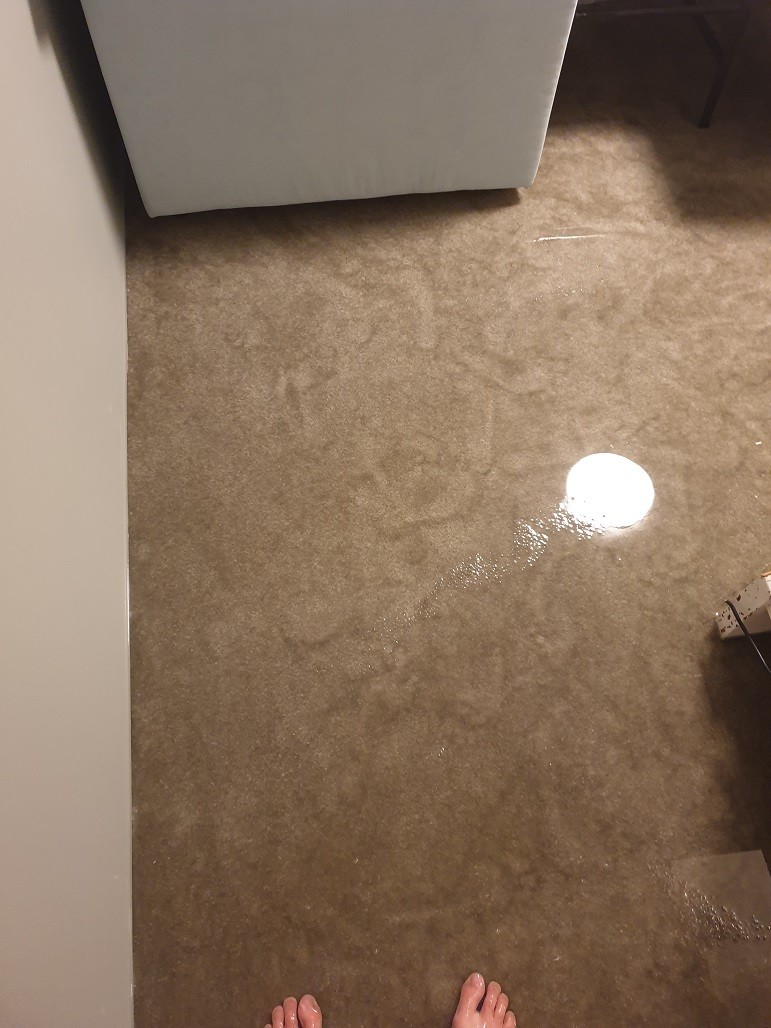
In the pictures below, we've just managed to remove some of the water and there it's about 4-5 cm high, but for about 18 hours there was between 10-15 cm high water.
Sympathize with you. I agree with your analysis - I don't think it's enough to dry out, but that's probably always the first measure.
We had a basement flood in our previous house and felt that the cleanup company hired by FB was professional. Now, they could come the morning after, so that was a certain difference, but it didn't help as the damage inspector still recommended tearing everything down.
Feel for you. I agree with your analysis - I don't think it's enough to just dry out, but it's probably always the first step.
We had a basement flood in our previous house and found the restoration company hired by FB to be serious. Now, they could come the morning after, so it was a bit different, but it didn't help as the damage assessor still recommended tearing everything down.
Thank you for the response, it's lucky that it's only material things, but it still feels extra sour with the room that just got finished. Hopefully, there will be a good dialogue with both FB and the inspector, and I have nothing bad to say about them as it has sounded positive in the contact I've had with financial assistance for buying pumps and other needed things. But it's always good to check with others before having the major dialogue about compensation for damages that have occurred.
Does the insurance cover water that comes from outside at all?
Yes, since this is an extreme situation, at least all major companies cover this. If there is more than 1mm/minute or 50mm/day of rainfall and it comes up from the drain or through doors/windows/other places, the insurance covers it. However, the deductible might be higher than for "regular" water damage with some companies, but we will see when that discussion comes up.
First: It's unfortunate what happened
Second: The insurance may refuse next time because it is an unforeseen event that is insured. If you think that there might be a flood in the future, the insurance might refuse because it was not unforeseen. This is a situation we haven't had in Sweden before but it's important to sort out. It may lead to some properties not being insurable against flooding.
I sympathize with you! I experienced the same thing in Sep '19. Basement flooded. Guest room had drywall and tile floor. OCAB sanitized the guest room for us and we left the walls intact. This summer we were out of the house for the first time in a long while, and when we came home after 4 weeks, we immediately noticed a damp smell in the basement (traced to the guest room), so now it's just a matter of biting the bullet and tearing out the drywall in the guest room and plastering and painting. I wouldn’t put up new drywall and would consider tile floors if I were in your shoes. You can furnish with small rugs on the floor and paintings or textiles on the walls to create a cozier environment.
By the way, according to the guys at OCAB, it would take between 6 months and a year before we got normal moisture levels in the walls and floors again. Reasonable? Maybe an argument for not enclosing the walls with drywall again?
Edit: In hindsight, we should have reacted to what they said and realized it would take a while for the walls and studs (in wood) behind the drywall to dry out and torn down the walls back then.
My dishwasher stopped pumping out water but continued to pump in, resulting in about 40cm of water in the machine when I opened the door. The relatively small amount of water resulted in having to tear up all the floors and cut the drywall 30-40cm up across the entire apartment, dry it out, replace the carpet in the stairwell, and tear out the neighbor's bathroom. Water has a knack for finding its way...
There has started to be a smell in the basement, not mold though, but a musty smell from old water type, so it will probably really set into the carpet and walls as it will take time to get someone here.
Still haven't gotten hold of a case handler at the insurance company, so I don't know how it will turn out, but I'm sitting and thinking a bit about possible measures depending on what they agree to.
If all the gypsum and the like has to come down and be replaced, it will be quite a few work hours and material in price. Do I have to restore as it was, or can I get the money "in cash" instead to match an offer from a company to tear/build new to resolve things myself or in a different way, or do I have to let the company do the work if that's the case?
We are actually considering tearing everything out anyway and hiring a firm to plaster the walls instead, and if so, to use the insurance money to cover part of that cost.
Tear down all drywall that has been in water 60 cm up from the floor. Rip out the carpet. You can also remove door frames.
If the floor is painted under the carpet, you can rent a flex and sand it down to start the drying process.
Save everything so it's available if the insurance company wants to see.
OCAB has been here and set up a fan to start drying the basement. They also tore out the carpet and threw it away, but we are holding off on the walls since they didn't have time to do more than get the fan running. We'll see what they say about the walls when they return in a few weeks for an inspection if parts can be torn down or if all the gypsum has to be removed.
Tear down any drywall that has been in water 60 cm up from the floor. Tear out the carpet. You can also remove the door frames. If the floor is painted under the carpet, you can rent a flex and sand it down to begin drying.
Save everything so it is available if the insurance company wants to see.
Normally, it's wise to have non-urgent actions sanctioned by the insurance company to ensure compensation will be paid out.
Sitting and thinking about another thing. Even if it would be possible to just cut away the damaged part at the bottom about 20cm up, there will still be issues joining a new sheet of drywall there since there isn't a board at the back, only steel studs, and making it rigid so there won't be horizontal cracks in the future due to vibrations doesn't seem possible, right?
Getting a horizontal stud that will be rigid doesn't seem like it can be solved in a super effective way either, does it?
You can splice with an OSB or ply piece behind the drywall where it is cut up, so that it is stable and no cracks occur.
You should cut up the walls, there will be growth, and it has probably already started. I've dealt with water damage quite a bit, and it is fascinating how quickly growth appears in the walls.
You can splice with an OSB or plywood piece behind the plaster where it cuts up, so you have it stable and no cracks occur.
You should cut up the walls, there will be growth and it has probably started already. I have dealt a bit with water damage, and it is fascinating how quickly growth starts in the walls.
But I don't want wood in the basement, hence the steel studs. Plasterboard is a risk construction in itself, but wood is worse and I don't want that in the walls.
Vi vill skicka notiser för ämnen du bevakar och händelser som berör dig.


mexitegel said:
Feel for you. I agree with your analysis - I don't think it's enough to just dry out, but it's probably always the first step. and it takes a lot of time to put it right.

Peter_Henry said:
You can splice with an OSB or plywood piece behind the plaster where it cuts up, so you have it stable and no cracks occur.