I'm about to install an HEB 140 beam on glulam pillars. I've read about potential risks with mixing wood/steel due to how they expand with temperature. But the span is about 2.3 m, so it should be negligible.
Anyway, does anyone have tips on how to fix the steel beam on the glulam pillars?
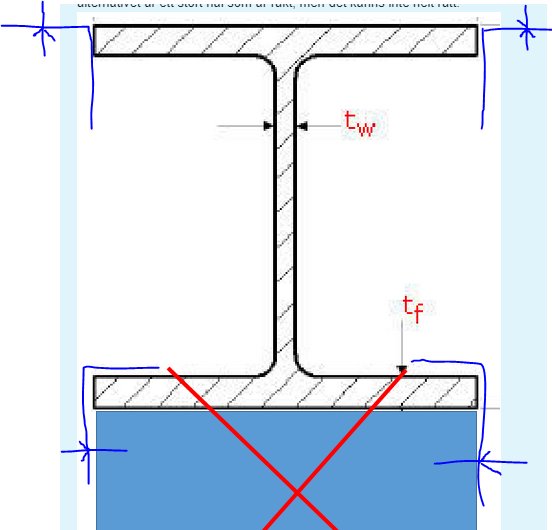
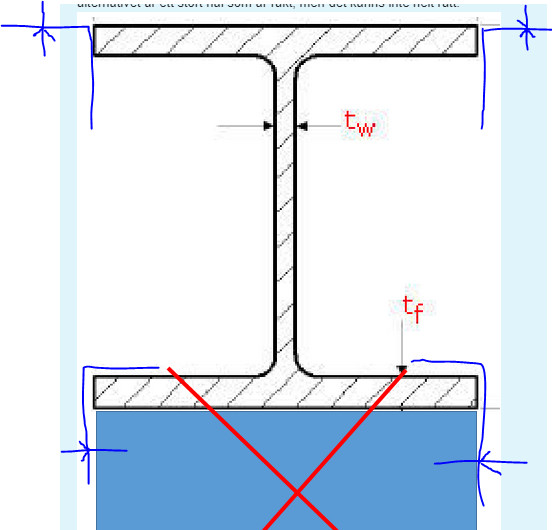
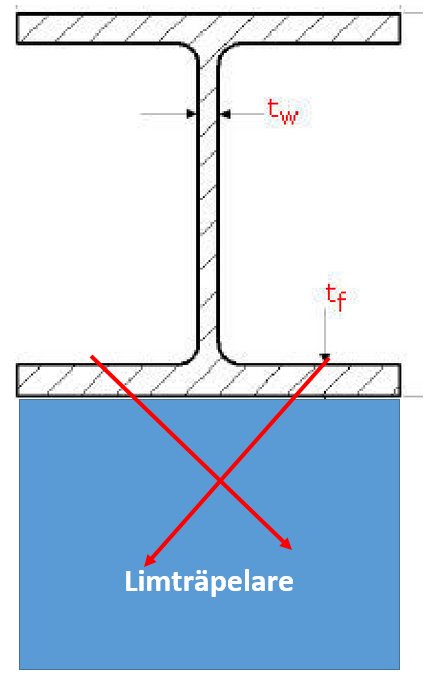
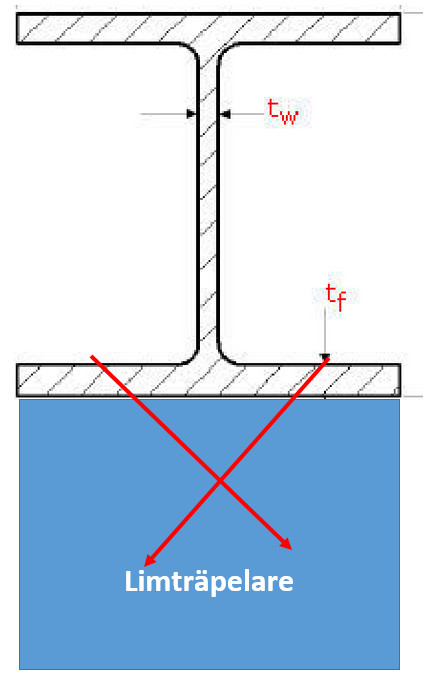
I initially thought of drilling a hole on each side at each end and then screwing in a screw on each side. But I realize it will be very difficult to drill into the steel at an angle, the alternative is a large hole that's straight, but that doesn't feel quite right.
I've seen some alternatives where flanges are welded onto the beam, but that requires welding and having full control of the measurements. It can of course be arranged, but I would probably prefer a solution where I can lay up the beam and then fix it myself. As mentioned, it's not a giant; HEB 140 2.3 m should weigh about 70-80 kg.
Glued-laminated timber 90x90 screwed together with a 45x95 stud, so 135mm.
From a structural perspective, the glued-laminated pillar should suffice. The 45x95 stud is just to provide a wider support surface and a little extra "meat".
If everything has to be clear afterwards, you can fasten Bmf brackets in the beam that you screw to the pillar. Another option is to either weld a rod underneath or on top and attach a bolt that sticks out, then create a corresponding hole in the pillar that the rod/bolt fits into. Fill the hole with polyurethane glue before assembly.
If everything needs to be attached afterward, you can fasten a Bmf bracket to the beam, which you screw to the column. Another option is to either weld a pin underneath or drill and install a bolt that sticks out and then drill a corresponding hole in the column that the pin/bolt fits into. Fill the hole with polyurethane glue before assembly.
What type of Bmf bracket are you thinking of then? The only thing I can think of is a metal plate or something similar, but I'm doubtful about how to attach it to the steel beam.
As you say, I could drill a hole in the flange, insert a bolt with a nut that extends a bit, and then glue it in place. But how stable is it then? You don't get the same direct "confirmation" that it's secure as with a screw joint But it is quite a "simple" solution.
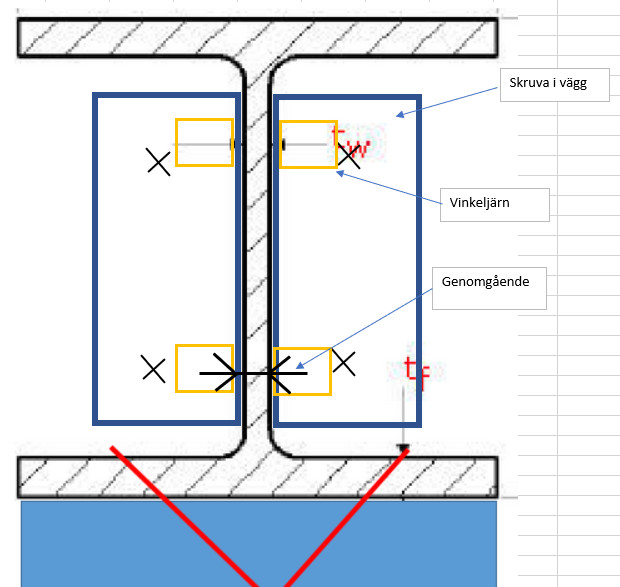
Should the beam be pressed up against the floor structure? Then you could control the top flange with angles against the floor structure. You could also use angles at the underside of the support. How thick is the wall to which the beam connects?
Should the beam be pressed up against the floor structure? Then you could control the top flange with angles against the floor structure. You could also use angles at the bottom of the support. How thick is the wall that the beam connects to?
[image]
Thanks!
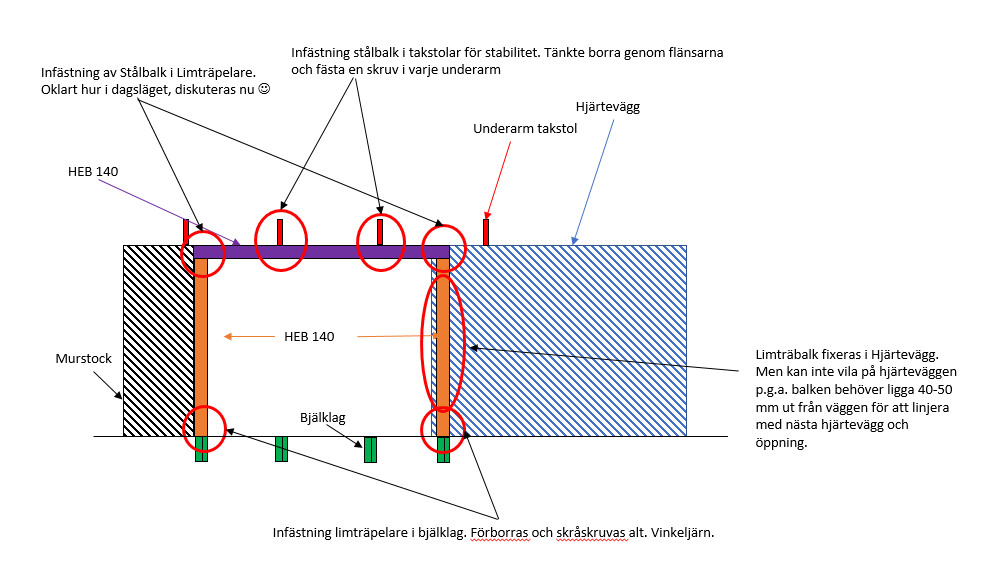
The angle irons at the top will in that case be attached to the tongue and groove boards which are nailed onto the rafters.
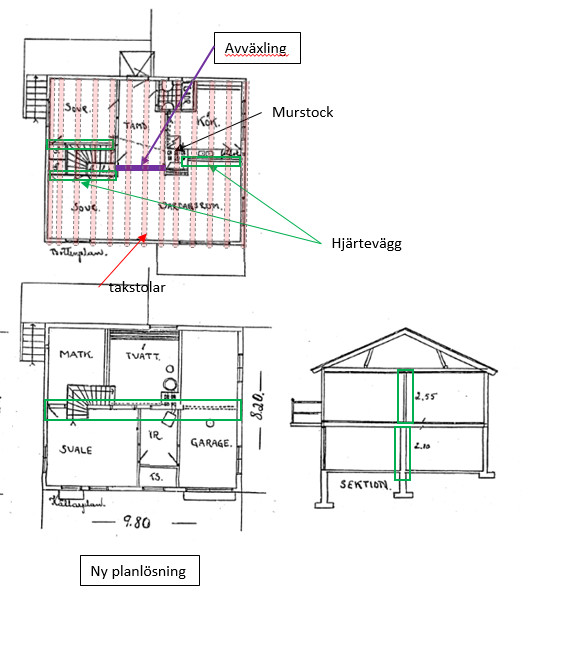
The angle irons at the bottom would fit nicely. The column on one side will be attached to the hjärtevägg, on the other side there's a chimney stack so it will be fastened to the beam for the floor structure resting on the basement wall's hjärtevägg.
So, in summary:
* Column at hjärtevägg - anchored to the hjärtevägg and floor structure
* Steel beam - anchored (what we are discussing ) in both columns. Also, I plan to drill holes in the top flange and screw a screw up into each rafter, a total of 2.
* Column at chimney stack - anchored to the steel beam and floor structure
Do you have an overview that shows how the beam goes and where the column is located? How are they supported otherwise, is there any direction that is locked?
You can always drill the holes in the beam's bottom flange before assembly, making it easier to drill and then install a screw from above when it is resting on the column. But the environment provides information on how stiff the attachment needs to be.
I suggest you remove the råspont locally so that the angles are attached directly to the roof truss.
Further examples of how you can lock it at the end.
Do you have an overview showing how the beam runs and where the column is located? How are they supported otherwise, any direction that is locked?
You can always drill the holes in the lower flange of the beam before installation to make it easier to drill and then mount a screw from above when it is on the column. But the surroundings provide information on how rigid the attachment needs to be.
Here is a picture of how I planned to do it
And here is the actual placement in the house. (don't mind the names of the rooms, the kitchen and bedroom (by the living room) have switched places).
[image]
I suggest you remove the sheathing locally so that the angles are attached directly to the rafter.
Additional examples of how you can lock it at the end.
I have looked and looked but don't really understand. What are the blue rectangles? And the upper angle irons are probably meant to be screwed into a beam that stands "behind" the steel beam? It doesn't quite look like that. Check my other post that hopefully explains how it looks
But regarding opening up the sheathing, I have shavings in the attic so there's a risk that a lot of insulation will fall down if I cut through the sheathing. But that can be resolved, but I don't really see what I gain from it? The screw I drive through the sheathing will also go quite a bit into the lower arm.
With that solution, the beam will not be subjected to much more load at the transition between the beam and column than vertical loads. I think it's sufficient if you can get a screw from the beam into the column. If you then place a screw through the top flange into the rafters, it will be perfect. The columns should be locked, i.e., securely fastened in the walls they are against.
With that solution, the beam won't be subjected to much more load at the transition between the beam and the pillar than vertical loads. Then I think it suffices if you get a screw down from the beam into the pillar. If you then place a screw through the top flange into the rafters, it will be perfect. The pillars should be locked, i.e., fastened stably to the walls they are against.
Thanks, yes, I actually feel calm that everything should be stable. But you know, belt and suspenders. My thought, however, is whether I can manage to screw in a screw in the flange. I think that even if I drill a hole in the flange from underneath, it would be a tricky angle with the screwdriver and screw afterward.
Moreover, the pillar by the chimney isn't attached to any wall. That's why I plan to fasten the HEB-beam to the rafters and the top of the pillar. And then the pillar to the floor joist. Then it should be locked in all conceivable directions
I would probably have done as you planned, but drilled perpendicular into the steel beam (from below). Pre-drill the glulam column before installation and use screws with hex heads like French wood screws in a suitable dimension so you can reach to tighten the screw with a regular ratchet instead of a screwdriver.
What is the problem?
Use a center punch, drill gradually with larger drill bits, and fasten with a French wood screw or similar.
Why even screw at an angle?
The pillar is only supposed to take the vertical load from the beam. I wouldn't even screw it especially tight and would drill larger holes than the screw if you're worried about length changes due to temperature.
Vi vill skicka notiser för ämnen du bevakar och händelser som berör dig.


Matti_75 said:
If everything needs to be attached afterward, you can fasten a Bmf bracket to the beam, which you screw to the column. Another option is to either weld a pin underneath or drill and install a bolt that sticks out and then drill a corresponding hole in the column that the pin/bolt fits into. Fill the hole with polyurethane glue before assembly. But it is quite a "simple" solution.