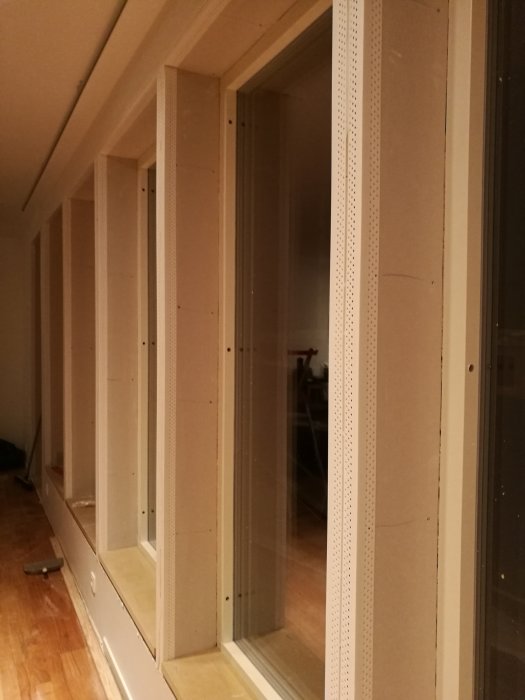
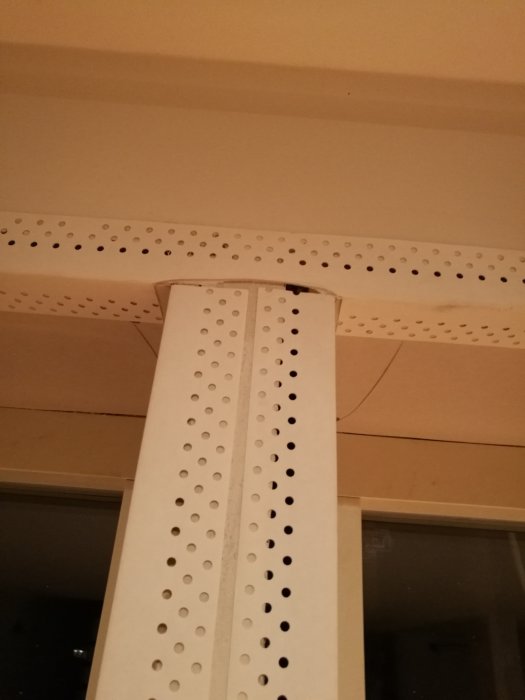
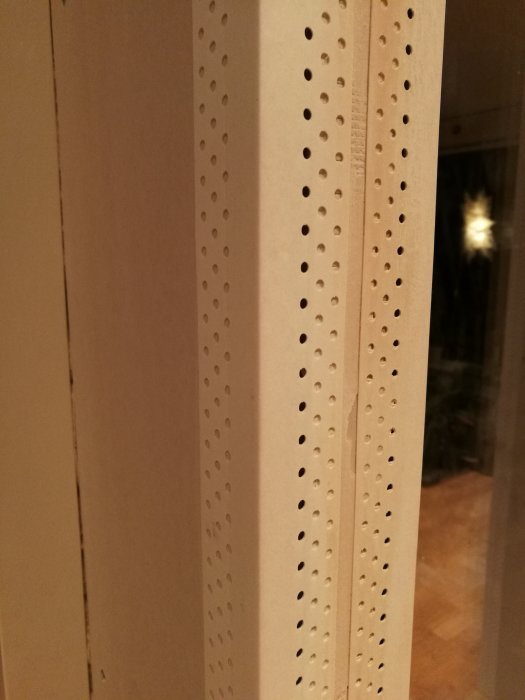
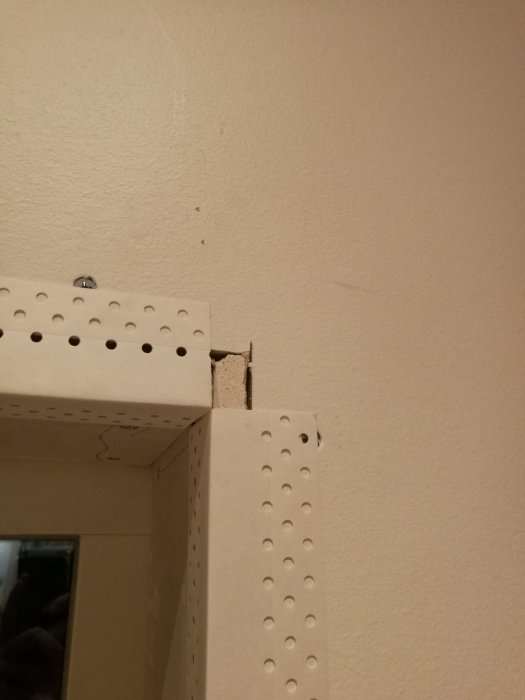
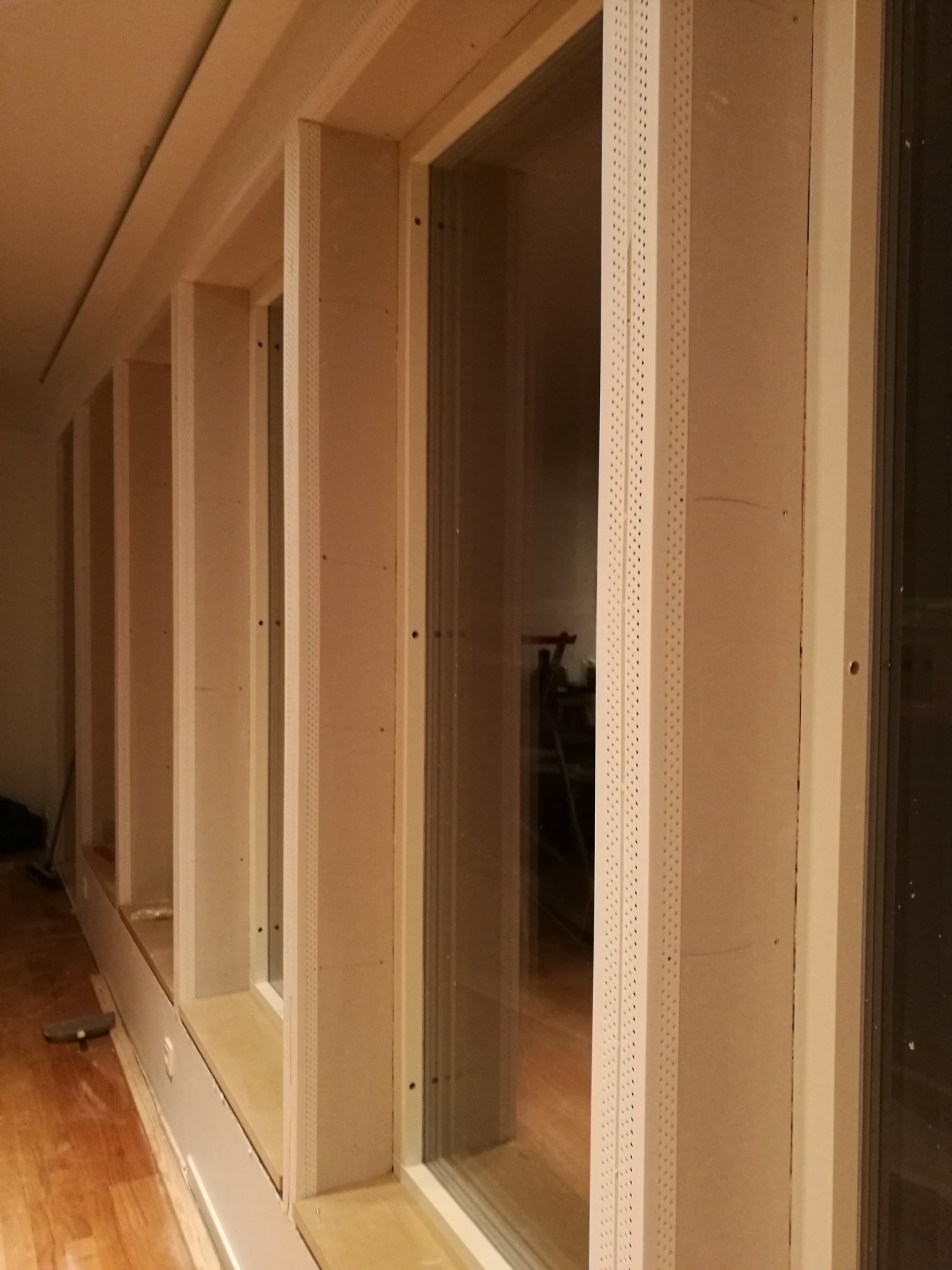
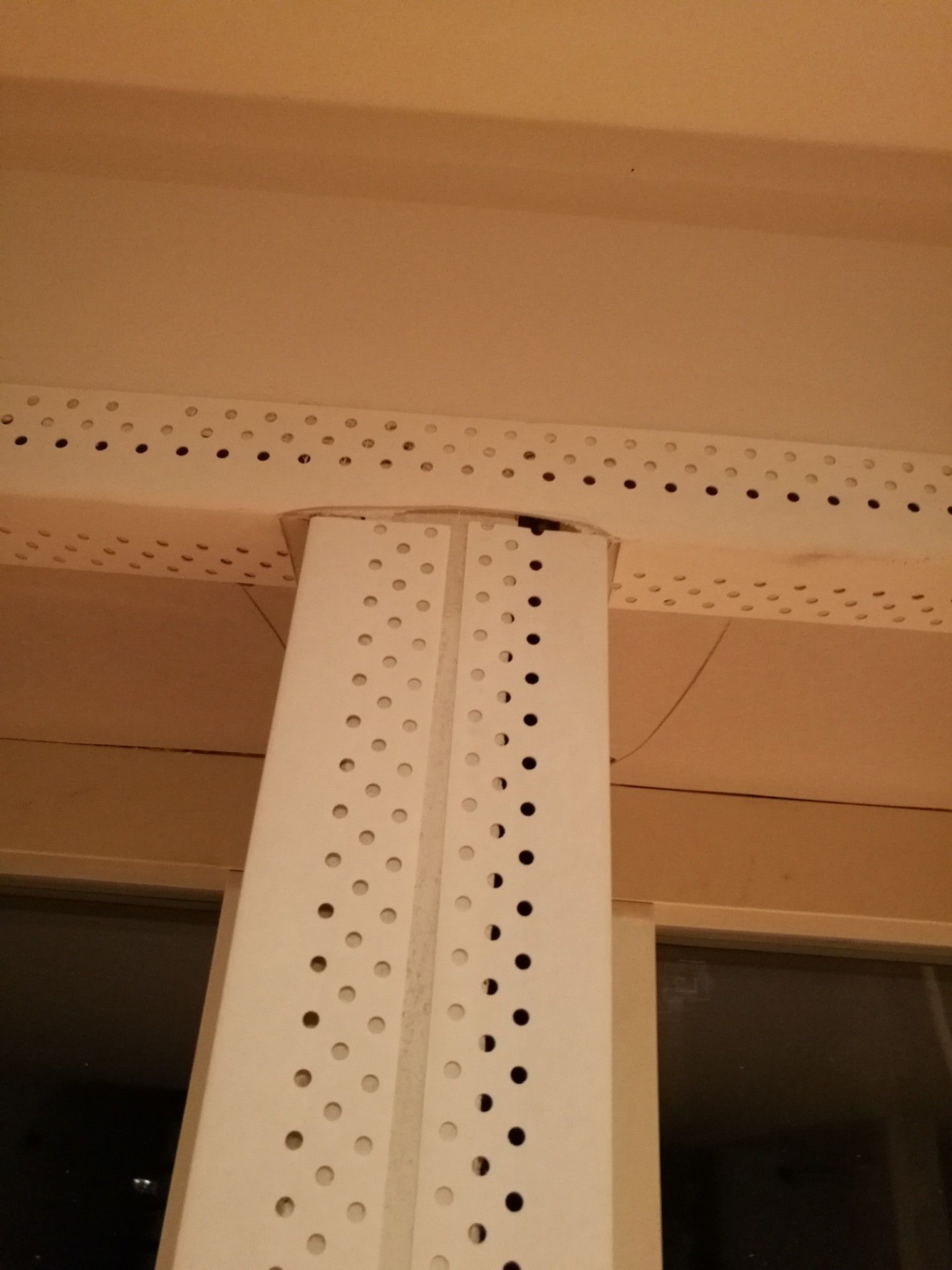
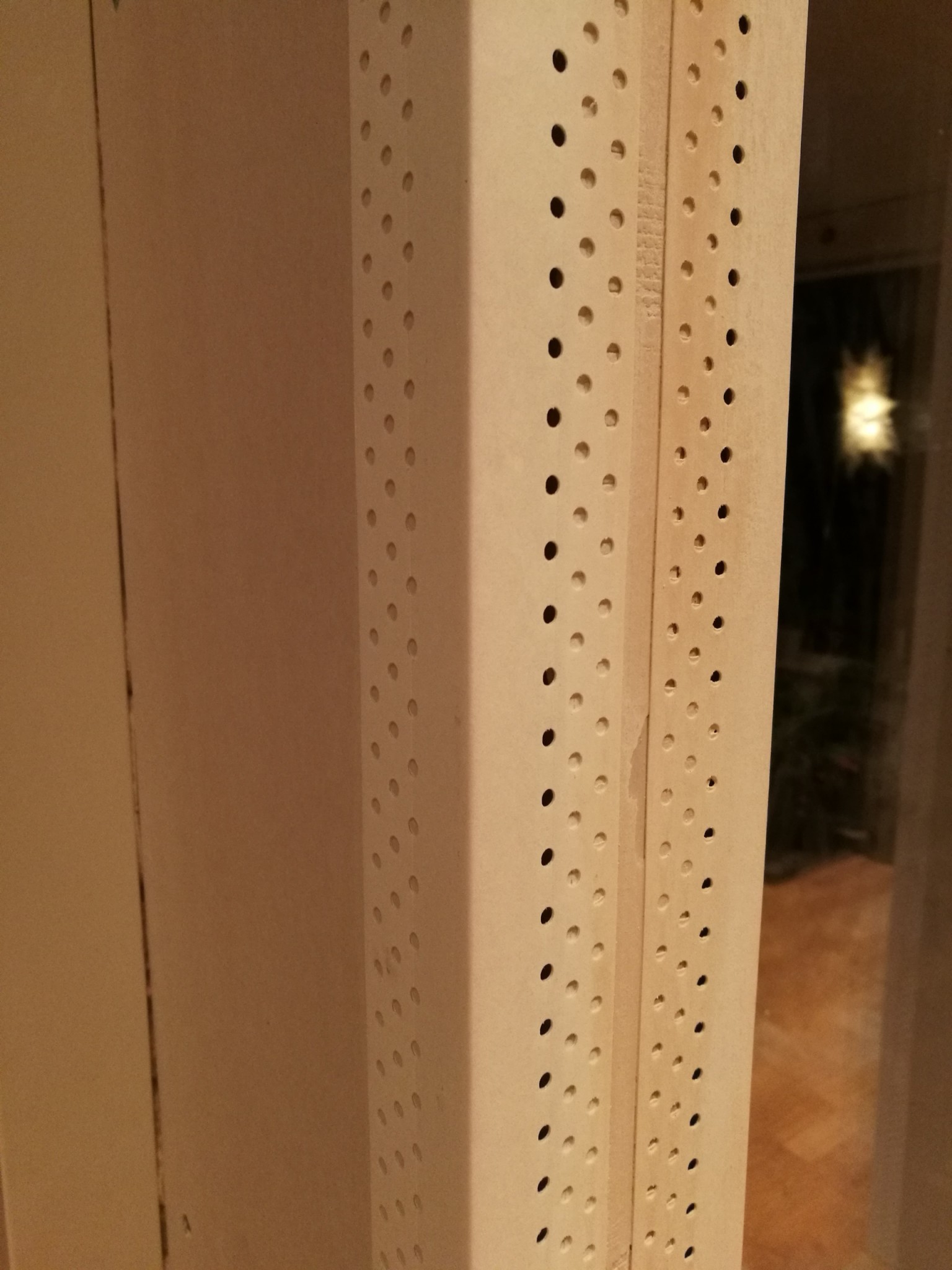
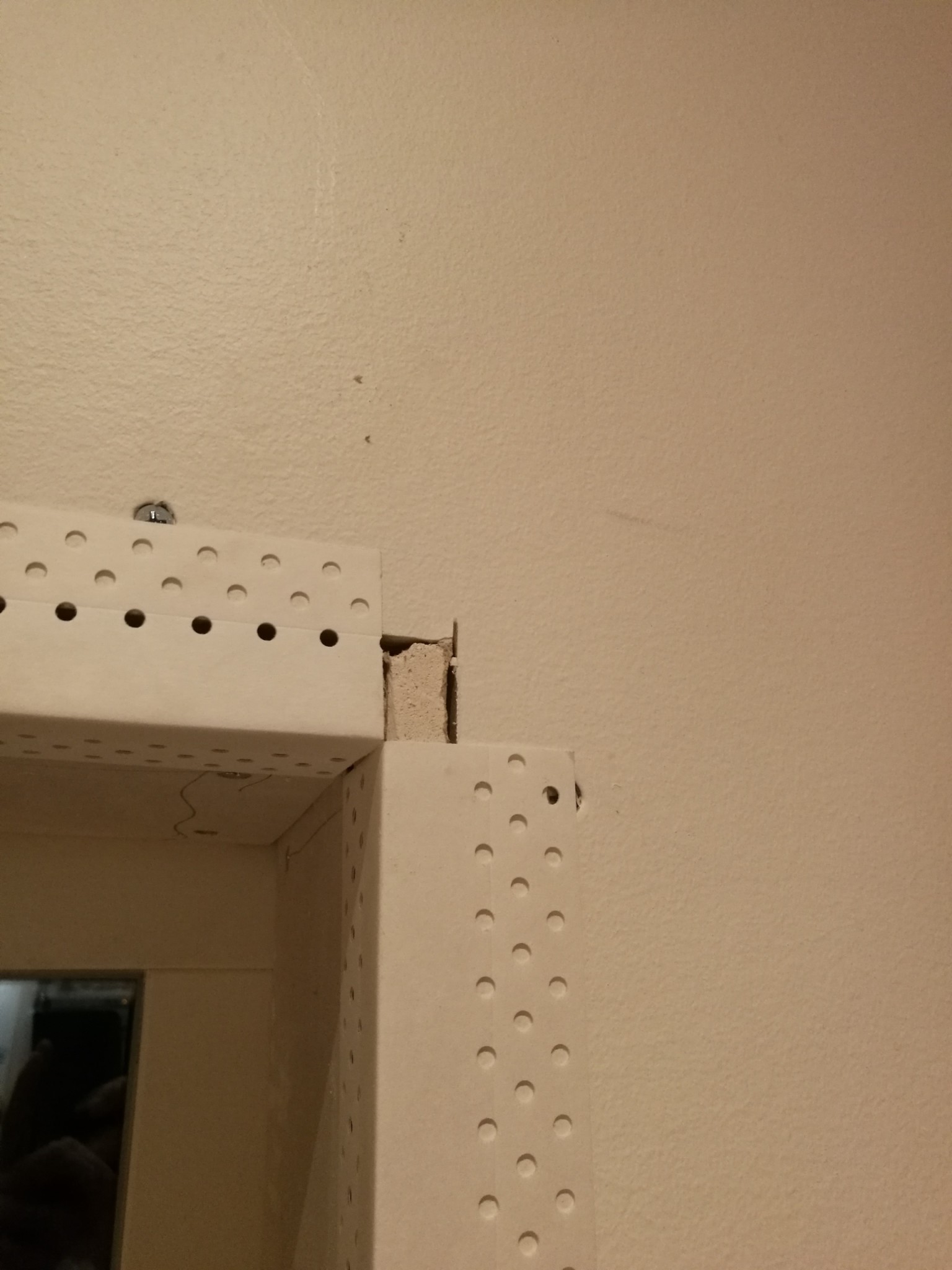
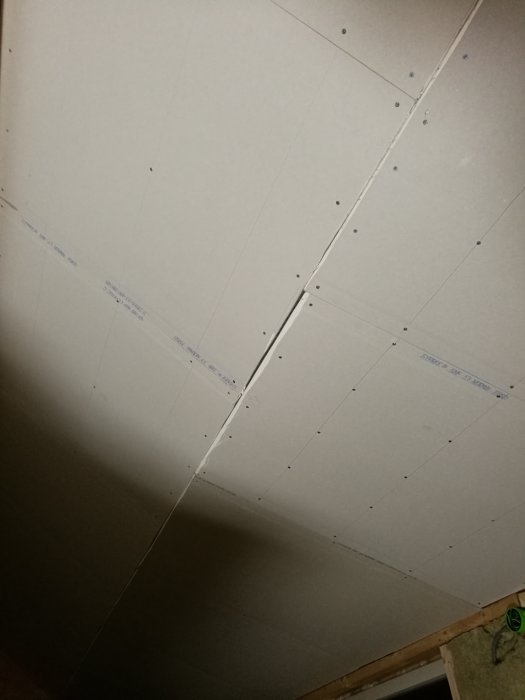
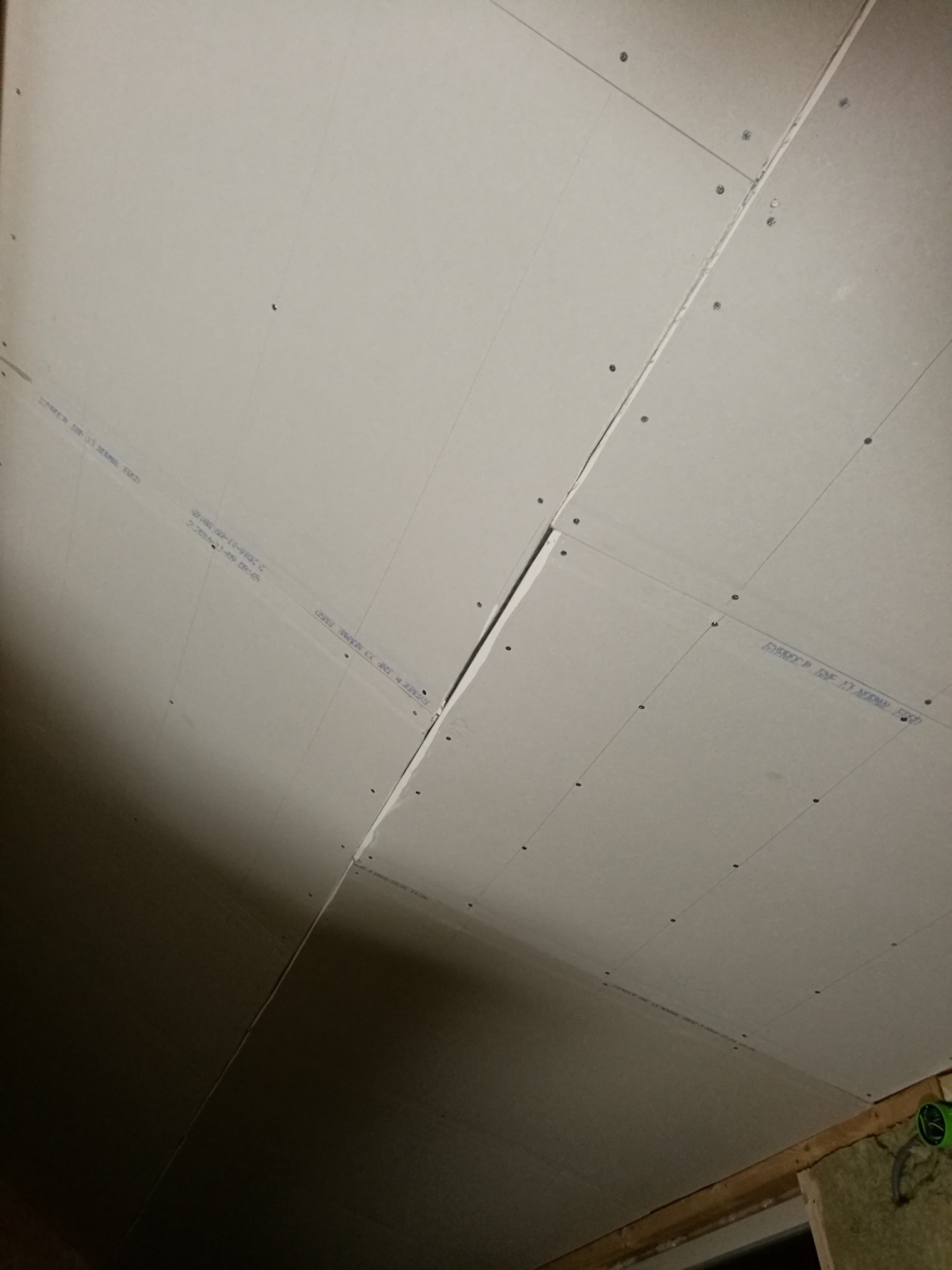
We have a total of 12 tall windows (21-module) and doors (25-module) where we have asked the carpenters to install drywall corners during the window replacement. The corners are reinforced with AquaBead but the question is how best to make this look good without hiring a painter. Glue paper tape over the perforated parts and then spackle over? Or spackle + microlit? Or just a lot of spackle?
I had filled the holes. Regular filler works great, spread it over the holes and smooth the edge against the wall with a wide putty knife, and it looks amazing after painting.
Ok, also mask against the windows so the frame stays fresh then I guess. Is there any filler that is particularly suitable and is there anything to avoid?
Start with a medium filler, if you want it extra fine then finish with a round of fine filler. It will probably take three rounds of filler before it's good.
Ok, also mask against the windows so the frame stays fresh, I assume. Is there a filler that is especially suitable and is there anything you should avoid?
It's not too tricky to mask when you're filling. The filler resolves with water, even when it's cured. Most often you can just peel it away, and at worst you can scrub with a sponge. Save the masking tape for when you're painting.
Some tips to reduce dust:
When there have been just a few spots to sand, I've been lazy and scrubbed with a wet sponge or dishcloth instead. Probably against all the rules, but it has worked well.
Mirka has a very good system called Abranet. You sand with a mesh on a special sanding block that you connect with a hose to your shop vacuum. There's a long thread praising sanding gypsum joints with Abranet.
Aha, clever gadget. If you already have metal and a grid under the plasterboard on both sides of the angle, is the metal version of the tape still necessary? I got a tip about Gypsum Naturgips. Is it advisable?
I haven't tested it myself, but I imagine that it's significantly easier to achieve a straight and neat edge with a sheet/strip like the one StefanN recommended than to try and plaster it freehand.
I have not tested it myself, but I imagine it's significantly easier to achieve a straight and neat edge with a sheet/strip like the one StefanN suggested than trying to plaster it freehand.