
I have an old closed staircase from 1926 that creaks a lot. I'm an enthusiastic amateur, so I've tried to read up on what causes the creaking. As I understand it, it's the gaps between the treads and risers that create the creaking.
What is the best solution? As mentioned, the staircase is very old and nailed, and as you can see in the pictures, there are very large gaps in some places. Should I glue wooden wedges from underneath?
I've hammered in every nail that is visible. I read somewhere that screwing is the best, but it doesn't seem like the best solution since the staircase is currently bare wood, and I don't feel like giving myself even more work by painting the staircase.
So what do the experts say? Wooden wedges from underneath the staircase or some other measure?
What is the best solution? As mentioned, the staircase is very old and nailed, and as you can see in the pictures, there are very large gaps in some places. Should I glue wooden wedges from underneath?
I've hammered in every nail that is visible. I read somewhere that screwing is the best, but it doesn't seem like the best solution since the staircase is currently bare wood, and I don't feel like giving myself even more work by painting the staircase.
So what do the experts say? Wooden wedges from underneath the staircase or some other measure?
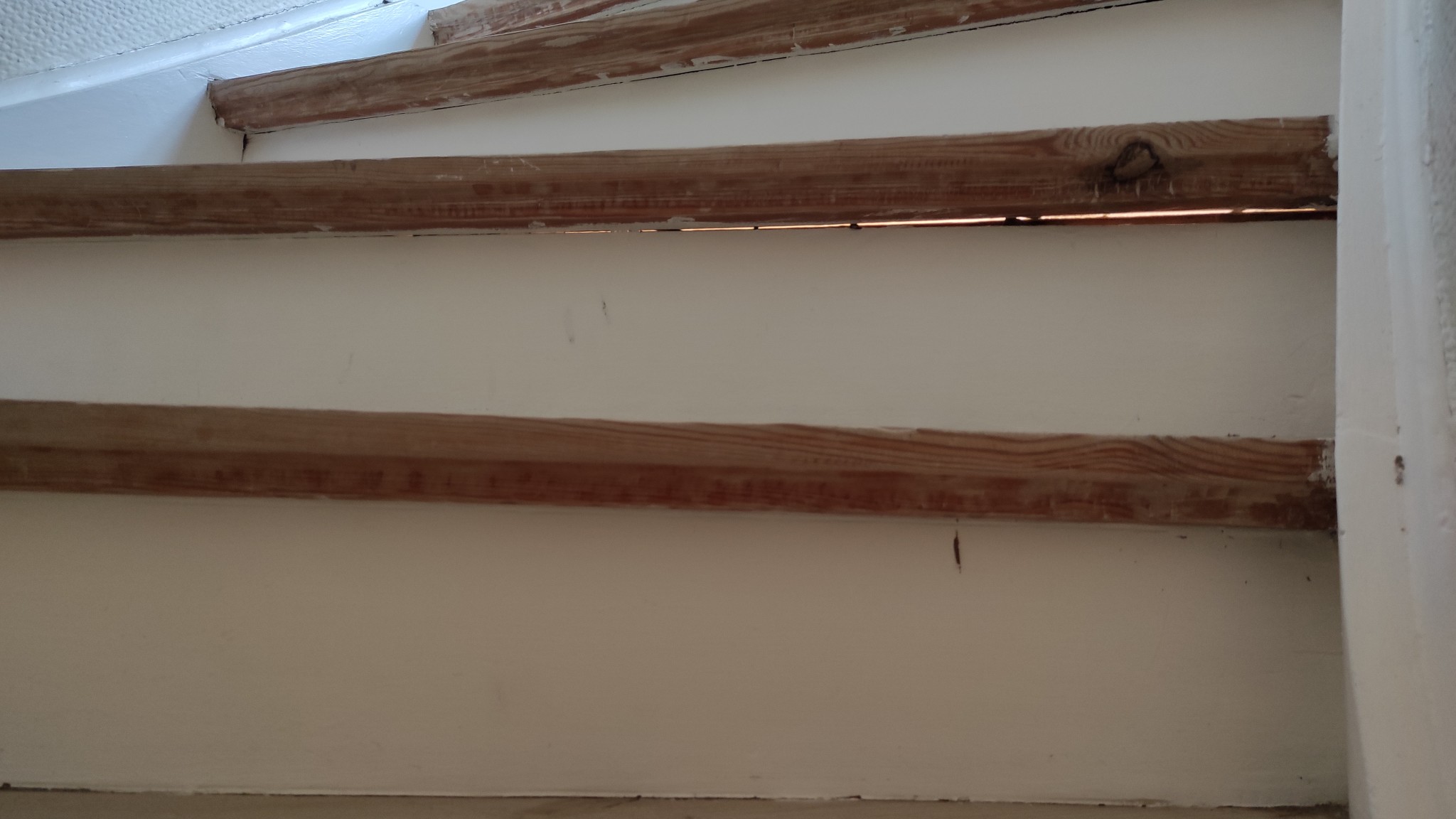
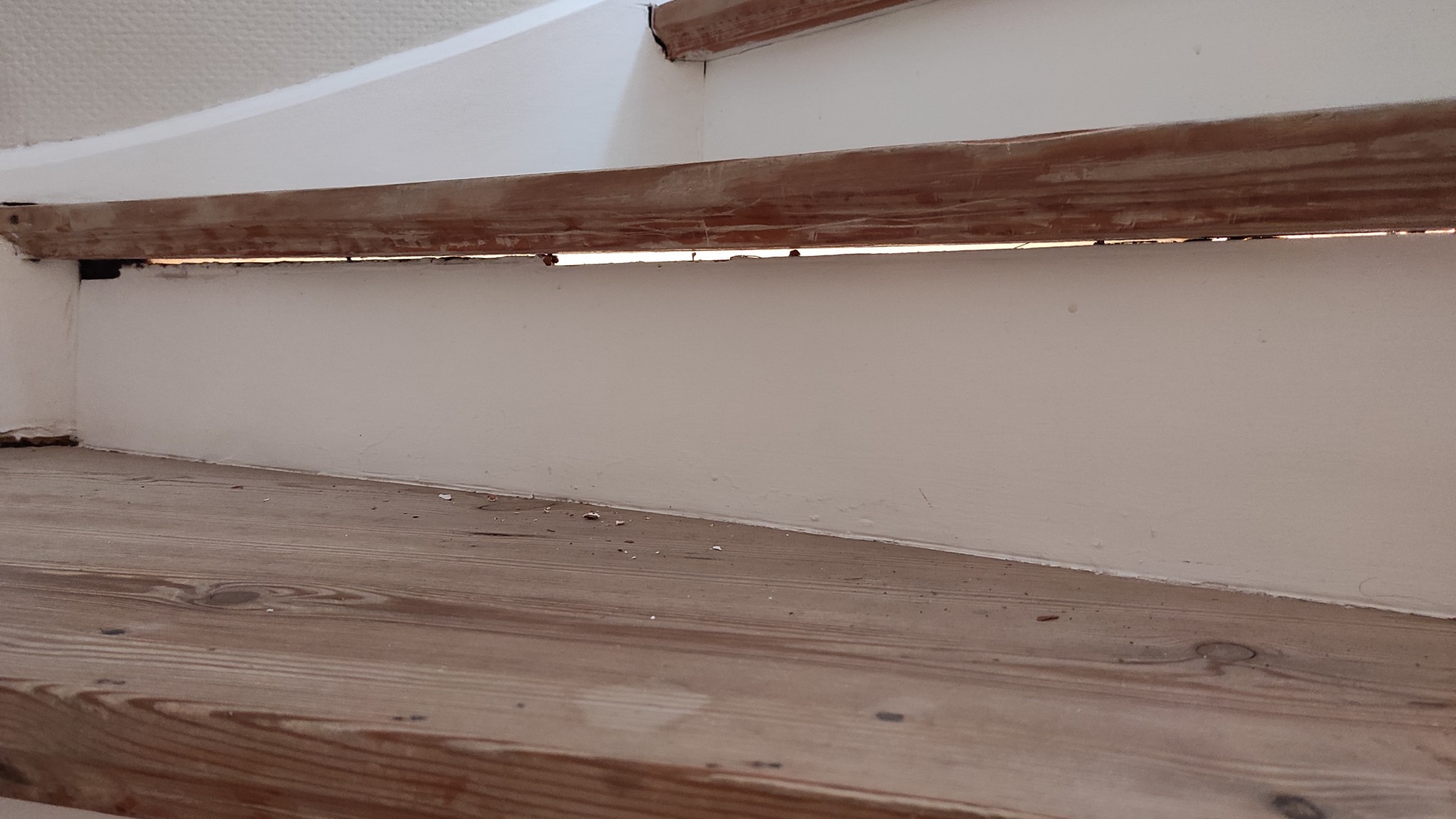
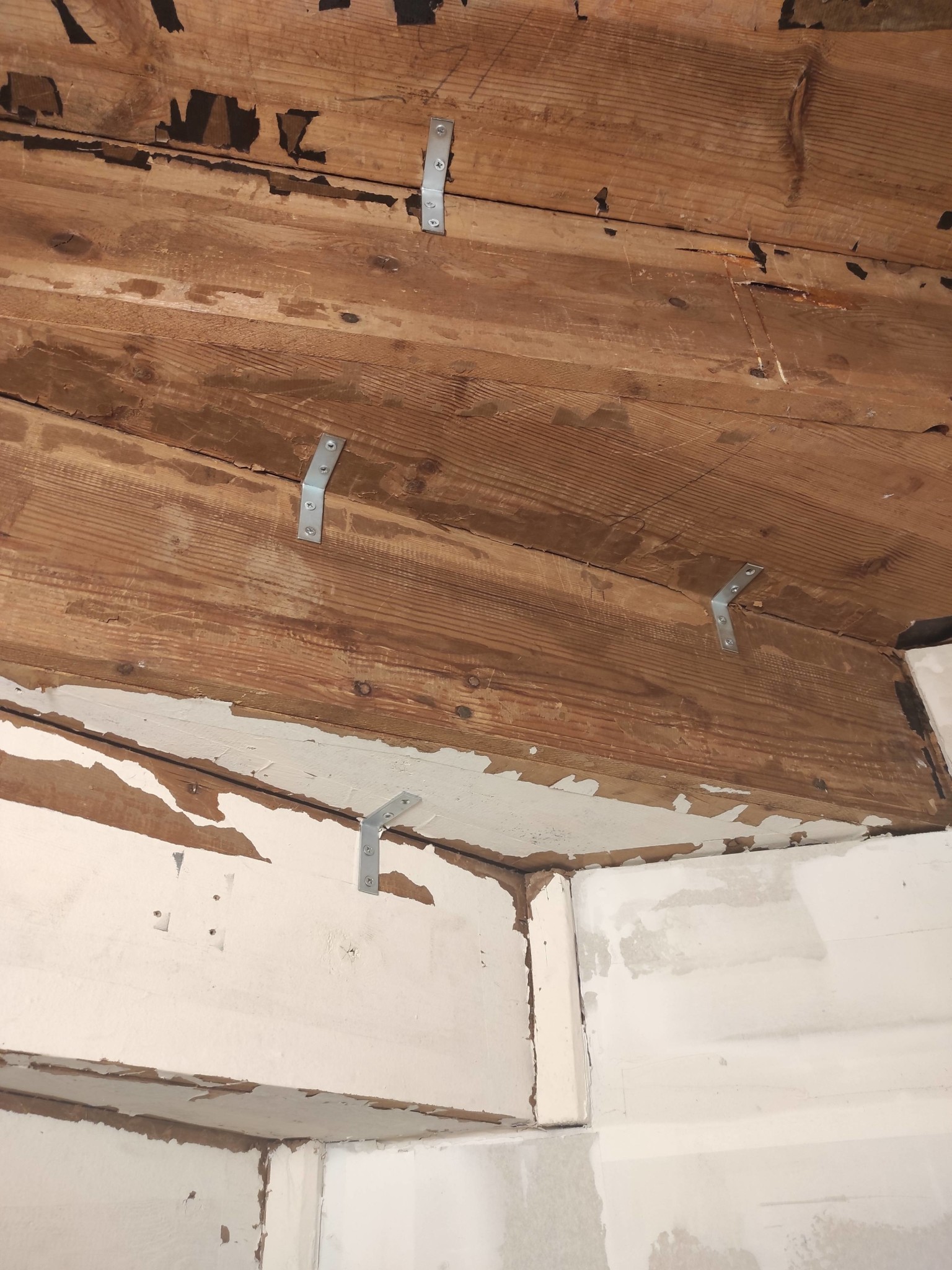

The primary cause of the creaking is that the staircase construction flexes too much. A 90 cm wide tread would need to be 40-50 mm thick on its own to feel solid. Therefore, risers are used to support the treads. The front edge of the tread should be flush against the upper edge of the riser. Then, the bottom edge of the riser should be screwed into the back edge of the next lower tread. The risers appear to be too uneven at the top for it to be easily fixed. I think you need to remove the risers one by one and plane them even at the top. The attachment to the back edge of the lower tread is absolutely crucial for stability.
Click here to reply