Isn't it a bit too bold to claim that one's products last forever in dry storage? - I mean, have they checked? - If you keep the packaging with that text, they would theoretically have a construction responsibility in 100 years?? - Usually, manufacturers try to disclaim as much as possible; it feels a bit risky to have that text on their products..
Best regards, Marcus
Ps. I used a 2-3 year-old open fix-bag from Bostik and sure enough... it took about 3-4 times longer to cure but then it was rock hard.. used it to secure the floor drain in place before casting so it wasn't too critical Ds.
Isn't it a bit cocky to claim that one's products last forever in dry storage? - I mean, have they checked?...
All manufacturers who want a specific (long) shelf life for their product use Svante Arrhenius' old formula. You observe and measure over a shorter determined period and can then extrapolate to reach a desired threshold value.
As noted in the thread, it seems primarily to be the chromium reduction and the risk that old self-leveling compound can cause allergic reactions that are the reasons for the short expiration date and not that the compound's properties rapidly deteriorate in any other way.
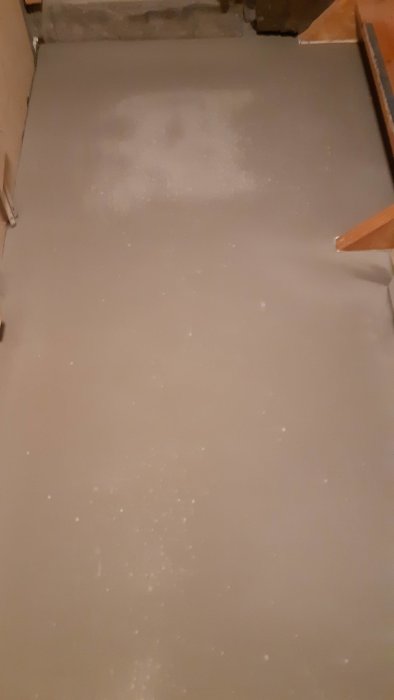
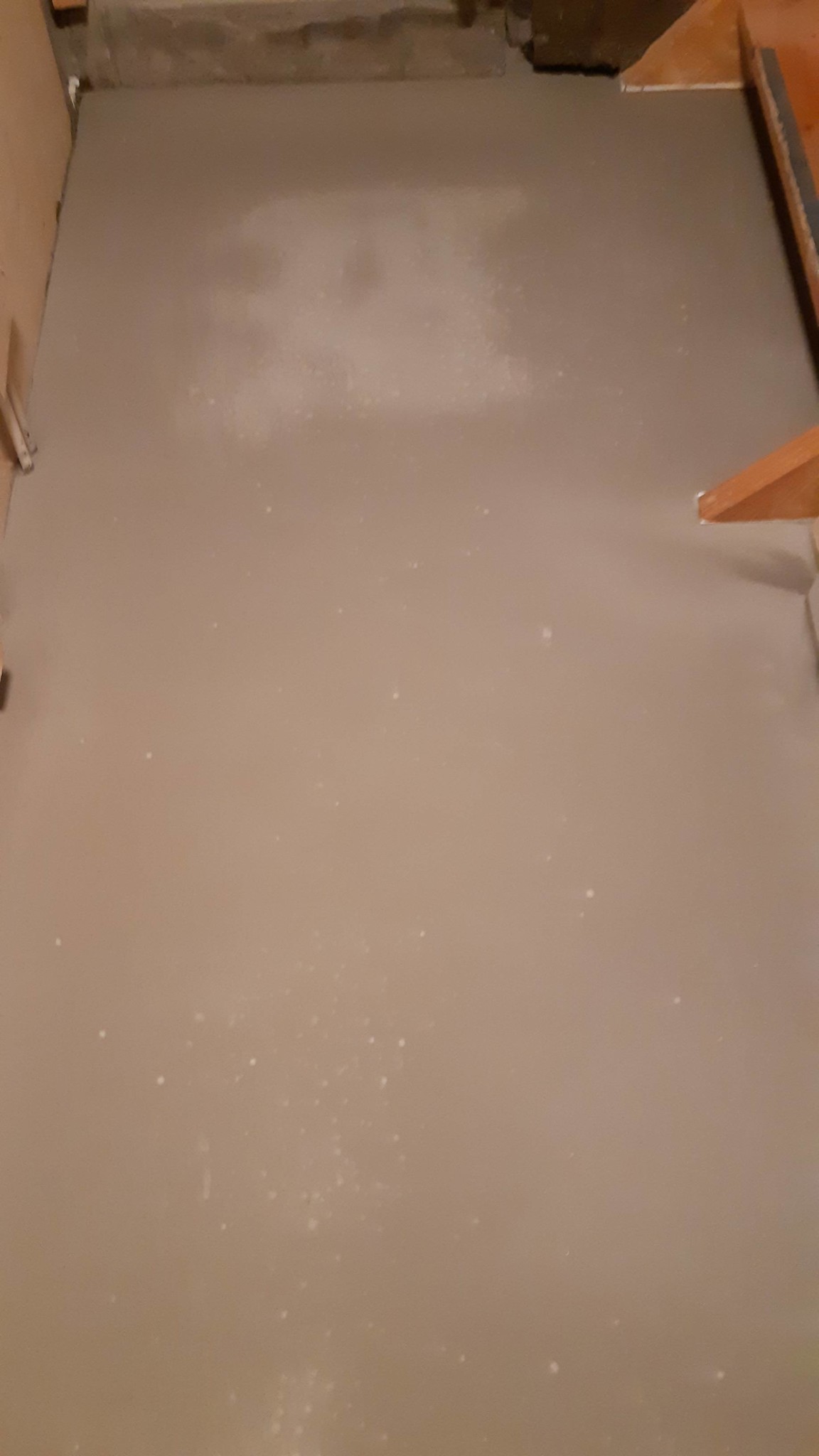
Just conducted an experiment with Finja leveling compound that was a year past its expiration date. I can confirm that it's not at all certain that it cures as it should, even though it takes much longer. It cures at the same pace as it takes for the water to evaporate. In my experiment, the water pushed up to the surface of the putty, floating like a lid over the mass below. Once the water evaporated (which takes a long time if you mix a 20kg bag with 3.5L of water), the mass was still soft and pitted. Not at all the even result that the water surface suggested. I had to take the spade and scoop it up. However, I left a clump to dry completely. But it lacked satisfactory strength and crumbled quite a bit. So with my hand on my heart, I don't know if I can merely trust that it's only the added sulfinic acid to prevent allergic reactions that is lost. There seems to be something else happening with the strength and cure time as well. I made a new attempt with fresh leveling compound and got a smooth form that was walkable in about 1.5 hours. Additionally, it could be shaped around 15-20 minutes after mixing without leaving uneven traces. For me, this experiment speaks clearly. But it's a real shame to throw away older bags. I know that, for example, in concrete, hardeners are added as it is being pumped out to ensure it sets. It would be hopeful if it were possible to recycle old cement at the manufacturer or point of purchase, but I'm unsure if it's possible.
I bought Combimix CM920 self-leveling compound last year from Bauhaus. It has a shelf life of 6 months and was 6 months expired when I purchased and poured the floor. Of course, I didn’t know it was expired then.
It took a long time to harden and resulted in large color variations, which was not acceptable as it was supposed to be a wear surface. I received new compound from Bauhaus, removed and redid it, and it turned out great.
Exciting thread
What do you think about sättlim and silicone?
I have tubes of sättlim that are unopened and a few years old. The glue has not dried in the tube.
at room temperature
apply the glue, test gluing a couple of boards with a slight offset and let it cure for a day, then try to separate the pieces
silicone, lay out a small bead and wait a day, if it’s still sticky then, leave the tube at the recycling center
Exciting thread
What do you think about adhesive and silicone?
I have tubes of adhesive that are unopened and a few years old. The adhesive hasn't dried in the tube.
Adhesive usually becomes harder to squeeze out.
Click here to reply
Vi vill skicka notiser för ämnen du bevakar och händelser som berör dig.