
61,295 views ·
23 replies
61k views
23 replies
Drilled large hole, by mistake, what to do?
I was going to put up a shelf, the wall seemed to be drywall all the way. Bought drywall anchors and began installation, the anchor required a 13 mm hole. The first two went fine, the rest of the wall didn’t sound as hollow and we thought maybe it was double drywall.
We continued, foolishly, with a 13 mm hole and it turned out this part of the wall was not drywall at all but lightweight concrete. Now we have an enormous hole in the lightweight concrete. The shelf can't be moved and start over with new holes, so we have to try to save this enormous hole.
Can we fill it with some kind of compound and then drill a new hole in the compound or what would you have done?
Update: Several have suggested using a suitable plug and screw, the problem is that the shelf bracket has a max hole for an 8 mm screw, and I can't find any plugs that are 13/14 mm in size but where you can use 8 mm screws. That is, using a suitable plug and screw doesn't seem to work in this case from what I understand.
We continued, foolishly, with a 13 mm hole and it turned out this part of the wall was not drywall at all but lightweight concrete. Now we have an enormous hole in the lightweight concrete. The shelf can't be moved and start over with new holes, so we have to try to save this enormous hole.
Can we fill it with some kind of compound and then drill a new hole in the compound or what would you have done?
Update: Several have suggested using a suitable plug and screw, the problem is that the shelf bracket has a max hole for an 8 mm screw, and I can't find any plugs that are 13/14 mm in size but where you can use 8 mm screws. That is, using a suitable plug and screw doesn't seem to work in this case from what I understand.
Last edited:
So you're saying you take a plastic plug that is about 14 mm in diameter and then screw in a screw that's meant for wood into it?
The problem is that the 14 mm plug we initially considered using to salvage the situation requires a 10 mm screw, which we can't fit through the shelf's bracket, the maximum size screw we can use is 7 or 8 mm. So it seems we have to reduce the hole size instead.
The problem is that the 14 mm plug we initially considered using to salvage the situation requires a 10 mm screw, which we can't fit through the shelf's bracket, the maximum size screw we can use is 7 or 8 mm. So it seems we have to reduce the hole size instead.

Welcome to Byggahus!
We all make that mistake, I hate setting up shelves for that very reason.
The tip is a bit late, but it's better to drill with a small (about 2-3 mm) drill bit first to try to find out what material the wall is made of.
It's probably doomed to fail filling the hole as it usually doesn't provide the same bearing capacity, so try what Guson suggests above: using a plastic plug and a suitable screw.
Good luck!
We all make that mistake, I hate setting up shelves for that very reason.
The tip is a bit late, but it's better to drill with a small (about 2-3 mm) drill bit first to try to find out what material the wall is made of.
It's probably doomed to fail filling the hole as it usually doesn't provide the same bearing capacity, so try what Guson suggests above: using a plastic plug and a suitable screw.
Good luck!
Self-builder
· Stockholm
· 10 494 posts
Anchor compound should work.


Maybe fill the hole with house fix/repair plaster and insert the screw before it hardens? Alternatively, drill a new hole with the correct size for the screw and plug once it has hardened so that it's correct and you can adjust the screw if needed?
Manufacture a wooden wedge that fits reasonably well but can be hammered in, glue generously with PL400/PL600 and plug in the wedge. Saw off any protrusion, then you can screw with wood screws into this. If not everything is covered by the shelf and there is a need for a neat finish, you can cut inwards a couple of 2 mm into the hole and fill with filler/soft sealant or other desired material and then paint.
Thanks!mexitegel said:Welcome to Byggahus!
We all make that mistake, I hate putting up shelves for that very reason.
The tip is a bit late, but it's better to drill with a small (about 2-3 mm) drill bit first to try to find out what material the wall is made of.
It's probably doomed to fail to fill the hole since it usually doesn't hold as well, so try, as Guson says above, using a plastic anchor and a matching screw.
Good luck!
What if the screw that fits the anchor is too big for the shelf bracket? My first thought was to use a larger anchor just as you suggested, but since the shelf bracket can only handle screws that are 8 mm max, it seems a large anchor won't solve the problem.
Hello,schmakita said:Manufacture a wooden wedge that fits reasonably but can be hammered in, apply plenty of PL400/PL600 glue and plug in the wedge. Saw off any protrusions, then you can screw with wood screws into this. If not everything is covered by the shelf and there is a need for a nice finish, you can take off a couple of 2 mm inward in the hole and fill with putty/soft sealant or other desired material and then paint.
Thanks for the answer, do you think the wooden wedge holds better than if you fill the hole with some mass that you let harden as useless suggests above?

As mentioned here, you can use expanding rubber plugs (good and secure mounting but expensive plugs)pellepe said:I was going to put up a shelf; the wall seemed to be drywall all the way. Bought drywall anchors and started the installation; the anchor required a 13 mm hole. The first two went fine; the remaining part of the wall didn't sound as hollow, and we thought it might be double drywall.
Unfortunately, I continued with a 13 mm hole, and it turned out that this part of the wall wasn't drywall at all but lightweight concrete. Now we have a huge hole in the lightweight concrete. The shelf can't be moved to start over with new holes and we must try to fix this huge hole.
Can it be filled with some compound maybe and then drill a new hole in the compound, or what would you have done?
Fill the hole with Husfix or similar (messy and not sure you’ll get a grip anyway)
Buy special plugs for lightweight concrete
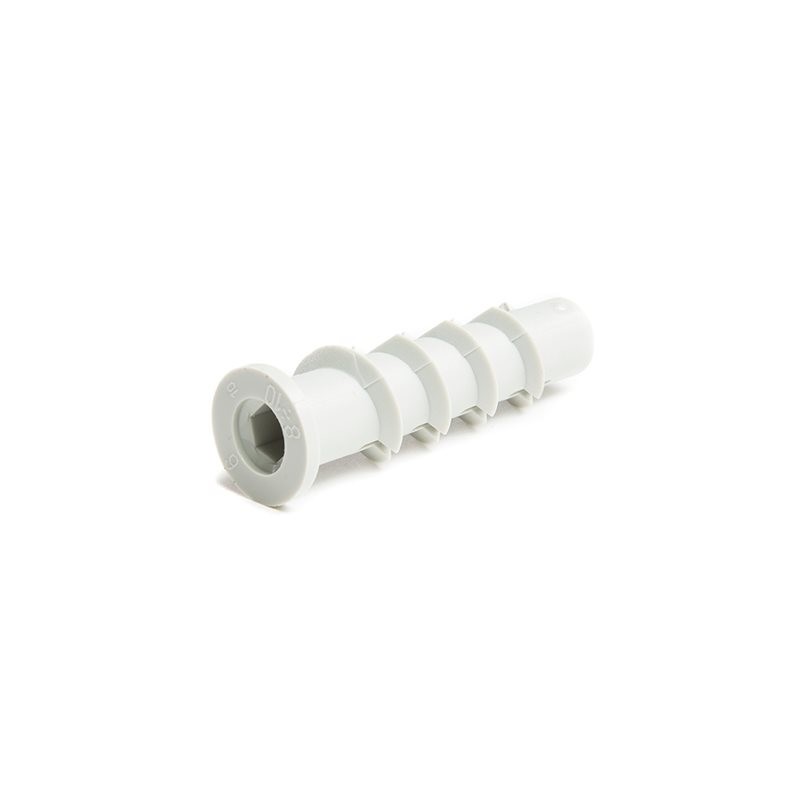
(cheap and good option; Byggmax has this model)
Insert a wooden plug that fits (might work, might make it worse)
Plastic plug with wood screw is not so good; it's hard to get a good grip in lightweight concrete (if you mean plugs that are really meant for concrete)

I had similar issues in a previous property, in that case when the existing anchor was pulled out of the wall and increased the hole's diameter. I used a Molly anchor and it worked very well in the lightweight concrete too, I don't know if it's generally recommended but it held up the hat rack which a regular anchor couldn’t handle...
Molly is, for those who don't already know, this type of anchor:
http://www.clasohlson.com/se/Skivexpander-M4-enkel/Pr409225001
Molly is, for those who don't already know, this type of anchor:
http://www.clasohlson.com/se/Skivexpander-M4-enkel/Pr409225001
Hi, thanks for the reply. Sounds like a good solution with the hat shelf, the problem here is that the shelf's bracket has a hole for the screw which can be 8mm at most. Since the hole is 13 mm in size, it means all the plugs and expanders I've found that fit in a 13 mm hole also require a larger screw, such as a 10 mm screw, which doesn't fit in the shelf's bracket.pacman42 said:I had similar problems in a previous property, in that case when the existing plug was pulled out of the wall and increased the hole's diameter. I then used Molly and it worked very well in the lightweight concrete too, I don't know if that's generally recommended, but it held up the hat shelf which regular plugs couldn't manage...
Molly is for those who don't already know this type of anchor:
[link]

If it is a shelf that needs to bear a lot of weight, I would choose ankarmassa. It is like plastic padding, quick-setting, you have about 4 minutes to insert the plug, there are some slower variants as well. The mass is mixed automatically when you press it out of the tube.
Last edited:
Molly with M6 at Classe has an 11mm hole.pellepe said:Hi, thanks for the answer. The solution with the hat rack sounds good, the problem here is that the bracket for the shelf has a hole for the screw that can be at most 8mm. Since the hole is 13 mm large, it means that all the plugs and expanders I've found that fit a 13 mm hole also require a larger screw, e.g., a 10 mm screw, which does not fit in the shelf's bracket.
Edit: And at Biltema, M6 means you insert it into a 13mm hole.
Last edited: