
13,649 views ·
40 replies
14k views
40 replies
Pull together two decking boards 28mm
Hi,
I'm working on stairs (outdoor) and was planning to use two 28x120mm decking boards as handrails. The top board, i.e. the one you hold onto, should be screwed to the underlying board from underneath. The top board should be pulled down/together with the underlying one. Now I've discovered that it's quite difficult to pull the boards together. I've tried with regular decking screws, type 4.5x50.
Any tips?
I'm working on stairs (outdoor) and was planning to use two 28x120mm decking boards as handrails. The top board, i.e. the one you hold onto, should be screwed to the underlying board from underneath. The top board should be pulled down/together with the underlying one. Now I've discovered that it's quite difficult to pull the boards together. I've tried with regular decking screws, type 4.5x50.
Any tips?


1. Deck screws have too pointed a head for this. Use wood screws
2. Drill a hole in the lower board so that the thread doesn't catch it (maybe from the top side of the lower board and not all the way through to the underside, so that the head has something to pull on)
2. Drill a hole in the lower board so that the thread doesn't catch it (maybe from the top side of the lower board and not all the way through to the underside, so that the head has something to pull on)
Well, it looks too bulky with 34x145. I have tested it. Moreover, it becomes even harder to pull down a board that is 34mm.
@MathiasS idea I believe in.
I will drill a pilot hole a few mm from the top straight through and then drill with a dimension that is adapted to the threads, i.e., so they don't touch the lower board. The pilot hole helps me to show where I should then place the screw.
@MathiasS idea I believe in.
I will drill a pilot hole a few mm from the top straight through and then drill with a dimension that is adapted to the threads, i.e., so they don't touch the lower board. The pilot hole helps me to show where I should then place the screw.
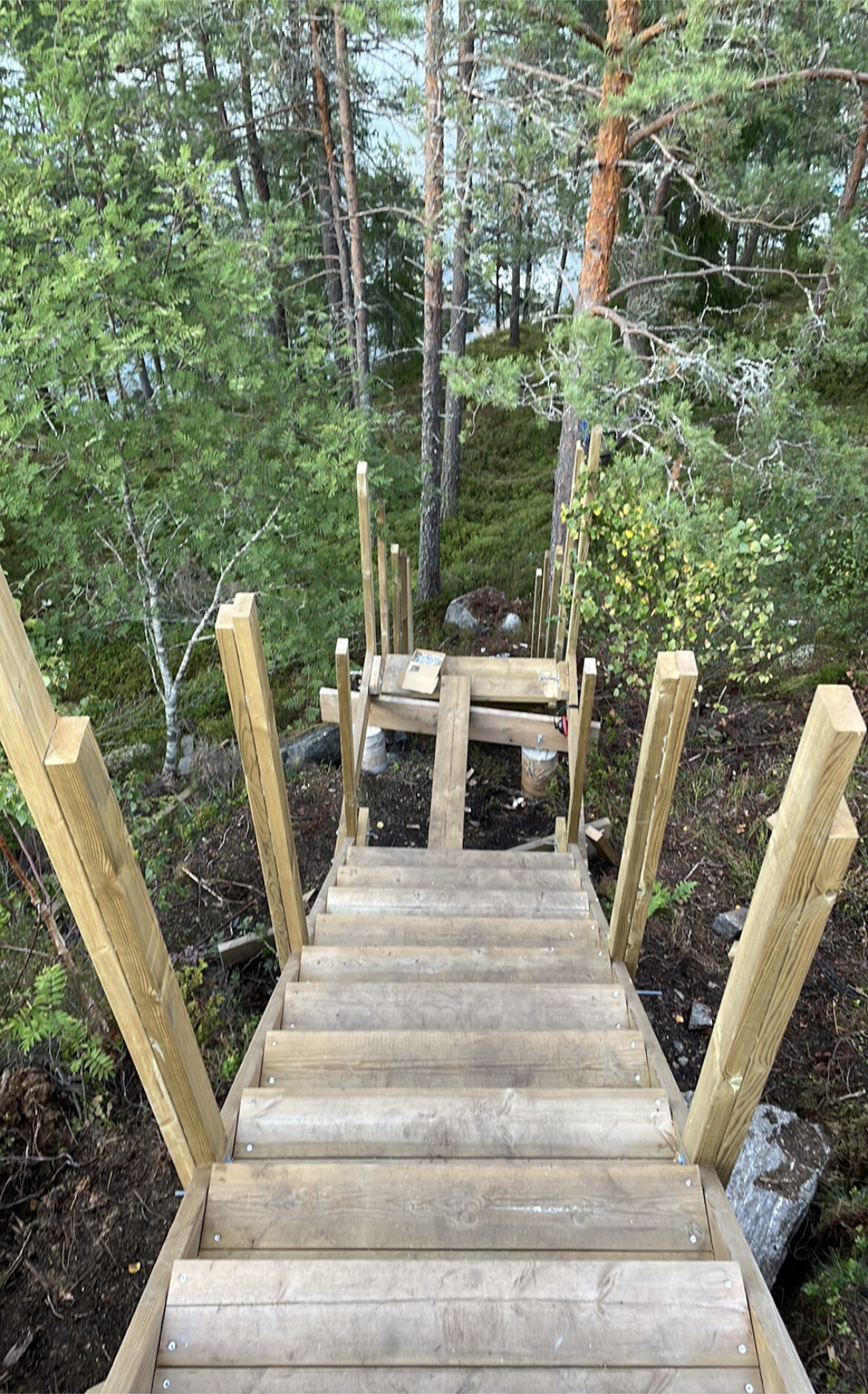
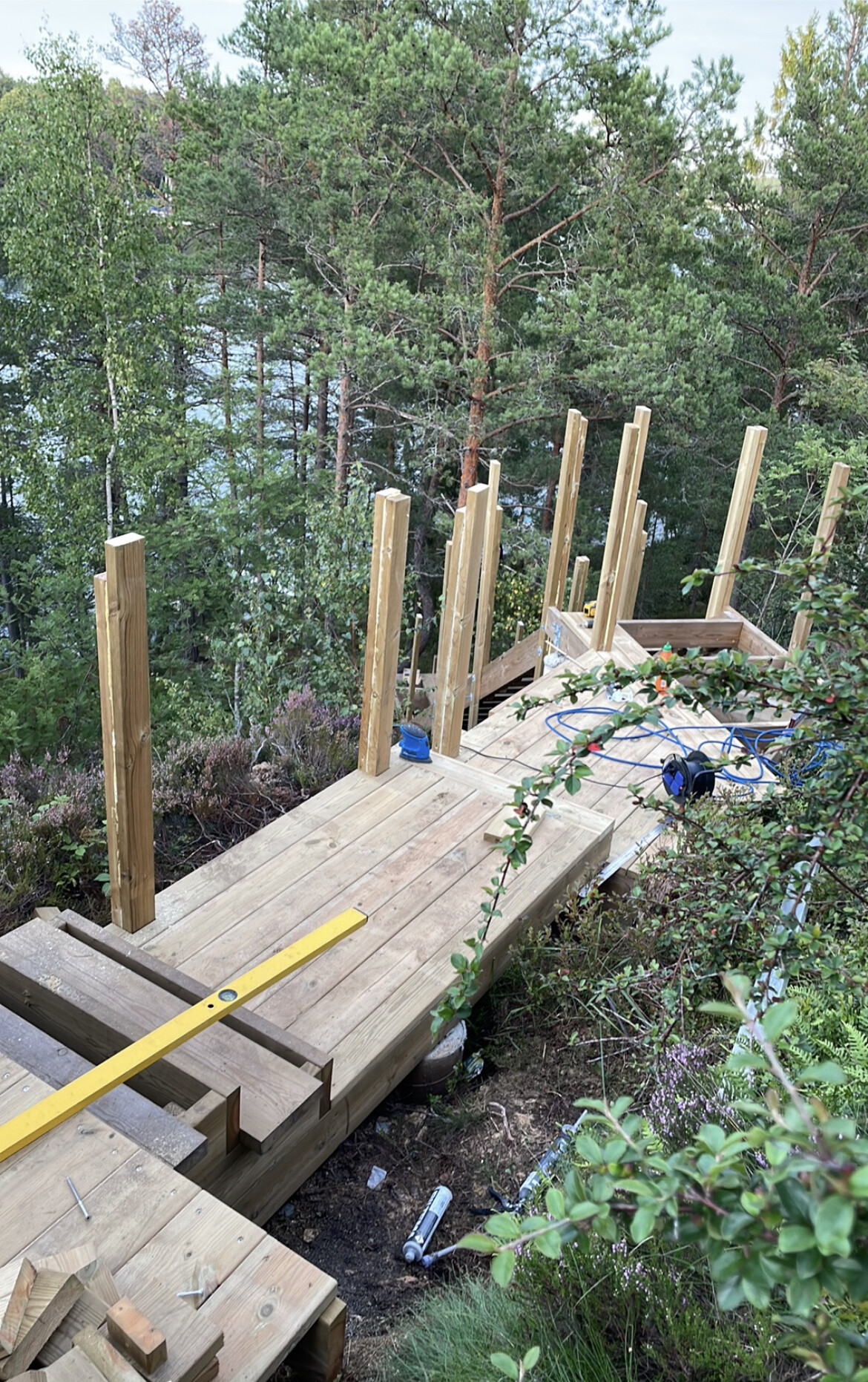

Maybe something like this?
https://www.google.com/search?q=tryckimpregnerad+handledare&oq=tryckimpregnerad
https://www.google.com/search?q=tryckimpregnerad+handledare&oq=tryckimpregnerad
I know that there are ready-made handrails. In total, I need 60 meters of handrails and it's too expensive to buy them ready-made, and furthermore, this staircase is in the forest, which means the budget is limited. I have already bought 28x120 x2 which I will make handrails from.
I double two 28x120mm. The lower one I rip to 110 and sand off the outer edges. I screw from underneath, which means there won't be any screw holes where you hold.
I double two 28x120mm. The lower one I rip to 110 and sand off the outer edges. I screw from underneath, which means there won't be any screw holes where you hold.
I believe 6x50 wood screws for outdoor use will be suitable, like this one:
https://www.biltema.se/bygg/fastele...MIl6mJ-bfahQMV-eyyCh2u1g3WEAAYASAAEgKfb_D_BwE
https://www.biltema.se/bygg/fastele...MIl6mJ-bfahQMV-eyyCh2u1g3WEAAYASAAEgKfb_D_BwE
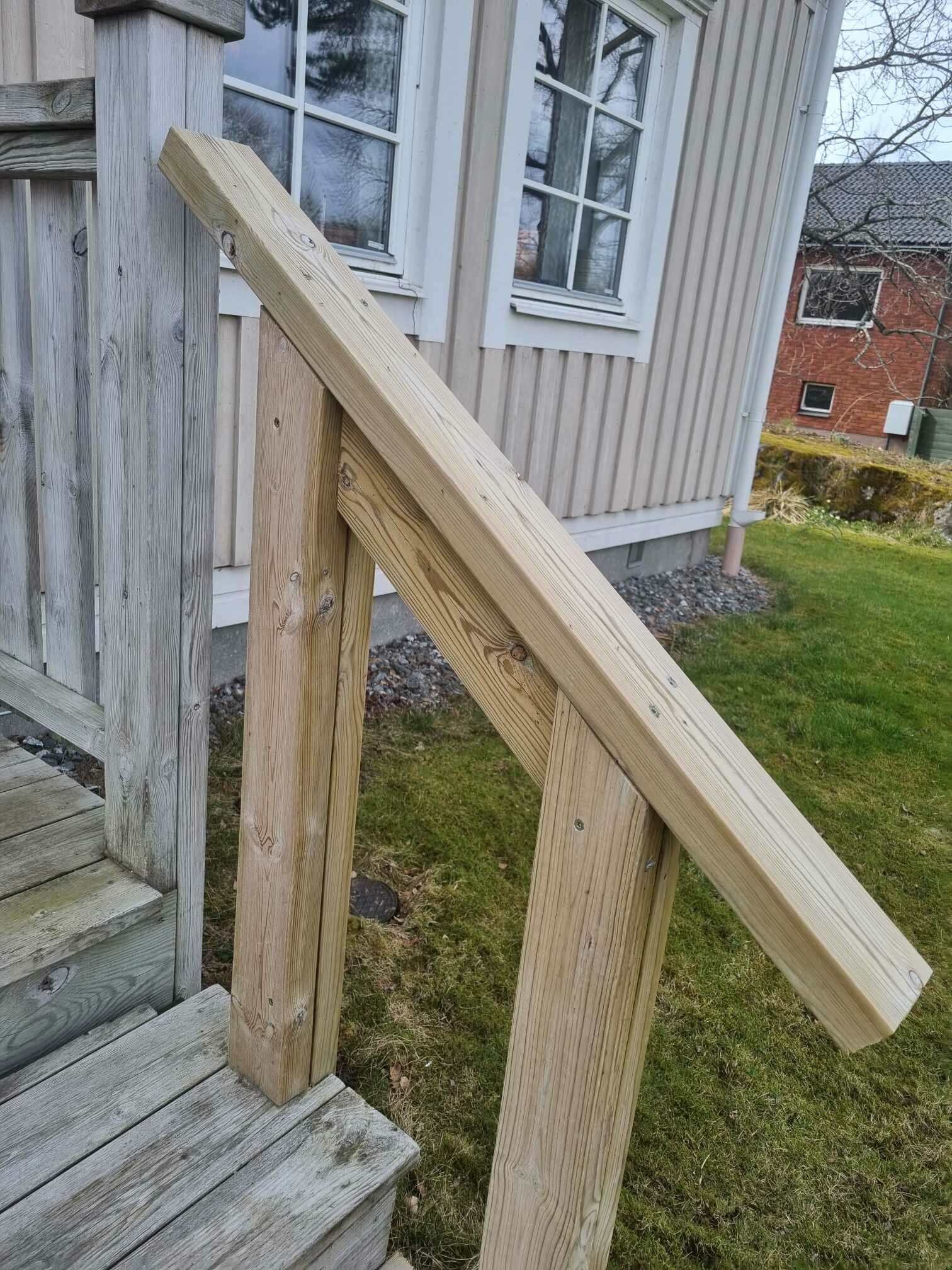

Flat head? I still want the screw to be countersunk into the lower board. Not sure if there is much difference in performance between a "regular" wood screw 6x50mm.
The last resort is to use a montage screw but then they won't be countersunk.
The last resort is to use a montage screw but then they won't be countersunk.
You can make both a countersink and clearance hole. Maybe not something you feel like doing, as it will be more work.D Derbyboy said:
Try with a wood screw with a comic head otherwise, you'll definitely notice if it works well or not. But at least make a clearance hole or thread-free in board one.
Clamp the wood together before screwing if you want to be able to replace it; otherwise, glue, clamp, and then screw. Have enough clamps so you can both press it together and align it edge to edge. Choose an edge/side that is most important to be even and hope it dries in an advantageous way.