43,355 views ·
15 replies
43k views
15 replies
Doorway without door, what to do with casing?
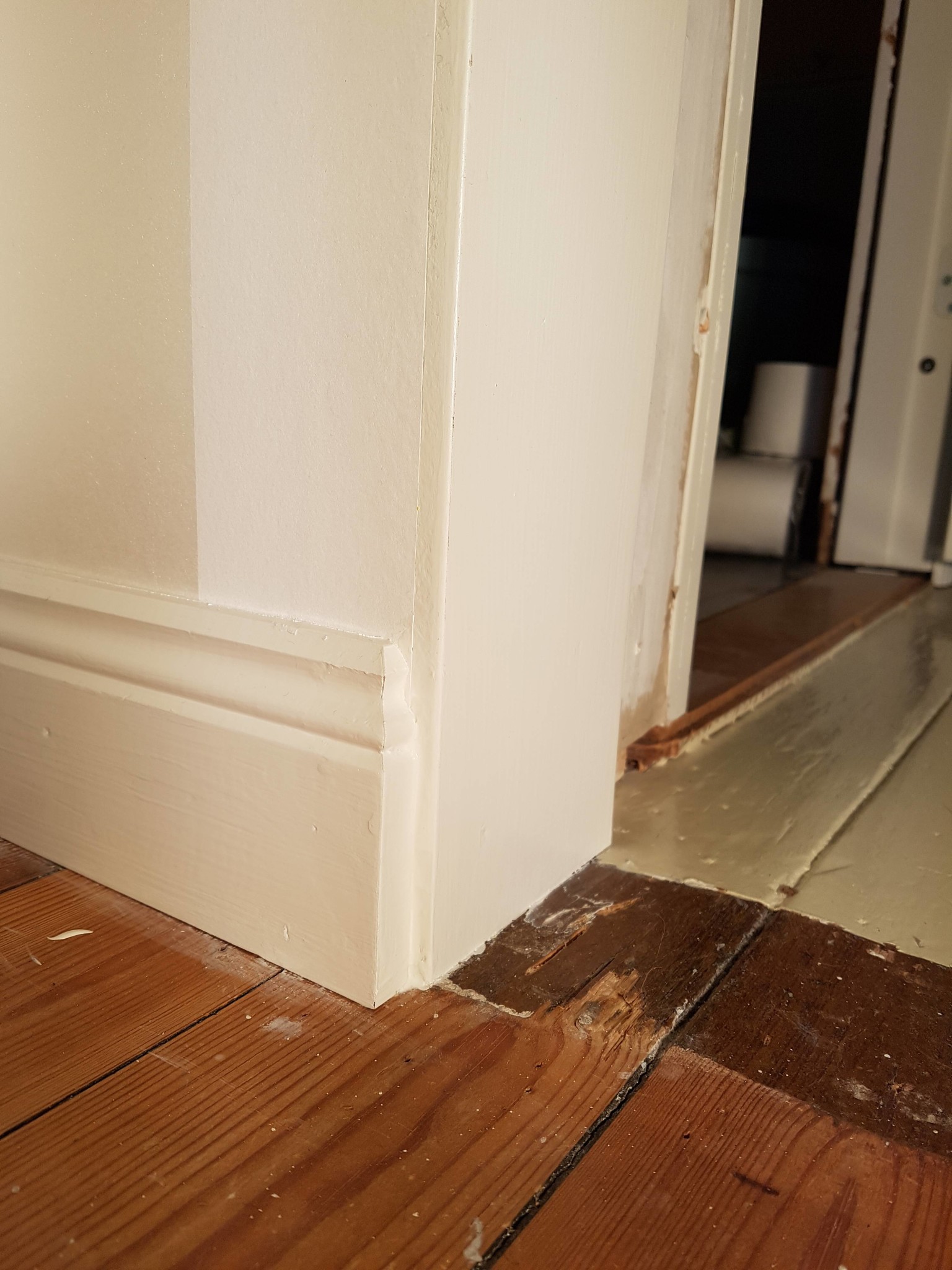
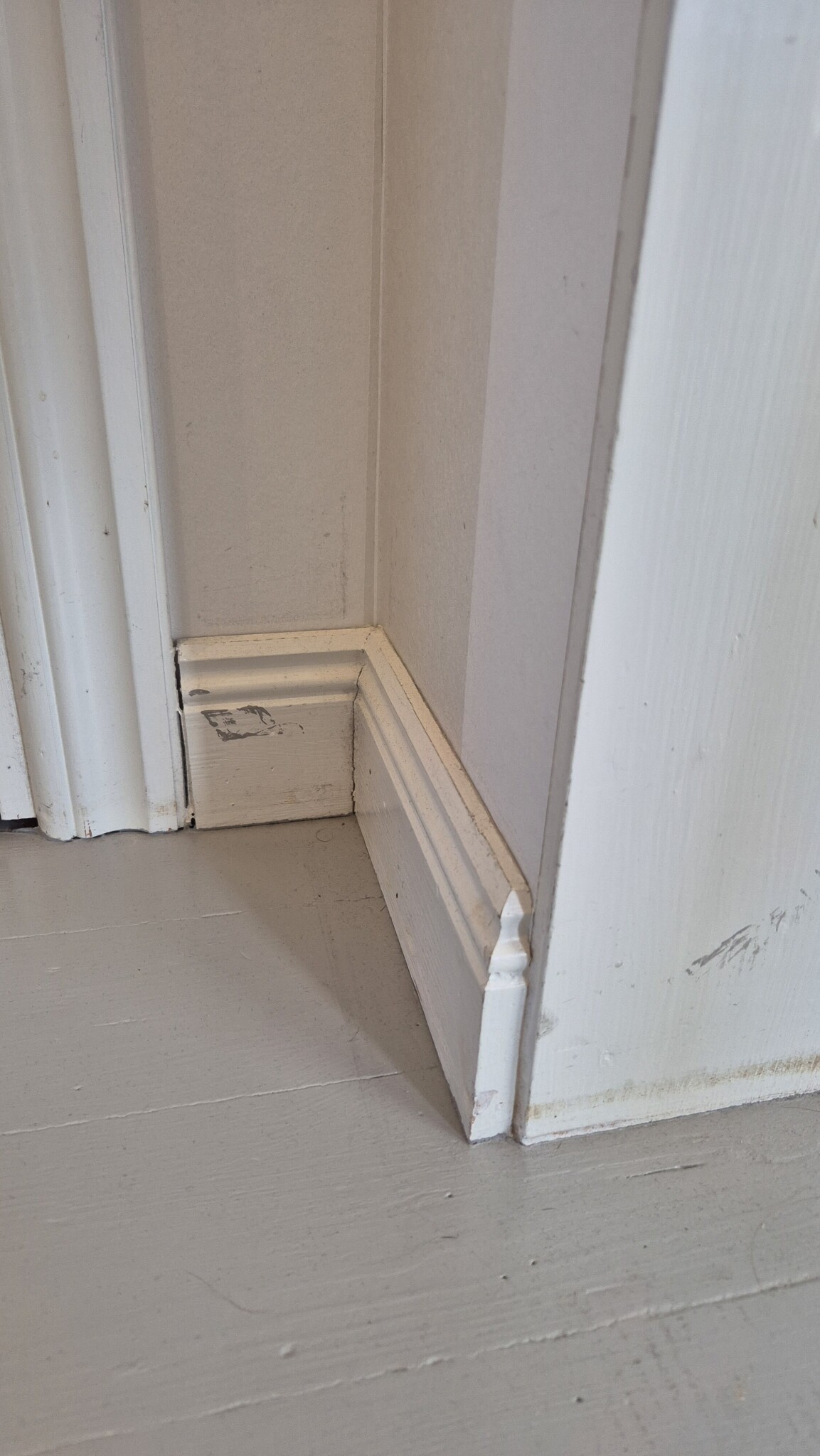
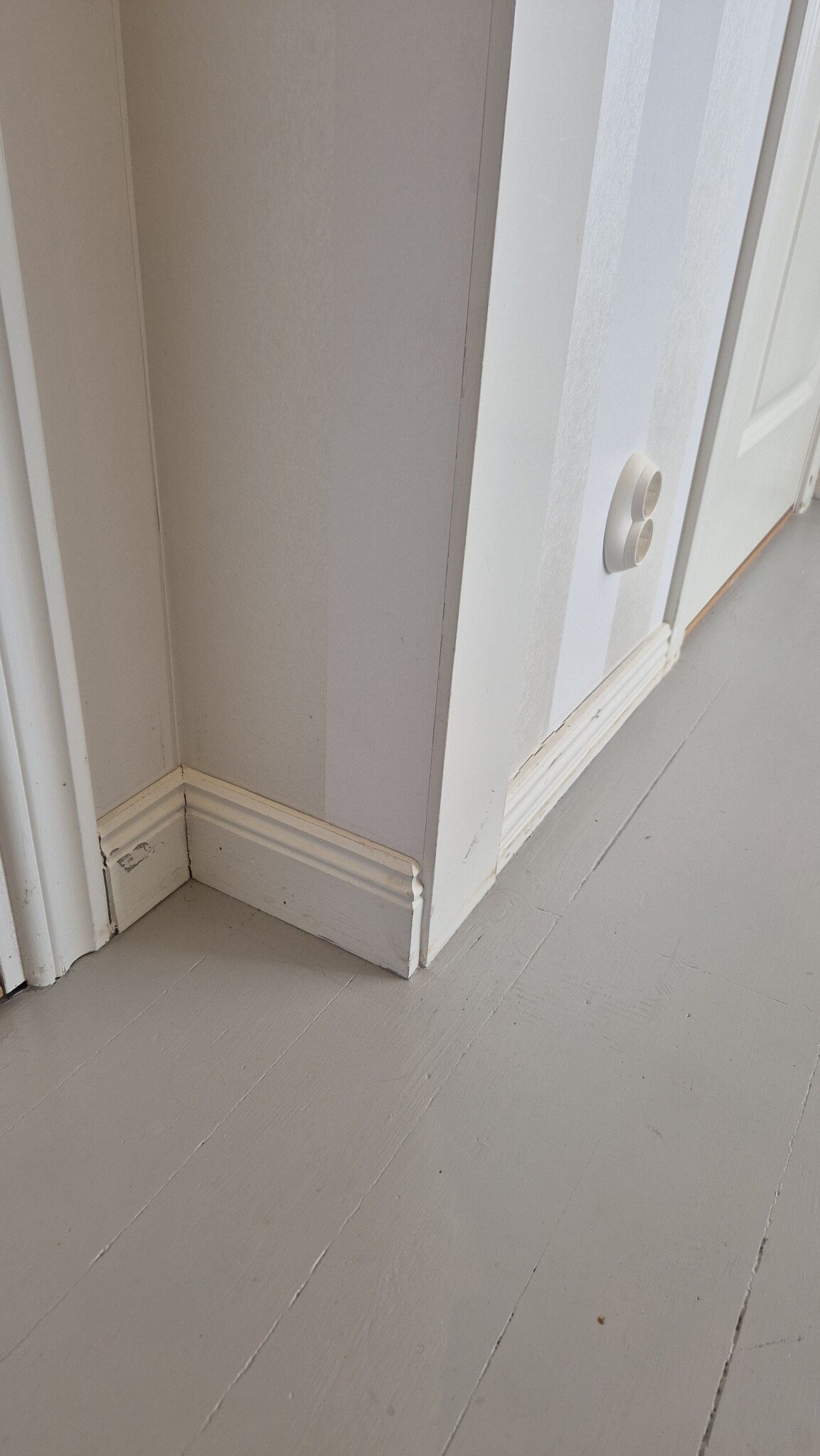
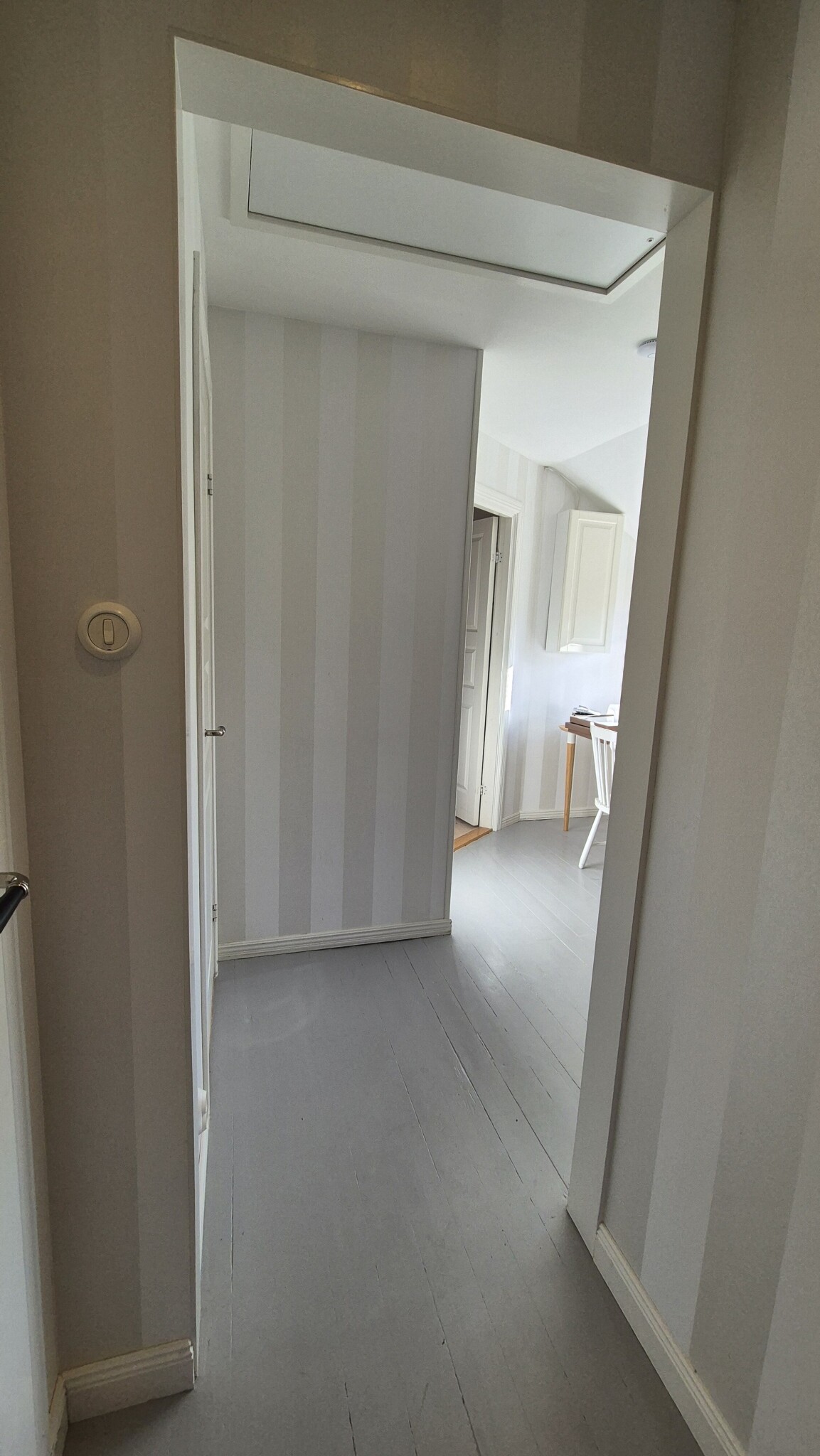
I'm thinking about how to solve this in a neat way. The problem is that the lining doesn't fit on one side and I don't want to make the hole smaller. What I'm considering is putting lining on one side and ending against the wall at the lintel, but that looks a bit odd. The second option is to let the baseboard continue through the door opening, but then I have other issues, such as different baseboards in the two rooms and that the wall on one side will be a challenge to make smooth and nice.
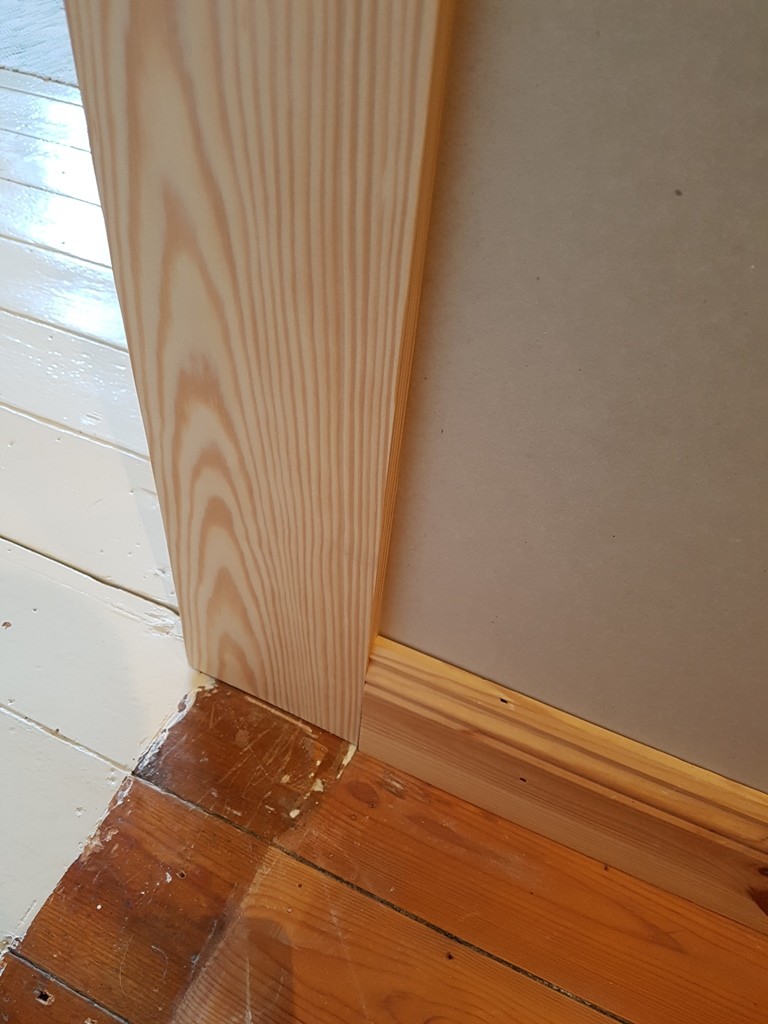

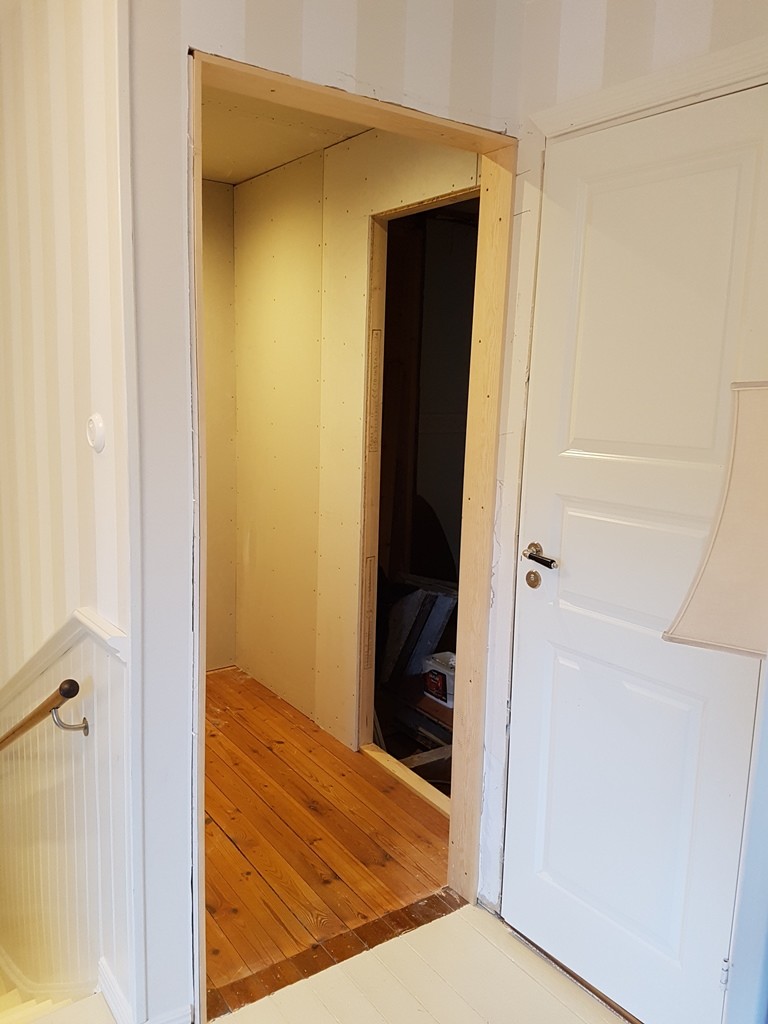
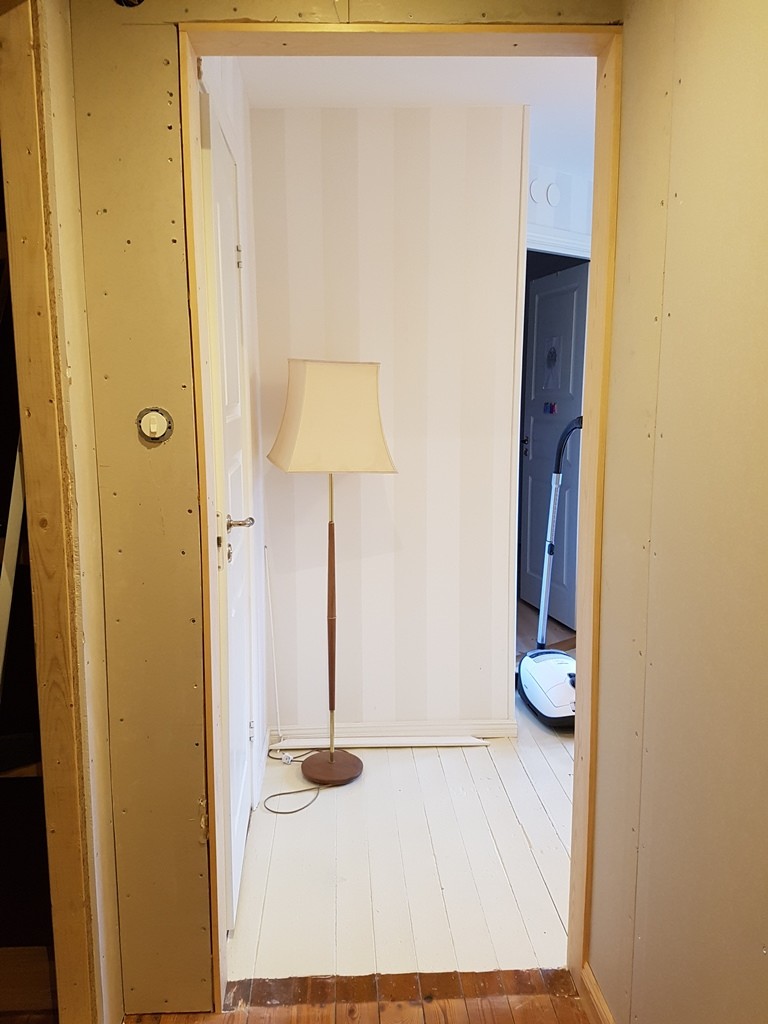
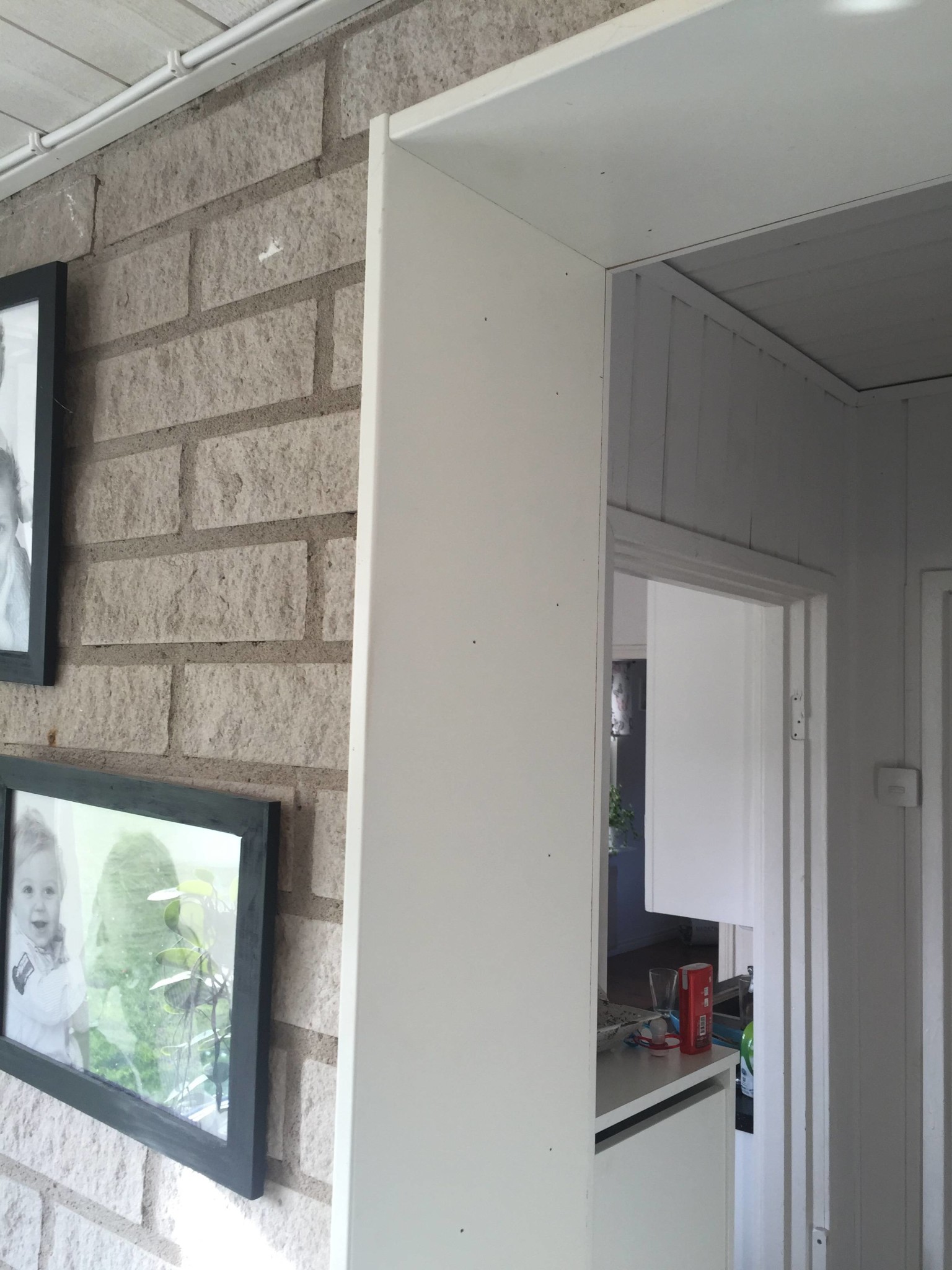

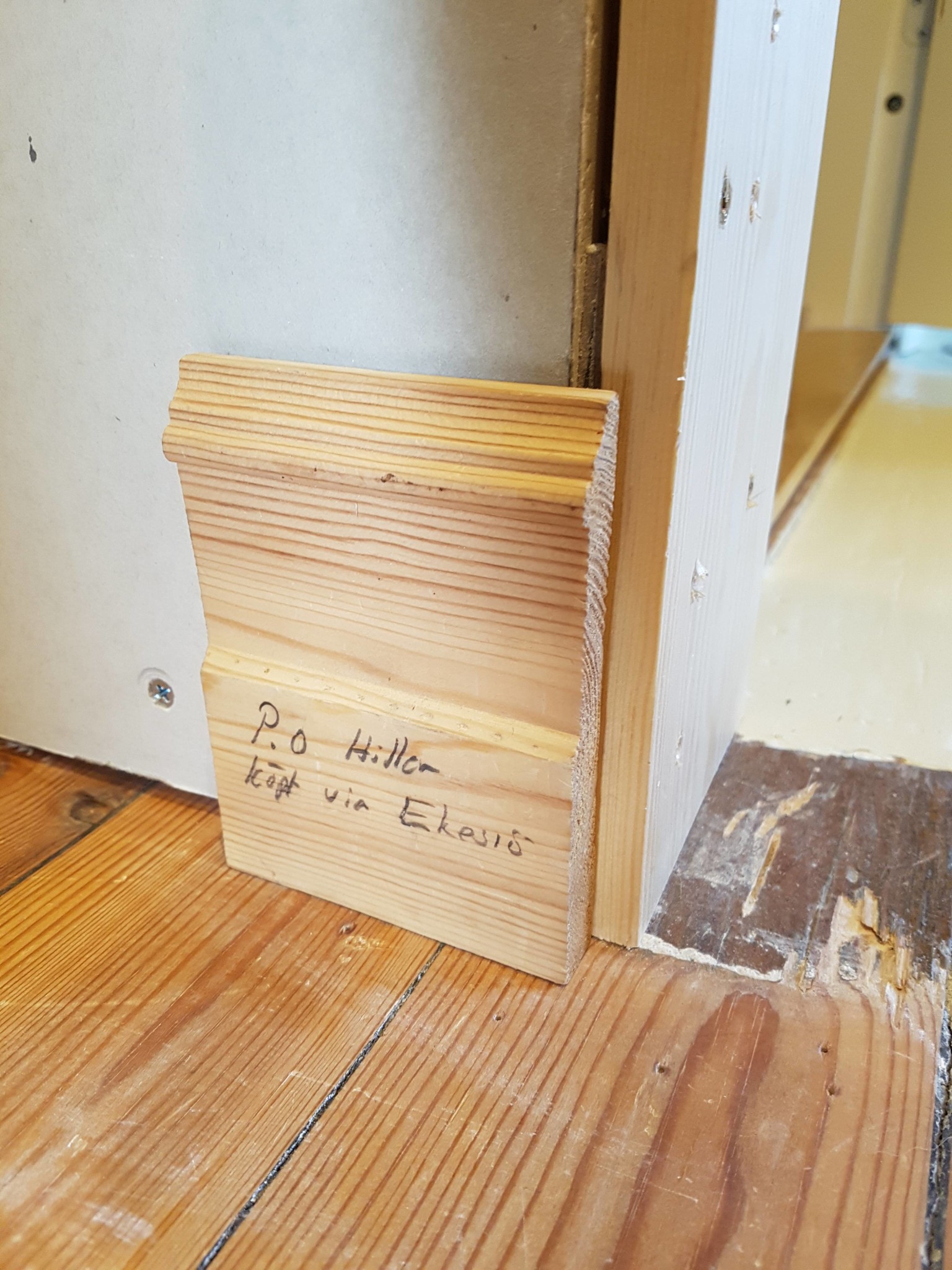
Yes, that would be an option. An equal amount of overhang on each side as the thickness of the plinth. It will probably have to be made of MDF in that case.
It will also be good for spackling against.
It will also be good for spackling against.

On the right side of the opening, according to the photographs, you have chosen to let the cover board go down to the floor and let the skirting board connect to it. It looks neat. From what I can see in the pictures, the cover board is on top of the plasterboard. If that's correct, no extra list or trim is needed. On the left side, you let the trim go down to the floor and connect with the skirting board in the same way.
You can do as Hallerudsbo shows with their picture, allowing the cover board to extend beyond the wall line a bit and omit the trim, but it requires the wall to connect to the cover board in a neat way. You can also place a block at the bottom corner that is slightly wider than the trim and skirting board, which these connect to. This is practical when the trim and skirting board have different thicknesses.
You can do as Hallerudsbo shows with their picture, allowing the cover board to extend beyond the wall line a bit and omit the trim, but it requires the wall to connect to the cover board in a neat way. You can also place a block at the bottom corner that is slightly wider than the trim and skirting board, which these connect to. This is practical when the trim and skirting board have different thicknesses.