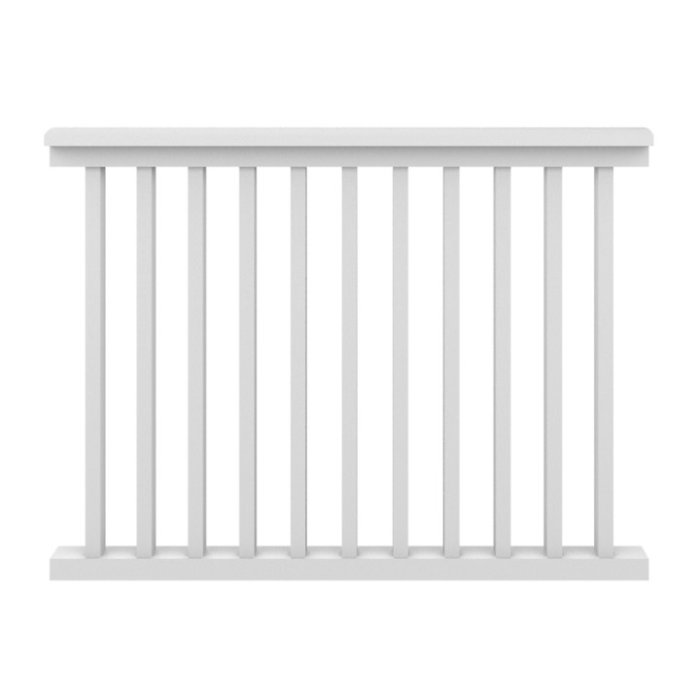
Time to install a railing as the final touch on the upstairs renovation. It should be a wooden railing and I've been eyeing Lundbergs at Bauhaus, but it is too costly after all the recent renovations (around 14,000 SEK).
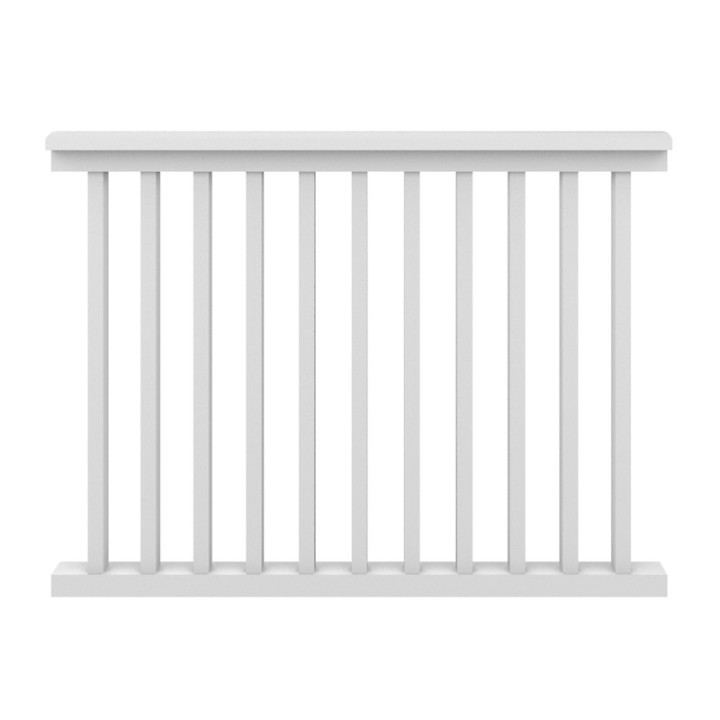
I've seen that they sell railing sections from Jabo meant for outdoor use, see the link below. They look really good design-wise and seem easy to install. BUT, can you assume any risk of cracking in the wood when used indoors, or other issues that could occur if using these sections indoors?
I was also thinking of using 95 * 95 end posts from the same series, also meant for outdoor environments.
I saw someone had written a question to Bauhaus about exactly this, and they replied, "..you can use this indoors but no guarantees apply as no tests have been done for extended periods in indoor environments."
Grateful if there are any opinions on this subject
The product description states that they are wood-protected. This might mean they should not be used indoors, depending on what that treatment includes. Otherwise, I can't think of any objections.
It says in the product description that they are wood protected. That may mean they should not be used indoors, depending on what the treatment contains. Otherwise, I can't think of any objections.
But if they are painted, then the risk of this is minimal.
Thank you for your insights! What do you think will happen with the surface treatment when it is painted over? I, being very unknowledgeable about how the surface treatment can have an impact, still feel that if there are two layers of paint over it, it should have "encased" the base treatment so that it shouldn't release chemicals? As I said, I'm not an expert but that's just a thought I have
Thank you for your opinions! What do you think will happen with the surface treatment when it is painted over? As someone who is very uninformed about what the surface treatment can affect, I still spontaneously feel that with two coats of paint over it should have "encased" the base treatment so that it shouldn't release chemicals? As I said, not an expert but just a thought I have
The chemicals are protected from being dissolved by moisture and from children licking the wood, but that doesn't protect against evaporation. On the other hand, you don't want the chemicals to evaporate because then they wouldn't be effective. Therefore, this happens to a very small extent. Anyone who has burned treated wood (by accident) notices that it smells a little, but not much. The treatment is usually copper-based and is therefore toxic, but not much will be released into the air. But, of course, it depends on where it's installed.
I have treated timber in the framework of my winter glazing (built by a carpenter), a room that can get around 60 degrees warm if I don't ventilate it. However, I haven't noticed any smell there. I also have treated timber in the walls and floor of my porch (converted from a porch by a carpenter). No smell is noticeable there either.
Beyond what is included in "wood protection treatment," the paint can also be a reason not to install it indoors. Greater emissions may be allowed in outdoor paint. I don't know if outdoor paints still contain mildew inhibitors, but if they do, it might also be unpleasant indoors.
We also looked a bit at Lundbergs but were appalled by the price; they charge a lot. Didn't like that some items were MDF either; we wanted pine for our 1920s house. We ordered untreated material from Nordingrå trä and it turned out to be quite a bit cheaper.
Thank you for your opinions! What do you think is supposed to happen with the surface treatment when it is painted over? I, myself, being very uninformed about what the surface treatment can affect, still feel spontaneously that when there are two layers of paint over it, it should have "embedded" the base treatment so that it shouldn't emit chemicals? As I said, not an expert, just a thought I have
depending on the manufacturer, there may be chromium, arsenic, copper salts. It can also include added formaldehyde. (However, formaldehyde naturally occurs in all wood products.)
No, it does not. Impregnerat wood contains copper salts. Copper is a necessary mineral that you need to intake. Not in too high amounts. But it is not volatile. So there is no risk of ingesting harmful amounts.
Historically, other substances with health-hazardous effects have been used. But that was not what the question was about.
No, it does not. Pressure-treated wood contains copper salts. Copper is a necessary mineral that one needs to consume. Not in too high amounts. But it's not volatile. So there's no risk of ingesting harmful amounts.
Historically, other substances with health-hazardous effects have been used. But that wasn't what the question was about.
but with an elevated intake, it affects the gastrointestinal tract acutely, with severe vomiting and diarrhea.
Vi vill skicka notiser för ämnen du bevakar och händelser som berör dig.