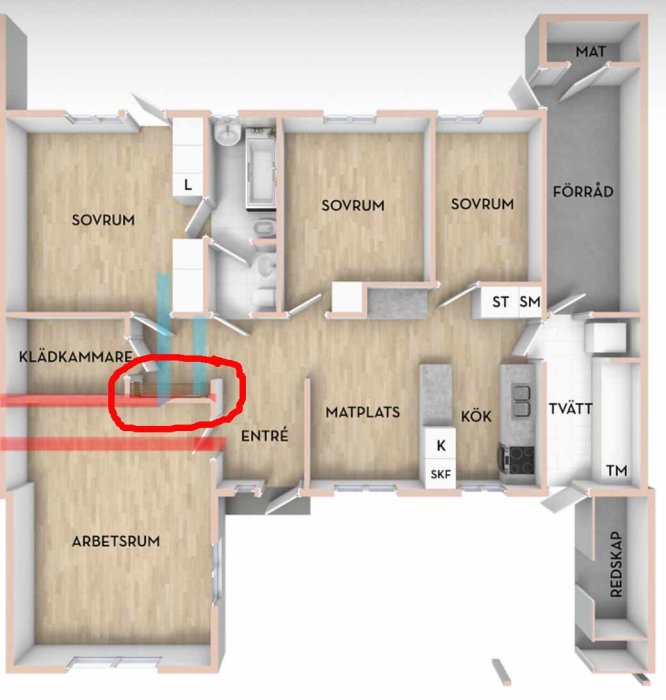
Yes, it changes the conditions radically. Firstly, you can skip the beam at a right angle, and secondly, the dimensions of the remaining beam need to be checked. Can you measure the exact position of the newly discovered roof beams that will rest on the new beam?
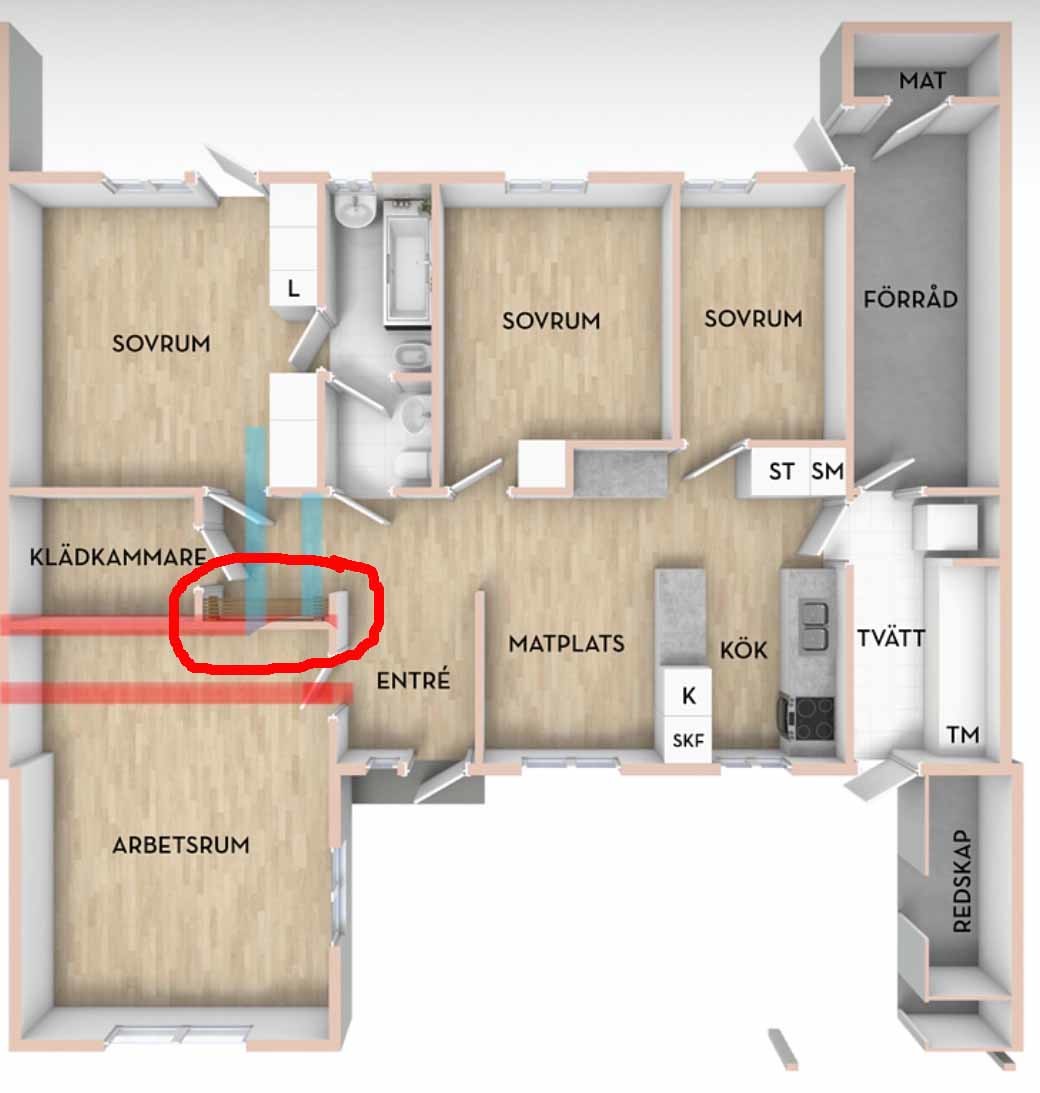
I assume that the red and turquoise beams are in the ceiling plan. The interactions within the area I have circled in the image below already exist and do not need to be addressed. You have two beam ends (red) which act as point loads on a new glulam beam. To determine the dimensions of the glulam beam, we need to know the size of these point loads. I calculate that one is 0.85 m from the beam end and the other 1.7 m. Based on my calculations, the dimension I previously suggested, 90x315, is more than sufficient even in this "new" situation.
The beams are properly positioned in the ceiling, right? If they are on the same plane, they should be fastened to each other. Or are they laid on the wall? You need to find that out.
I think they look like they are on the wall. I'll see if I can check them out without too much interference. But if we assume that they are on the wall, can I go with the dimensions you initially suggested, 90*315 and 90*225?