
Hello!
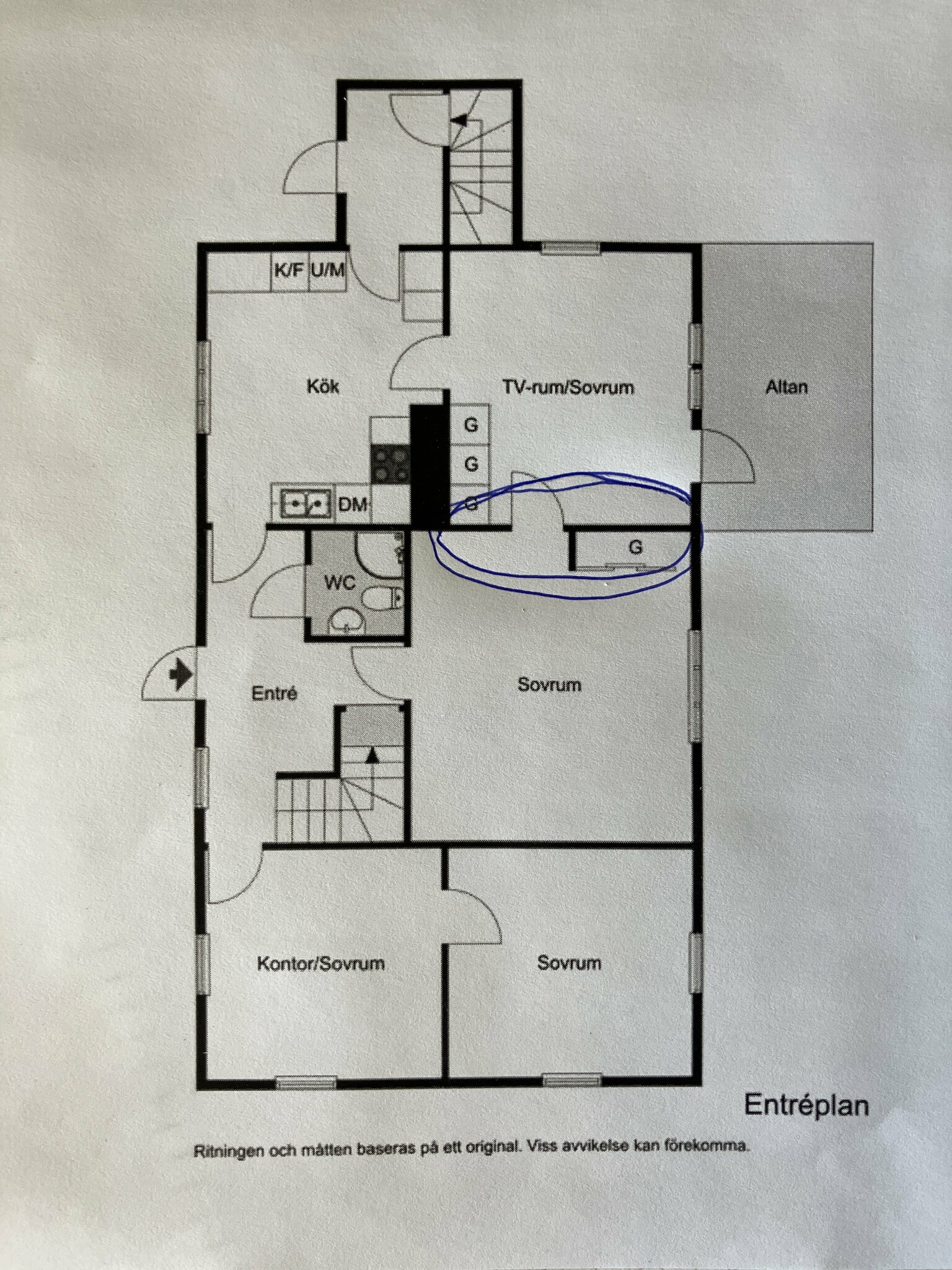
We have bought a house built in 1917 and were thinking about tearing down a wall that turned out to be masonry. We believe it is not load-bearing but will obviously open up the ceiling to find studs and see that they are not overlapping on the wall. But what is your experience with masonry walls indoors in old houses? Often load-bearing? Does a steel beam or glulam beam work well for support? Can you leave the beams but remove the bricks? Tips and tricks are gratefully received from a couple who have now embarked on their first renovation. Attached is the realtor’s drawing, unfortunately, I don't have a better one. Thanks in advance!
We have bought a house built in 1917 and were thinking about tearing down a wall that turned out to be masonry. We believe it is not load-bearing but will obviously open up the ceiling to find studs and see that they are not overlapping on the wall. But what is your experience with masonry walls indoors in old houses? Often load-bearing? Does a steel beam or glulam beam work well for support? Can you leave the beams but remove the bricks? Tips and tricks are gratefully received from a couple who have now embarked on their first renovation. Attached is the realtor’s drawing, unfortunately, I don't have a better one. Thanks in advance!
Hobby carpenter
· Västra Götaland
· 1 496 posts
Perhaps it is an old outer wall?
Contact a building conservator, such as at the County Museum in your county, or someone knowledgeable in older buildings (search, for example, via the Svenska Byggnadsvårdsföreningen website) for advice about the wall.S Sellergrenskan said:Hello!
We have bought a house built in 1917 and had an idea to tear down a wall that turned out to be brick. We believe it is not load-bearing but will of course open up the ceiling to find the studs and see that they do not overlap on the wall. But what are your experiences with brick walls indoors in old houses? Often load-bearing? Does it work well with a steel beam or glulam to support? Can you leave the beams but remove the brick? Tips and tricks are gratefully received from a couple now embarking on their first renovation. Attaching the realtor's drawing, unfortunately not much better. Thanks in advance!
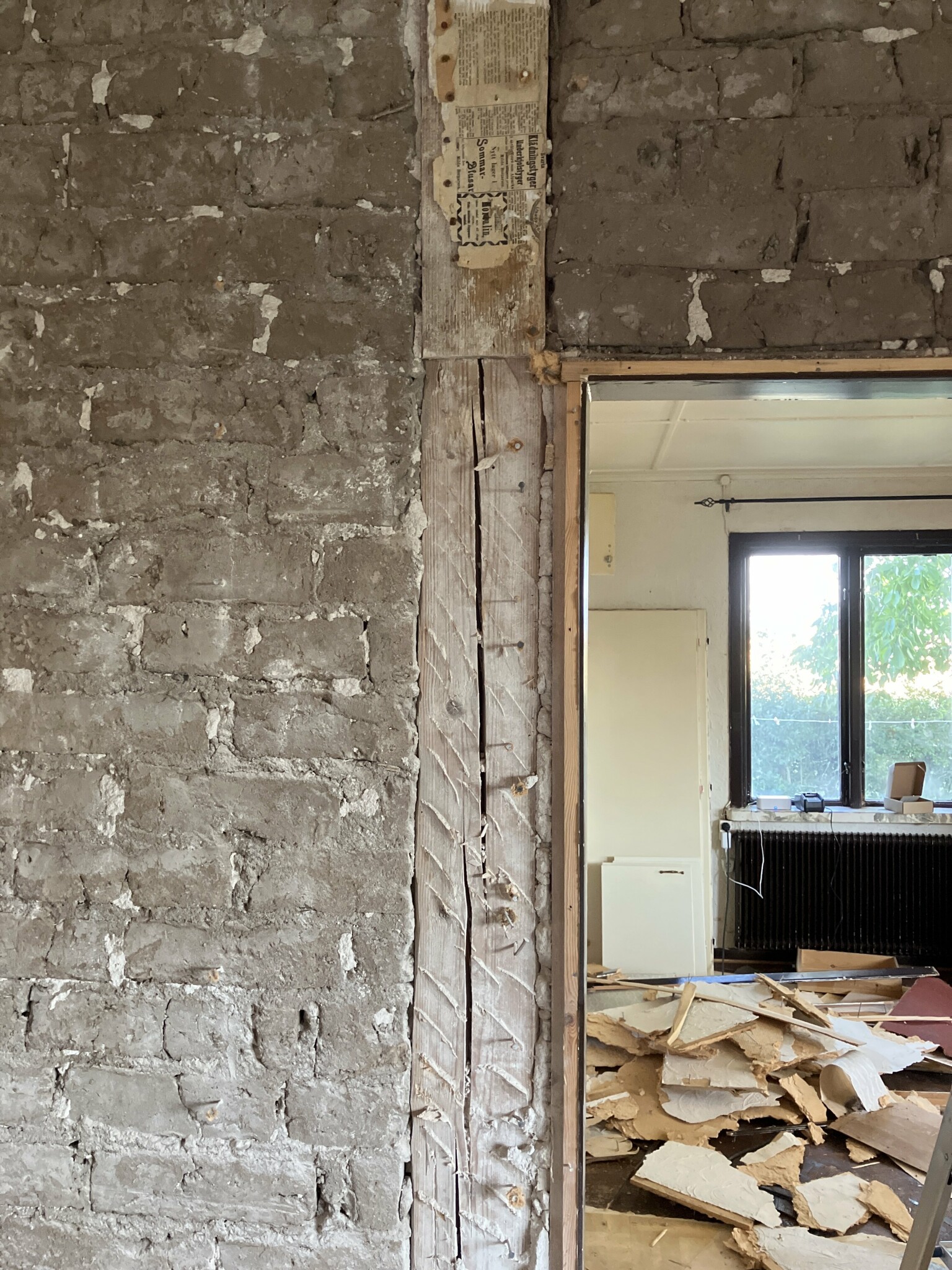
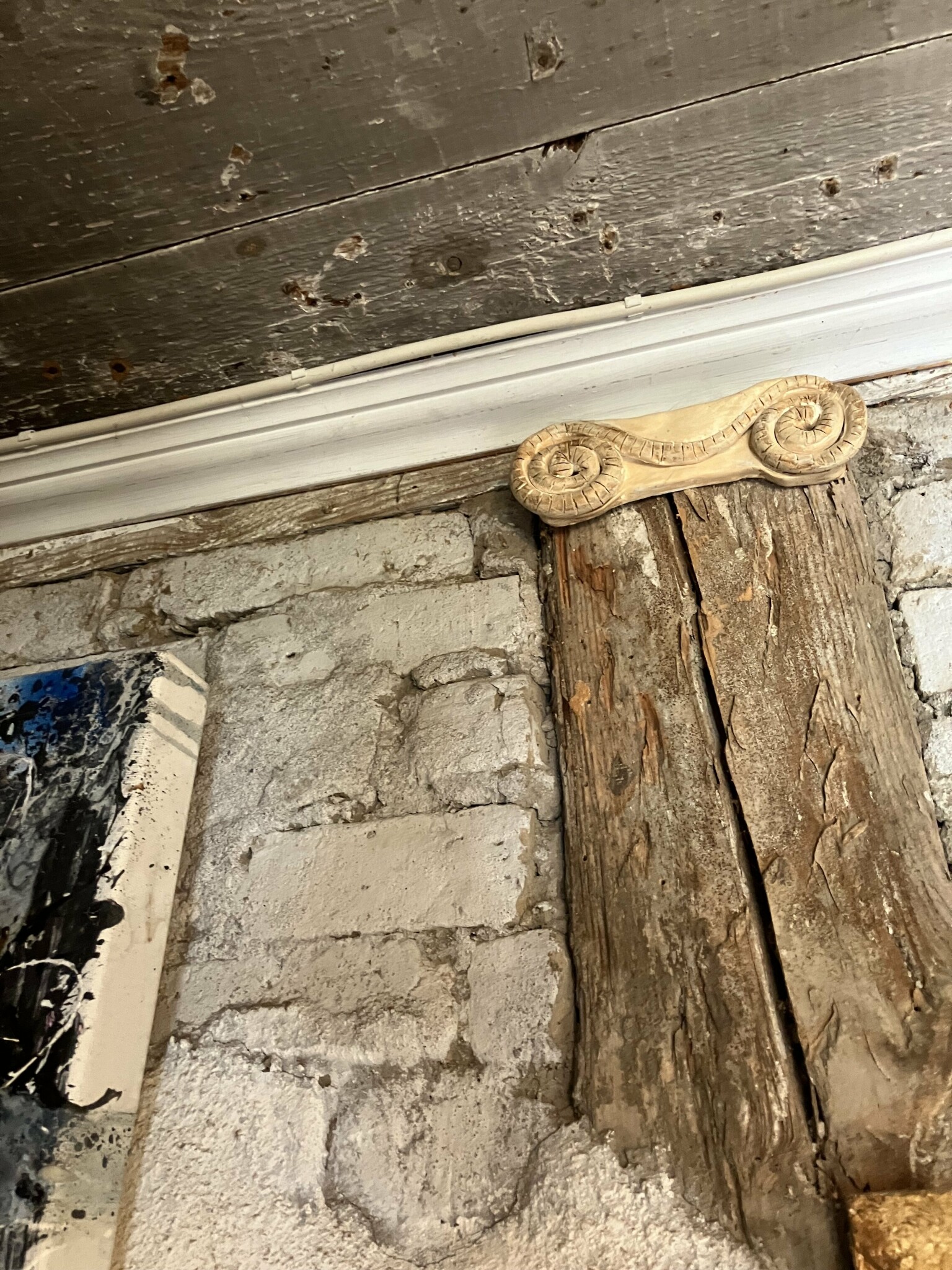
The bricks may be "filling" in the wall that aren't needed for structural reasons, but the vertical studs can very well be load-bearing, and horizontal timber may also hold the exterior wall together with the chimney. It looks a bit in the picture like it is built according to the same construction principle as a "half-timbered house," and in that case, it can brace the house both horizontally and vertically, and if so, you need help from the right type of constructor to remove the wall, if it's even a suitable measure.
A knowledgeable person needs to see the entire construction of the house, including the rafters, preferably both via drawings if they exist, and also on-site, to determine if it is suitable, or inadvisable for structural reasons, to remove the wall, and how it should be done, and what, where, and how the wall should then be replaced.
I was just at a friend's house that has similar walls and they said it might be clay mortar (not fired stones) and therefore the wall itself might not be load-bearing, but the beams might be, a bit like you mentioned. From your experience, do you see any major risk in taking down the stone?S skogaliten said:Contact a building antiquarian, for example, at the County Museum in your county, or someone knowledgeable about older buildings (search, for example, via the Swedish Building Conservation Association's website), regarding advice about the wall.
The bricks may be "filling" in the wall that are not needed for strength reasons, but the standing studs can very well be load-bearing and the horizontal timber also holds the outer wall together with the chimney. It looks a little in the picture like it is built according to the same construction principle as a "half-timbered house," and if so, it can brace the house both horizontally and vertically, and in that case, you need help from the right kind of constructor to be able to remove the wall, if it's even a suitable measure at all.
A knowledgeable person needs to see the entire house's construction, including roof trusses, preferably both via drawings if such exist, and also on-site, to determine if it is appropriate, or unwise from a structural standpoint, to remove the wall, and how that should be done, and what, where, and how the wall should be reinforced in that case.
S Sellergrenskan said:I was just at a friend's house who has similar walls and they said it might be clay mortar (i.e., not fired bricks) and therefore the wall itself might not be load-bearing, but the beams might be, similar to what you mentioned. From your experience, do you see any major risk in taking down the stone?

I would wait to take down the stone until I know which parts of the woodwork can be moved or which ones are not suitable to move at all.S Sellergrenskan said:I recently visited friends with similar walls, and they mentioned that it could involve clay mortar (i.e., not burnt bricks), and therefore the wall itself might not be load-bearing; instead, the beams could be, as you suggested. Do you, from your experience, see any major risk in taking down the stone?
From a style perspective, the old wall/the part of the old wall that must remain can become a decorative element that connects to the house's history, with "its stones," for example, covered by a thin layer of clay plaster or lime plaster.
Otherwise, you would need to arrange a good filling for the part of the wall that needs to remain.
Smacking on plasterboard and trying to create 90-degree corners might not be the most attractive if you want to preserve at least parts of the character in an old house.
Have a little patience for a few days until you get help from someone knowledgeable in the local building traditions via the tips on where to look that I gave earlier.
Thank you so much for the help!S skogaliten said:I would wait to remove the stone until I know which parts of the timber can be moved or which are not suitable to move at all.
From a stylistic perspective, the old wall/the part of the old wall that has to remain can become a decorative element that connects to the house's history, with "its stones," for example, covered by a thin clay plaster or lime plaster.
Otherwise, you need to arrange a good filling for the part of the wall that needs to remain.
Slapping on drywall panels and trying to create 90-degree corners might not be the most attractive if you want to preserve at least parts of the character of an old house.
Have a little patience for a few days until you've gotten help from a knowledgeable person within the local building tradition via the tips on where to search that I gave earlier.
Click here to reply