Hello everyone,
New to the forum but have been reading and benefiting from your expertise in various matters for a long time.
However, I have now found myself in a situation where I need help.
Context:
House from the mid-70s
Concrete basement from floor to ceiling.
About 40 sqm
We started a project to replace the floor in our basement as the joists and insulation were directly on the concrete floor.
When this was done, we also noticed that there was a bad smell coming from the walls. We contacted a dehumidification/sanitation company who concluded that the walls would probably benefit from being torn down and rebuilt, while we also plan to drain as soon as the vessels have released.
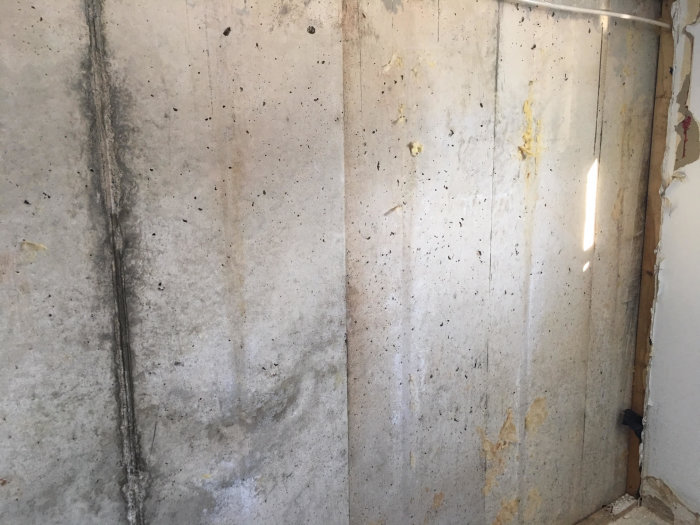
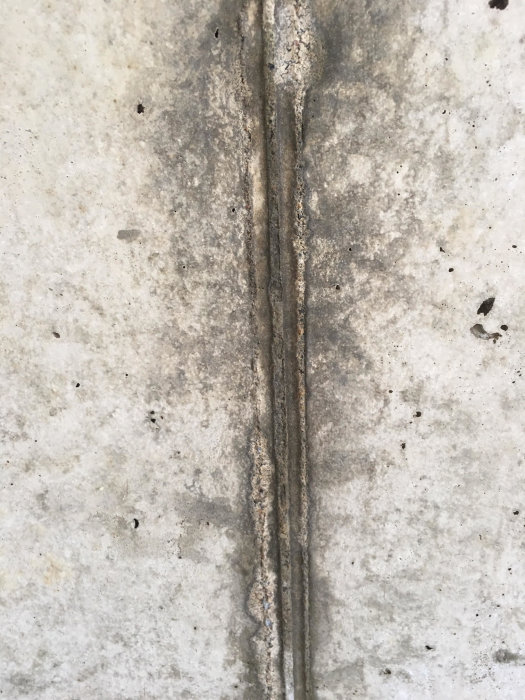
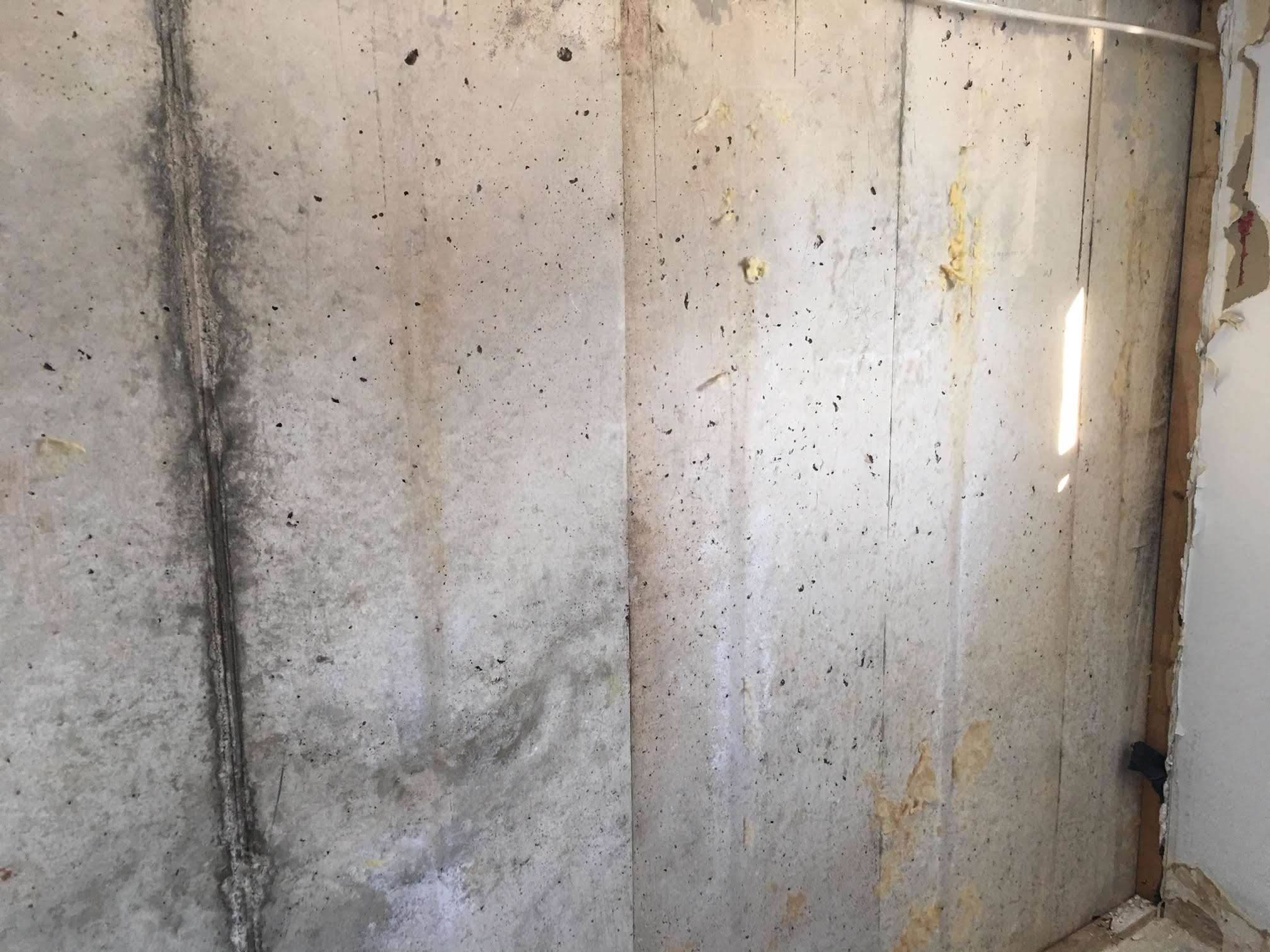
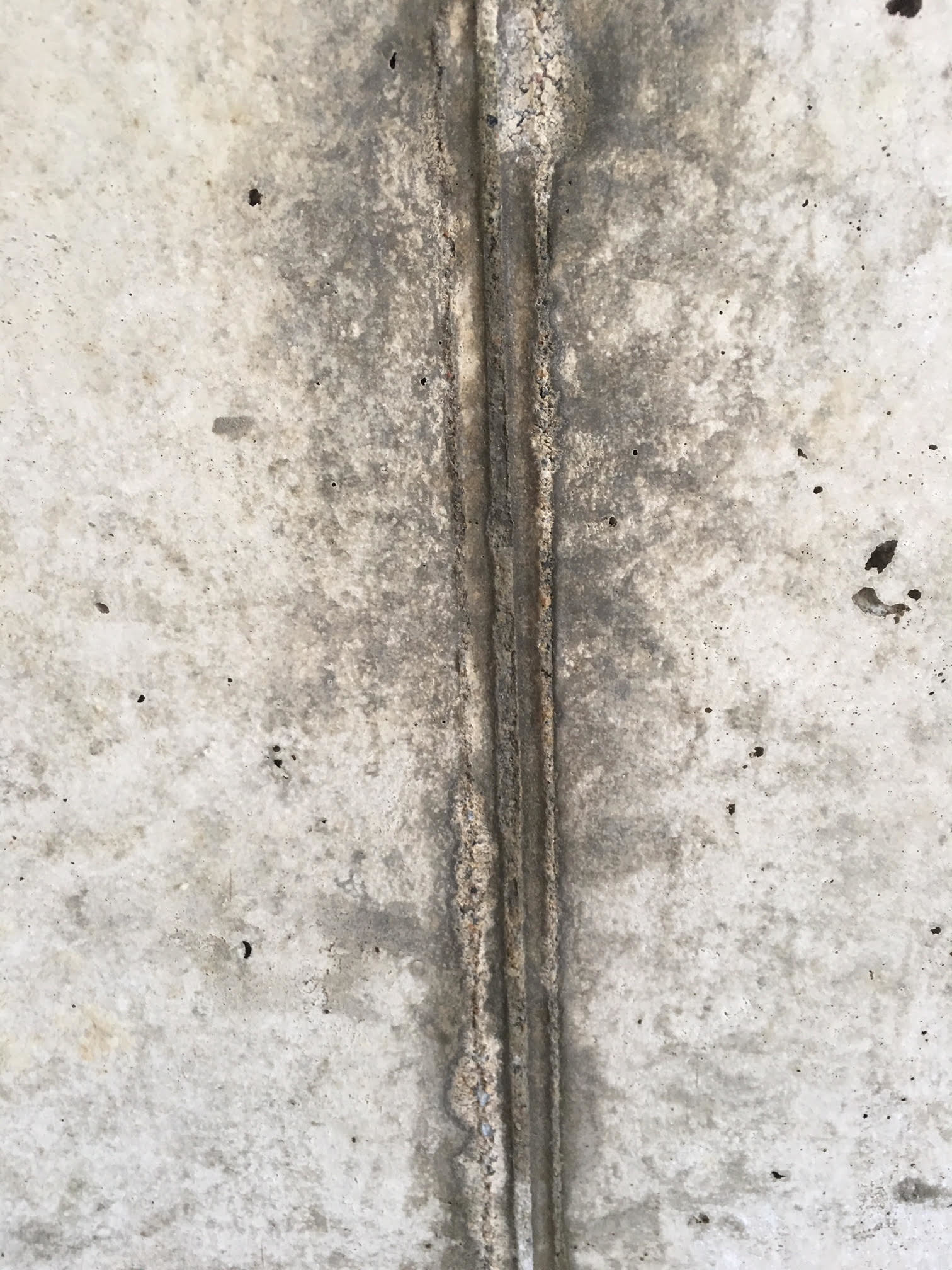
I opened up the wall today to check the status of the concrete wall and discovered the following:
From this scenario, I have the following questions.
The following questions:
1. What is this on the wall? What should be done about it and what needs to be considered?
2. How do you clean these walls and floors?
I have read several threads that refer to chlorine, while others say it's an absolute no-no.
What is correct?
3. Air gaps in the wall.
My father suggests that we build the joists a few cm away from the wall so there is an air gap between the concrete wall and the joists. But all guides only refer to making an air gap at the top and bottom of the wall.
Advantages/disadvantages, what should I consider?
4. Radiators, how do you deal with these? Turn off the water, tear down the walls, put up new joists and reattach the radiators without needing to seal them off, etc.?
That is, can the radiators remain in their pipes with some support, just building a new wall/joists behind them to attach them directly?
I have had 2 companies come and inspect and answer these questions, so I thought I'd provide answers in case someone else encounters similar problems.
We have found the cause of the moisture problem; it came from the neighbor's house which has been addressed.
1. No problem, caused by moisture, washed clean and neat with a little water and chlorine.
2. Water and chlorine or mold removal agent
3. Concrete wall -> 2 cm air gap -> Studs/insulation -> wall
You can also apply plastic on the studs/insulation on the side facing the concrete wall if you want to be extra sure.
4. Worked fine to just "clamp them" between things and let them "hang freely"
Have had 2 companies come and inspect and answer these questions, so thought I'd give answers in case someone else encounters similar issues.
We found the cause of the moisture problem, it came from the neighbor's house which is now fixed.
1. No problems, caused by moisture, cleaned nicely with some water and chlorine.
2. Water and chlorine or mold removal agent
3. Concrete wall -> 2 cm air gap -> Studs/insulation -> Wall
You can also put plastic on the studs/insulation on the side facing the concrete wall if you want to be extra sure.
4. Worked fine to just "fasten them" between things and let them "hang freely."
Best regards
Hello,
I'm considering the same thing but wherever you read, it's not recommended to put up walls in the basement. How did the result turn out for you? Did you leave any opening at the top/bottom? How do you get the air to move behind the wall? Did you use drywall?
The best thing is to plaster the walls and then paint with a diffusion-open paint. Using studs and laying panel material might mean that you're trapping moisture, which will eventually lead to microbial growth (mold).
If you don't drain and insulate from outside, I wouldn't put panels on the walls and would simply plaster them instead. You could also build/buy a Nivell system (or a variant) with mechanically ventilated walls that blow out moisture and keep an air gap "warm" with indoor air if you absolutely want panels but can't drain.
The floor as well, since it's the mid-'70s I'm assuming it's an uninsulated slab on the ground, so either just lay a needlefelt carpet, or alternatively, tiles in a relatively small size (I would say a maximum of 15x15cm) since it's only the joints that "breathe" and let moisture through.
You can clean with Klorin to remove the mold that's already there.
Click here to reply
Vi vill skicka notiser för ämnen du bevakar och händelser som berör dig.