I just started laying underlay on my Attefall house. I bought something called underlay fabric 117 at Byggmax. It should work under roof tiles. But damn, it was thin. Not at all like the underlay paper I'm used to. The adhesive tape stuck well, so that wasn't a problem. But it got bubbly under the fabric where the adhesive isn't.
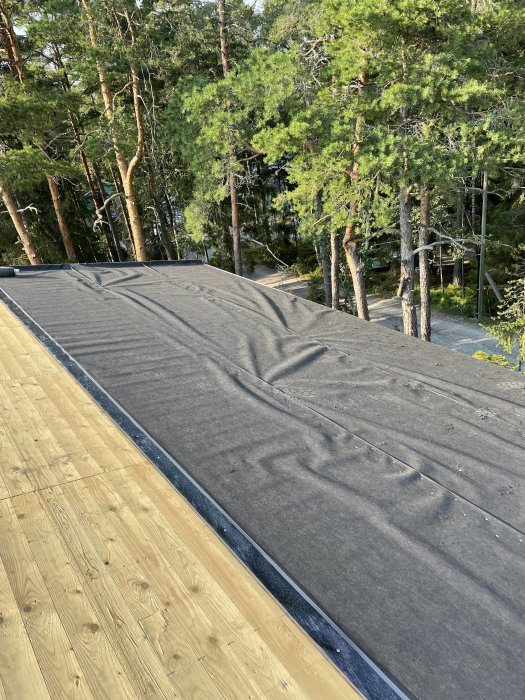
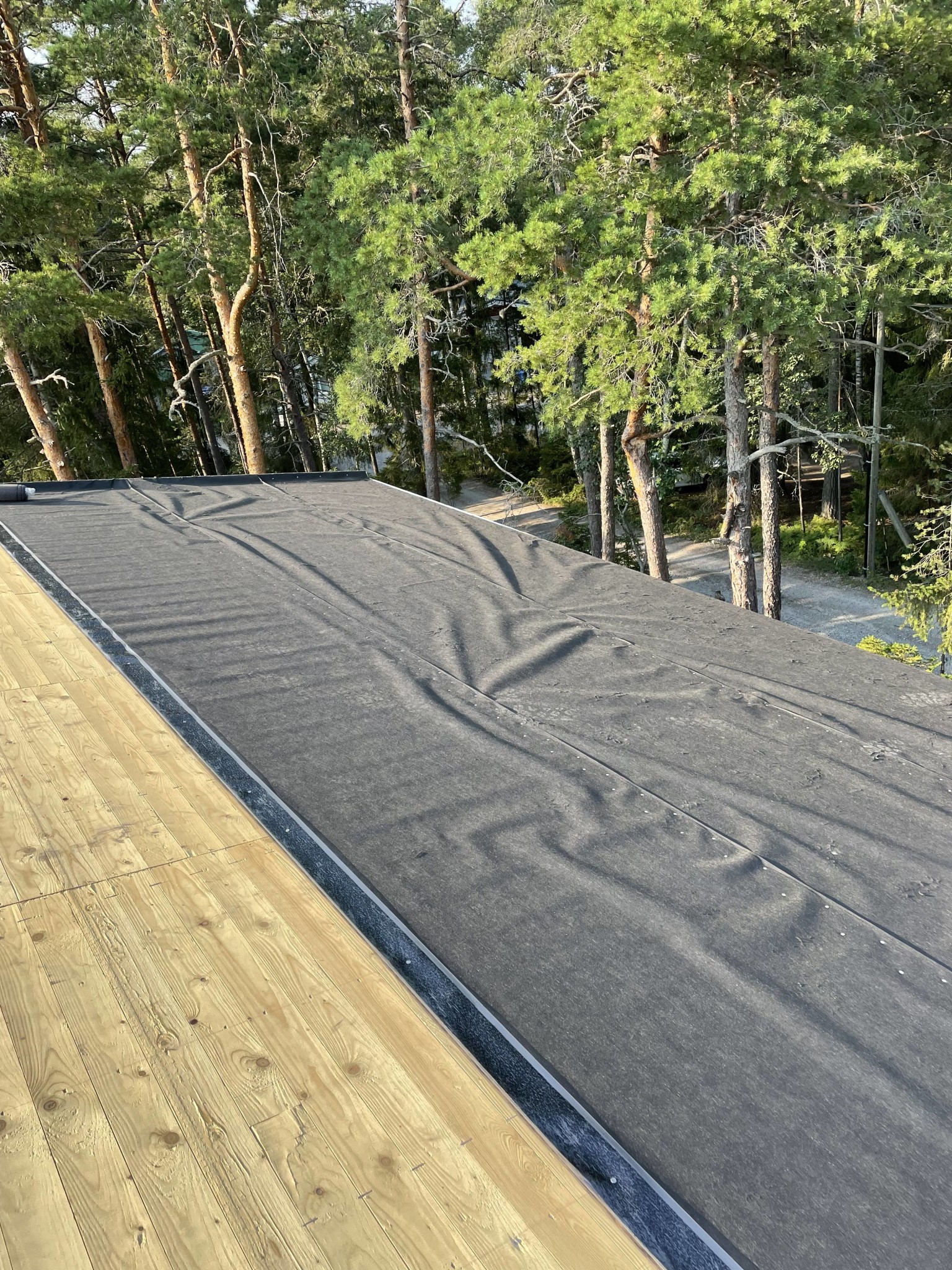
This is how it looks. Do I have to redo it?
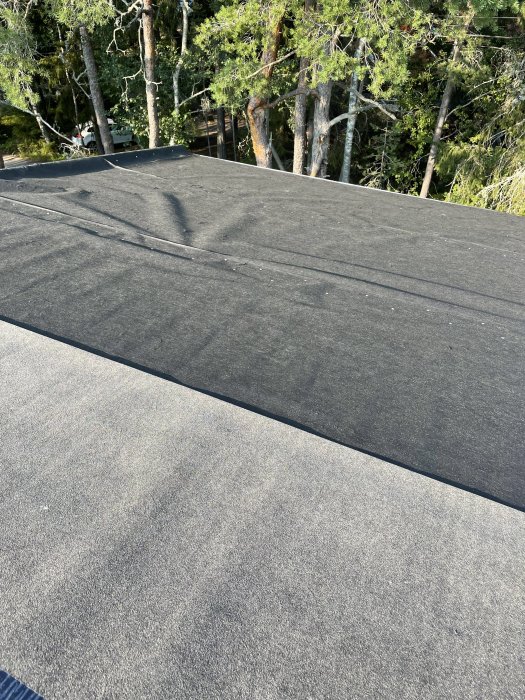
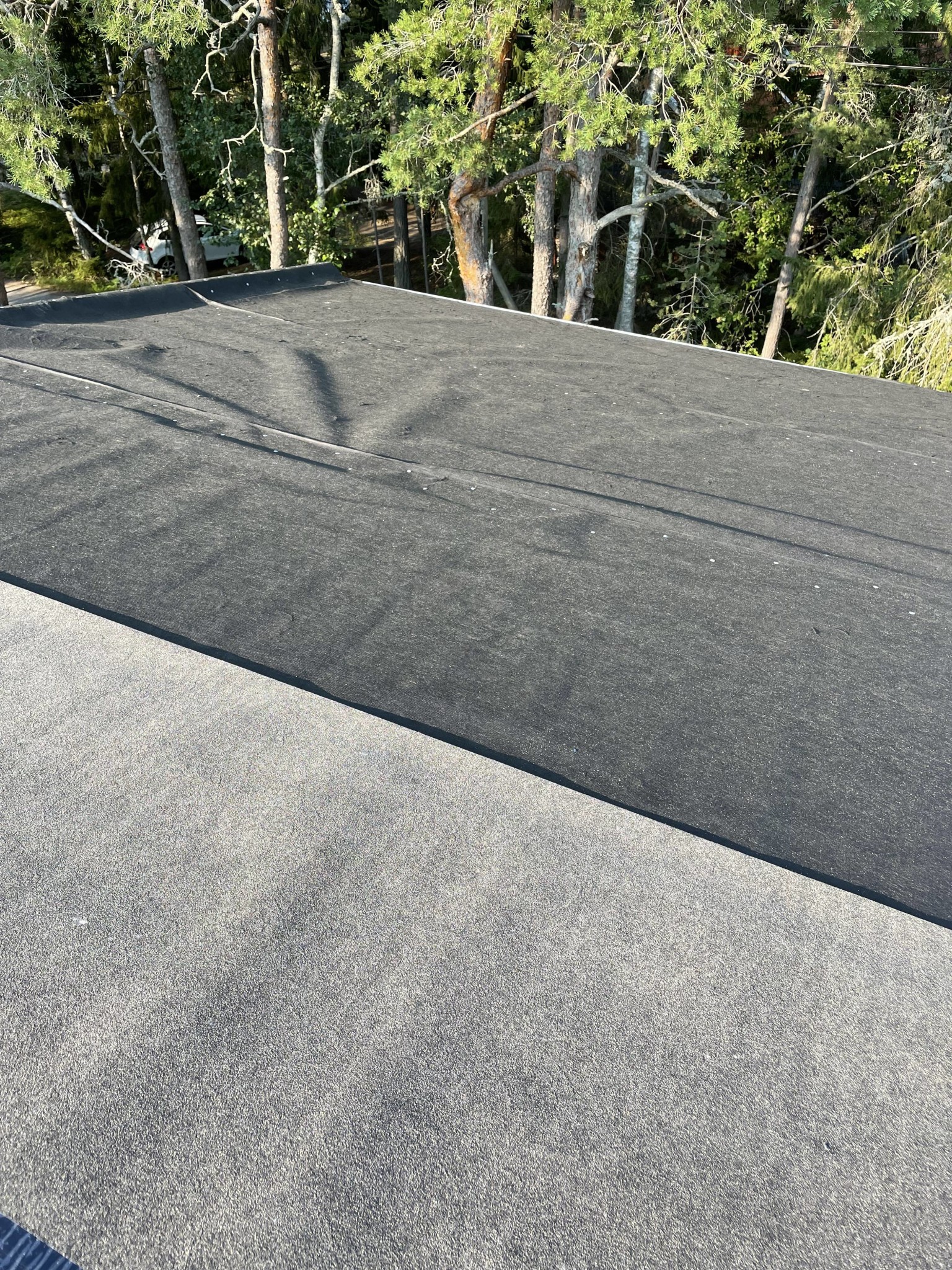
I had some YAP2200 at home that I used at the end. Here you can see the difference:
Fabric is a completely different material than cardboard and should be treated differently. For example, I don't think the one you have chosen is okay to nail through both layers; it should be stapled discreetly and then really only held in place by the battens.
I sometimes recommend fabric (often yep700) to some because I find it incredibly easy to install compared to cardboard for beginners, so I don't quite understand how it turned out like that for you
You should redo it as you assembled it incorrectly and nailed through the canvas.
It should only be nailed through the bottom layer and not through the entire seam.
It is held in place by the adhesive edge.
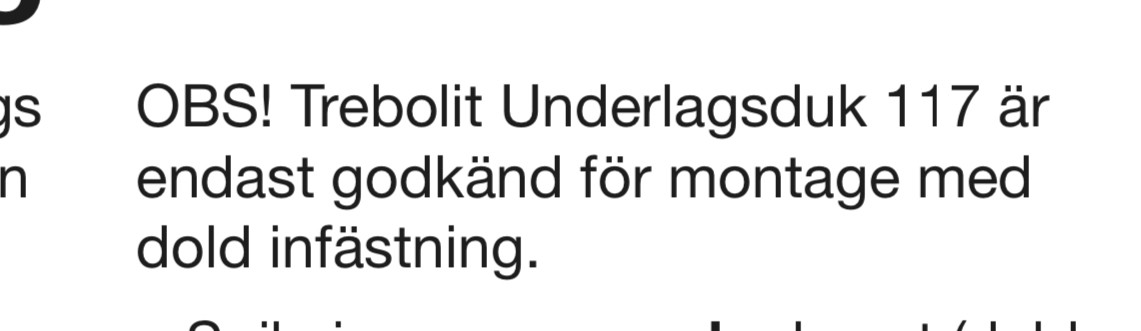
This is also clearly stated in the installation instructions.
You'll need to redo it. The instructions are clear that it should be hidden fastening. [link]
I skimmed through the installation instructions above and it mentions the example of nailing through both layers, so there's no major reason to redo it.
Put the same cloth last year, avoid walking on the pappen when the sun is shining on it, it can get easily damaged. It might get a bit bubbly, I found that it settles after a day in the sun. Good luck.
I also learned in elementary school to double-check things, especially when it comes to Byggmax. In the edition of the instructions that is not pieced together from several models, it is clearer.
you must have forgotten your reading glasses when you carefully read the instruction
"Nailing through the lower layer (hidden attachment): Felt nails 20x2.8 or 25x2.5. Nail pattern according to Method 1."
"Assembly can be done with hidden attachment (if battening occurs immediately) alternatively with nailing through both layers of the underlay covering"
Vi vill skicka notiser för ämnen du bevakar och händelser som berör dig.







GoC said: