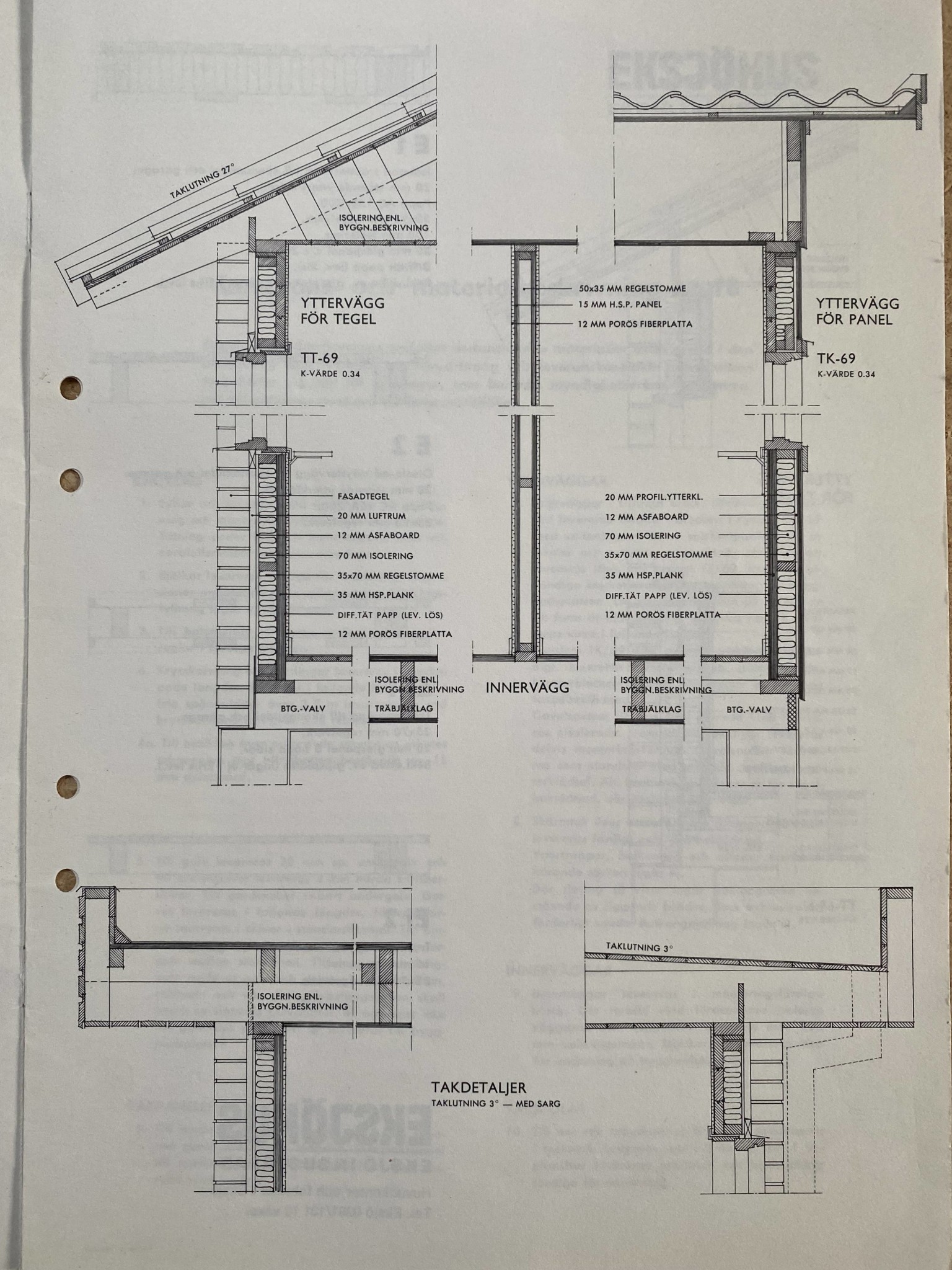
if you don't have any blueprints of the house where you can see how the exterior wall is constructed, contact the municipal building permit department and have the drawings sent to you, e.g., via e-mail
if there are roof trusses above the window, you should check the drawings
If you don't have any construction drawings of the house where you can see how the outer wall is constructed, contact the municipality's building permit department and have the drawings sent, for example, via email.
If there are roof trusses above the window, you should check the drawings.
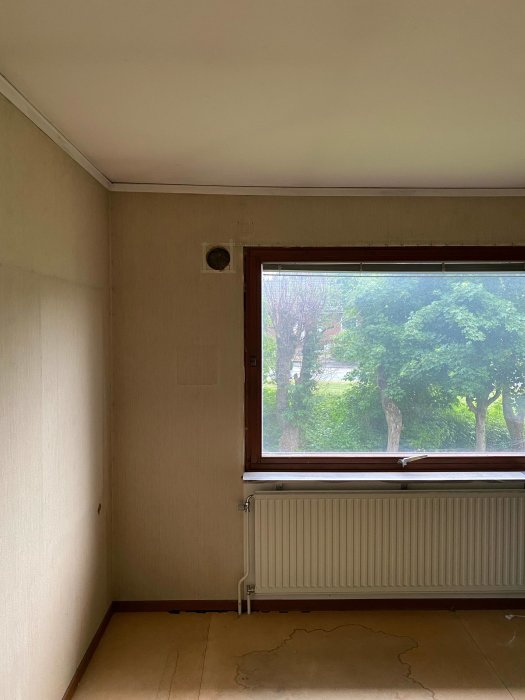
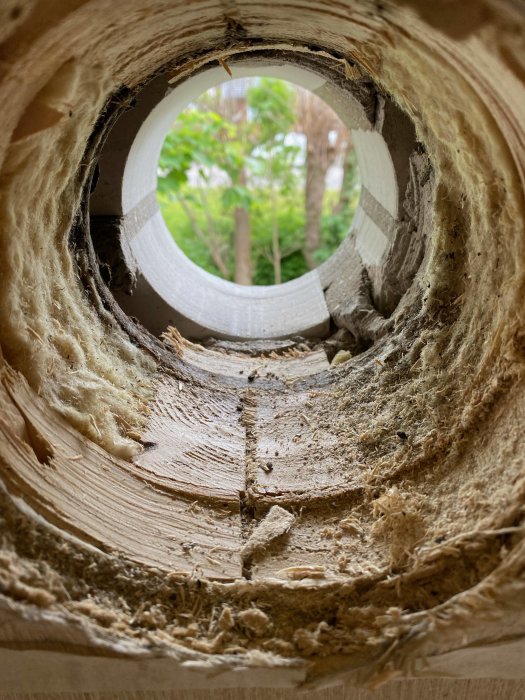
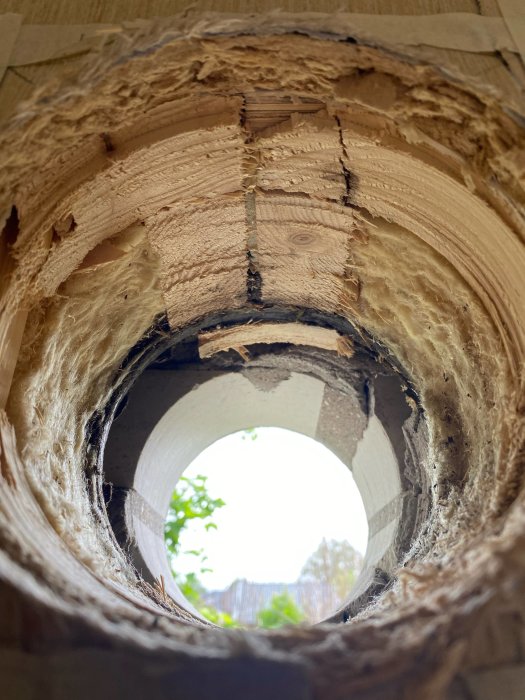
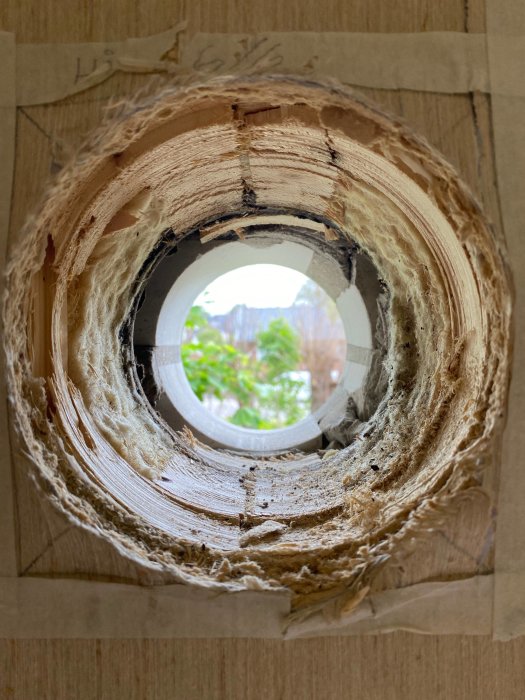
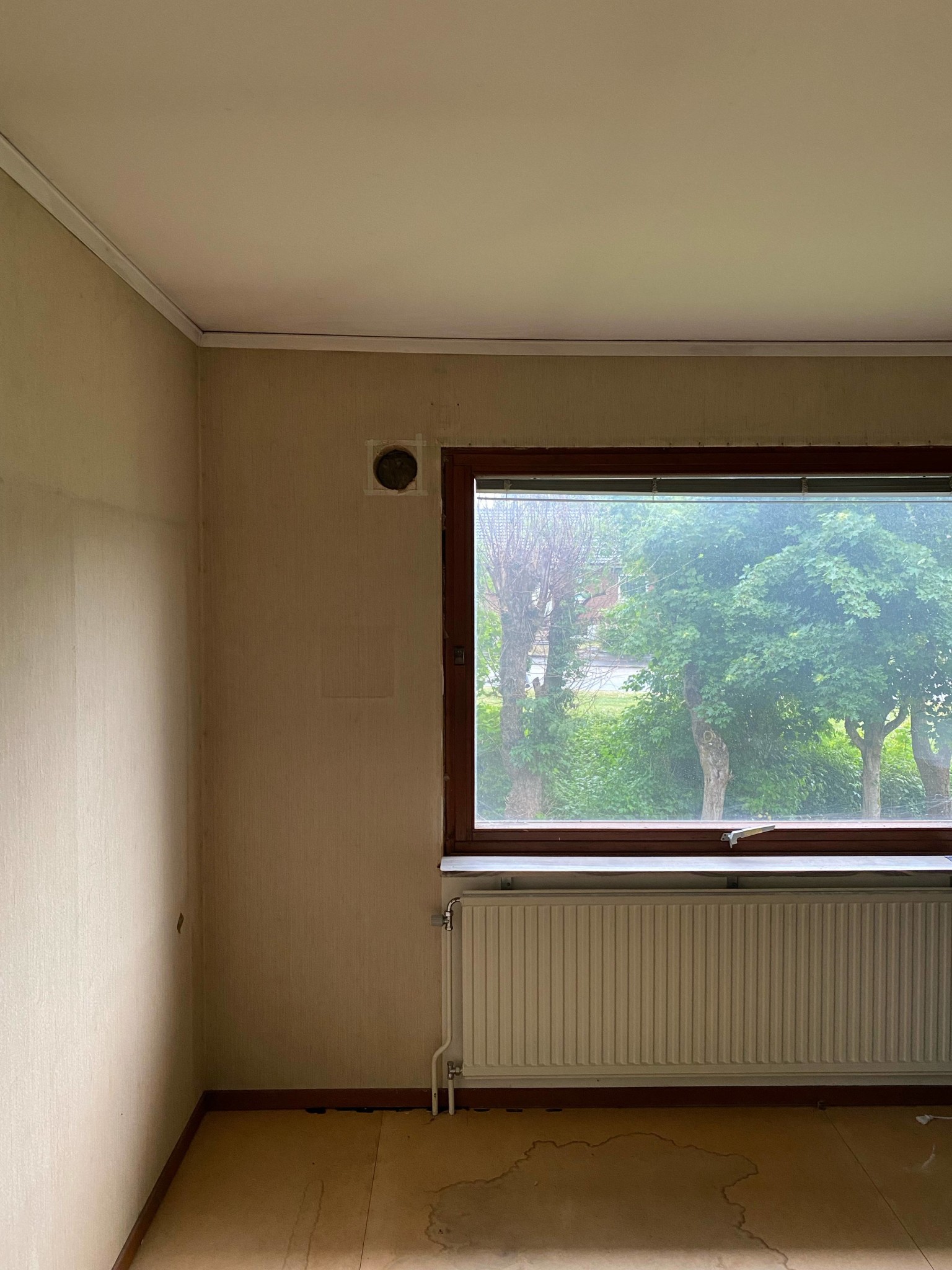
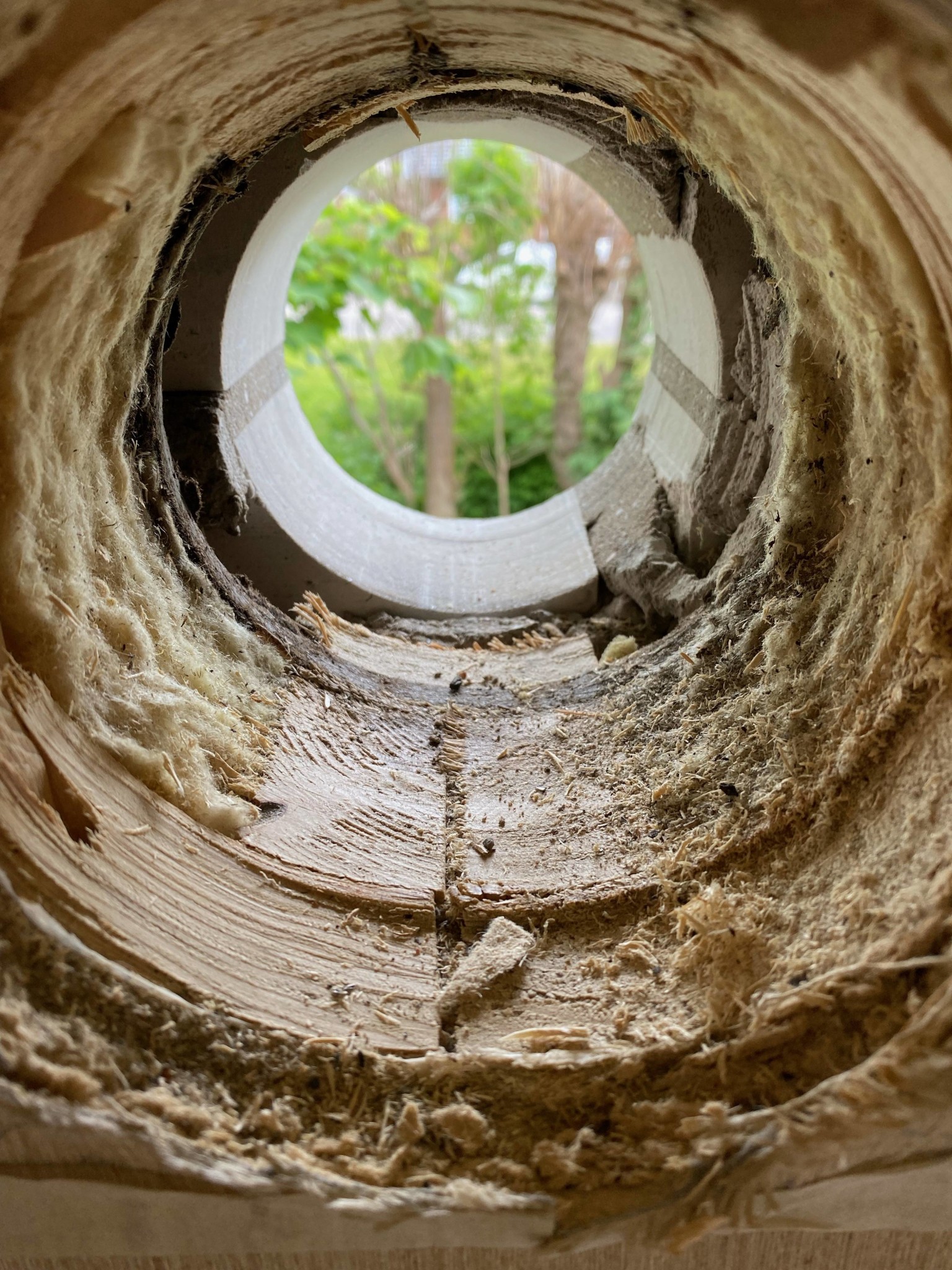
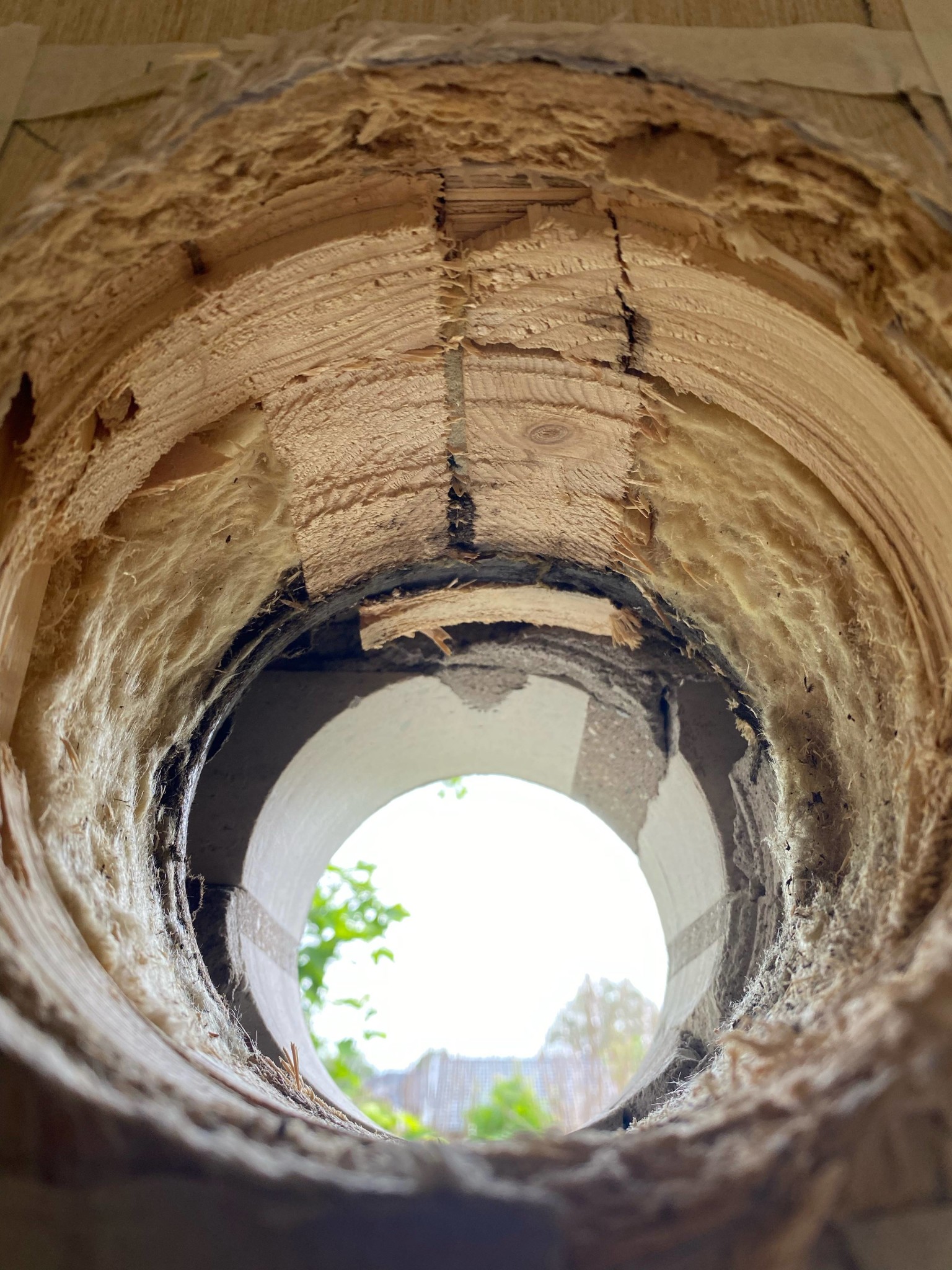
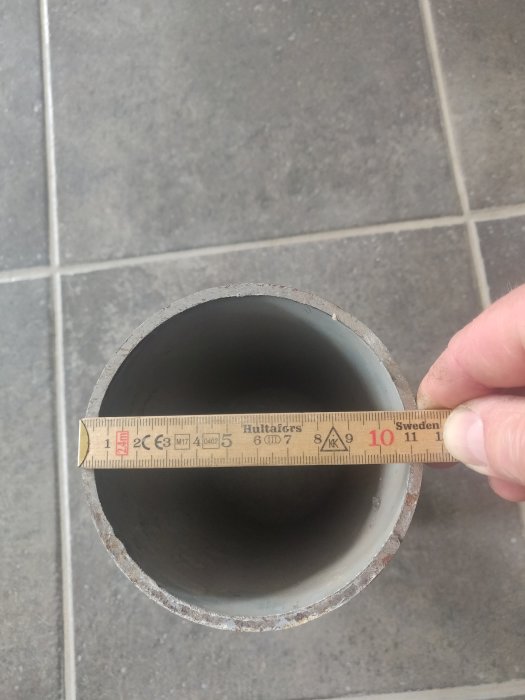
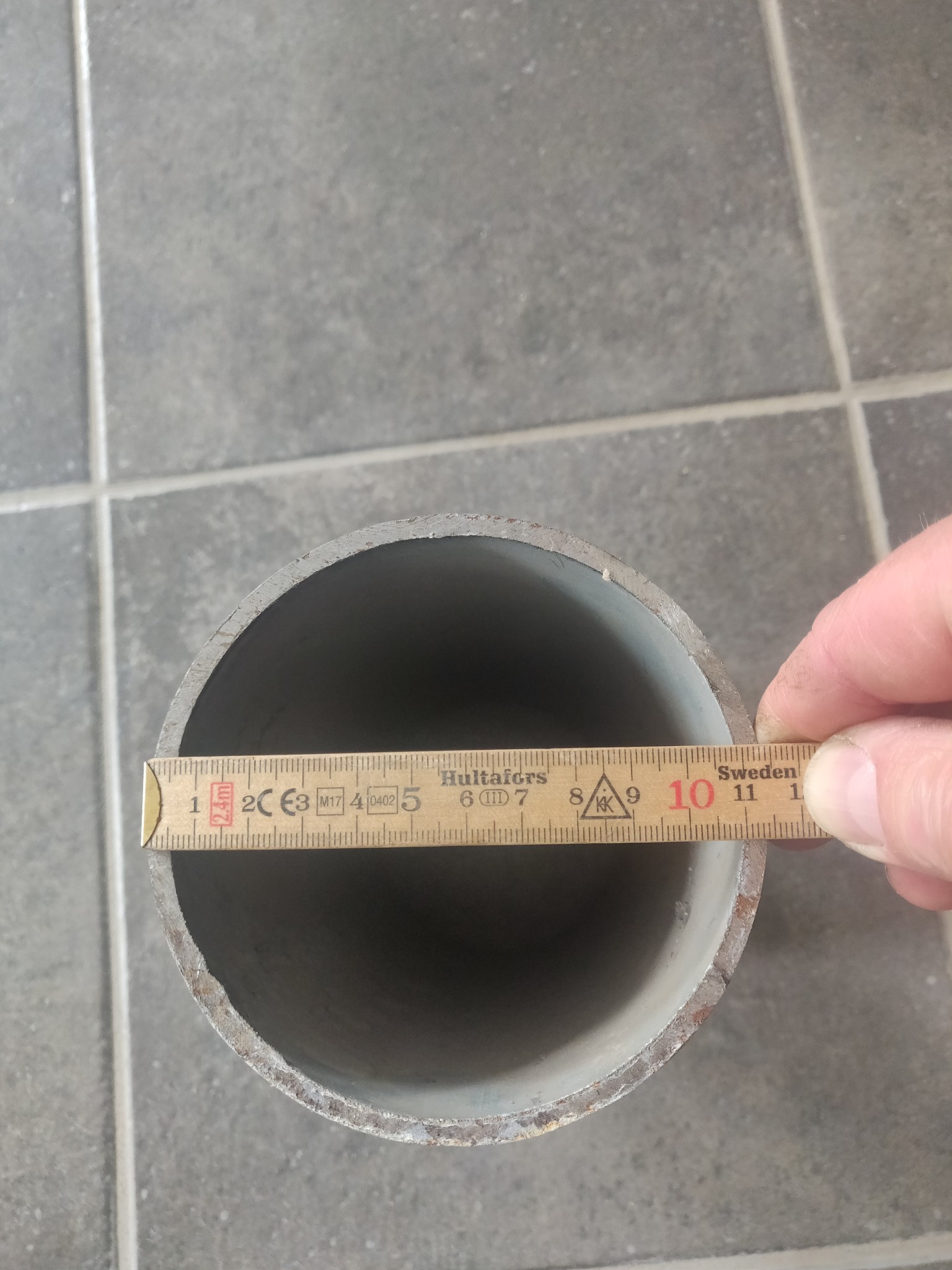
I have some information. The red arrow shows where the ventilation hole is in the pictures.
Without having detailed knowledge of the issue and the competence to fully interpret the drawings, it could indeed be problematic as it seems that the rafters rest on the wall you have drilled into, meaning you might have pressure from the rafters/top plate. By the window, it is likely that a supporting beam has been placed, and the load from the rafters is distributed down through side columns. It could be that you have cut off one of these side columns, thereby weakening the load-bearing structure.
I can't say for sure if that's the case, and I can't comment on any potential impact.
It is a panel-built house. If the hole cutters could read drawings, they would not have placed the hole right there. The hole ended up in the middle of a joint between two wall panels. Since the trusses (W-truss with hipping) rest on this outer wall, the roof loads become quite large. I would demand that the hole cutters plug this hole (including wedges for solid support of the sawed-off studs) and make a new one a little further away from the window.
I agree that the studs should be repaired. But who is responsible for the repair and new hole depends on the instructions you gave the hole makers. If you pointed and said that you want a hole here, they cannot be blamed for this.
Thanks for all the answers, it's greatly appreciated! This is a fantastic forum.
I'll have to fix this and make a new hole a bit away from the existing one.
Unfortunately, I can't demand that they fix this since they disclaimed responsibility. My soon-to-be partner and I are working against a deadline and this actually goes a bit against my principles to make this type of intervention so hastily... but well... fast sometimes leads to mistakes, lesson learned. I even urged them to proceed cautiously to avoid drilling through something unwanted.
5 out of 6 holes turned out just as planned, but that doesn't help me right now...
Do you have good tips on how I can go about wedging in a support so that the studs regain their relieving function?
Also, how do I plug the hole from the outside, sealant?
It's about using imagination. I would turn a slightly conical round block that I can knock in, but then you need access to a lathe... The basic principle is to tighten using wedges. On the outside, you need to insert new bricks. Holes that large don't look nice with sealant. Or you could install a plate valve that's closed and pretend it's an additional air vent.
Or, instead of doomsday prophecy, one manufactures something made of steel that supports the rule while simultaneously allowing for the installation of a valve. You would then have to cut slots if it's a valve with a through pipe, but that's a minor concern, somewhat depending on which valve you plan to install.
Or, instead of a doomsday prophecy, you make something out of steel that supports the rule but at the same time allows for valve installation. You would have to cut slots if it's a valve with a through pipe, but that's a minor concern, depending a bit on which valve you plan to install.
Thought the same, it should be possible to make something out of steel that is strong enough but still of a dimension that allows air passage.
It is a prefab house. If the hole cutters could read drawings, they would not have placed the hole right there. The hole ended up right in a seam between two wall elements. Since the roof trusses (W-truss with hip) rest on this exterior wall, the roof loads become quite large. I would demand that the hole cutters plug this hole (including shims for a solid support for the cut studs) and make a new one a little further from the window.
I have practically never encountered a hole cutter who looks at a drawing or takes responsibility for what is inside the surface layer; hole cutters make holes where they have been directed, and it is up to the client to ensure that the placement is appropriate.
I have never encountered a hole puncher who can read blueprints, but as a rule, neither can the client. It is an absurd situation. In occasionally overregulated construction Sweden, only formal certification is required to perform energy calculations and to be KA. Not even individual electricians need to have authorization. Or for that matter architects, designers, and a bunch of other super important competencies.
Click here to reply
Vi vill skicka notiser för ämnen du bevakar och händelser som berör dig.