
9,609 views ·
24 replies
10k views
24 replies
Cursed brick staircase - tips on repair.
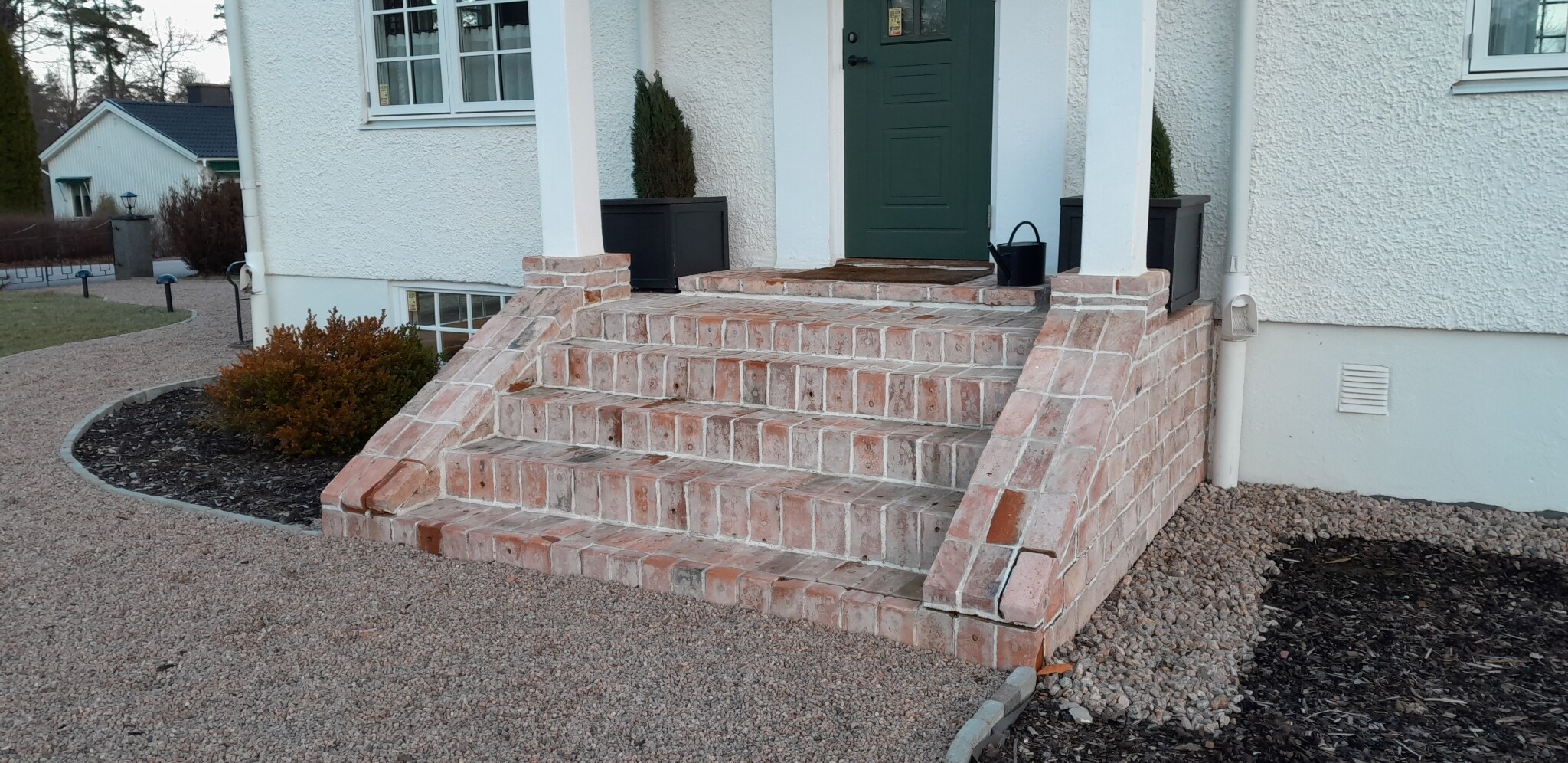
Hello Forum. After 3 years of repairs and additional work, I'm now checking with you what might be wrong with this construction (note, I've built it myself with recommended materials, so I only have myself to blame  .
.
In spring 2022, we cast a concrete/leca block staircase covered in bricks.
The mortar is hand-painted with water-mixed lime to get white joints.
Finally, the entire staircase is impregnated with Jotun impregnation for masonry.
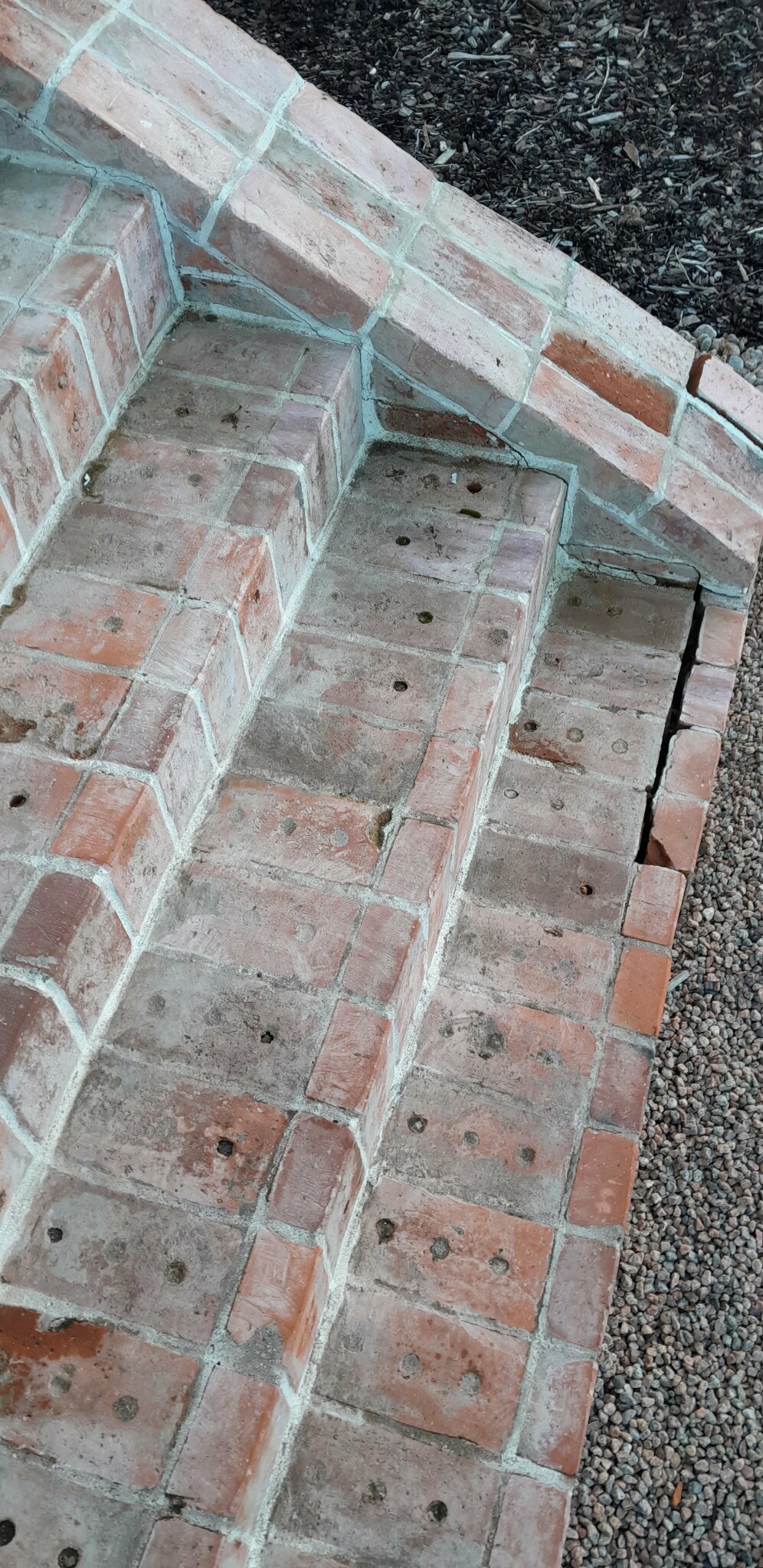
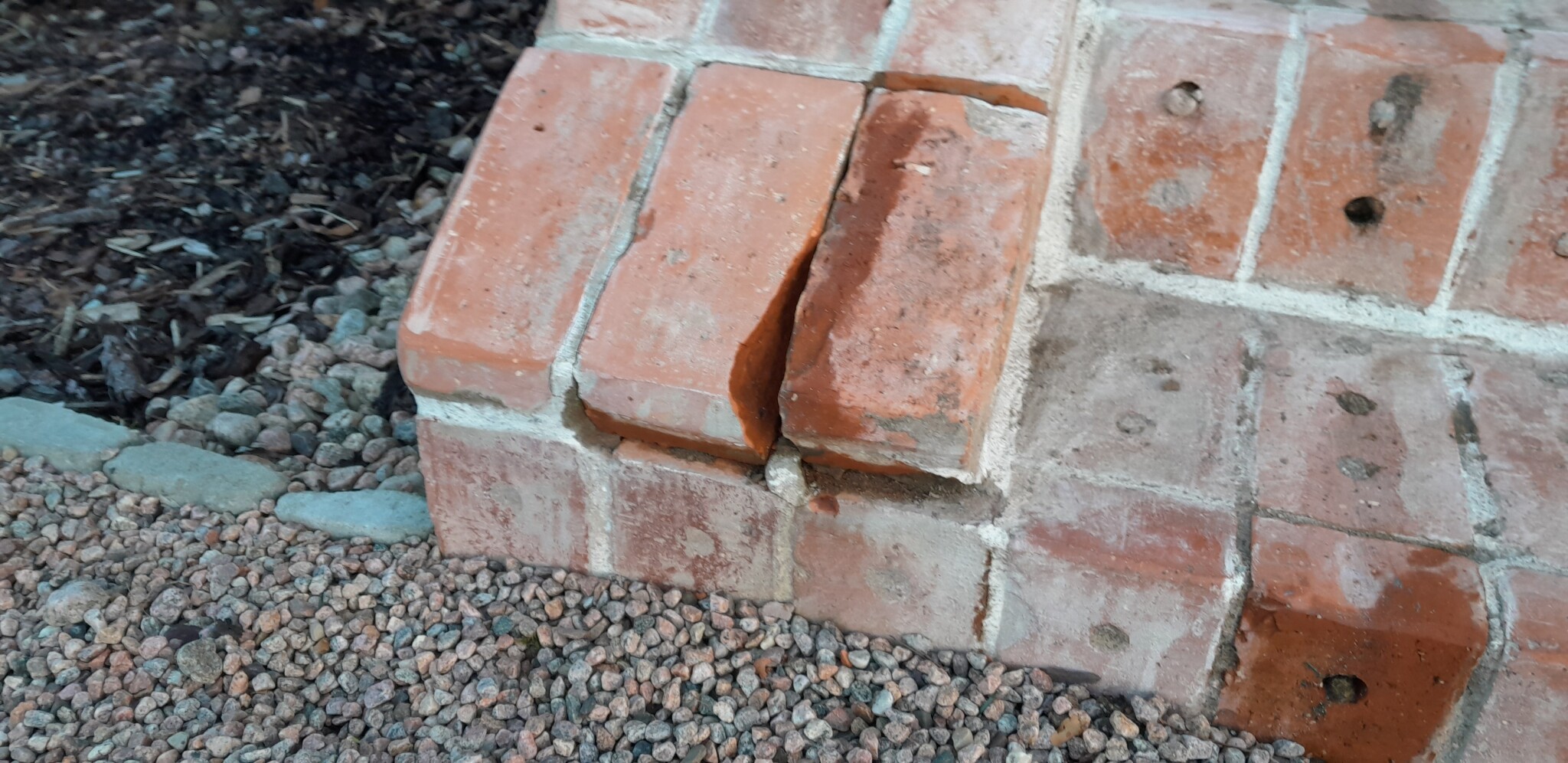
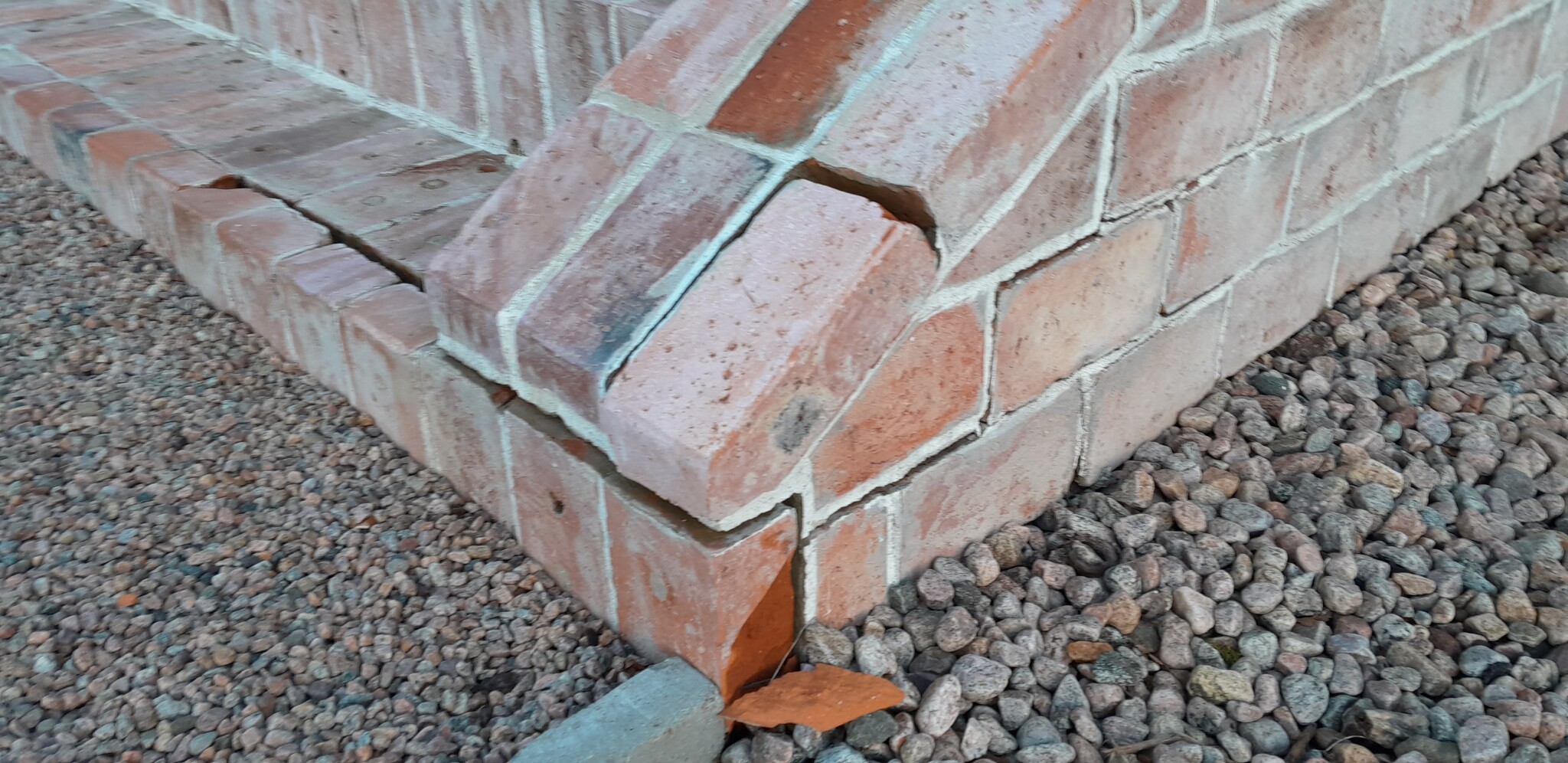
Both winters 2022-2023-2024, the joints have cracked, and water has seeped in and caused damage.
Chipped out each stone with joint damage and re-mortared/jointed last year.
Now we're back again for the second time, and there must be something I'm doing wrong in the procedure.
Grateful for tips for the third repair. Is it the wrong mortar, impregnation, or possibly even the stone?
Extra info.
Brick from 1927 (old chimney)
Mortar - (Render/Mortar C from Finja).
Impregnation - Jotun stone wall impregnation (12 liters for the entire staircase even though 4 liters was considered sufficient)
Thanks in advance.
.In spring 2022, we cast a concrete/leca block staircase covered in bricks.
The mortar is hand-painted with water-mixed lime to get white joints.
Finally, the entire staircase is impregnated with Jotun impregnation for masonry.
Both winters 2022-2023-2024, the joints have cracked, and water has seeped in and caused damage.
Chipped out each stone with joint damage and re-mortared/jointed last year.
Now we're back again for the second time, and there must be something I'm doing wrong in the procedure.
Grateful for tips for the third repair. Is it the wrong mortar, impregnation, or possibly even the stone?
Extra info.
Brick from 1927 (old chimney)
Mortar - (Render/Mortar C from Finja).
Impregnation - Jotun stone wall impregnation (12 liters for the entire staircase even though 4 liters was considered sufficient)
Thanks in advance.
lime does not tolerate being submerged in water and freezing, nor does kc mortar. Brick, depending on how it is fired, does not either; there are ground bricks for such purposes. Who recommended this? The guy who hangs around at Hornbach and knows electricity, masonry, tiles, plumbing, carpentry, and nuclear physics and therefore never gets a job anywhere?
Thank you for your response, Drburr. No, it was a difficult decision when the job was about to start.D Drburr said:lime cannot withstand being soaked in water and freezing, nor can kc cement. Depending on how it is fired, bricks cannot either; there is special paving brick for such uses. Who recommended this? The guy who hangs around at Hornbach and knows electricity, masonry, tiles, plumbing, carpentry, and nuclear physics, and therefore never gets a job anywhere?
The chimney bricks already came from an outdoor-standing chimney, so the strength of this was considered good enough to use again.
C-cement was considered usable as it was heavily impregnated after drying.
Lime is only brushed on the joints for appearance's sake.
Regards G



Use paving stones and/or retaining wall stones instead.G GustafZ said:
Our steps are made of this:
https://stenbolaget.se/products/visby-struktur-terramix-210x140x50
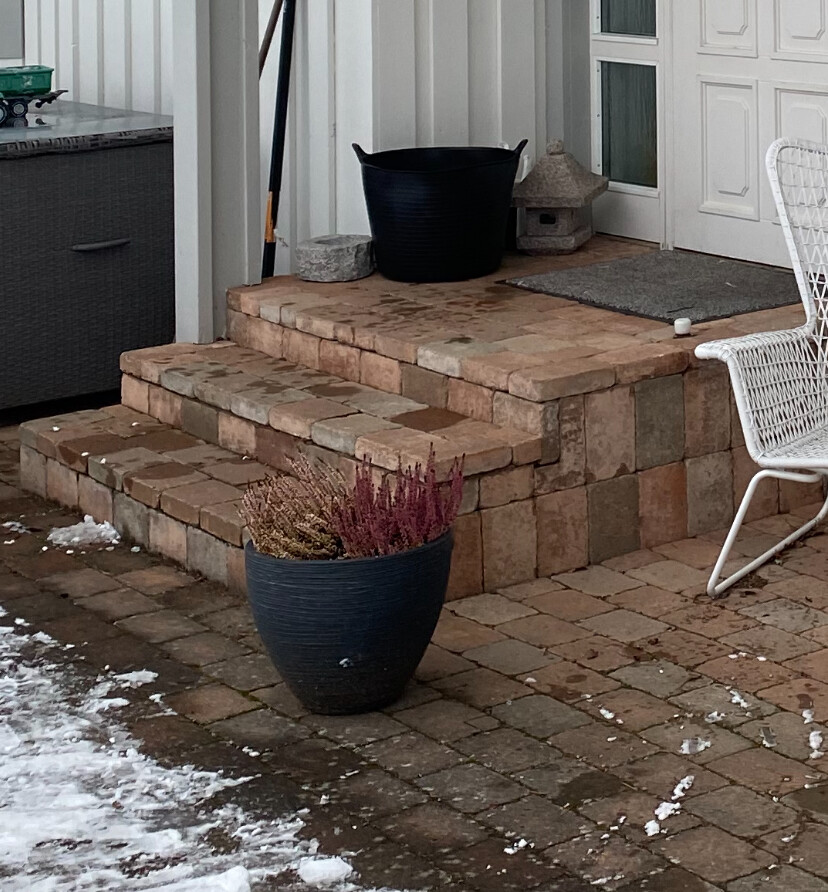
If you want more red, maybe this can suit you.
https://stenbolaget.se/collections/marksten/products/rustik-terra-200x133x50
How have you attached the brick? Laid in mortar or with adhesive or not at all? Do you have a slight slope so water doesn't stand still?
Shouldn't paint the devil over the whole wall, some seem to stick. But the mortar with cbruk won't last many years.
If you don't want to redo everything, I would try to glue back the loose stones and grout with a-46 or cement mortar (can be pigmented to at least a light sand color). Either it is too strong for the stone and comes loose or it holds for a few years.
Shouldn't paint the devil over the whole wall, some seem to stick. But the mortar with cbruk won't last many years.
If you don't want to redo everything, I would try to glue back the loose stones and grout with a-46 or cement mortar (can be pigmented to at least a light sand color). Either it is too strong for the stone and comes loose or it holds for a few years.

I am a novice at masonry but am a bit curious about the joint at the edge of the step, wouldn't it be better if the step stone extended all the way over the standing one with a half-brick innermost?
Yes, you have succeeded in all the wrongs😢G GustafZ said:Hello Forum. After 3 years of repairs and additional work, I'm now looking with you at what might be wrong with this construction (note: I built it myself with recommended materials, so I only have myself to blame
Spring 2022, we poured a concrete/lecablock staircase covered in brick.
The mortar is hand-painted with diluted lime to get white joints.
Finally, the entire staircase is impregnated with Jotun impregnation for masonry.
Both the winters of 2022-2023-2024, the joints cracked, and water has penetrated and burst.
Knocked off each stone with joint damage and re-mortared/re-jointed last year.
We are back again for the second time, and there must be something I'm doing wrong in the procedure.
Grateful for tips for the third repair. Is it the wrong mortar, impregnation, or even the stone?
Extra info.
Brick from 1927 (old chimney)
Mortar - (Plaster/Mortar C from Finja).
Impregnation - Jotun stone wall impregnation (12 liters for the whole staircase, even though 4 liters were considered enough)
Thanks in advance.
The brick you have used is not sufficiently moisture and frost-thaw cycle resistant, probably an MX1 classification on the brick or unclassified indoor brick.. for an outdoor exposed site, at least MX3 classified brick is required.
Against the ground, B-mortar is the lowest class that can be used, but preferably A-mortar..
Here you have used C-mortar, which absorbs water like a sponge, and you have Leca Stone underneath, which retains moisture…
If you're going to impregnate outdoor brick, it places enormous demands on the execution that there should not be any cracks and paths where water can get in, otherwise, it will frost burst…
It's possible to make a staircase if you want the look with facade brick..
Including an explanation of the different facade brick classifications so you can read..
https://www.wienerberger.se/content...de/SE_MKT_DOC_FAC_TEC_Eksponeringsklasser.pdf
Thank you for your responses. Yes, this construction went a bit too quickly, and in hindsight, I could have built it differently, but sometimes one is too energetic.
I'll throw in some answers to previous questions.
The stone is attached to the concrete/leca block stairs with mortar c. Joint compound finja between the stones.
Slope on all steps.
Oddly enough, very few frost explosions on the actual brick. Cracks strangely only occur between the stones and the joint itself, which initiates an explosion. It seems that the stones and the joint do not become one with the casting.
Thank you for your input.
I'll throw in some answers to previous questions.
The stone is attached to the concrete/leca block stairs with mortar c. Joint compound finja between the stones.
Slope on all steps.
Oddly enough, very few frost explosions on the actual brick. Cracks strangely only occur between the stones and the joint itself, which initiates an explosion. It seems that the stones and the joint do not become one with the casting.
Thank you for your input.
Nice staircase! It's clear that it's not something from Byggmax that's been stacked up—definitely worth trying to maintain its appearance.
I don't know much about masonry. But there is a significant difference in what can be used in a wall and what can be used on a flat surface without a roof. For example, a concrete roof tile on a steep roof can last twice as long as one on a flat roof (despite inspectors saying the lifespan is 30 years, regardless 😀).
C-bruk is definitely not something that works in this kind of construction. No way. This is more comparable to the joints in a bathroom floor than to the joints in a wall.
The brick, though, well, maybe, no one* really knows how it's been fired and it probably doesn't have any classification. It's not a material I would have initially gambled on, but now that it's in place, you can perhaps form your own opinion on how it holds up. I took down parts of the chimney at home about 5 years ago. Very large bricks, from 1922. Some of those bricks have been used outside to prop up various things, make sure the trailer doesn't roll away, etc. No frost damage at all, a few chips here and there, and most of the mortar fell off in the first year, then nothing more. I'm a bit surprised; my mom used bricks, normal-sized and somewhat modern, for similar purposes, and they crumbled after a few years.
*Some old guy probably knows that for chimneys in southern X, bricks were taken from Y brickworks, and they were heavy and dense like you wouldn't believe.
I don't know much about masonry. But there is a significant difference in what can be used in a wall and what can be used on a flat surface without a roof. For example, a concrete roof tile on a steep roof can last twice as long as one on a flat roof (despite inspectors saying the lifespan is 30 years, regardless 😀).
C-bruk is definitely not something that works in this kind of construction. No way. This is more comparable to the joints in a bathroom floor than to the joints in a wall.
The brick, though, well, maybe, no one* really knows how it's been fired and it probably doesn't have any classification. It's not a material I would have initially gambled on, but now that it's in place, you can perhaps form your own opinion on how it holds up. I took down parts of the chimney at home about 5 years ago. Very large bricks, from 1922. Some of those bricks have been used outside to prop up various things, make sure the trailer doesn't roll away, etc. No frost damage at all, a few chips here and there, and most of the mortar fell off in the first year, then nothing more. I'm a bit surprised; my mom used bricks, normal-sized and somewhat modern, for similar purposes, and they crumbled after a few years.
*Some old guy probably knows that for chimneys in southern X, bricks were taken from Y brickworks, and they were heavy and dense like you wouldn't believe.
Last edited:
Brick does not work where water can remain and freeze. You can see it on every collapsed old cabin or old stone barn and all the piles of bricks people store outdoors. It eventually breaks due to freezing. Sooner or later.
If you build with soft mortar, the joints will frost shatter first. If you build with hard cement mortar, the brick will frost shatter first. No matter how you do it, it won't hold.
Tear it down and build a wooden staircase made of pressure-treated wood!
If you build with soft mortar, the joints will frost shatter first. If you build with hard cement mortar, the brick will frost shatter first. No matter how you do it, it won't hold.
Tear it down and build a wooden staircase made of pressure-treated wood!
Thanks for the response, kunganka. Yes, I must check if we really have been using c- bruk because it sounds completely crazy now that you mention its intended use. But it is definitely something water-sensitive because it’s precisely the joints that are failing.
Heimlaga - yes, the flat areas on the stairs without a roof are clearly problematic, however, pressure-treated wood is never considered as a replacement; instead, it’s leaning towards re-sealing, possibly changing all the stone to something frost-resistant.
Heimlaga - yes, the flat areas on the stairs without a roof are clearly problematic, however, pressure-treated wood is never considered as a replacement; instead, it’s leaning towards re-sealing, possibly changing all the stone to something frost-resistant.
If you re-point with a mortar that holds, the bricks will instead freeze and break. You get one or the other. Never both.G GustafZ said:Thank you for your response, kunganka. Yes, I need to check if we really have been using C-grade, it sounds completely crazy now when you describe its intended use. But it's definitely something water-sensitive as it is precisely the joints that are failing.
Heimlaga - yes, the flat areas of the staircase without a roof are clearly problematic, however, there's never a question of using pressure-treated wood as a replacement; instead, it's leaning towards re-pointing, possibly replacing all stone with something frost-resistant.
The reason I suggest wood is because concrete steps often become dangerously slippery in the winter. Concrete steps were fashionable in the 50s but almost everyone has chipped them away and replaced them with wood after a few fall accidents.
I don't agree with the conclusion. There are no uglier stairs than those made of pressure-treated wood.H heimlaga said:Brick doesn't work where water can remain and freeze. You can see that on every collapsed old cabin or old stone barn and all the brick piles that people save outdoors. It gets frost damaged. Sooner or later.
If you build with soft mortar, the joints get frost damage first. If you build with hard cement mortar, the brick gets frost damage first. No matter what you do, it doesn't last.
Tear it down and build a wooden staircase with pressure-treated wood!
I know that in northern Germany, they build stairs like the one the original poster has, out of brick, unfortunately, I don't know what type it is. Very nice, and lasts for many years. They also have frost and quite a bit of rain there.

Nytt_användarnamn_2024_12
Banned
· Sveriges himmelrike
· 165 posts
Nytt_användarnamn_2024_12
Banned
- Sveriges himmelrike
- 165 posts
Agree, a brick staircase is nice. Rejäl has summarized it well. It's important to have the right type of brick and mortar and no impregnation, then it will last.
Today's pressure-treated wood is nothing to write home about😀
Today's pressure-treated wood is nothing to write home about😀