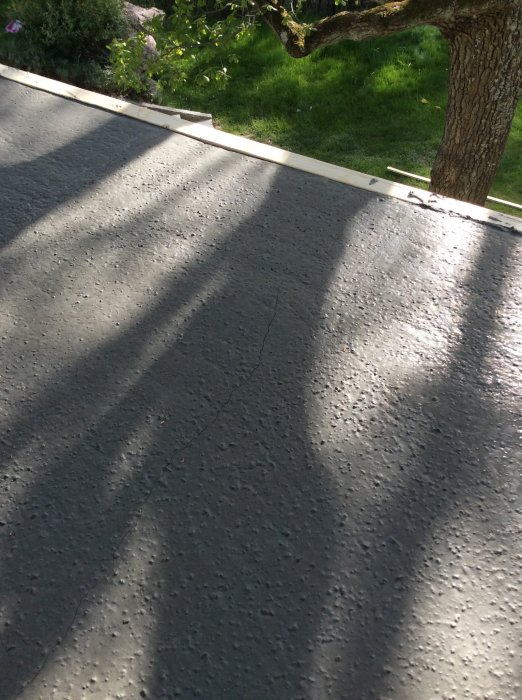
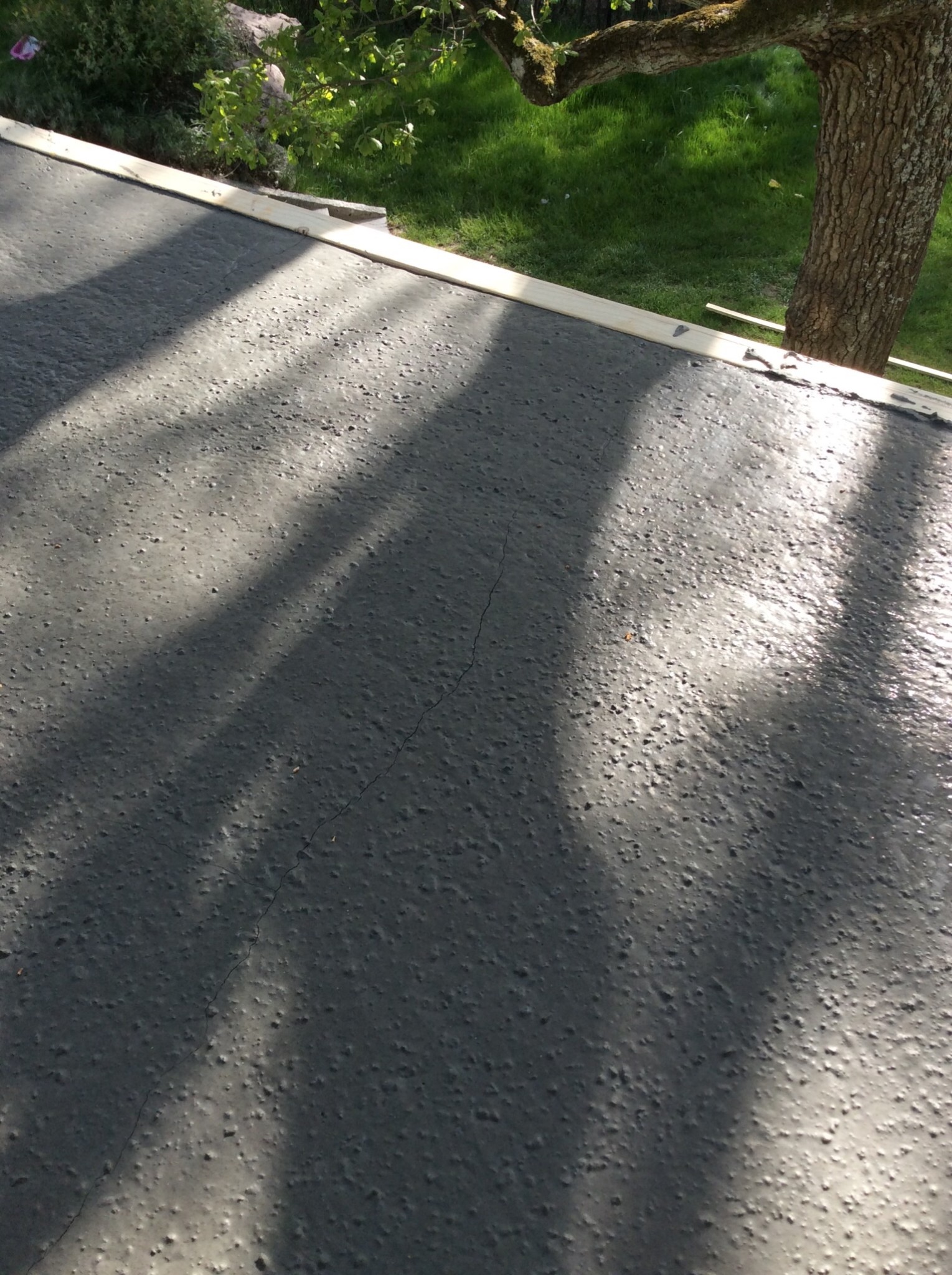
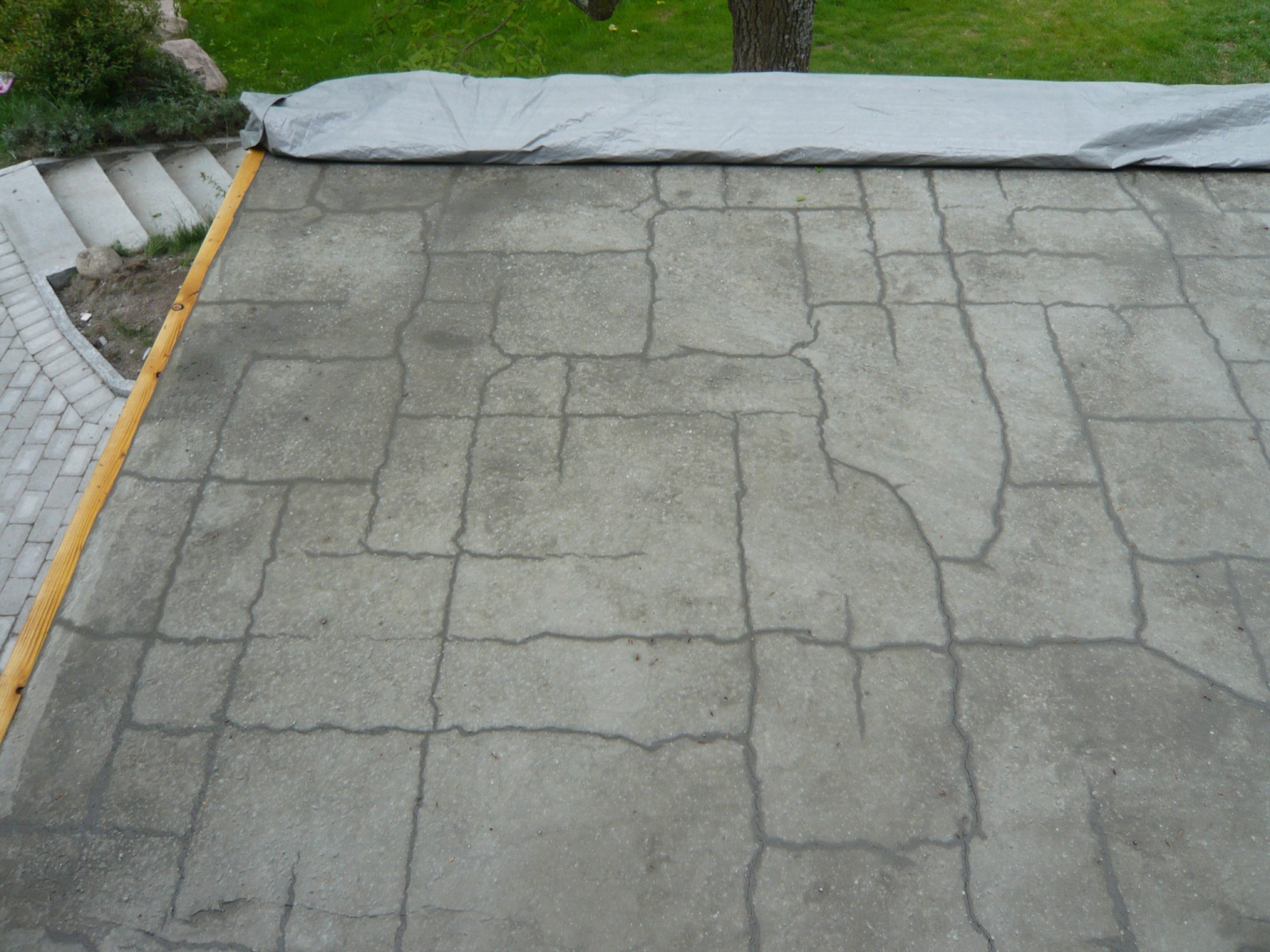
I have a newly made slab as a base for paving, thinly cast (70-50 mm) on top of insulation on a concrete roof. It appears the casting was not covered and no curing was done, it is also exposed to the sun all day. Now, 6 hours later, meter-long cracks have appeared all over the slab... Normal or a problem??
According to the plan, it should be fiber concrete, but it's hard to determine after the fact.
Grateful for opinions on how concerned one should be...
there is nothing that can completely prevent cracks.
and as a customer, you can demand the recipe (what kind of concrete it is)
if it looks like that 6 hours after casting, you almost have to have some accelerator in it too
Cover it with plastic but water it first. You can skip the plastic but then you must keep it moist with water. You should water it at least 3-4 days afterward, especially in the sun. So get out the water hose....
These are shrinkage cracks and they can be reduced if you keep the concrete moist during the first days, but they still occur even if you are careful with curing, albeit in smaller numbers.
Well, the recipe is difficult to obtain - unfortunately, the builder is not the easiest to deal with. Probably because he doesn't have a complete grasp of what is ordered or what is done during the work - several examples of this from before.
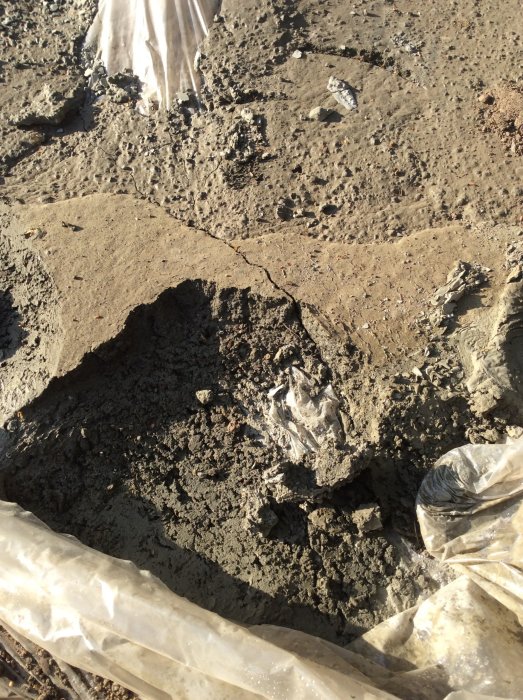
Regarding the accelerator, I don't know, a lump of concrete laid out in the garden (to empty the pump) has hardened completely in all parts that weren't covered. The parts of the lump that were under plastic are moist in the bottom 1/3 of the layer.
There's no trace of any fibers if there are any, I think they should be visible to the naked eye?
Most afraid that the slab is cracked all the way to the edges (the cracks on the surface go all the way to the form) and on those surfaces, rainwater will run, which will then be absorbed into the slab in the future. The slab is situated south-facing on insulated ground and today the temperature has probably been up to 30 degrees in the sun from pouring until now... and with an uncovered/unwatered slab that is so thin, it makes one wonder. Easy thing to fix covering, too bad it was missed...
Below is a picture of the lump in the garden...
These are shrinkage cracks that have occurred in your casting due to too rapid drying and insufficient reinforcement. Regarding the fiber reinforcement, you should see if it is in the pile on the ground. All concrete shrinks and cracks, you can reduce crack formation and the size of the cracks with the help of reinforcement and the right curing method.
Ok. Yes, the fibers are visible in the parts that are on the ground, very fine fibers that were hard to see but they are there. The reinforcement is 8 mm mesh 150x150 over the entire surface (14 sqm)...
Well, the recipe is hard to get - the builder, unfortunately, is not the easiest to deal with. Probably because he doesn't have full control over what's being ordered or what's being done during the work - several examples of this from before. then you should change the builder
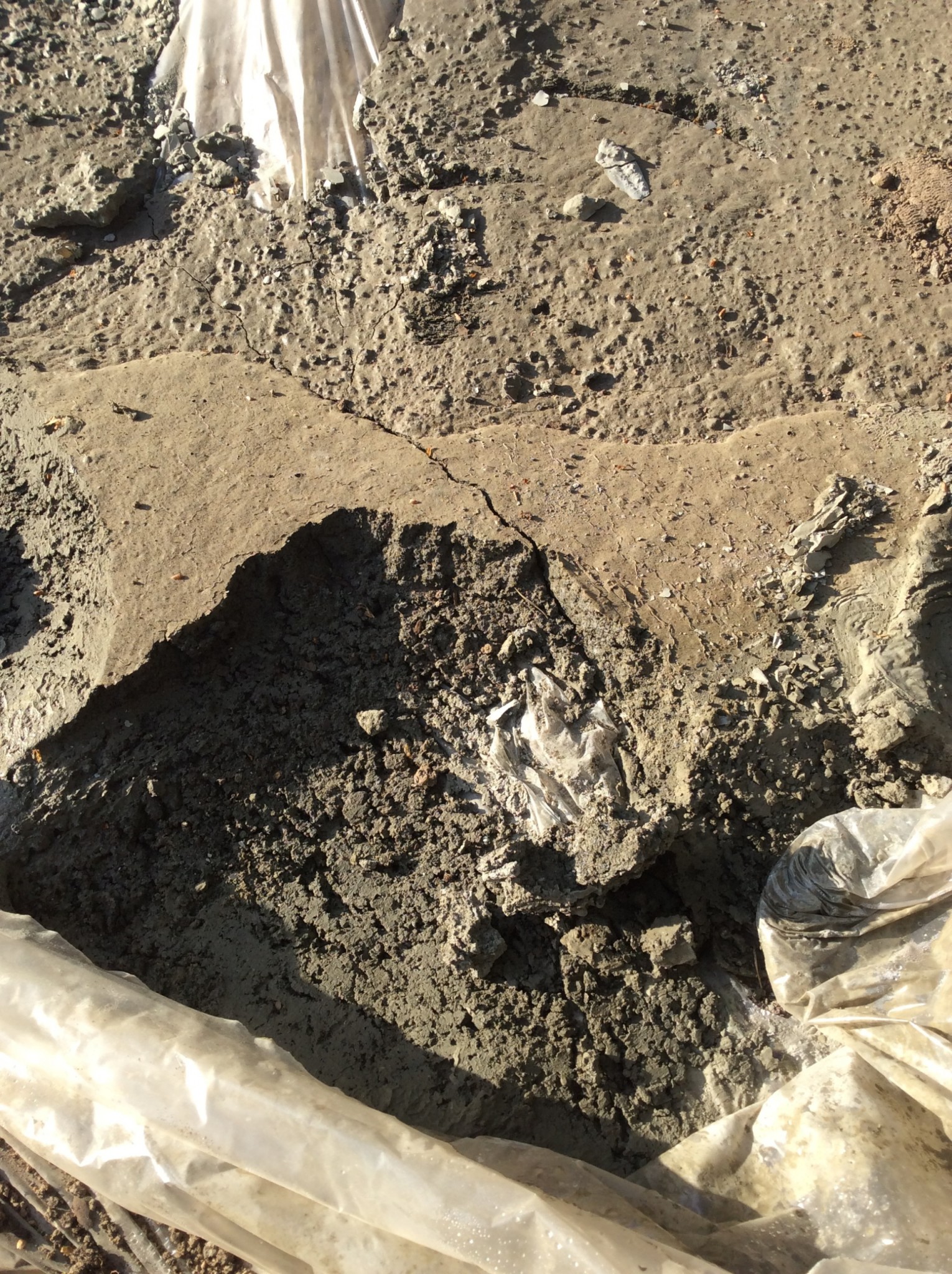
Regarding the accelerator, I don't know, a slab of concrete laid in the garden (to empty the pump) has hardened all the way through in all parts that weren't covered. The parts of the slab that were under plastic are moist in the bottom 1/3 of the layer.
There isn't a trace of any potential fibers, shouldn't they be visible to the naked eye? you should be able to see some
Most afraid that the slab is cracked all the way to the edges (the cracks on the surface go all the way to the form) and on those surfaces rainwater will run and then be absorbed into the slab in the future. The slab is in a south-facing position on an insulated base and today the temperature has probably been up to 30 degrees in the sun from casting until now... and with a slab that is uncovered/unwatered and so thin, one becomes concerned. Simple thing to fix the covering, a shame it was missed...
Below is a picture of the slab in the garden... I would put a vapor barrier
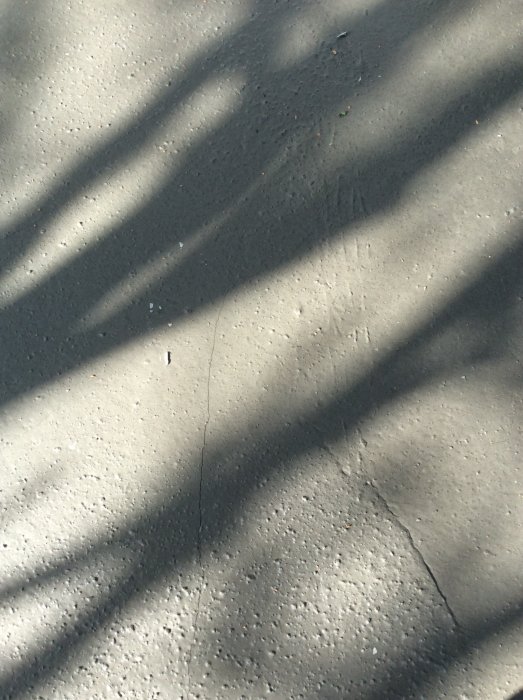
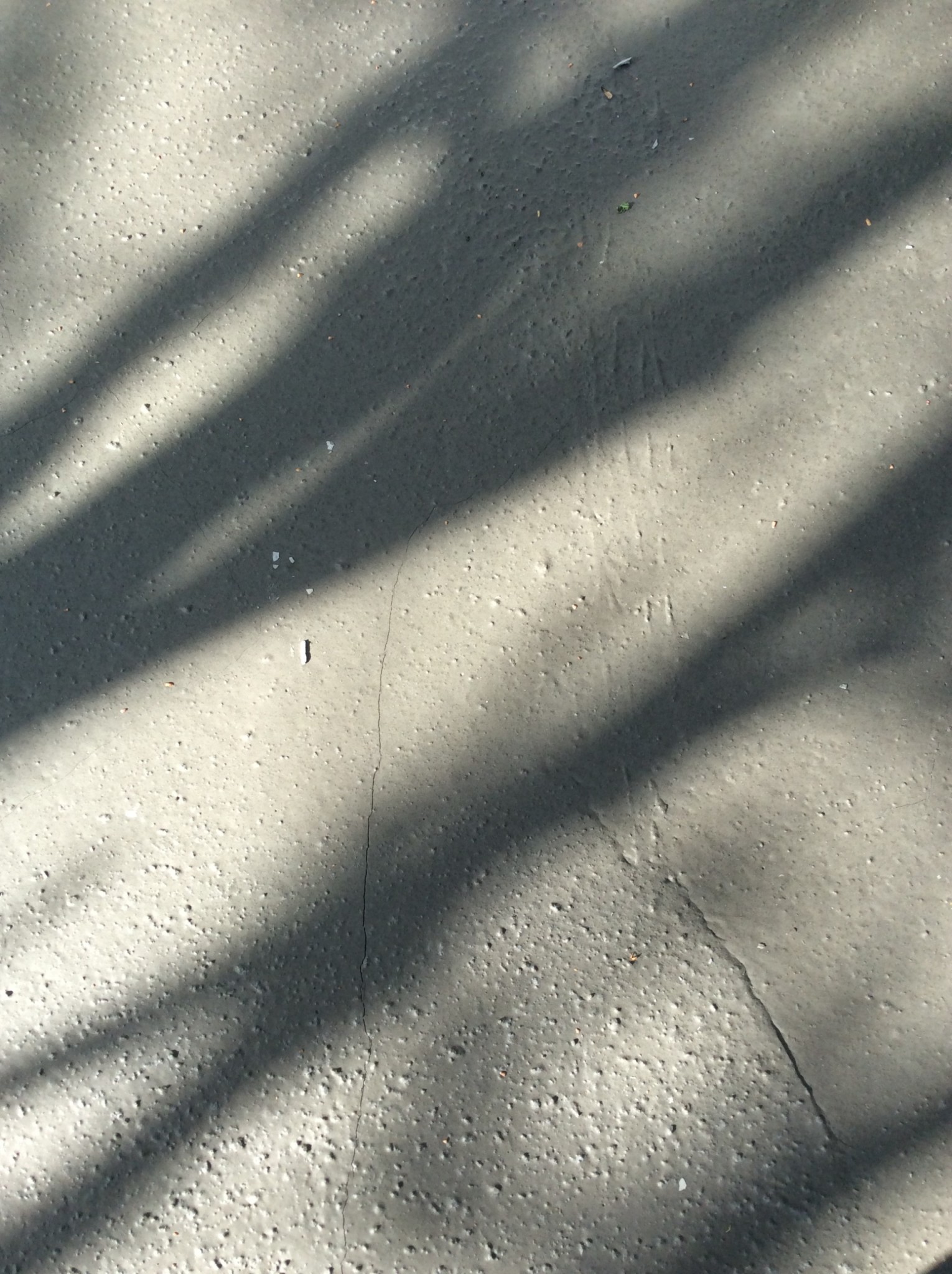
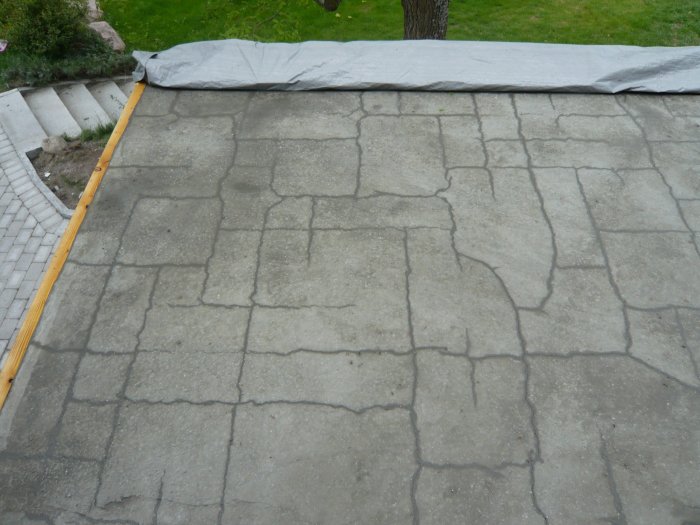
This is how the slab looks between waterings, obviously it has cracked along the reinforcement mesh (the cracks are 150 mm apart...) except in a few places where the cracks go diagonally.
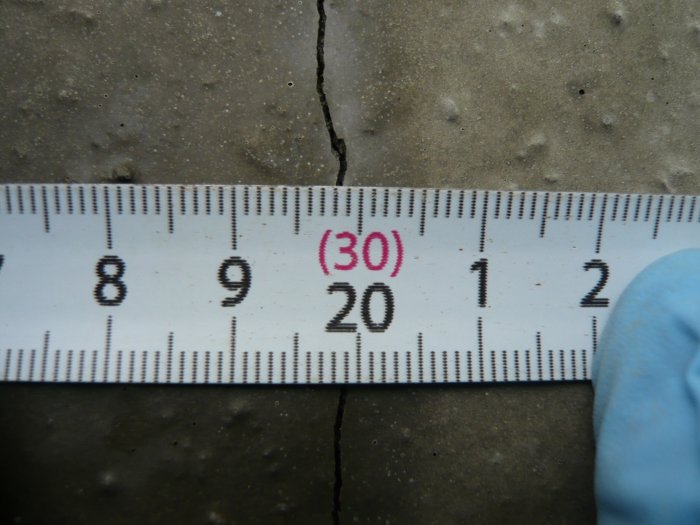
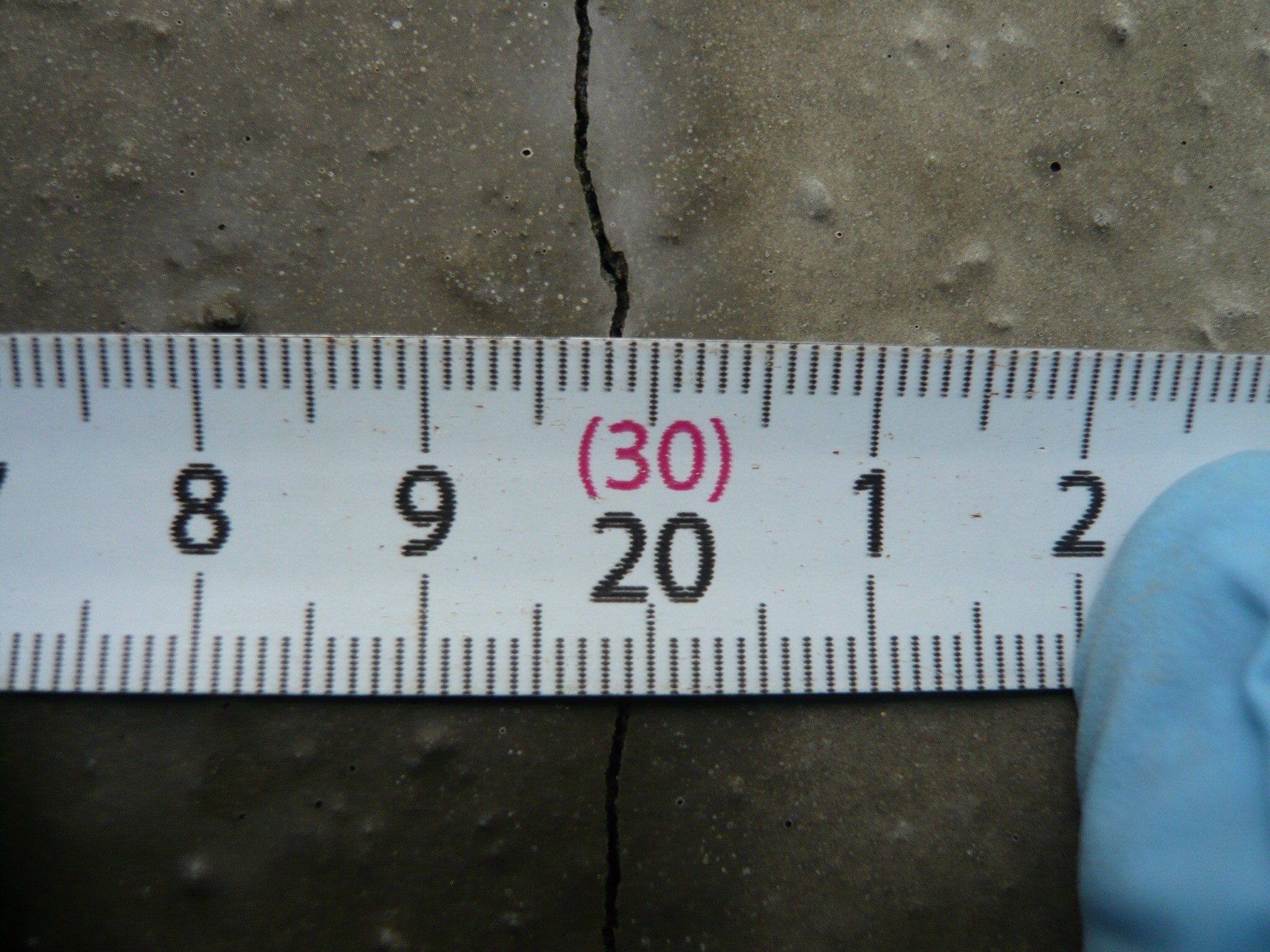
The cracks are of varying widths, one of the wider (diagonal) ones is visible in the image below.
Is this solely due to rapid drying, or is the reinforcement too heavy? The construction drawings specify no reinforcement mesh, only fiber-reinforced concrete. However, the guy who built the form insisted that mesh was necessary...
Unfortunately, the segments between the cracks also seem to move, as water is absorbed faster into the cracks if you stand on an "island" between the cracks...
You don't need to water the slab, the damage is already done. It is most likely caused by rapid drying/incorrect concrete mix that has caused your settlement cracks.
Suspect that they poured with an SKB (self-compacting concrete).
If there is not supposed to be a waterproofing layer above this concrete, it might be best to chip it away and pour a new slab with someone who knows what they're doing.
Wait, have you poured concrete on a roof? Of course, the wrong concrete and plastic shrinkage cracks, but it almost looks like what the concrete is on has settled.
The concrete feels very "smooth"/oily on the surface (it almost feels oily on your hands when you run them over the watered surface). I don't know if it's self-compacting or not...
Yes, unfortunately, it is intended to lay tiles (granite slabs) attached with fix on top of this, but with all the cracks, the reinforcement in the slab will probably rust quickly and crack it. Also, the joints are likely to crack now as the segments move against each other.
The waterproofing layer is underneath on the actual concrete roof of the storage, this slab is only for placing stone on. Under the waterproofing layer, XPS 300 is glued against the actual concrete roof of a storage room.
I also see no other option than to redo it and do it right. Unfortunately, the builder is occasionally really poor at coordinating between his subcontractors, and this appears to be an effect of this, perhaps in combination with a misunderstanding about the reinforcement (8150 mesh might be too heavy for a 50-70 mm slab? There is no mesh on the construction drawing...). It will be an interesting challenge to get them to accept responsibility and redo this, I think.
And not entirely unexpectedly, the entrepreneur's response now is:
"The reinforcement holds the slab together" and "We can smooth the entire surface with concrete filler so it's even."
We haven't even brought up with them yet that the surface isn't even enough for tiling (not floated)... but they've obviously realized they've missed that too...
Concrete filler probably won't work as the "islands" are already moving today, the filler cracks under load and is not waterproof either...