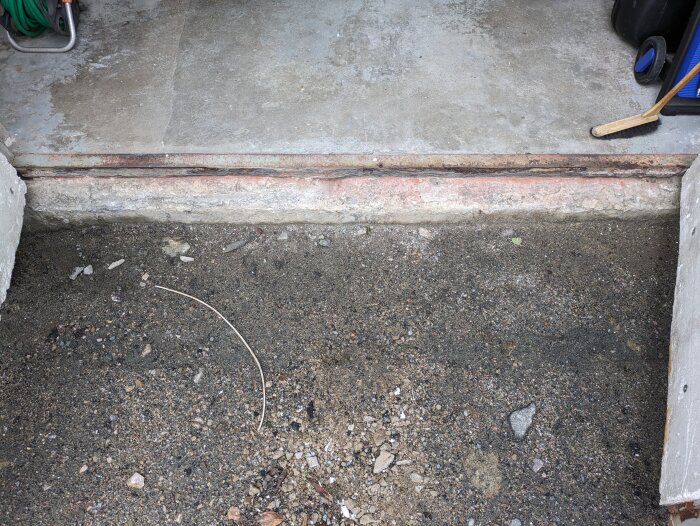
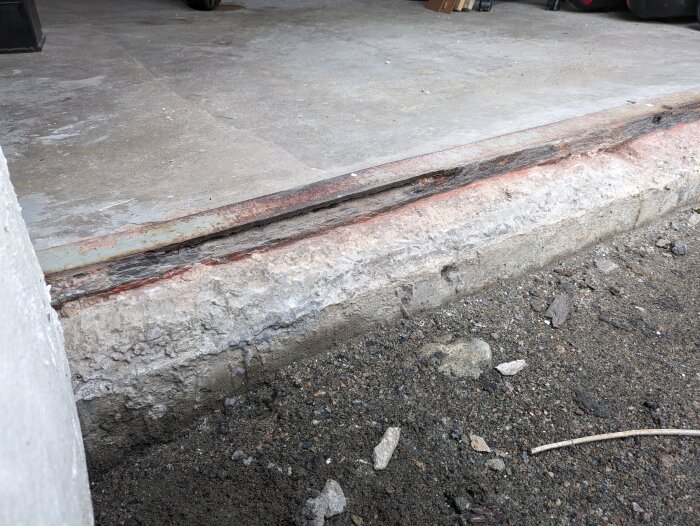
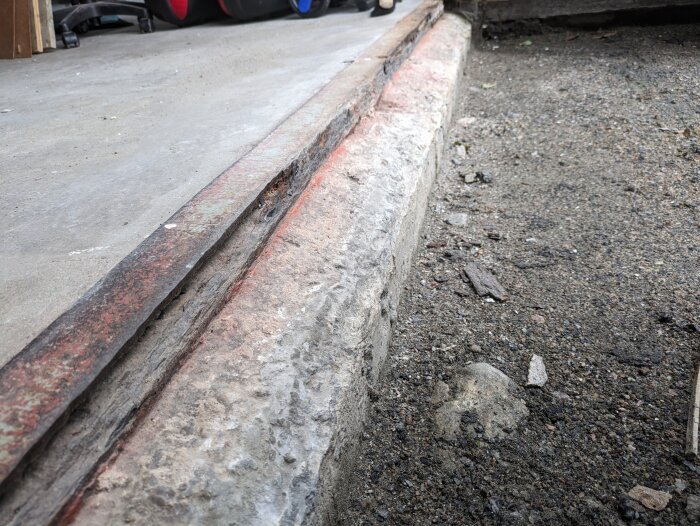
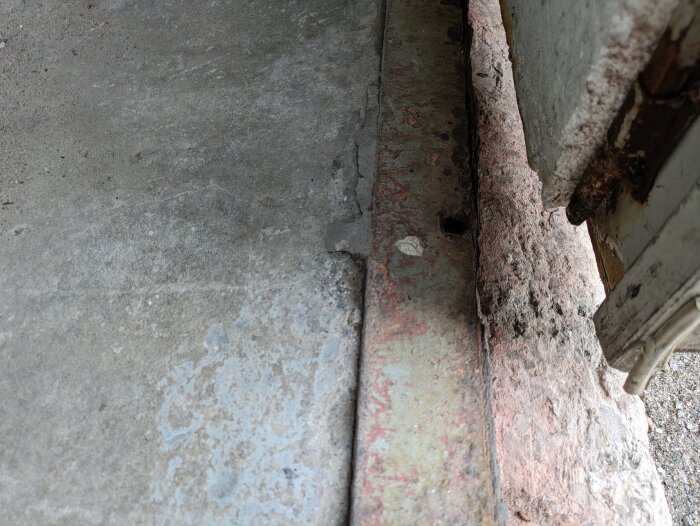
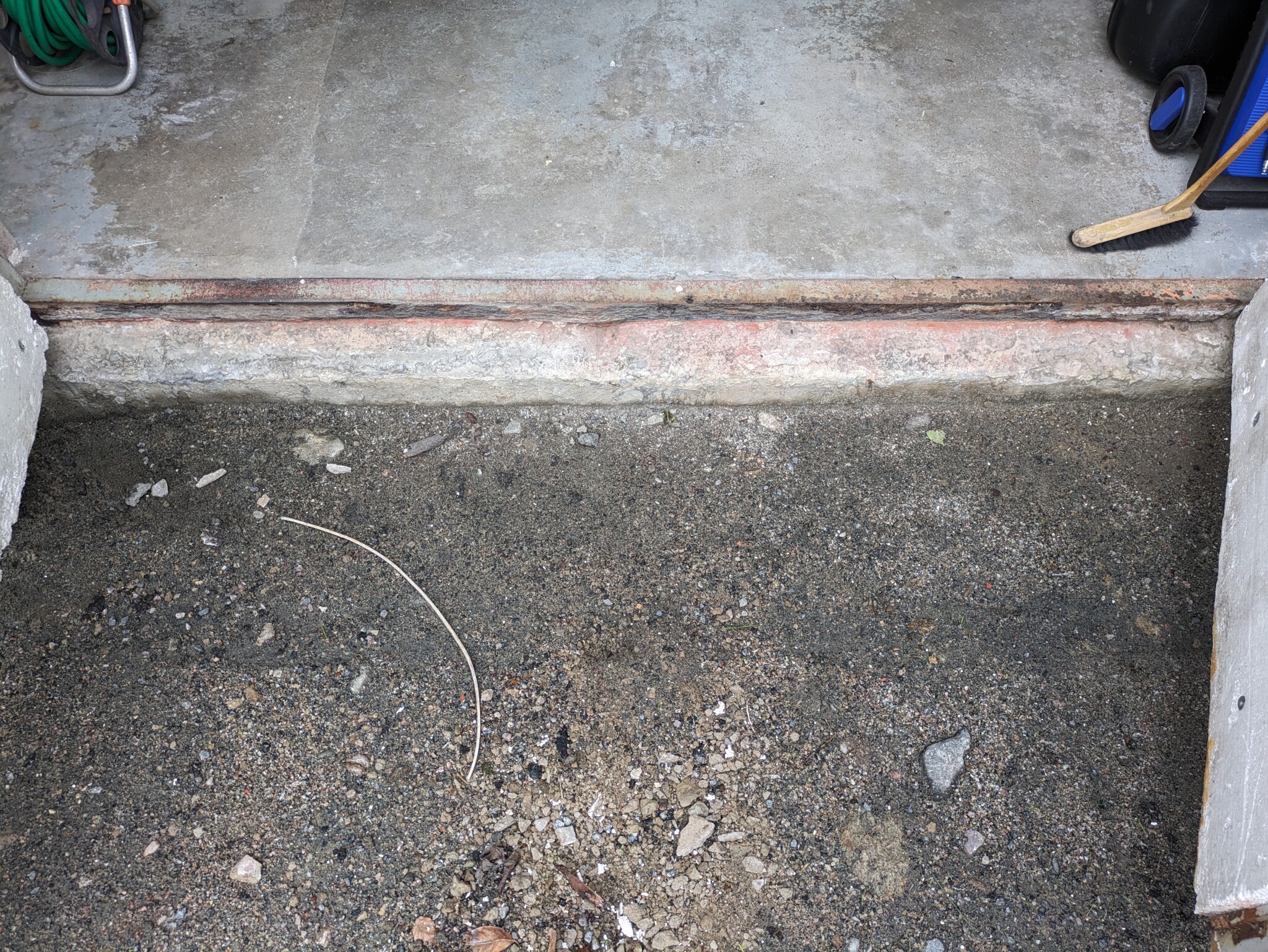
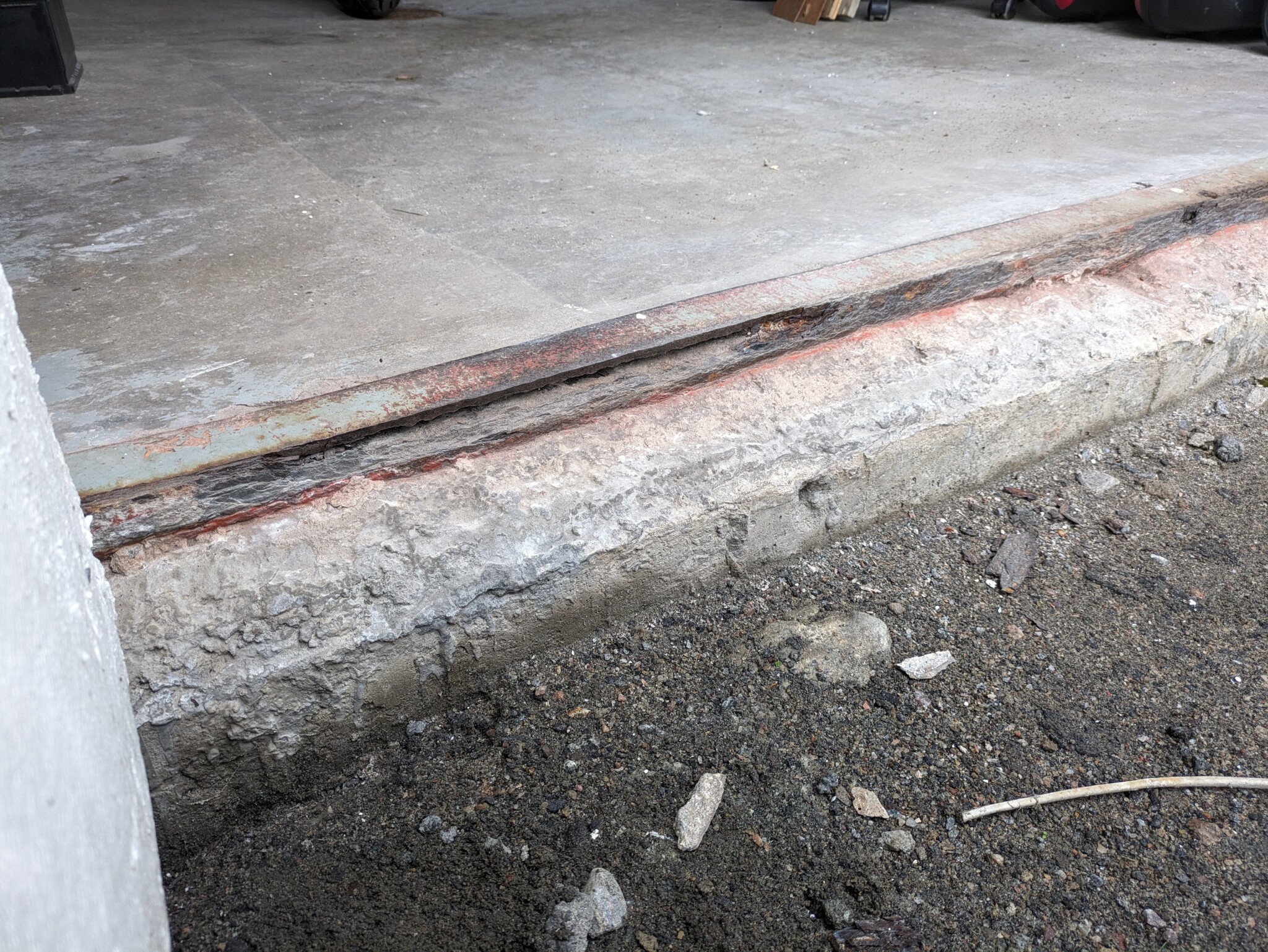
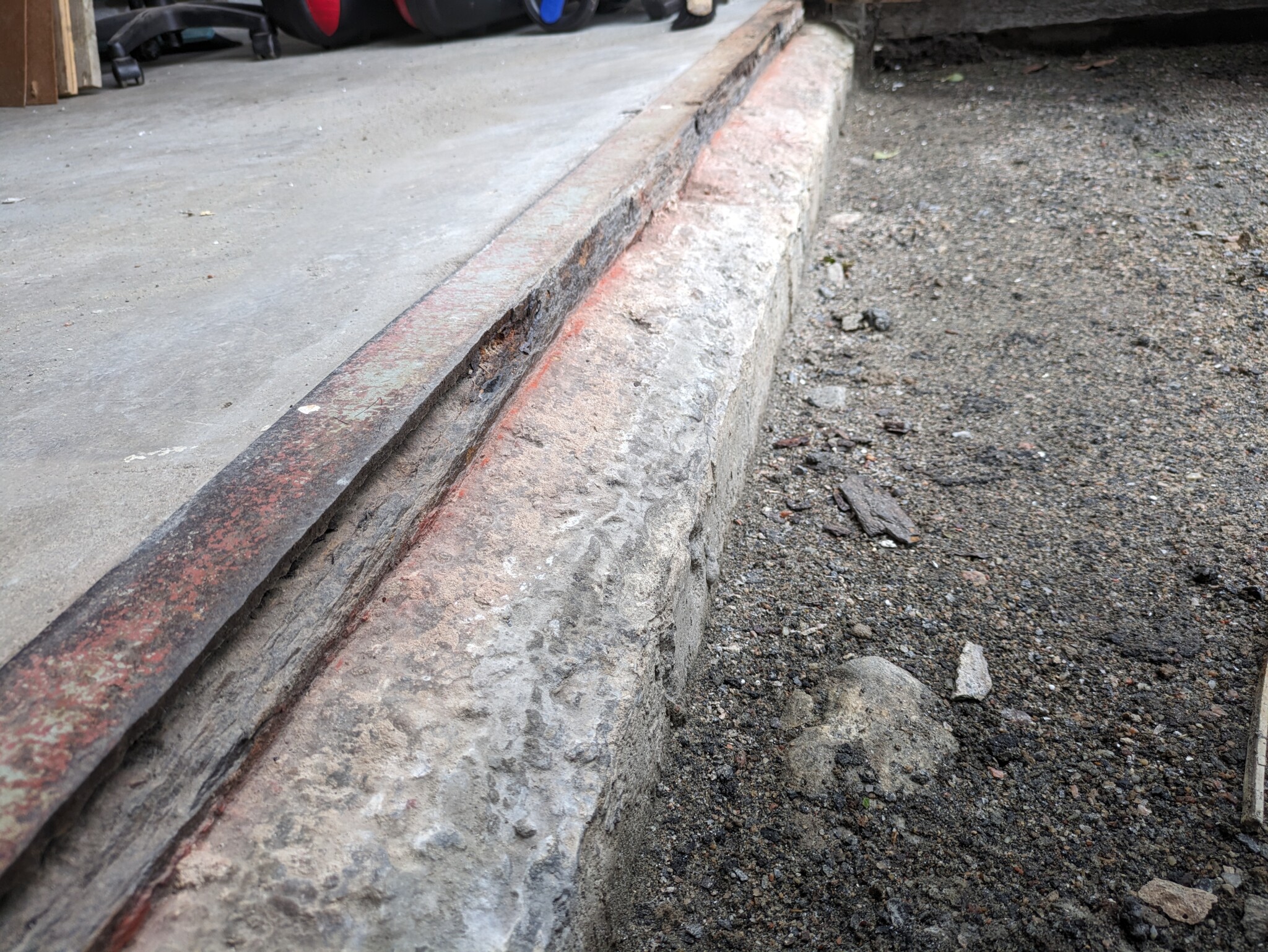
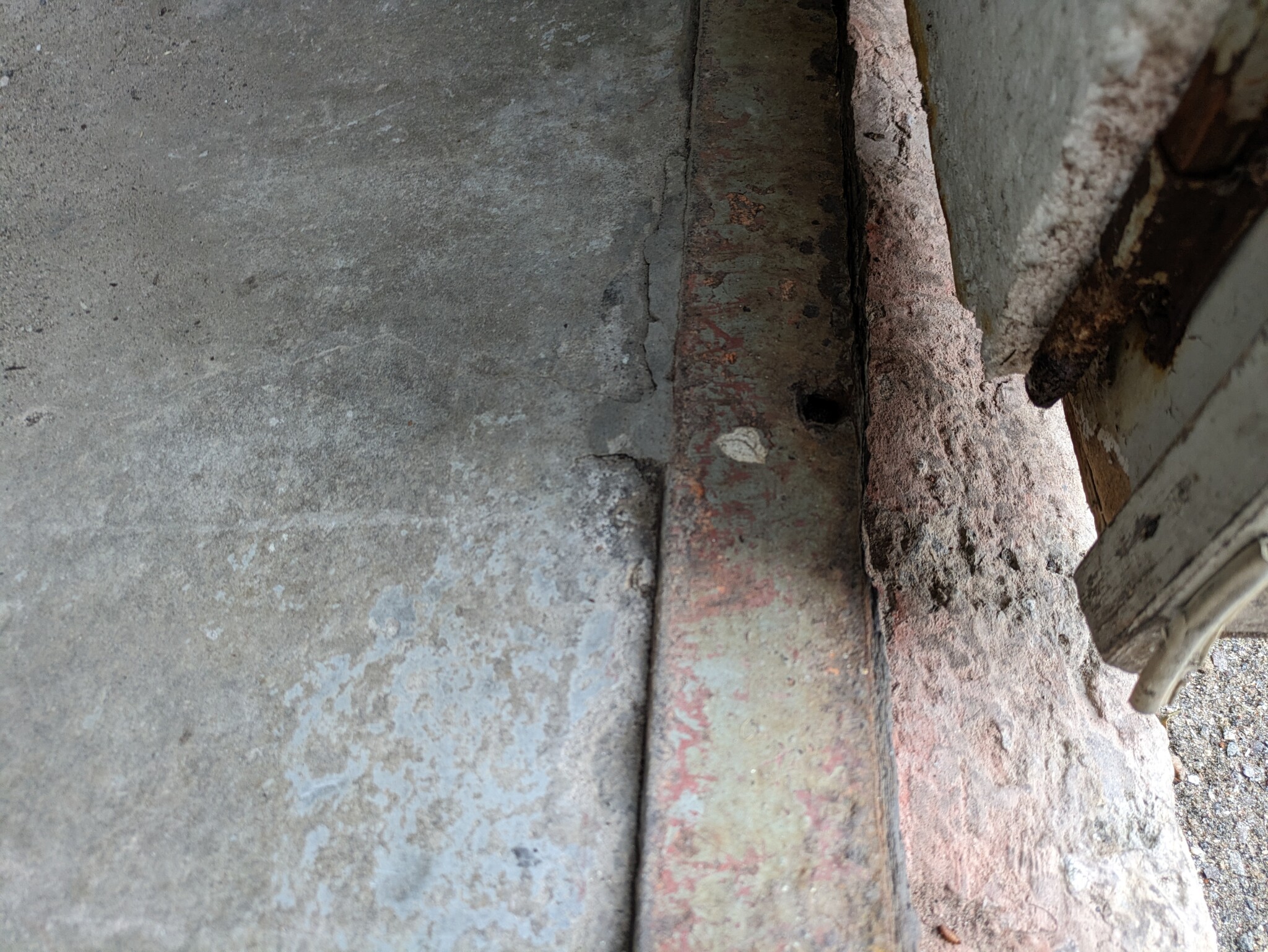
I am planning to cast a new concrete sill under the garage door, but I'm a bit unsure about what to do with the steel threshold that is almost completely rusted.
How would you handle this situation? Would you try to replace it? It has a small opening for the locking mechanism to latch onto (last picture), so a new one would have to be customized.
Alternatively, just scrape out the rust and fill the cavity inside the threshold with concrete. From the top side, it's intact.
That's a cheap and simple solution.
It is an angle iron you have in the concrete slab..
It needs to be removed before you pour again, otherwise the new casting will be damaged by the rusty iron that's left behind..
It's an angle iron you have in the concrete slab.
It needs to be removed before you pour, otherwise the new pouring will be damaged by the rusty iron that remains.
Ah, thanks for the answer, good info. So replace it with a new angle iron that I'll make a hole in for the door latch to go down into?
How do you cast in the new one? Should you make a casting with a 90-degree corner that you just place the iron against?
Ah, thanks for the reply, good info. So, replacing with a new angle iron that I need to drill a hole in for the door latch to go down into?
How do you cast in the new one? Should you make a casting with a 90-degree corner that you just lay the iron against?
Any of these? [link]
I saw there are ready-made threshold irons to buy for garage doors [link] but these have reinforcement bars for embedding. That would be a bit more complicated and involve removing a lot of concrete, wouldn't it?
Yes, it needs to be a galvanized one with dowel bars in it like you have in one of the links.
You have to cut and chisel out the old iron and then when you have bought the new one, see if you need to chisel out more to make room.
Cast again with something like expanding concrete that doesn't sink during the drying time..
Ah, thanks for the answer, good info. So, replace with a new angle iron that I need to make a hole in for the door latch to go down into?
How do you embed the new one? Should you make a casting with a 90-degree corner that you just rest the iron against?
One of these? [link]
I saw that there are ready-made threshold irons available for the garage door [link] but these have rebar for embedding. Then it becomes a bit more complicated and quite a lot of concrete you have to chisel away?
The fact that they have rebar doesn't necessarily make it much more complicated. They look fairly short. Can't you drill down and use anchor compound for those? Instead of chiseling away everything and recasting.
Yes, it needs to be a galvanized one with twist-in rebar like the one in your link. You'll have to cut and chisel out the old rebar, and then when you've bought the new one, you'll see if you need to chisel out more to make space. Seal again with something like expanding concrete that doesn't shrink during drying time.
Ok. Does it have to be twist-in rebar? It feels like that would be a much bigger job then.
I found this thread https://www.byggahus.se/forum/threads/garagekant-troeskel.348606/
Don't you think it might look the same for me? I mean, that it's just a concrete edge it's been placed on. In the thread, they even mention that you can simply glue on a new one.
I could start breaking the threshold to check myself, but the problem is then I wouldn't be able to close the garage door in the meantime...
The fact that they have rebar doesn't have to make it much more complicated. They look quite short. You could drill down and use anchor mass for those, right? Instead of chiseling everything away and recasting.
Yes, that's a smart idea otherwise. Sounds much easier.
Ok. Does it have to be anchor iron? It feels like it will be a much bigger job then.
Found this thread [link]
You don't think it looks the same for me? That is, that it's just a concrete edge it has been lying on. In the thread, they even write that you can just glue on a new one.
Of course, I could start breaking the threshold and check myself, but the problem is that then I can't close the garage door in the meantime...
It doesn't have to, but the angle iron needs to be fixed in place. Just resting it against the concrete as you want won't hold...
otherwise, the new casting will be damaged by the rusty iron left behind.
It is a truth with some modification…
In the first few years, concrete protects against further corrosion because it is quite alkaline. However, over the years, the concrete carbonates and the pH value drops. If water and air penetrate, metal inside the concrete can start to rust, but that's when it happens.
If the iron rusts, it can crack the concrete by expanding. But it doesn't seem to have any load-bearing function here, so the worst that can happen is that you'll have to recast in the 2040s.
ps! Even though there was just an EU election, was it really so tough for the beam that it feels overvoted...? 😁😁
During the first years, concrete protects against further corrosion because it is significantly alkaline. However, over the years, the concrete carbonates and the pH value decreases. If water and air penetrate, metal inside the concrete can begin to rust, but that's when it happens.
If the iron rusts, it can crack the concrete by expanding. But it doesn't seem to have any bearing function here, so the worst that can happen is that you'll need to recast around the 2040s.
ps! Even though there was just an EU election, was it really so hard for the beam that it feels brokenöstad…? 😁😁
What is a truth with modification?
So you mean in all seriousness that TS should keep the rusted iron and cast against it, and you guarantee that it will hold until 2040?
What is a truth with modification?
So you mean in all seriousness that TS should keep the rusted iron and cast against it, guaranteeing it will hold until 2040?
Guarantee and guarantee. Corrosion is a chemical process that requires oxygen and water. Inside concrete, there's a lack of such and it remains so for many years. Otherwise, one would have to start using stainless reinforcement bars, but they are usually reddish-brown from surface rust already when you lay them in/into them.
Guaranteeing and guaranteeing. Corrosion is a chemical process that requires oxygen and water. Inside concrete, such things are scarce and remain so for many years. Otherwise, one would have to start using stainless steel reinforcements, but they are usually reddish-brown from surface rust already when they are placed in.
But if you have any understanding of construction beyond chemistry, you should also understand that this angle iron is not surrounded by concrete but lies at the surface, so water and salts, etc., will run in between. You can believe what you want, but the existing iron is finished; it has even rusted through in large areas.
use the järnet in the link and it will be good https://markgrossen.se/husgrund/armering/troskeljarn-kantskoningsjarn-till-garage-2500mm/ a tip if you're going to drill a hole for the gate lock measure the center of the hole before removing the old järnet and mark it on the new järnet, cut a foam cube about 40x40x40mm and glue it on the underside where the hole will be so you don't damage the drill when you drill the hole
But if you have any knowledge of construction techniques apart from chemistry, you also understand that this angle iron is not enclosed in concrete but lies at the surface so water and salts, etc., will run in between..
You are free to think and believe what you want, but the existing iron is done, it has even rusted through in large areas..
If it is exposed at the surface, that changes the situation. In such cases, it should naturally be replaced. I missed that if so.
However, if it is to be enclosed in concrete, it will not rust further for a while.
If it is exposed at the surface, the matter takes a different turn. In such cases, it should of course be replaced. I missed that if so.
However, if it is to be encased in concrete, it won't continue to rust for some time.
But you don't encase heavily rusted iron if you want it to last, if it's surface rust or minor rusty damage, you sand them clean, apply rust protection, and then pour concrete.
But hats off to you for finally realizing that there was something off with your reasoning in TS's case..😉
Vi vill skicka notiser för ämnen du bevakar och händelser som berör dig.


ricebridge said:
It is a truth with some modification…