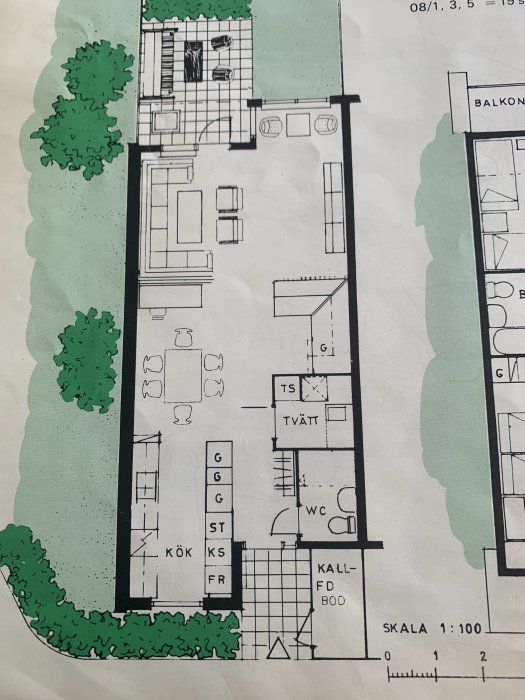
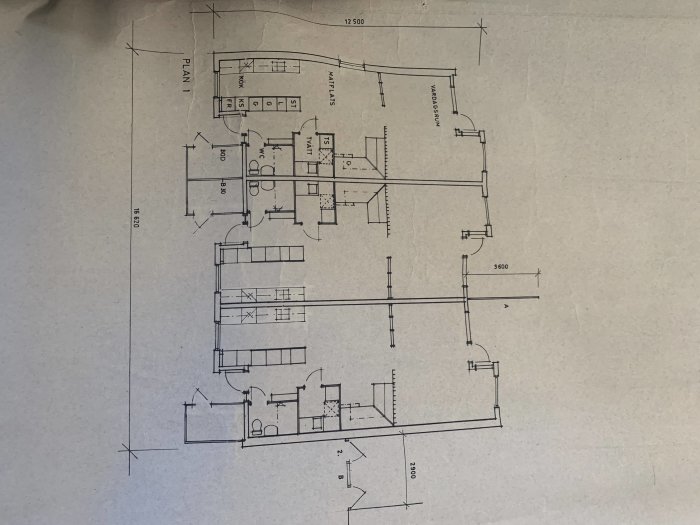
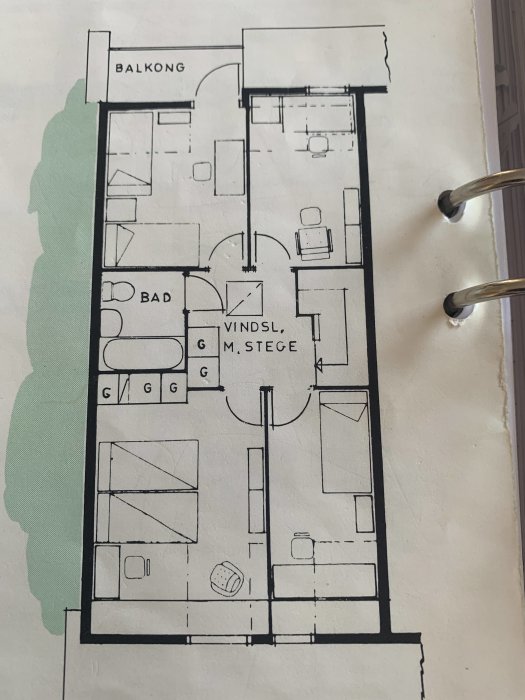
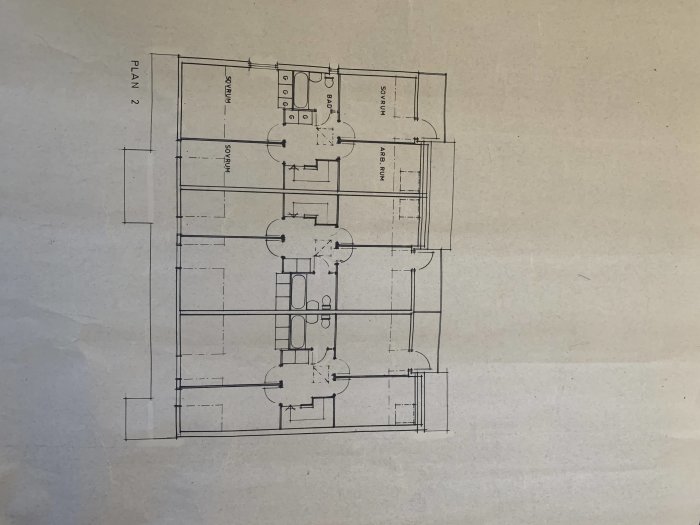
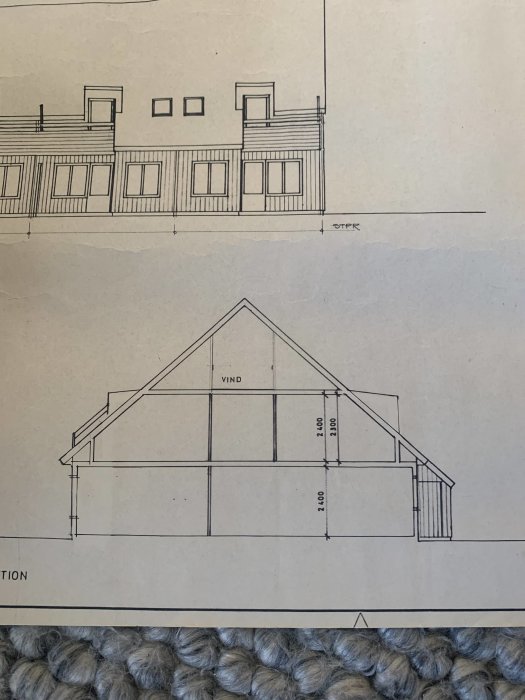
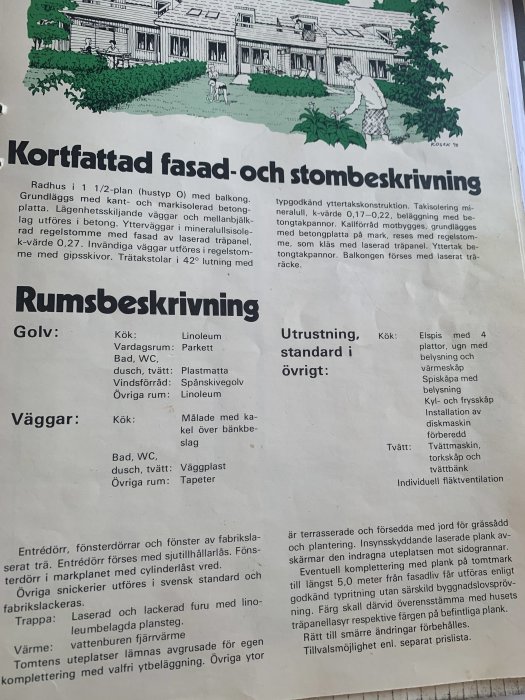
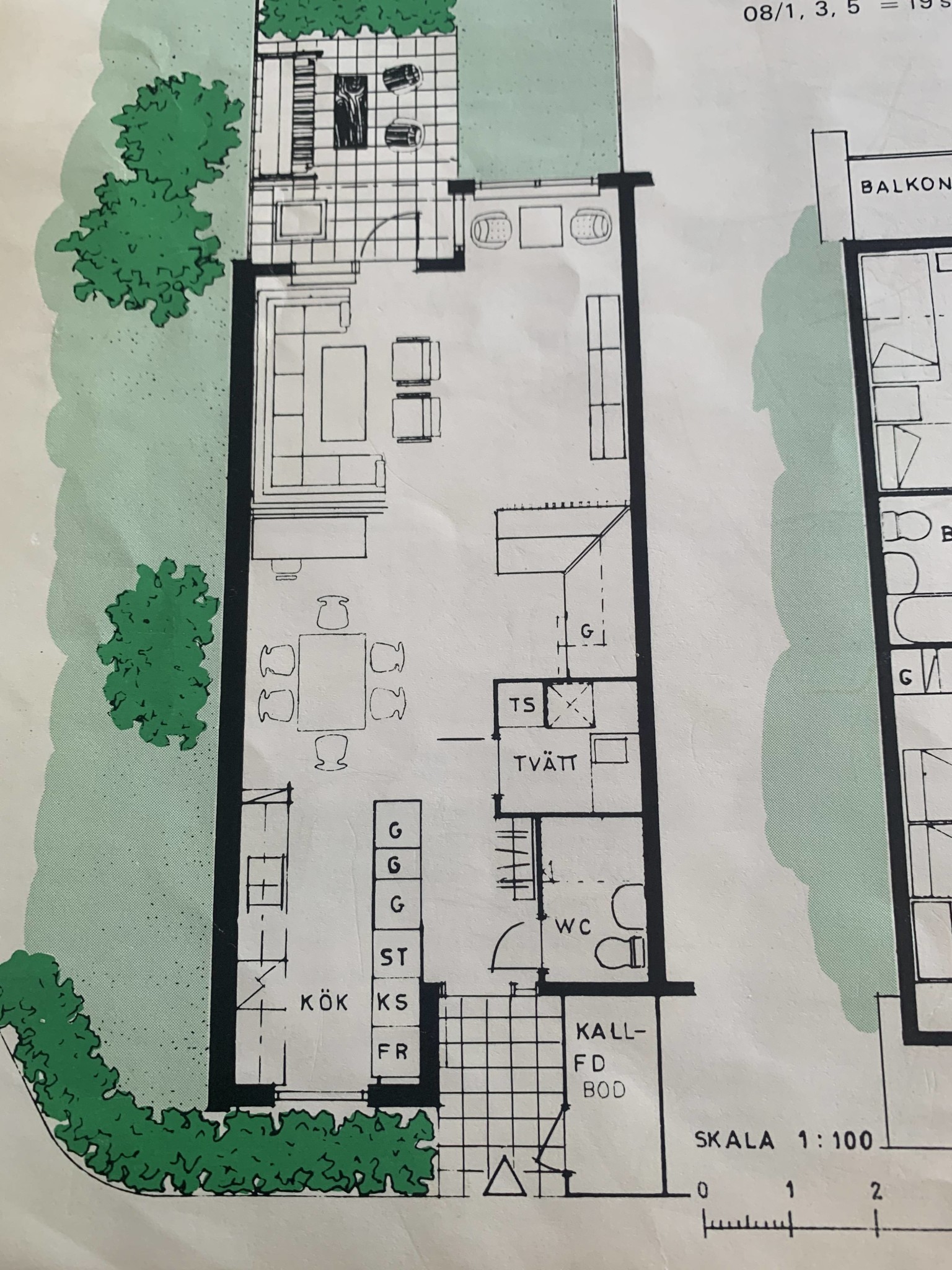
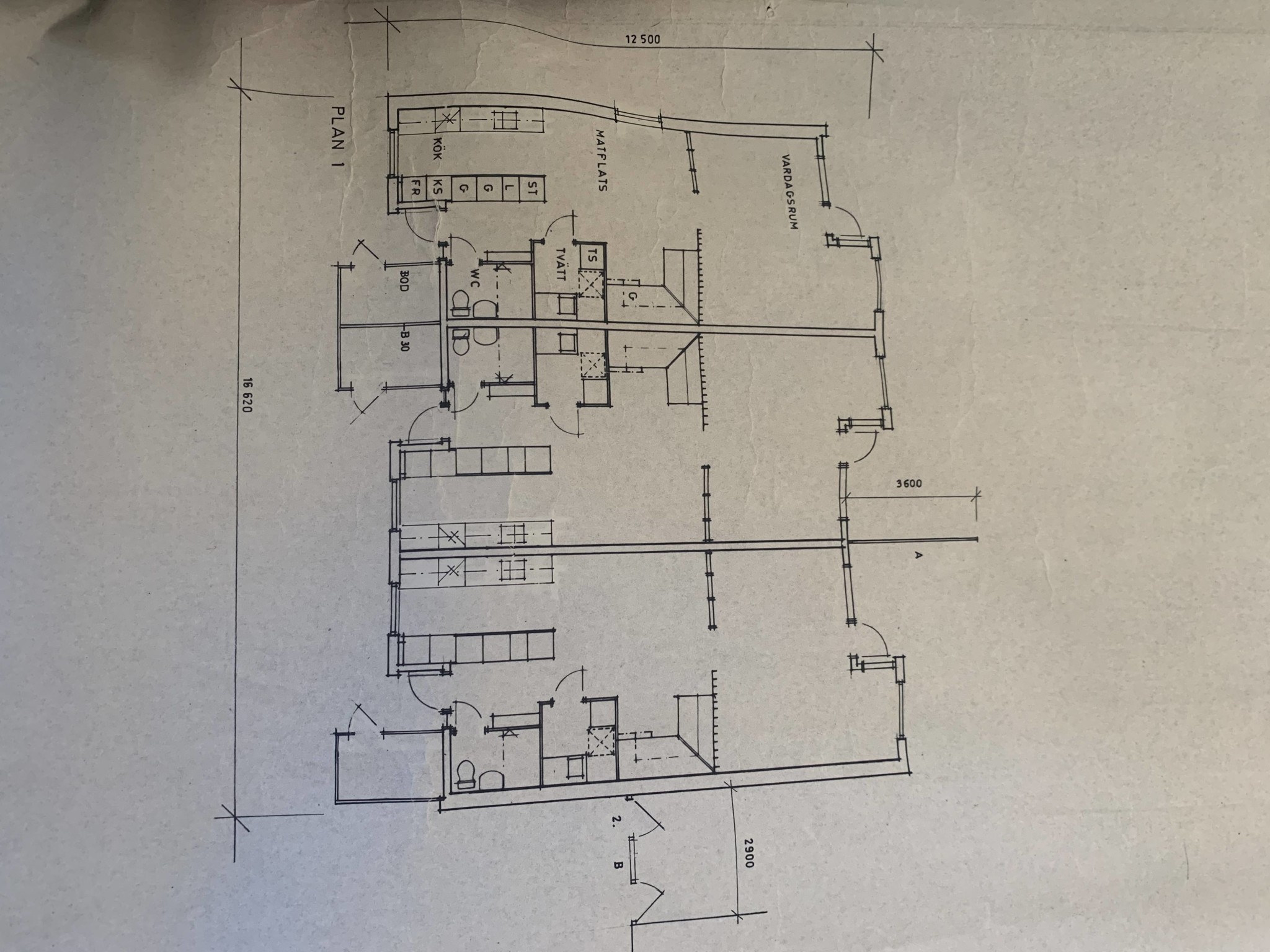
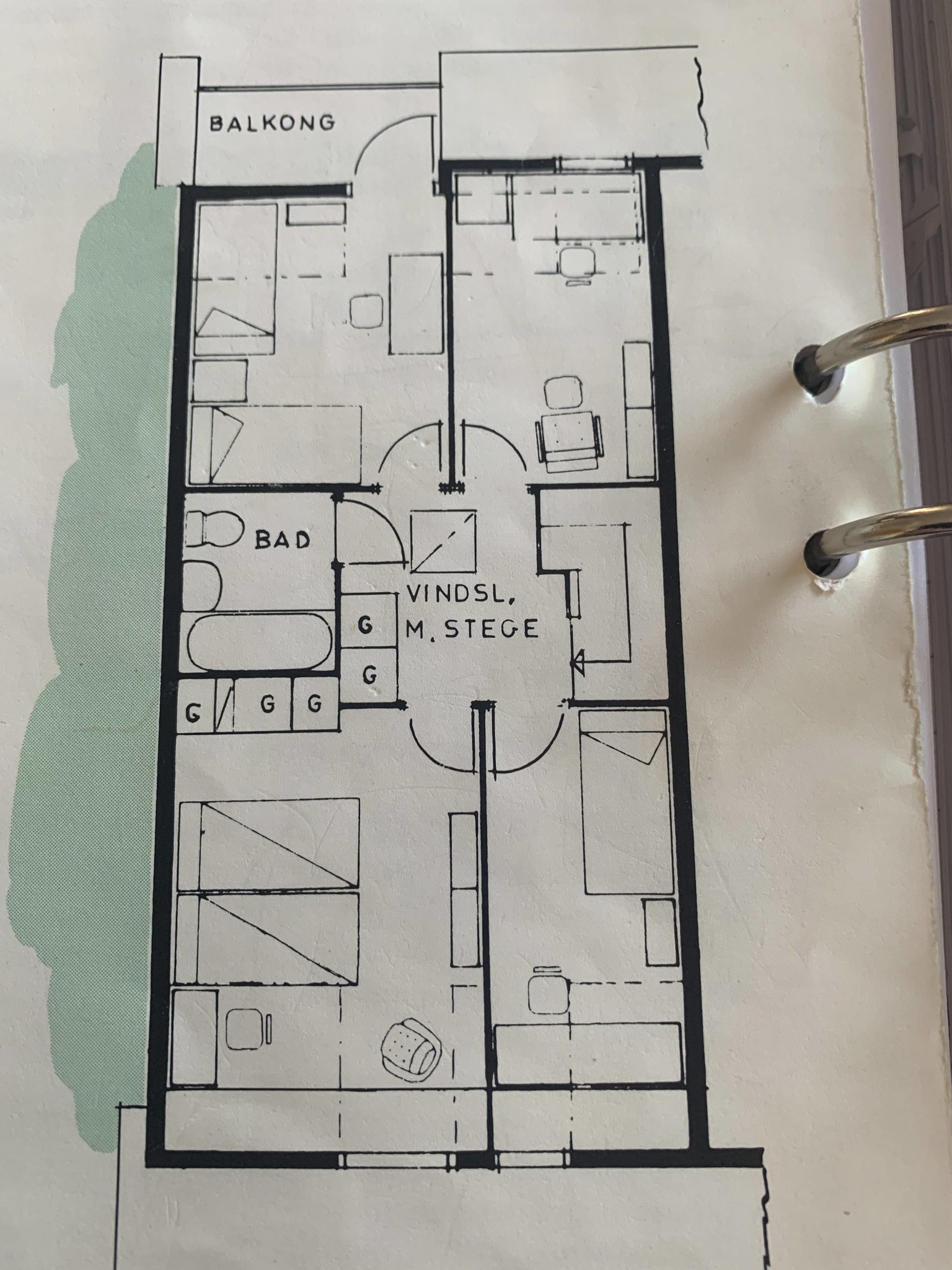
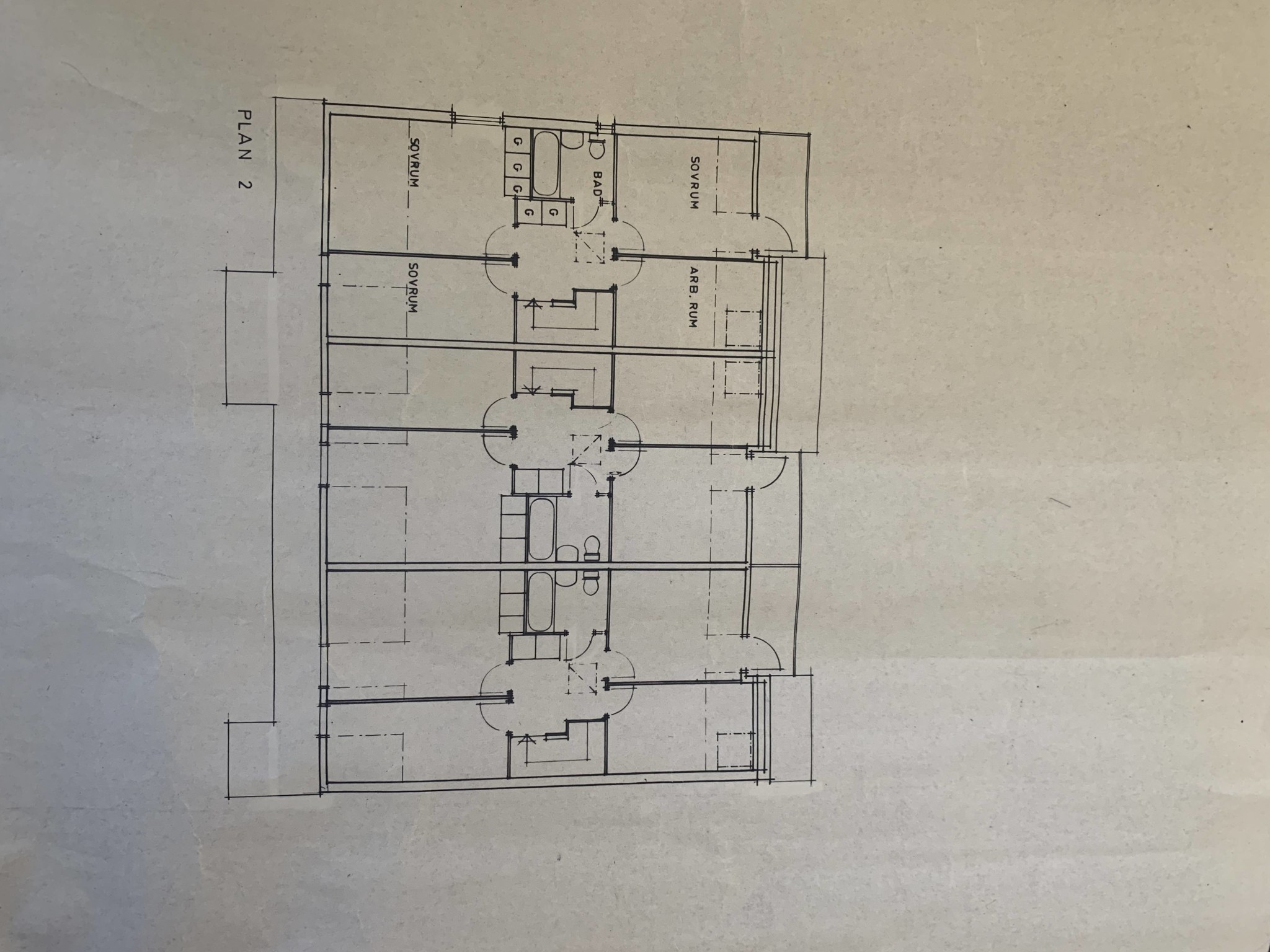
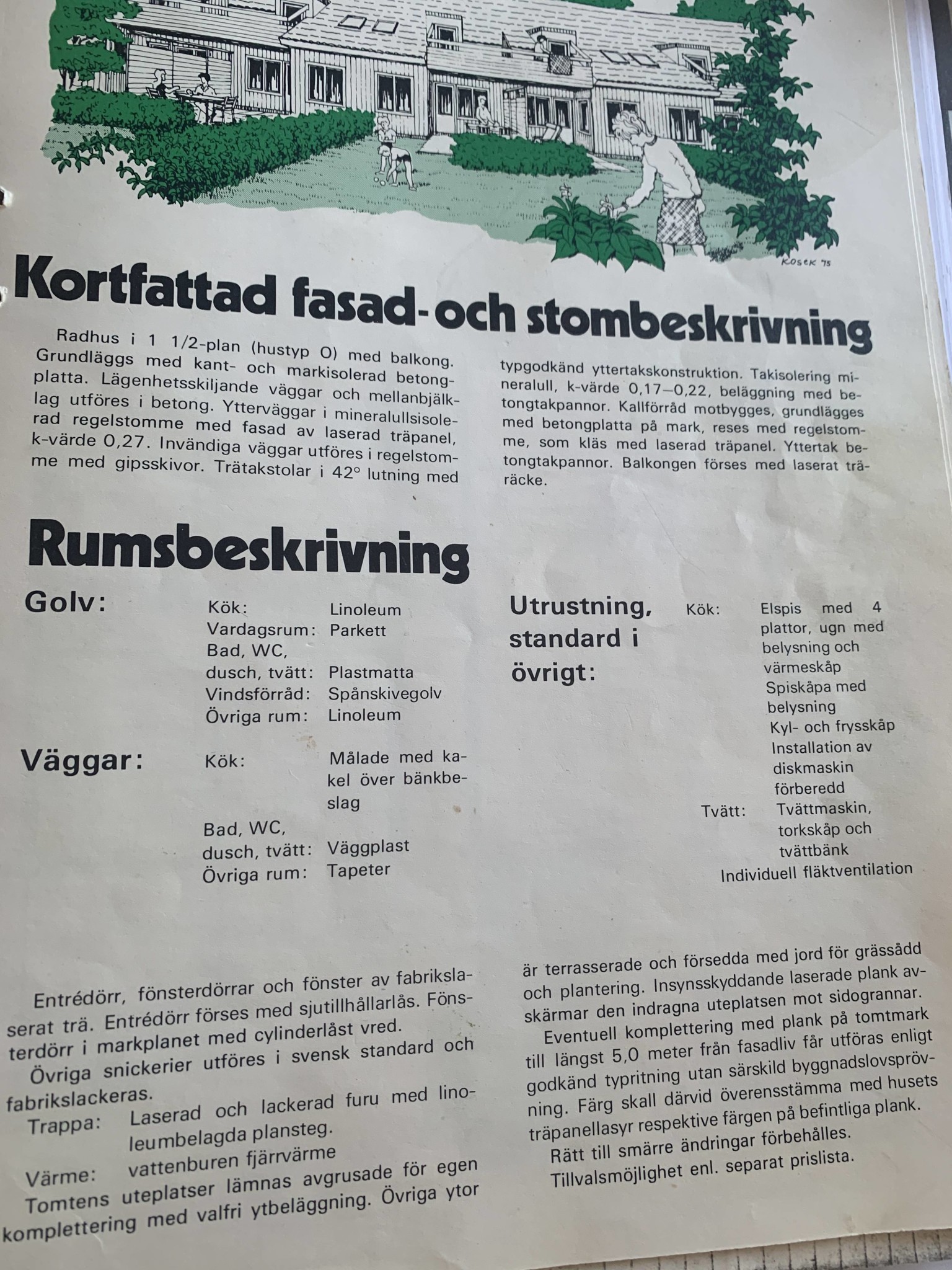
Attached are floor plans and structural descriptions of our townhouse from 1976 (we have an end unit). I want to learn about construction, what supports what, and what possibilities we have to change the layout eventually.
Many of our neighbors have an open floor plan on the lower level, meaning the trellis by the stairs has been removed (see original plan), but does this mean there are no load-bearing interior walls?
I'm quite good at painting and wallpapering and making things look nice, but of course, I need to learn a bit more about the basics .
.
Thanks in advance!
The house has a somewhat complex structure. One must look at the drawings and the attached description text to understand. The house is built on an insulated concrete slab. The apartment-separating walls, as well as the intermediate floors, are also made of reinforced concrete, while the attic floor is made of wood. On the ground floor, there are no load-bearing interior walls. On the upper floor, the interior walls that cross and surround the stairs and bathroom are load-bearing. Only masonry and cast walls can be load-bearing for a concrete floor. Sometimes one must look at a reinforcement drawing to determine, but that is hardly relevant here.
Thank you so much!!!
I apologize, I didn't get a notification that I received a response, but I saw it now when I was about to make another post. I'm impressed by all the knowledge here, and this gave me a good basis for continued renovation. I may return with new questions ☺️
Jjustusandersson said:
The house has a somewhat complex structure. You have to look at the drawings and the attached description text to understand. The house is founded on an insulated concrete slab. The apartment-separating walls and the intermediate floors are also made of reinforced concrete, while the attic floor is made of wood. On the ground floor, there are no load-bearing partition walls. On the upper floor, the walls that run across and surround the staircase and bathroom are load-bearing. Only masonry and cast walls can be load-bearing for a concrete floor. Sometimes you have to look at a reinforcement drawing to determine, but that's hardly relevant here.
Jjustusandersson said:
The house has a somewhat complex structure. You have to look at the drawings and the attached description text to understand. The house is founded on an insulated concrete slab. The apartment-separating walls and the intermediate floors are also made of reinforced concrete, while the attic floor is made of wood. On the ground floor, there are no load-bearing partition walls. On the upper floor, the walls that run across and surround the staircase and bathroom are load-bearing. Only masonry and cast walls can be load-bearing for a concrete floor. Sometimes you have to look at a reinforcement drawing to determine, but that's hardly relevant here.
Click here to reply
Vi vill skicka notiser för ämnen du bevakar och händelser som berör dig.

 .
.