
1,452 views ·
11 replies
1k views
11 replies
Condensation top side vapor barrier slab

Currently building an Attefall house. Concrete slab.
The sill is on sill paper. Put up two-by-two on the inside of the sill, and installed a vapor barrier on the underside which I extended a bit onto the floor.
Yesterday it was insulated with loose-fill insulation and after that, I started a 2kw construction heater.
When I came out this morning to check on it, condensation had formed on the top side of the vapor barrier that is extended a bit onto the slab.
I assume it's because the slab is really cold and that it will resolve itself when it gets warmer as well?
The sill is on sill paper. Put up two-by-two on the inside of the sill, and installed a vapor barrier on the underside which I extended a bit onto the floor.
Yesterday it was insulated with loose-fill insulation and after that, I started a 2kw construction heater.
When I came out this morning to check on it, condensation had formed on the top side of the vapor barrier that is extended a bit onto the slab.
I assume it's because the slab is really cold and that it will resolve itself when it gets warmer as well?


Natural ventilation. Two air inlets, one of which is positioned high, should create a draft considering the heat. Later an exhaust in the bathroom, but the electricity hasn't been drawn yet.Centano said:
It's not sealed. The film is on the underside of the two-by-two I installed as the installation layer...
Natural ventilation might work when the house is dry, but if you still have a lot of construction moisture left in the slab, it's not certain you'll get it all out quickly enough. Simply clamping the foil with a stud against the concrete doesn't provide a good seal, so moist air can escape into the structure.
The frame itself is on 8mm sill insulation and the vapor barrier is taped at the sill according to the manufacturer's instructions.Natural ventilation might work when the house is dry, but if you have a lot of construction moisture left in the slab, you might not be able to get it out quickly enough. Simply clamping the foil with a batten against the concrete does not provide a good seal, so moist air can seep into the construction.
The slab has also been bone dry for three months with good ventilation.
If it were the slab that was damp, shouldn't the plastic be wet on the underside?
How much moisture should come out of the slab depends on many factors, including whether it has been weather-protected.
I probably misunderstand how the plastic is laid out at the sill. I can't figure out how it is taped at the sill and at the same time hangs out over the concrete.
Do you know what VCT value the concrete has?
What is the temperature and relative humidity in the house?
I probably misunderstand how the plastic is laid out at the sill. I can't figure out how it is taped at the sill and at the same time hangs out over the concrete.
Do you know what VCT value the concrete has?
What is the temperature and relative humidity in the house?
WCR 0.55? Guessed from memory.How much moisture should be released from the slab depends on many factors, including whether it has been weather-protected.
I might be misunderstanding how the plastic is applied to the sill. I can't figure out how it is taped to the sill and at the same time hangs out over the concrete.
Do you know the WCR value of the concrete?
What is the temperature and relative humidity in the house?
Right now it's around 15-16 degrees.
I have to take out the dehumidifier to find out the relative humidity.
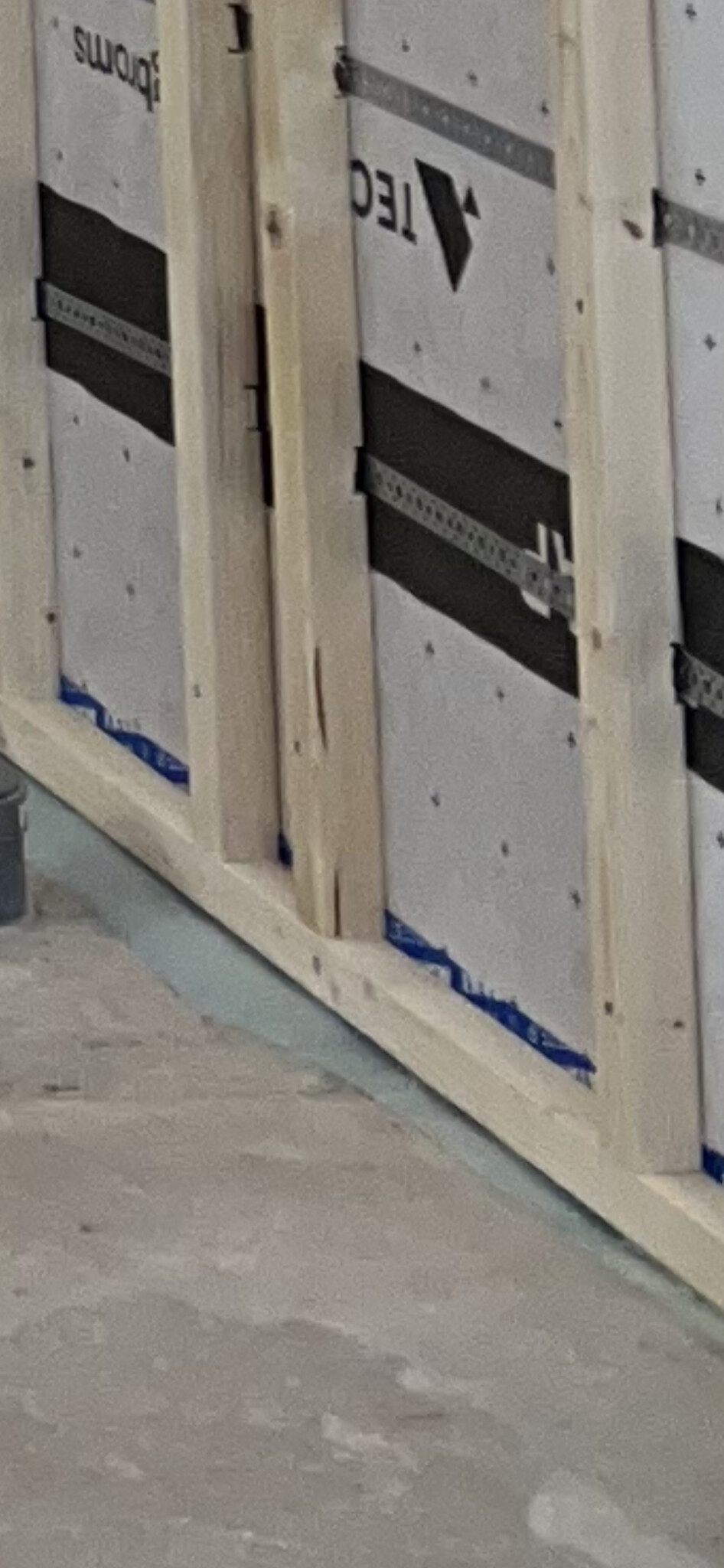
Okay, so the vapor barrier is taped to the sill and then there's a strip of construction plastic under the installation rule, got it. What I was wondering about was if there might be drafts at the sill allowing cold air in, which could cool the plastic, but that might be a long shot.
0.55 sounds reasonable but it generally dries out very slowly especially if you’re going to apply a moisture barrier and perhaps need to get down to 85% RH. Of course, it depends on which moisture barrier will be used. Thinking about the bathroom in your case.
An unrelated question; why are there nail strips against the vapor barrier?
0.55 sounds reasonable but it generally dries out very slowly especially if you’re going to apply a moisture barrier and perhaps need to get down to 85% RH. Of course, it depends on which moisture barrier will be used. Thinking about the bathroom in your case.
An unrelated question; why are there nail strips against the vapor barrier?
Exactly 🤙🏻Okay, so the vapor barrier is taped to the sill and then there's a strip of construction plastic under the installation batten, now I understand. What I was wondering about was if there might be leaks at the sill allowing cold air to come in and cool the plastic, but that might be a long shot.
0.55 sounds reasonable but it generally dries out very slowly especially if you're going to apply a waterproofing layer and may need to get down to 85% RH. Of course, it depends on which waterproofing layer is going to be used. Thinking about the bathroom in your case.
An unrelated question; why is there a metal strap against the vapor barrier?
I've been running the Wood’s dehumidifier for a while now, and it's showing 55. That's pretty dry from what I understand.
Regarding the metal straps... I'm going to have horizontal paneling inside, so I needed something to hold the vapor barrier in place when we sprayed the insulation.
I honestly think the dew point was simply reached on the plastic. Cold floor meets warm air. But I'm really not an expert...
I'll probably leave the dehumidifier out there for a while.
Click here to reply