I just got a little emergency project at home and could really use all the input on this. Therefore, I just created this account - to, if possible, benefit from the collected experience and knowledge of "the general public". NOTE! Scroll to "SHORT VERSION" if you can't handle too much text...
---
LONG VERSION
After a more or less invasion-like attack of horse ants was noted last week (mostly outside around the house foundation but also some indoors), I started a more in-depth investigation of where they might be coming from and, if possible, prevent any attempts at establishment. Since we live in a log house, it doesn't feel entirely unproblematic to share the house with types that want to make nests in the actual house structure.
Quick as lightning, I bought Myrr both in powder and spray form wherein I immediately responded with a chemical counter-attack. And after a generous application of Myrr, I seemed to have won the battle. Just as suddenly as the ants disappeared, an even more unpleasant problem appeared.
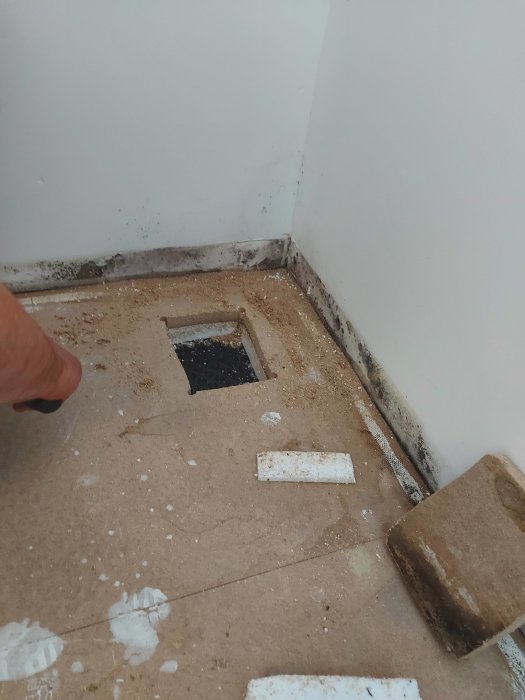
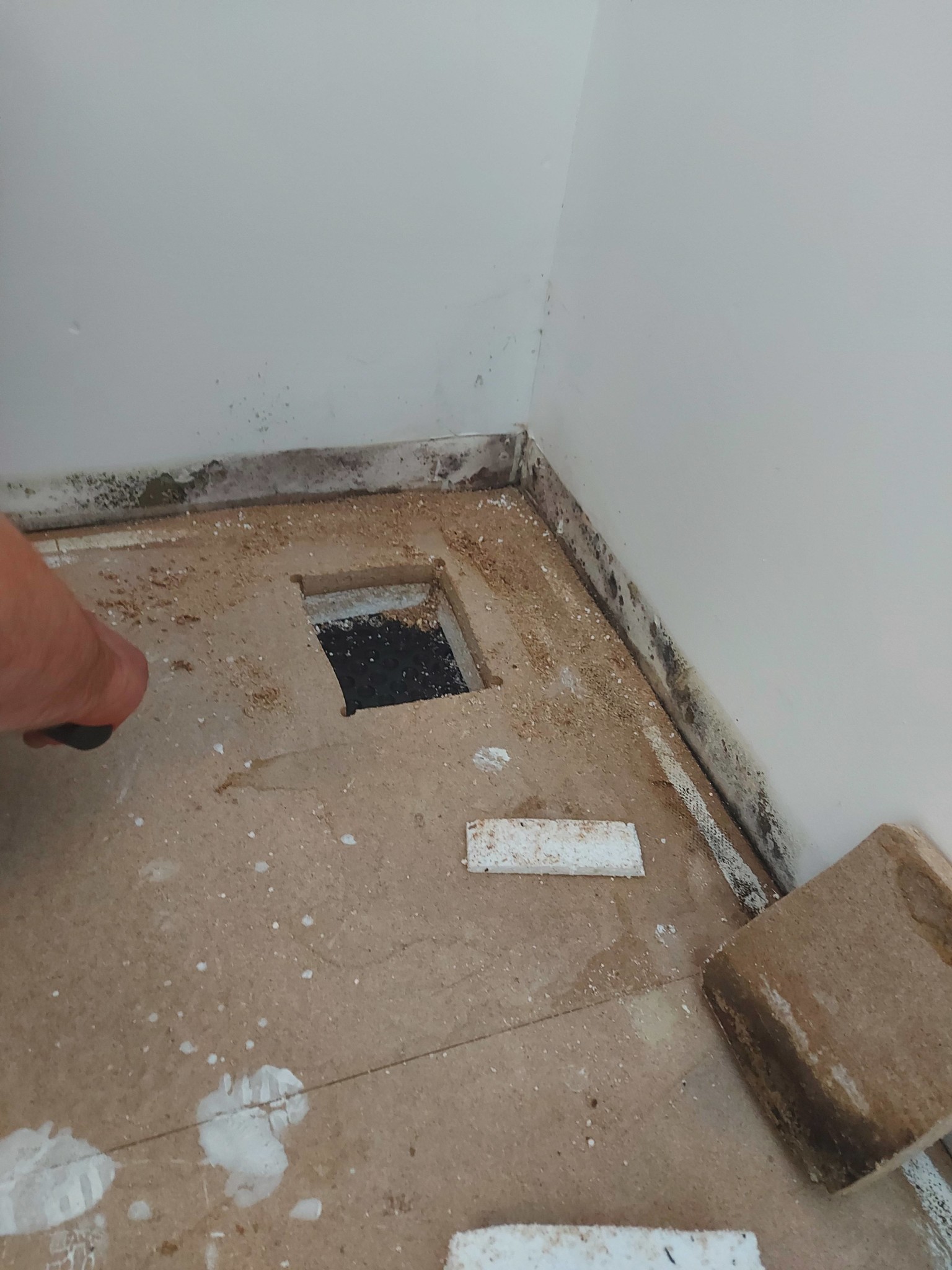
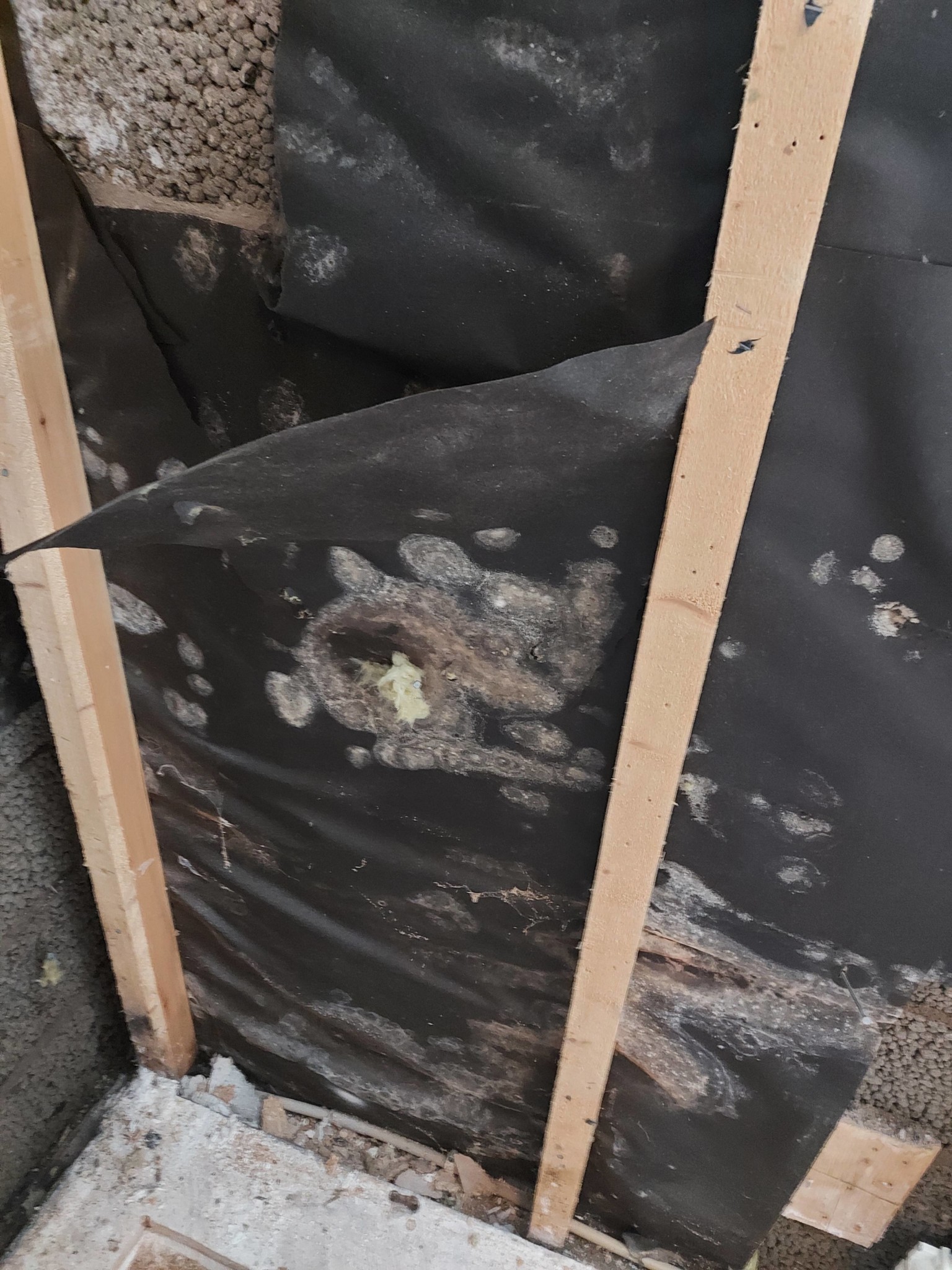
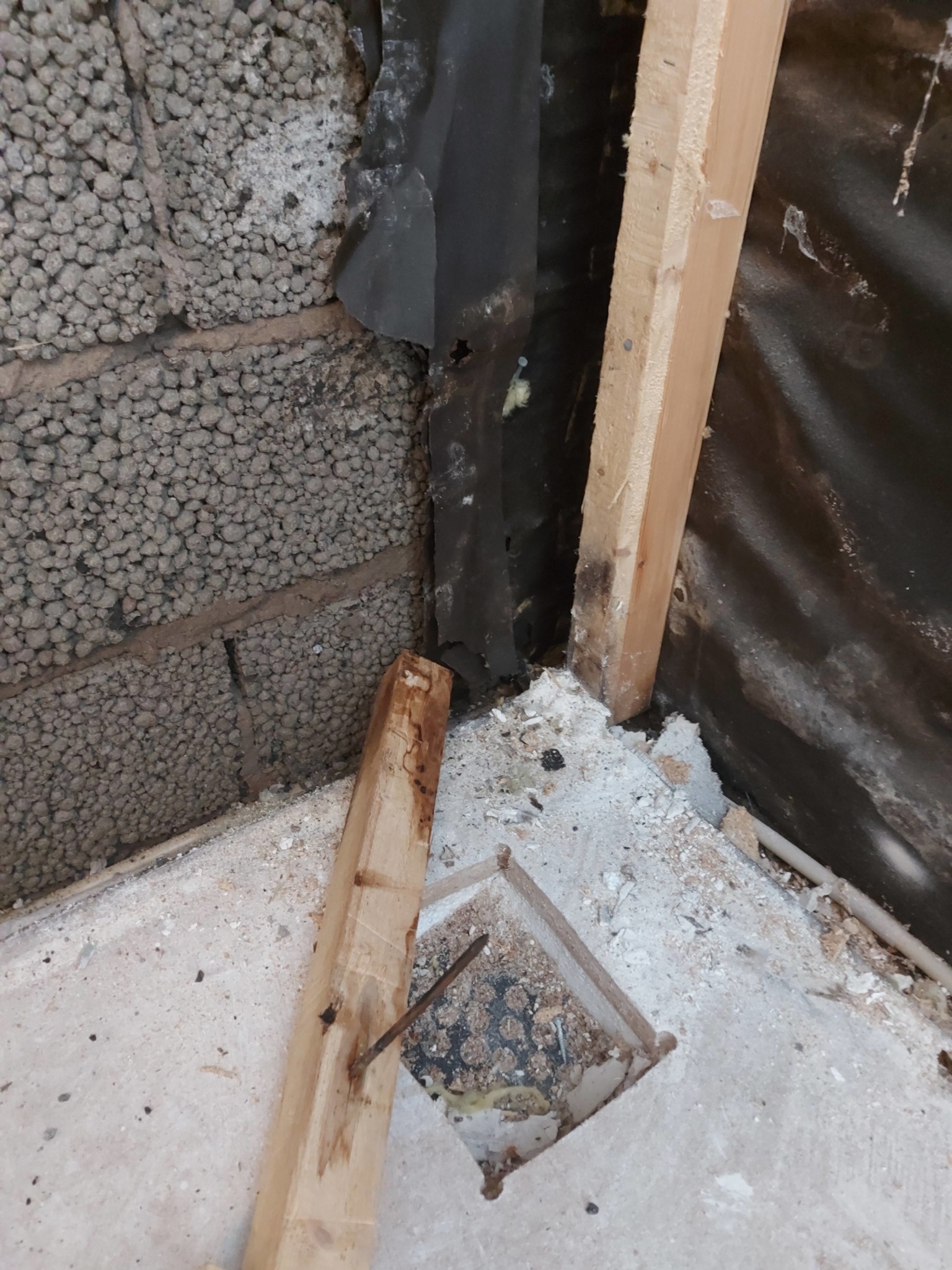
During the inspection of the basement, in search of a potential "ant nest," two large mold spots appeared on the wall in one of the basement rooms when I moved some wooden boxes. The wooden boxes were bone dry, so I concluded that the moisture was likely coming from outside. I then drilled a hole through the floor to check the condition from underneath and see how the floor seemed to be "doing."
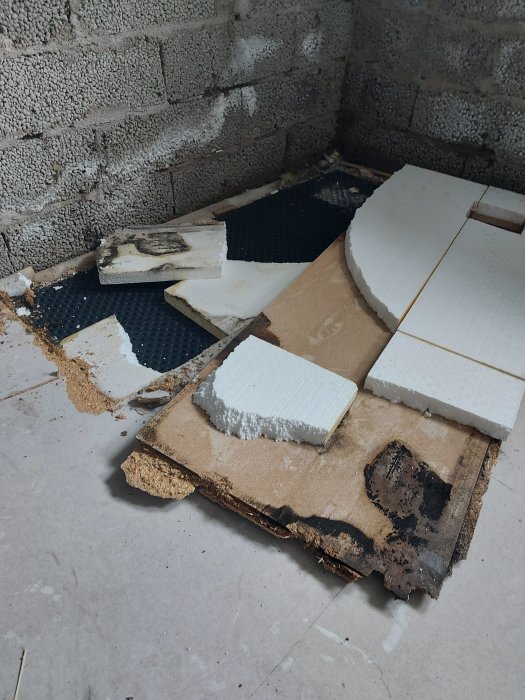
The floor construction seems to look like this from top to bottom. (Though I haven't sawed through the Platon mat, so one can't be completely sure...)
plastic mat
floorboard (like chipboard/wood boards)
styrofoam board (about 5cm thick - insulation?)
Platon mat (that black "egg cup mat")
concrete/base plate(?)
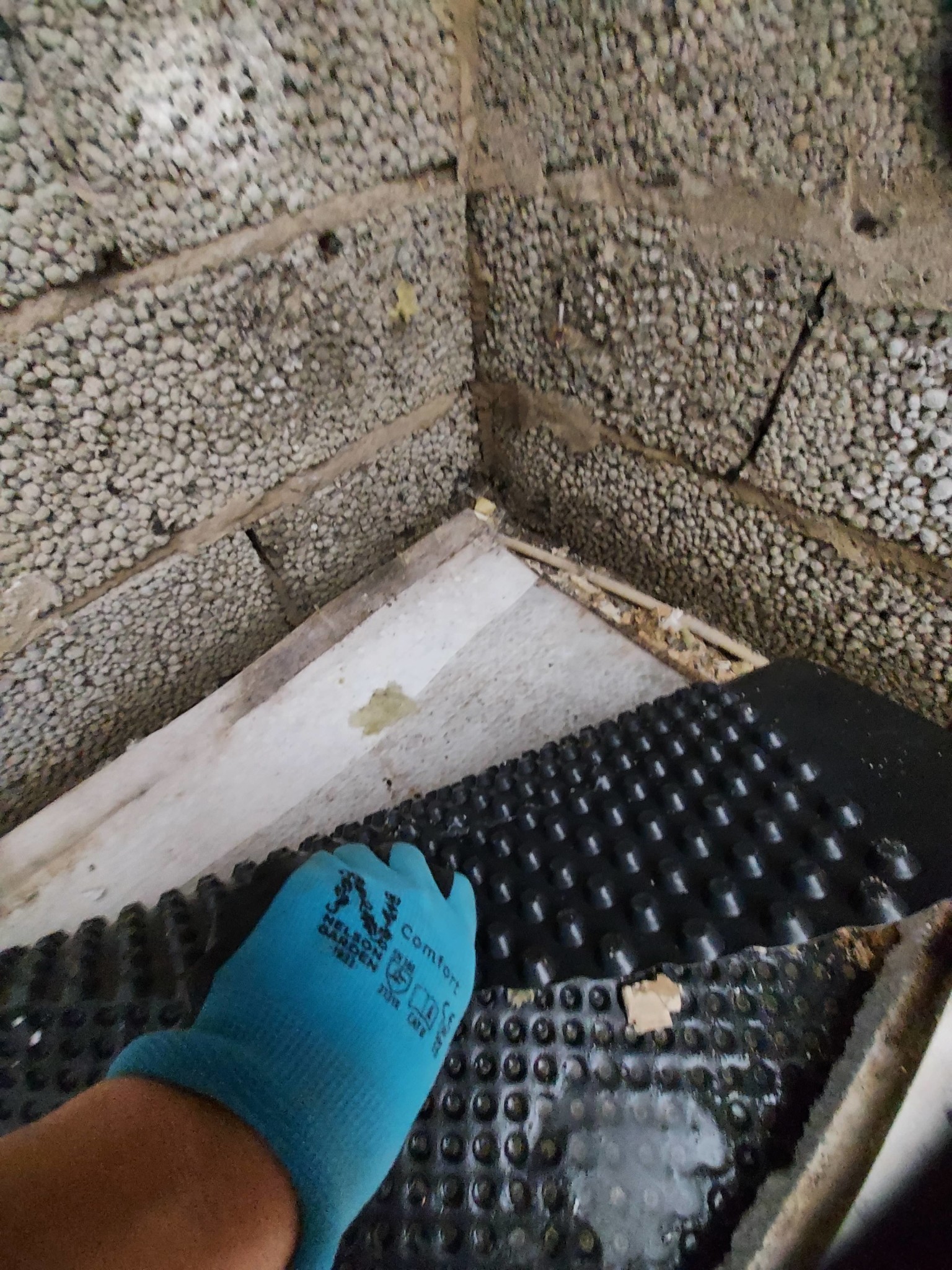
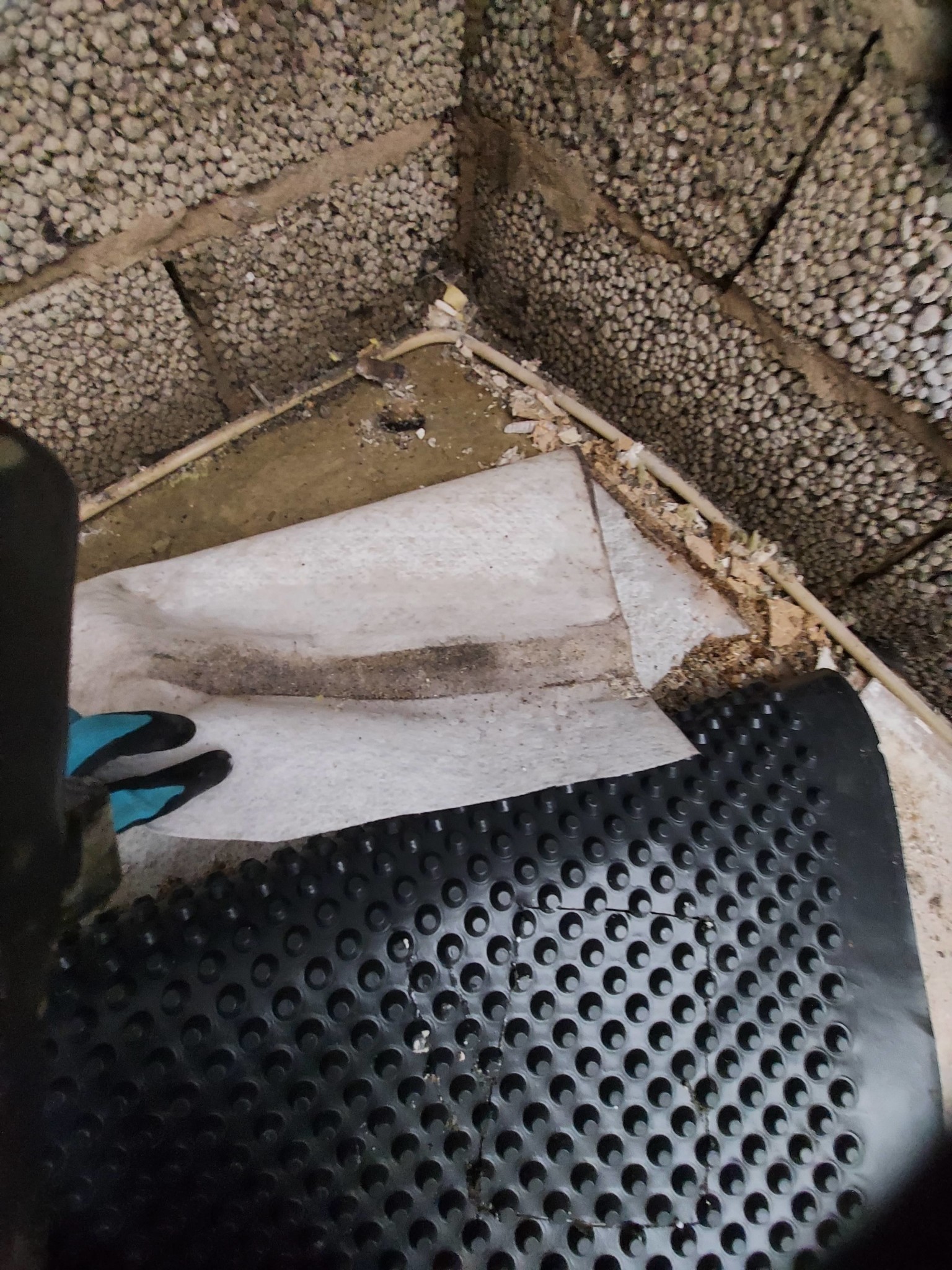
It turned out there was water in the depressions of the Platon mat (which I assumed has come in "from the side" somehow - the underside of the floorboard and the top of the styrofoam were completely dry).
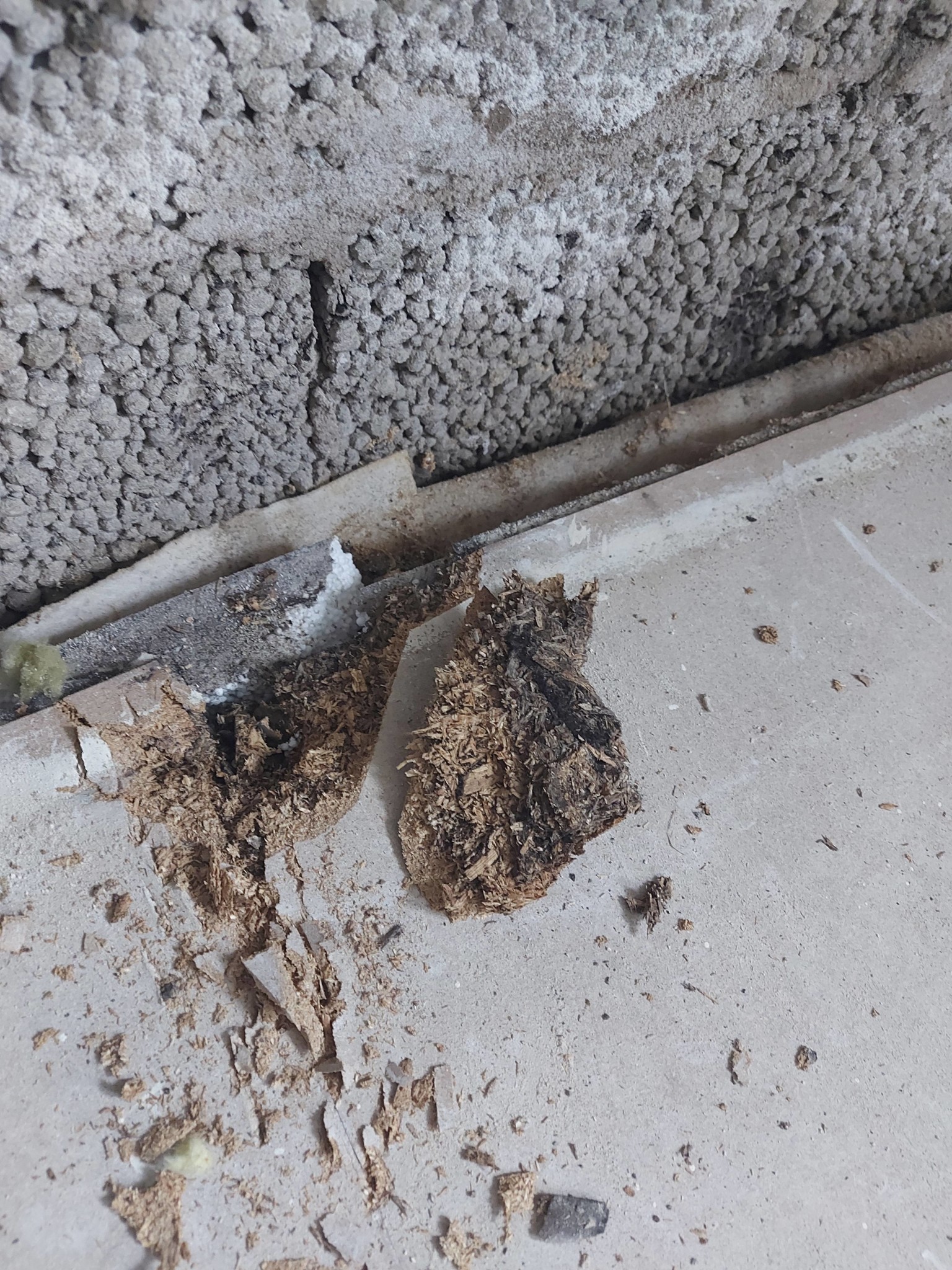
I continued my increasingly unpleasant investigation, during which I discovered some mold/damp spots behind the baseboards.
The basement was quite recently fully renovated (about 2012 by the previous owners) after extensive water damage due to flooding. At the same time, the house was dug around, and it was found that the drainage pipes were apparently too high (done by the owner before last). This is supposed to have been fixed.
---
SHORT VERSION
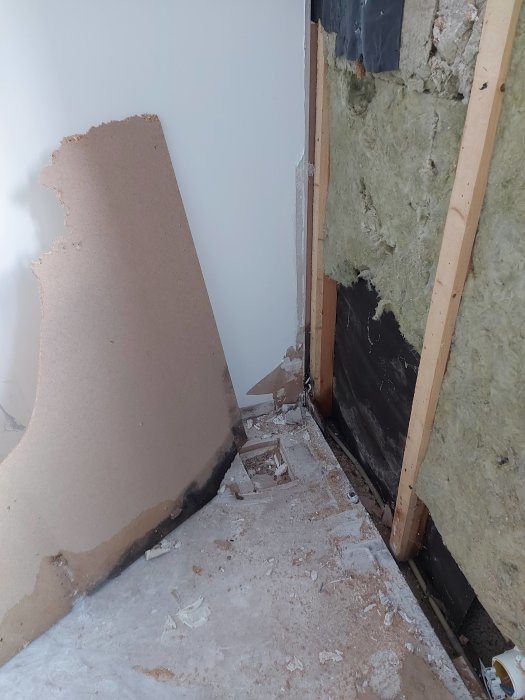
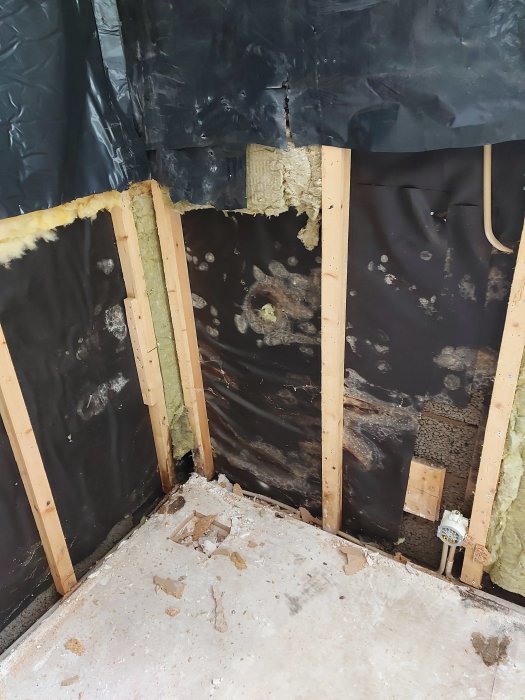
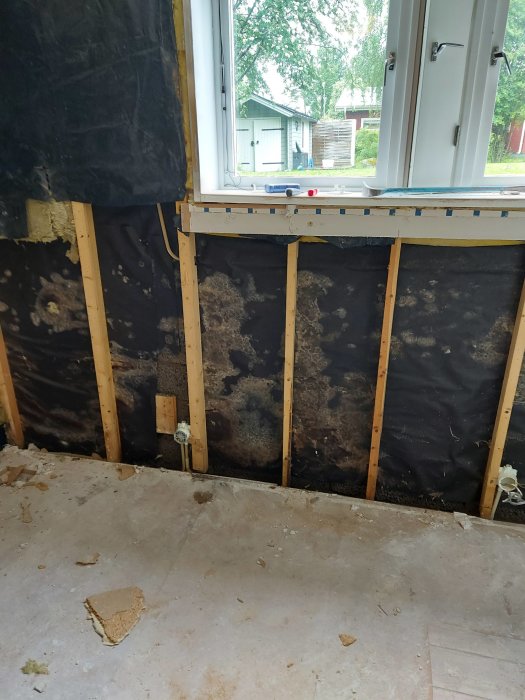
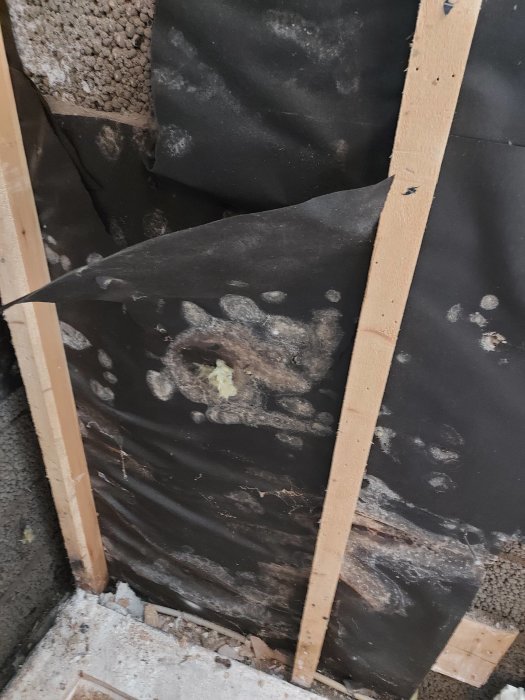
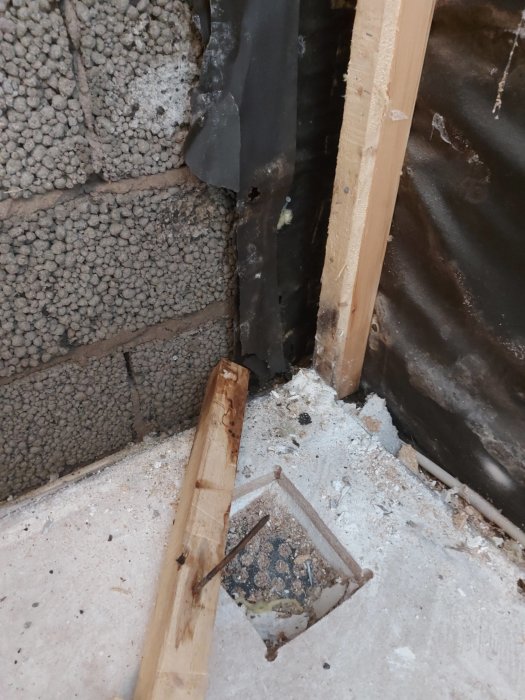
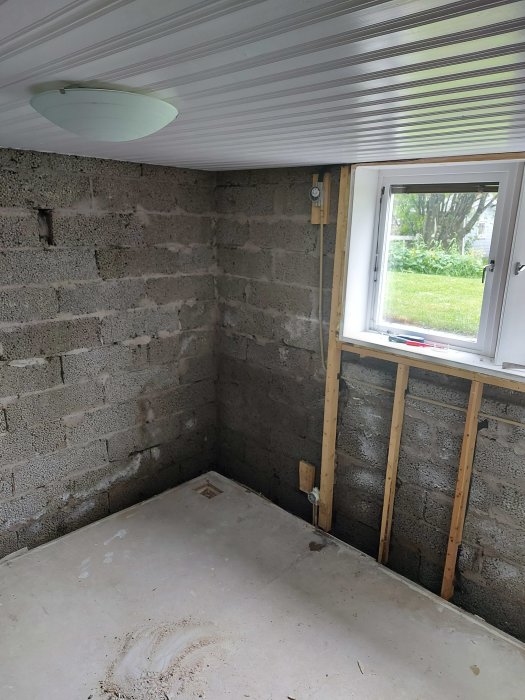
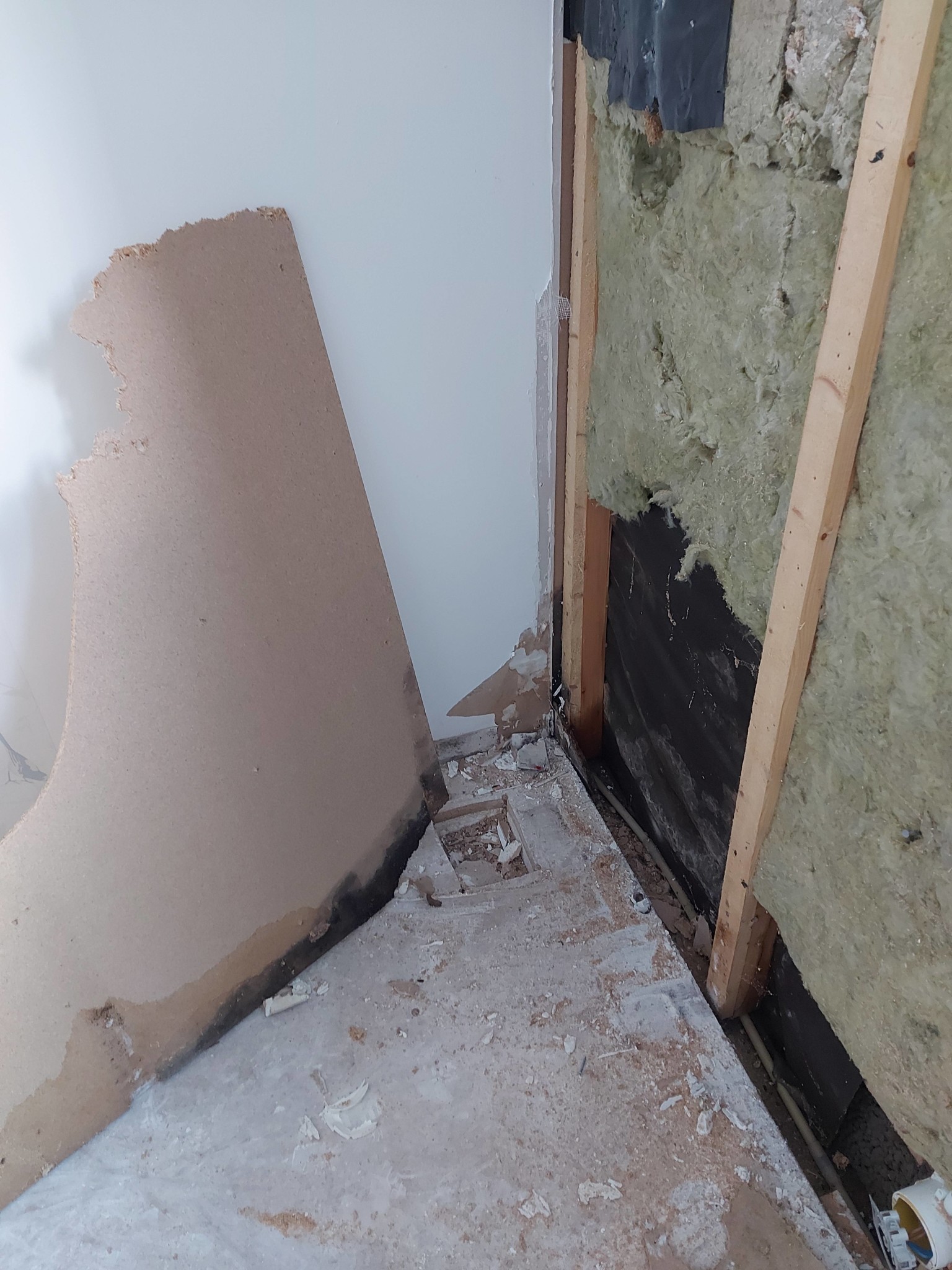
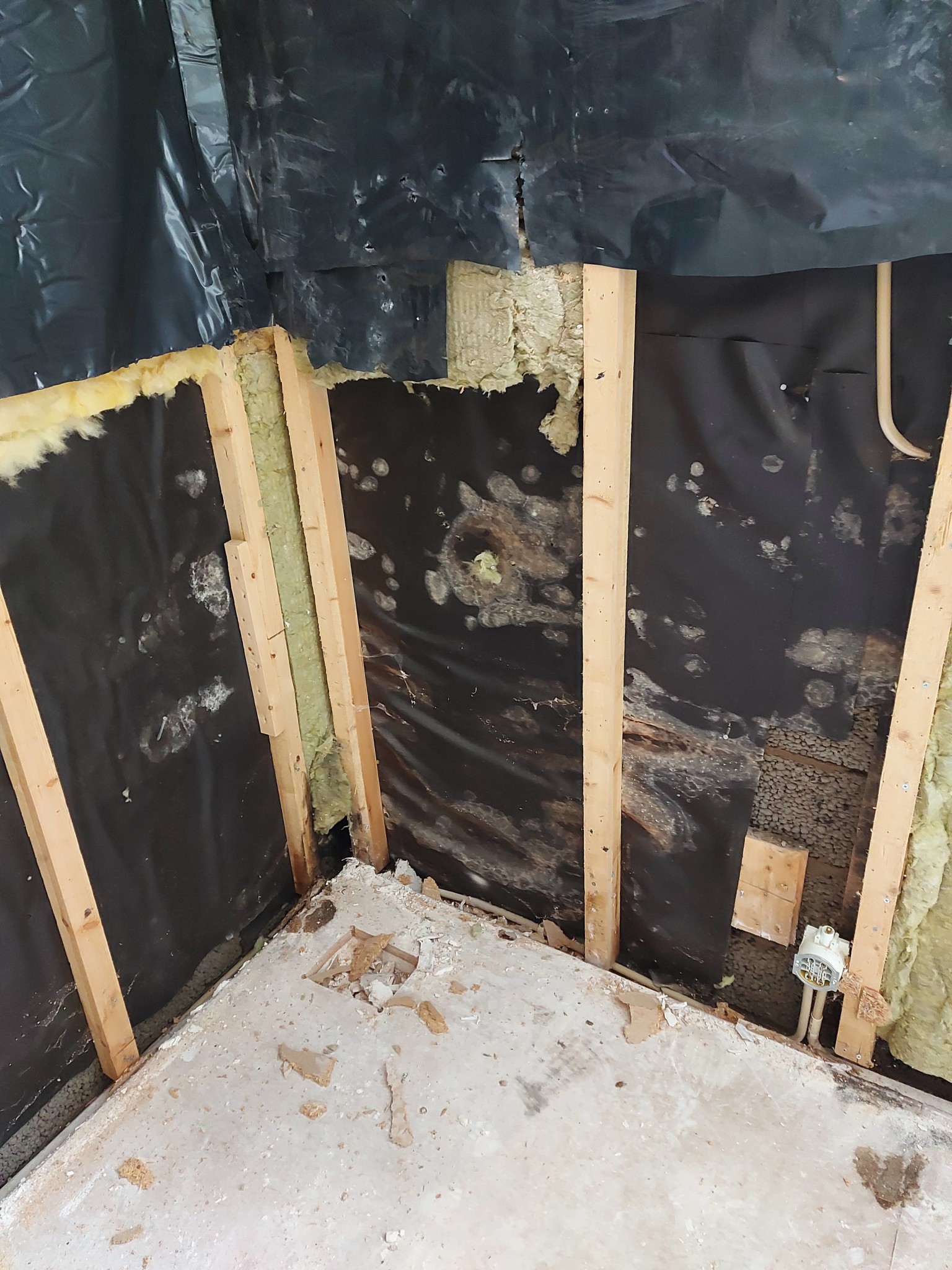
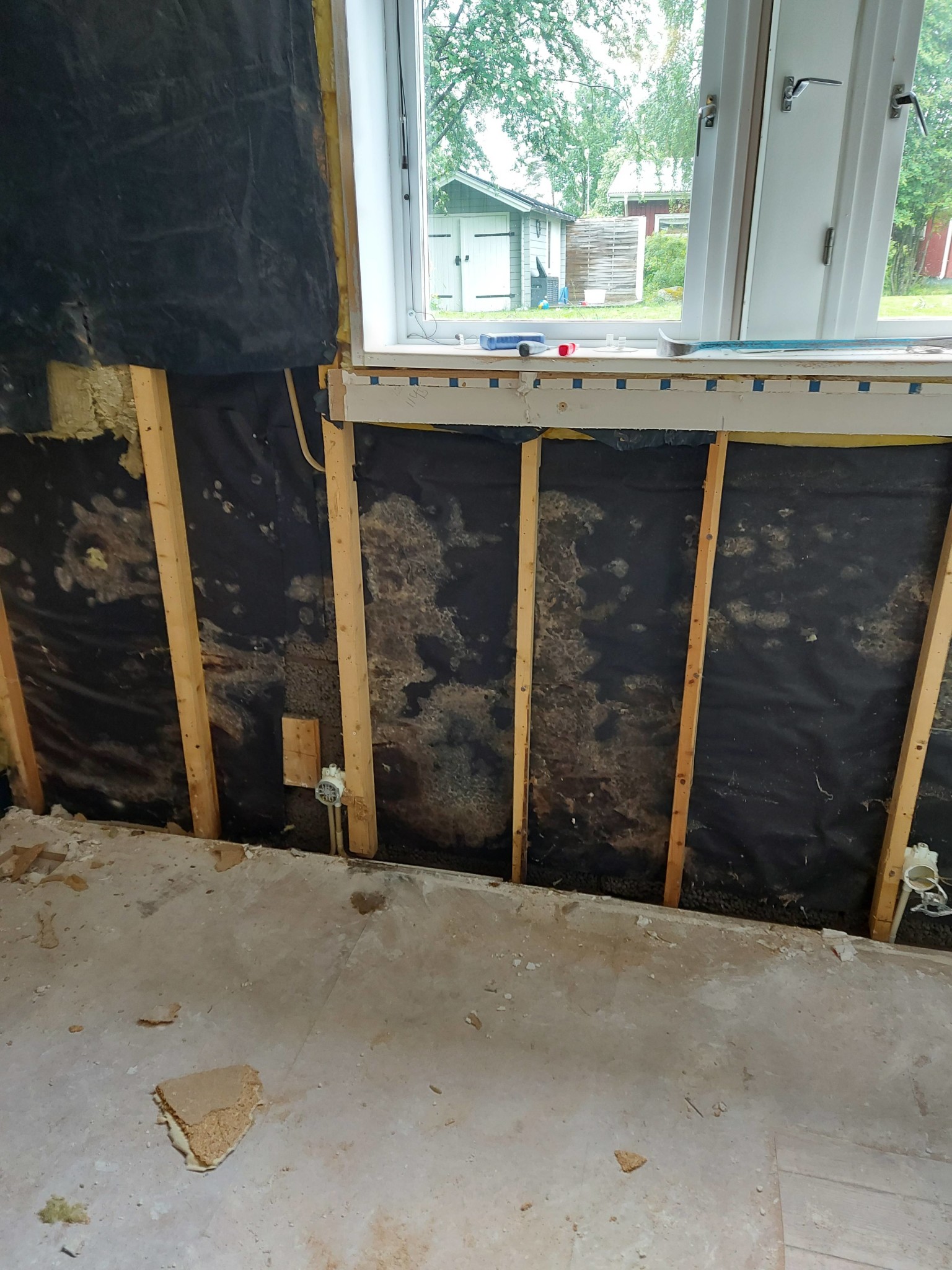
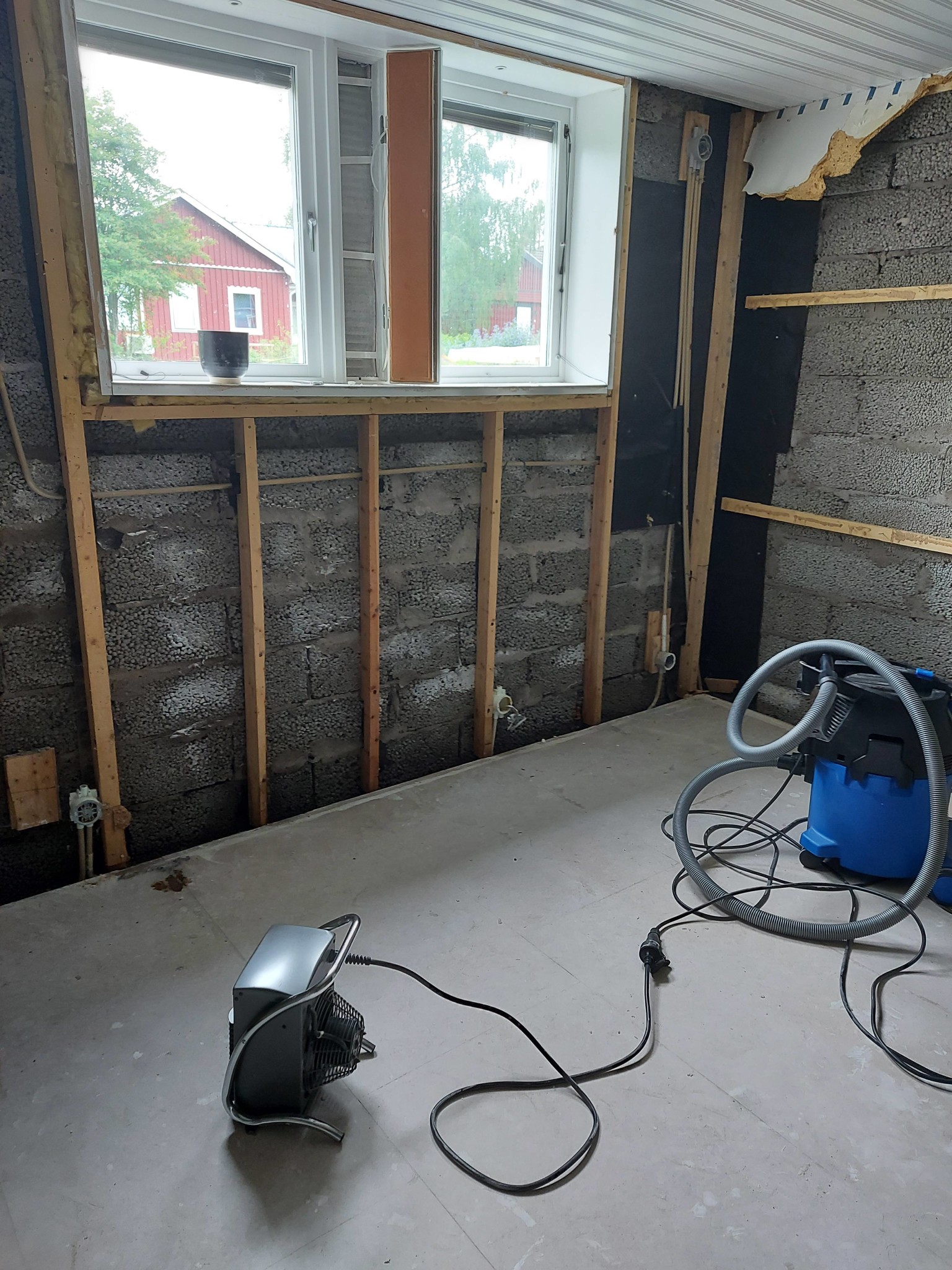
This has now led me to peel off all the walls in the room down to the foundation. This is how it looks/looked, from outside to in:
LecaBlock
"Black paper"
Wooden studs "nailed"(?) into the Leca blocks
Insulation
Black plastic
Chipboard attached to the studs
Plasterboard attached to the chipboard
Wallpaper
In short: Basement room inside the house corner. Renovated in 2012. Now severely water-damaged. How to redo it right?
Some thoughts:
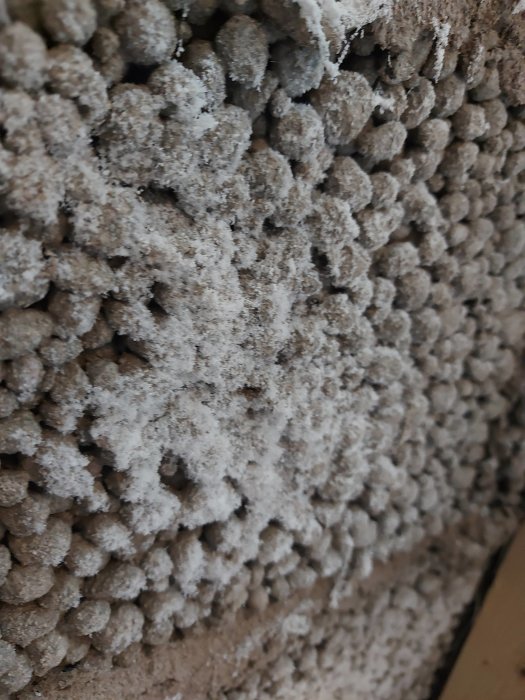
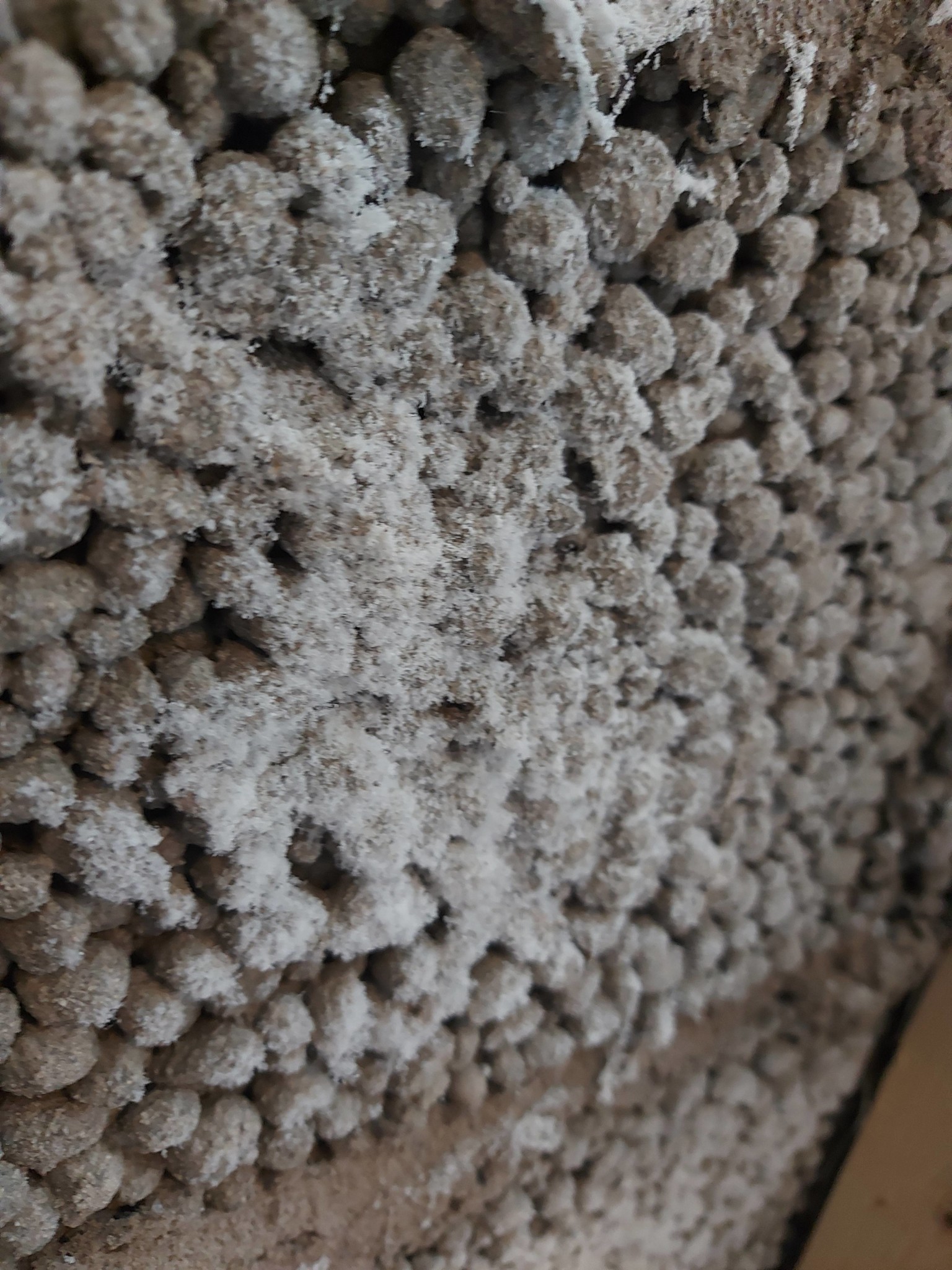
1. Is there mold on the Leca blocks? (and how should it be removed if so?)
2. How long does it take to "dry out" the whole room? (about 15 sqm)
3. How do I attach a construction of steel studs? (The wooden studs were at least attached with big nails directly into the Leca blocks, what kind of nails were they?)
4. The "black paper" closest to the Leca blocks was severely mold-infested, what is its purpose?
5. How to insulate "risk-free"? Is interior insulation even necessary if I maintain high heating and insulate from the outside? (I was planning to dig up around the corner to check how it looks anyway.)
6. Should I attempt to "install" a mechanically ventilated floor myself, like Nivell..(other mech.vent. - floor?) How expensive does it get?
7. Is it worth doing the room before I have managed to dig around the corner outside? (I understand of course that the root problem is the moisture that comes from outside - We also have quite clayey/compact soil where the house stands.) Thinking more if there is a good solution for avoiding moisture/mold damage indoors but that at the same time includes interior walls and floors.
8. What do you think the total cost will be if I do as much as possible myself?
Do you have a photo of the outside of the house corner? Primarily of interest is the roof drainage, if there are downspouts, leaf catchers, spouts, or if it is directed into stormwater.
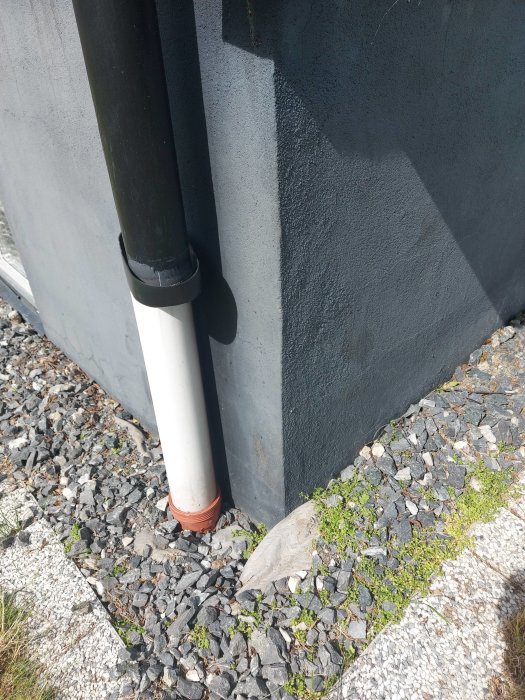
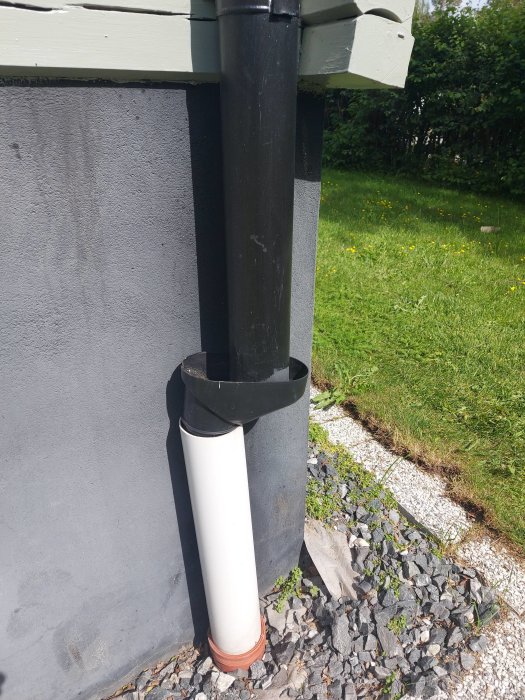
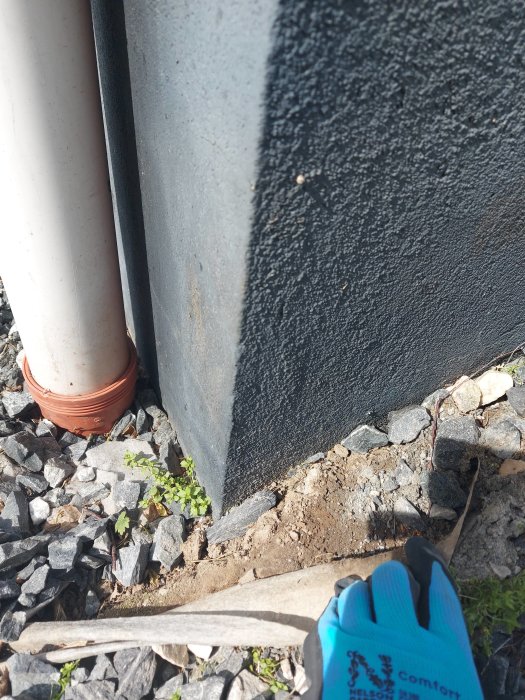
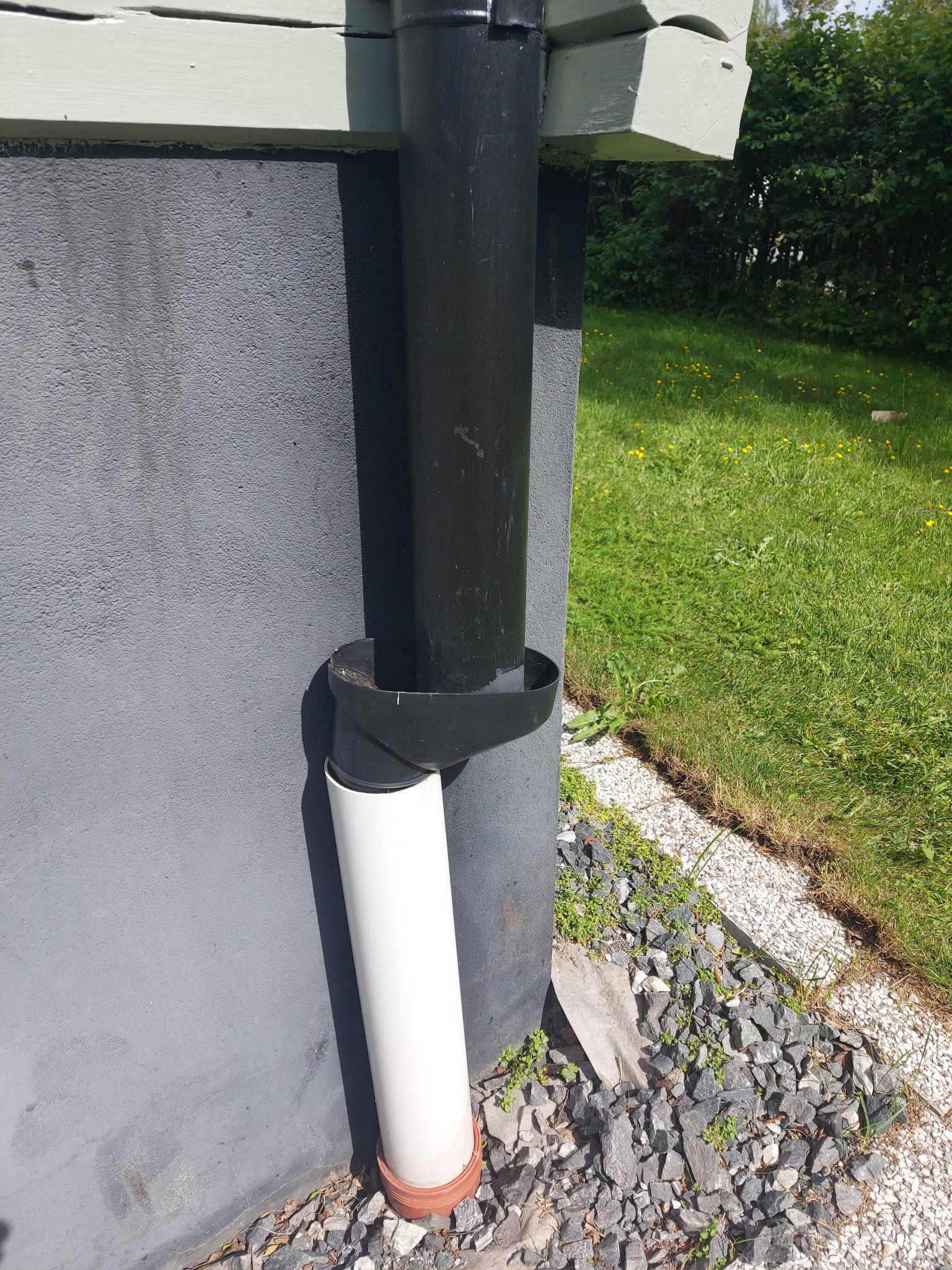
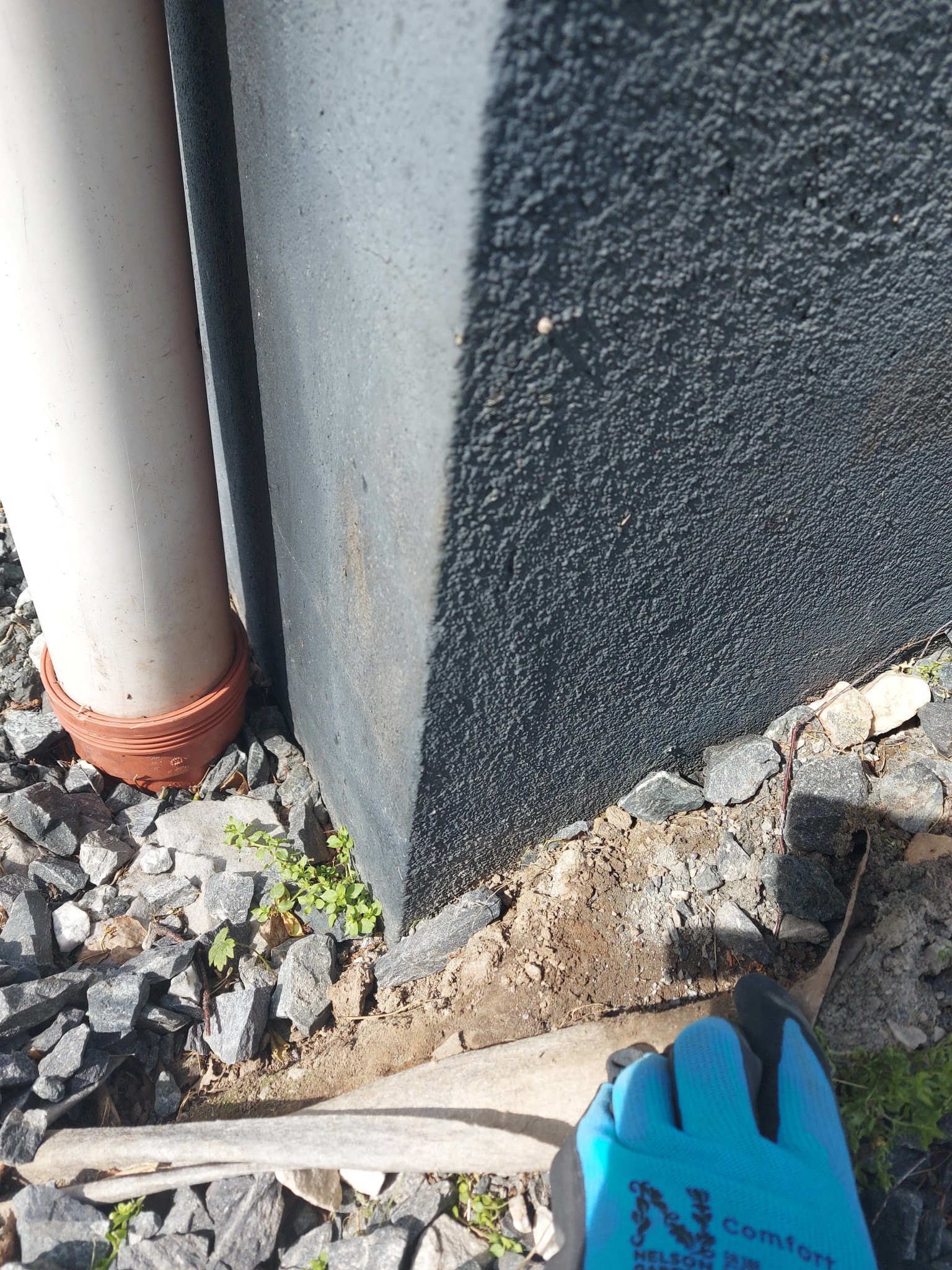
Here's what the (visible) corner of the house looks like from the outside. A fairly thin layer of larger gravel over some kind of cover/ground cloth and beneath it finely packed soil (which feels damp even quite a while after it has rained). Would it be better to have gravel further down, rather than that soil (which I suppose would be labeled "clayey")?
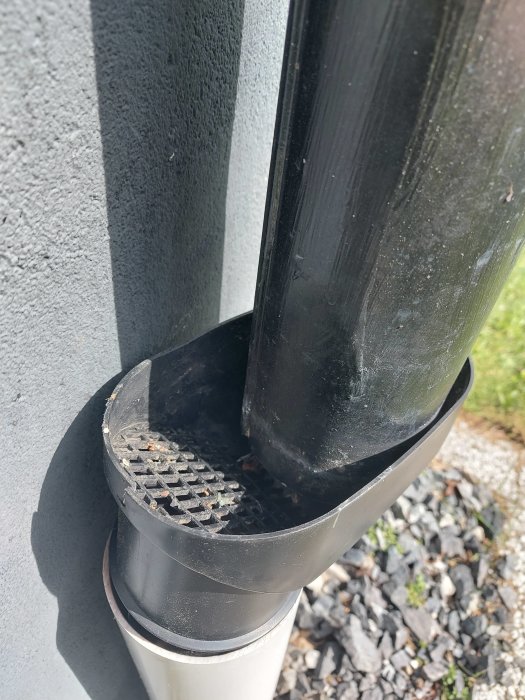
The downspout leads into the ground and connects to the outlet(?) During rain, however, a lot of water splashes from the strainer and hits the foundation. Should I perhaps cut the pipe and redirect the water out onto the yard instead? (Or alternatively place one of those barrels under it..?)
More pictures will come when I have time to dig a bit around the corner. The foundation is supposed to have some isodrän around it, but I do not know how it looks in this particular corner.. And shouldn't a potential platon plate stick up a bit along the visible foundation?
This is how the (visible) corner of the house looks from the outside. A fairly thin layer of larger gravel over some kind of cover/ground cloth and underneath that a finely packed soil (which feels damp even quite long after it has rained). Would it be better with gravel further down, rather than having that soil (which I suppose would be classified as "clay-like")?
The downspout leads into the ground and connects to the outflow(?) During rain, a lot of water splashes from the strainer and splashes against the foundation. Should I perhaps cut the pipe and redirect the water out onto the yard instead? (Alternatively, place one of those barrels underneath..?)
More pictures will come when I have had time to dig a bit around the corner. The foundation is partially supposed to have insulation around it, but I don't know how it looks in this particular corner.. And shouldn't a potential retaining plate stick up a bit along the visible foundation?
[image] [image] [image] [image]
At my house, it looked the same, it looked as if the previous owner had made some clever intricate solution with pipes underground… After a while, I realized that the pipe was simply buried straight down into the soil, just as it looks in your pictures. I rented a mini excavator as it was also necessary to trench around the driveway - it was a breeze to dig out about 60-70 cm width around the corner. With some caution around the pipe, of course. Then I laid out coarse gravel for drainage and breathability around the corner - it has worked excellently for almost 15 years.
It doesn't necessarily have to be the same for you, but I would have dug it up and checked the situation. I made a joint on the downspout and diverted the water to an area where there is a natural slope away from the house.
Thanks for the tip! I will definitely choose a different solution than pipes underground (even if they were now correctly connected to stormwater). It's silly to bury something you want to be able to "keep an eye on."
I will take a look at the foundation below ground level. I actually plan to dig by hand all the way down to the footing. (Should work well, provided I have the same "clay soil" all the way down and get help to remove any large stones on the way down)
I need to find out what it looks like throughout the foundation along the exterior of the house corner, so it's just as well to try to dig down to the presumed drainage pipe and hope to actually encounter it under the "footing level" as it should be.
I also plan to place Platon and Isodrän boards against the foundation if they are missing or not installed according to regulation.
However, one question remains - how deep can I fill with gravel once the corner is "fixed"? All the way? And is it better than the soil that is probably there now?
My guess is that it should be better with "airy" gravel stone than packed clay soil if you want to avoid moisture seeping into the basement?
And do the Isodrän boards provide insulation for the room inside, even if I were to fill with gravel outside the "Isodrän layer" along the entire corner?
It should be added that we live in northern Sweden where there are often longer periods of cold and also large amounts of snow, which means a lot of meltwater when it thaws down into the ground every spring.
Right now it feels like our house and basement are built in a gigantic sponge
You don't want any surface water going into the drainage, so a layer of clay soil sloping away from the foundation is good; a thin layer of decorative stone does not matter as long as the water can drain away. If you live in the northern parts of Norrland, you also don't want to increase the frost depth with macadam, so refill with the same material you dig up.
Start by investigating where the water goes; it might just be splashing from the grate causing the increased moisture load around the corner. With a self-cleaning grate, you can redirect any splashes away from the base. I wouldn't build anything on the inside until the moisture problem was resolved. On second thought, I would probably plaster the inside and insulate the outside
You don't want surface water to go down into the drainage, so a layer of clay soil with a slope away from the foundation is good, a thin layer of decorative stone doesn't matter as long as the water can drain away. If you live in the upper part of Norrland, you also don't want to increase the frost depth with macadam, so backfill with the same material you dig up.
Start by investigating where the water goes; it might just be splashes from the grid that have caused the increased humidity around the corner. With a self-cleaning grid, you can redirect any splashes away from the plinth. I wouldn't seal anything inside until the moisture problem is solved. On second thought, I might plaster the inside and insulate the outside
Sounds sensible. I am completely inexperienced with this myself.
What should I use to plaster the lecablocks with? Should I scrape/remove the mold that's already on the lecablocks? Isn't it a bad idea to seal the cavities in the leca, considering potential future moisture formation?
Right now, there's a heater running to dry the room. I don't know how long it's usually needed. And how do you determine that the room is dry enough? The room is about 15 sqm, and a window with an open vent flap is open. Also, the door is slightly ajar to try to create airflow. (Or am I just circulating bad moldy air around the house this way?)
Can I attach metal studs to the plaster afterward, or were you thinking I could keep the plaster as the only interior wall (just paint over it with a suitable paint to make the room somewhat aesthetically pleasing?)
As mentioned, I'm completely inexperienced in this area and not very handy. But you learn as you go, and you certainly don't get dumber by digging around here on the forum
(The ground level outside is just at the bottom edge of the window)
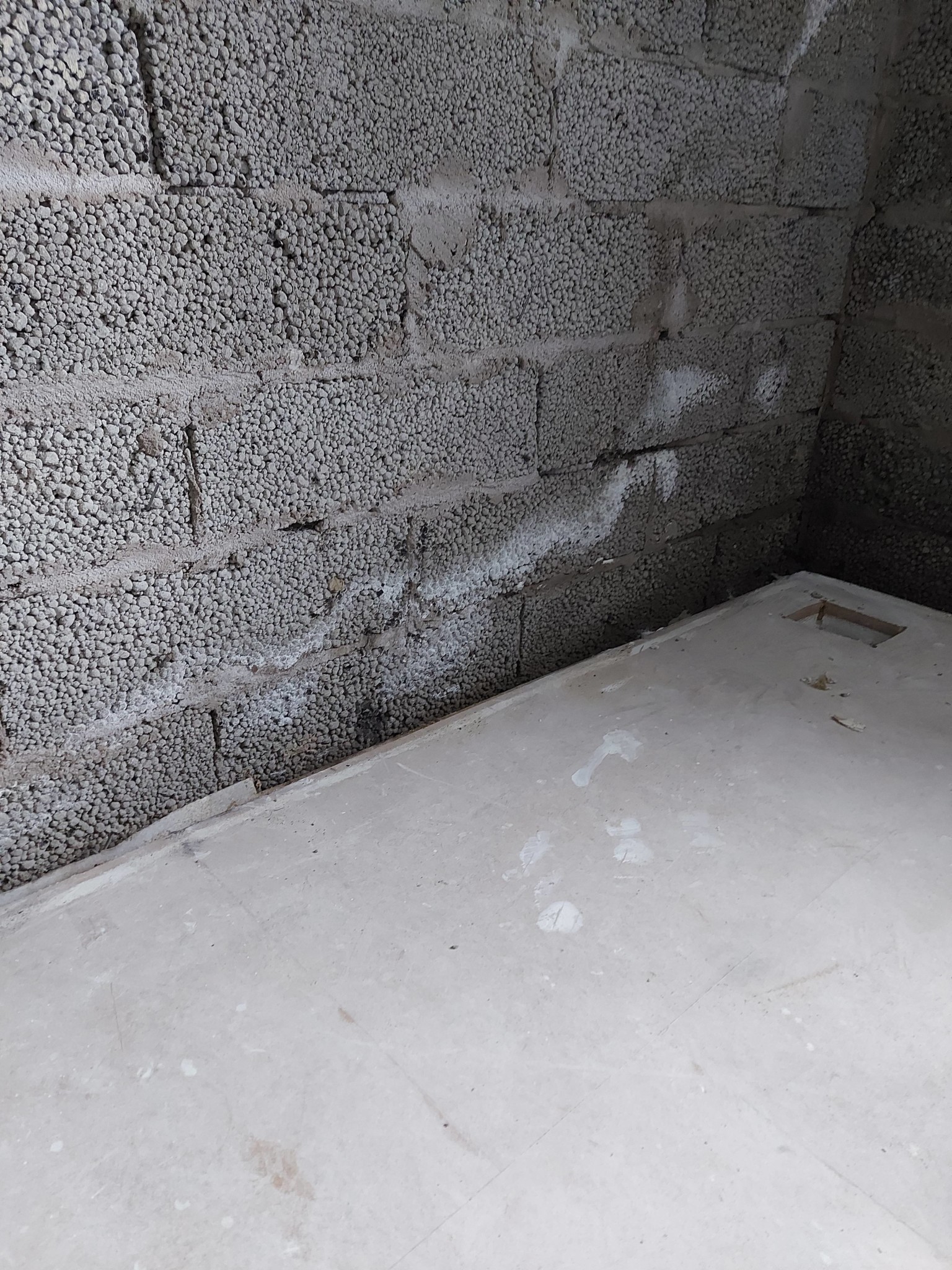
The advantage of plaster is that you don't cover up the problem. Additionally, if you paint with silicate paint, you get a nice surface that can handle higher moisture loads than organic materials, without taking damage or molding. The white powder you see on the lecablock is salt deposits, and it's enough to brush away the worst with a broom. C-bruk is well-suited for basement walls; of course, it's more work to also plaster the walls, so that's a trade-off you'll have to make.
I actually don't know how long it takes to dry out completely, but if you have access to a dehumidifier, it will probably speed up the process, especially if you already have a heater. Without a dehumidifier, you'll probably need to leave the door or window ajar
The advantage of plaster is that you don't cover up the problem, and if you paint with silicate paint, you get a fine surface layer that can handle higher moisture loads than organic materials without getting damaged or moldy. The white powder you see on the lecablocks is salt efflorescence, you just need to brush away the worst with a broom. C-bruk is suitable for basement walls, and of course, it's more work to also plaster the walls, so it's a trade-off you have to consider.
I actually don't know how long it takes to completely dry out, but if you have access to a dehumidifier, it should speed up the process, especially if you already have a heater. Without a dehumidifier, you'll probably have to leave the door or window slightly open
1000 thanks for the good info and tips! I actually became very interested in plaster after a bit of googling.. We'll see what I end up using, though. I note that B-Bruk is often mentioned in these contexts.. I guess I'll have to read up and ask around a bit!
However, I still have some wooden studs left to take down and a bit of fine-tuning around the electrical and window frame before the room is ready to dry completely. But most importantly: Outside, there's a house foundation to excavate! (Right now, it actually feels more fun than hard to get into and plan this. As long as I keep the costs at reasonable levels, it'll be perfect, plus I earn some DIY points in the process )
The thread will likely continue as the work progresses, as I have no experience with this or could even generally be classified as particularly handy haha.. But there's nothing wrong with my willingness.
With a full-time job that includes evenings and weekends, plus two diaper kids and a third on the way, I don't exactly have eons of time Also, I'll be taking part-time studies in the fall, so busy days during the holiday
As I said, 1000 thanks for the input! And anyone reading is welcome to bomb the thread with questions, tips, knowledge, and advice!
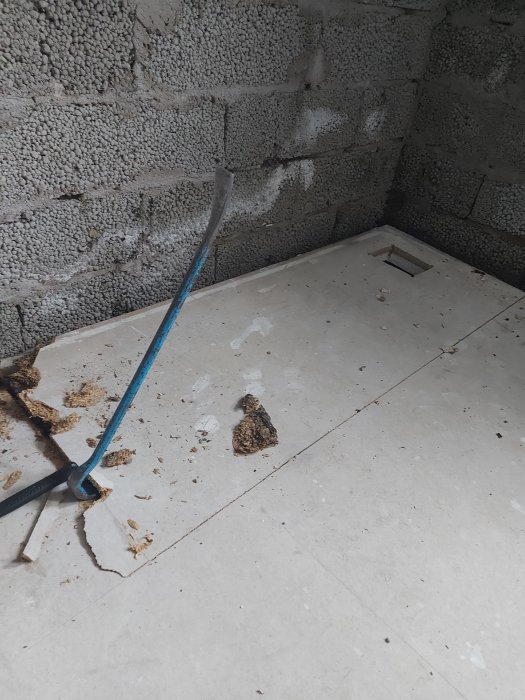
I have now started breaking up the floor in my "problem room"..
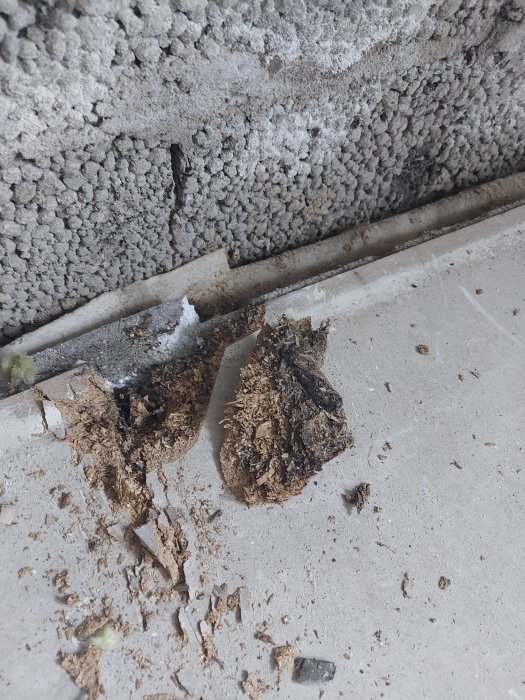
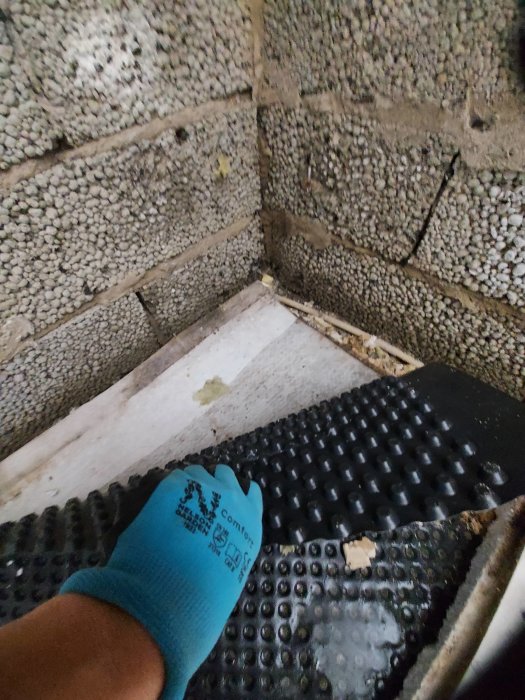
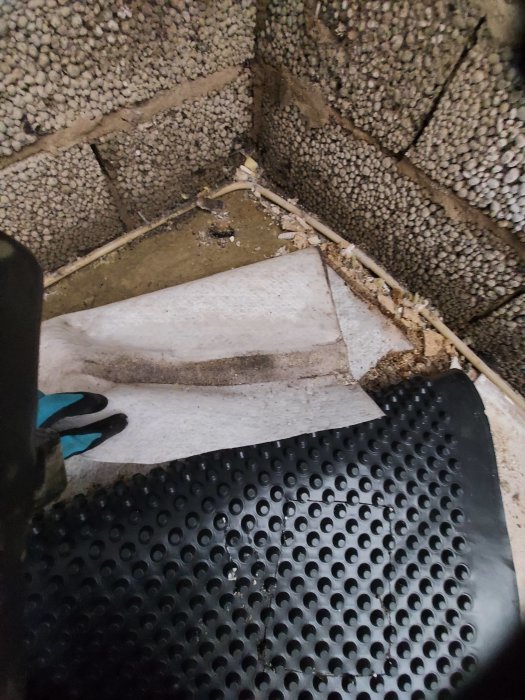
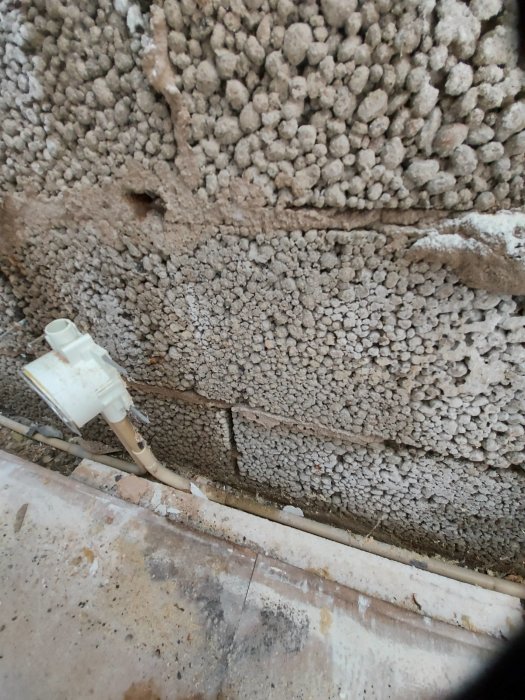
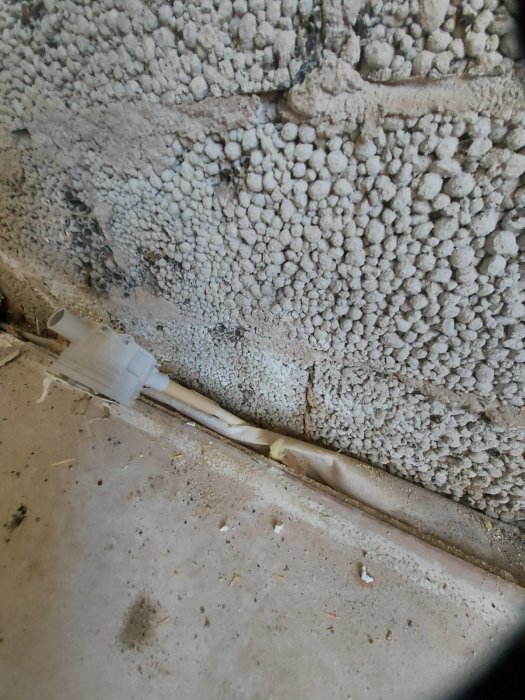
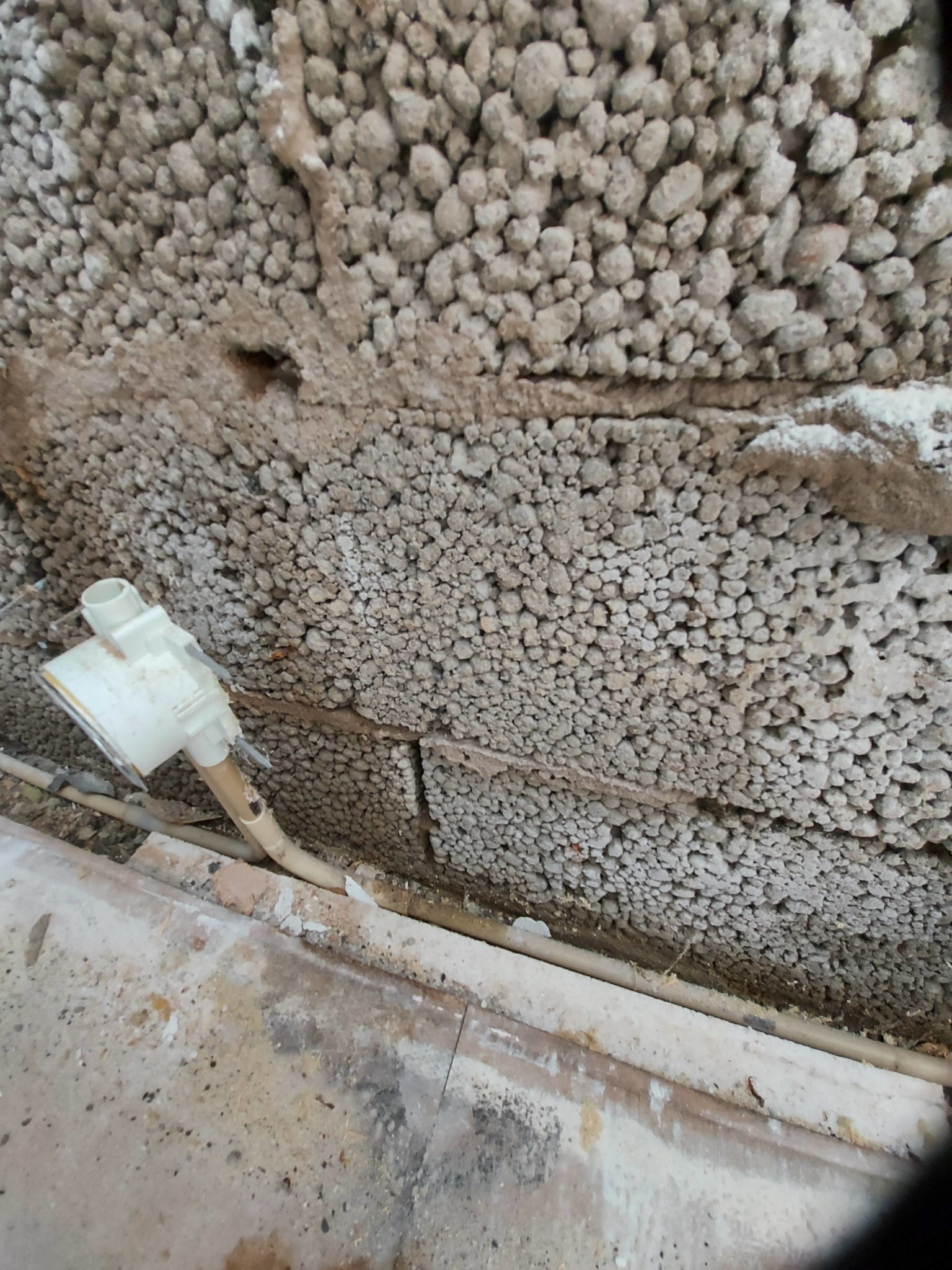
Unfortunately, it turns out that water has also gotten under the floor tiles. Moreover (as previously noted already during the first drilling of the floor) there is more water between the Platon membrane and the styrofoam, so the small "cups" in the Platon membrane are filled with water.. Under the Platon membrane there is then.. well.. what? Some kind of white undefined material (which is obviously also wet) directly against the concrete floor.. Feels a bit concerning.
While it feels good that I started "peeling off" the entire room, one becomes worried.. As I have every reason to assume that the "floor construction" looks like this everywhere since the entire basement was totally renovated around 2012.. Not so fun.. The idea of a mechanically ventilated floor now feels like the only long-term "solution," can I really attempt to install a "mech. vent. floor" myself and what might it cost? (About 15sqm floor) Anyone with experience? My previously somewhat manageable project suddenly grew a bit too large
Anyone with suggestions on what to do?
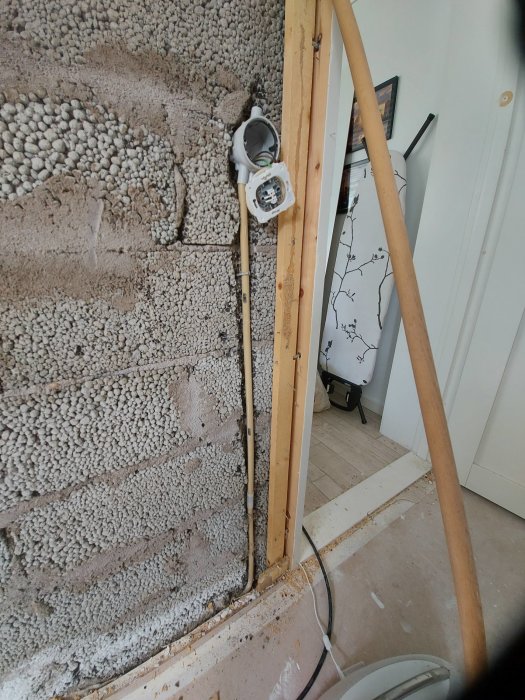
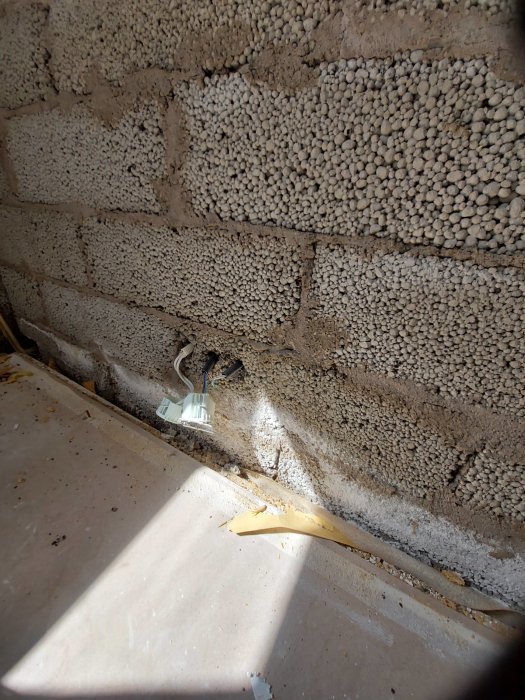
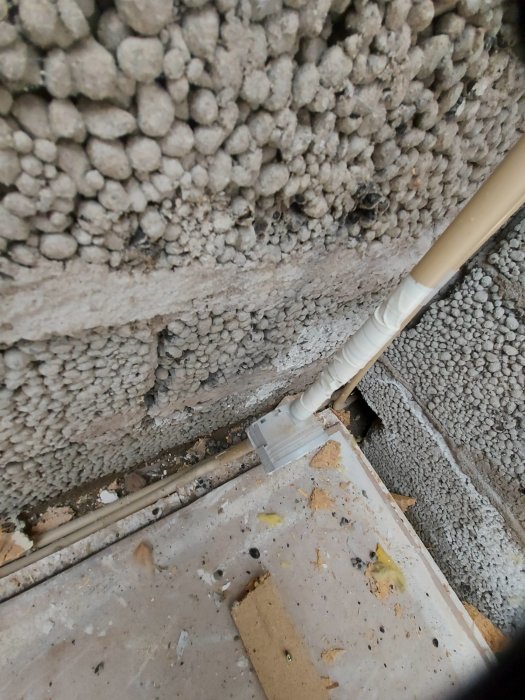
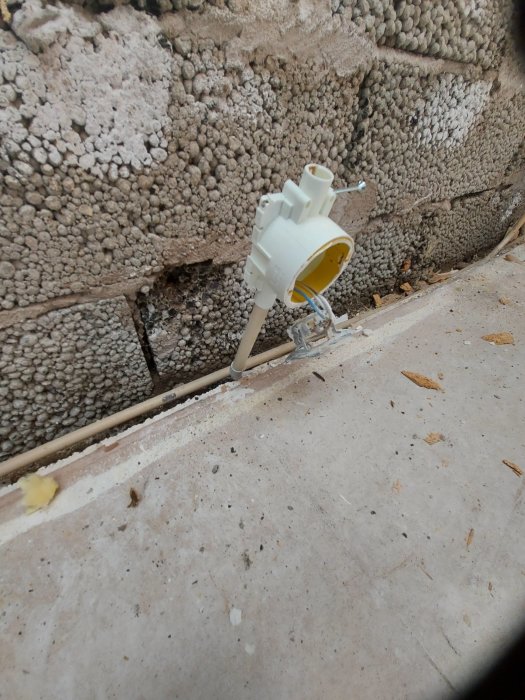
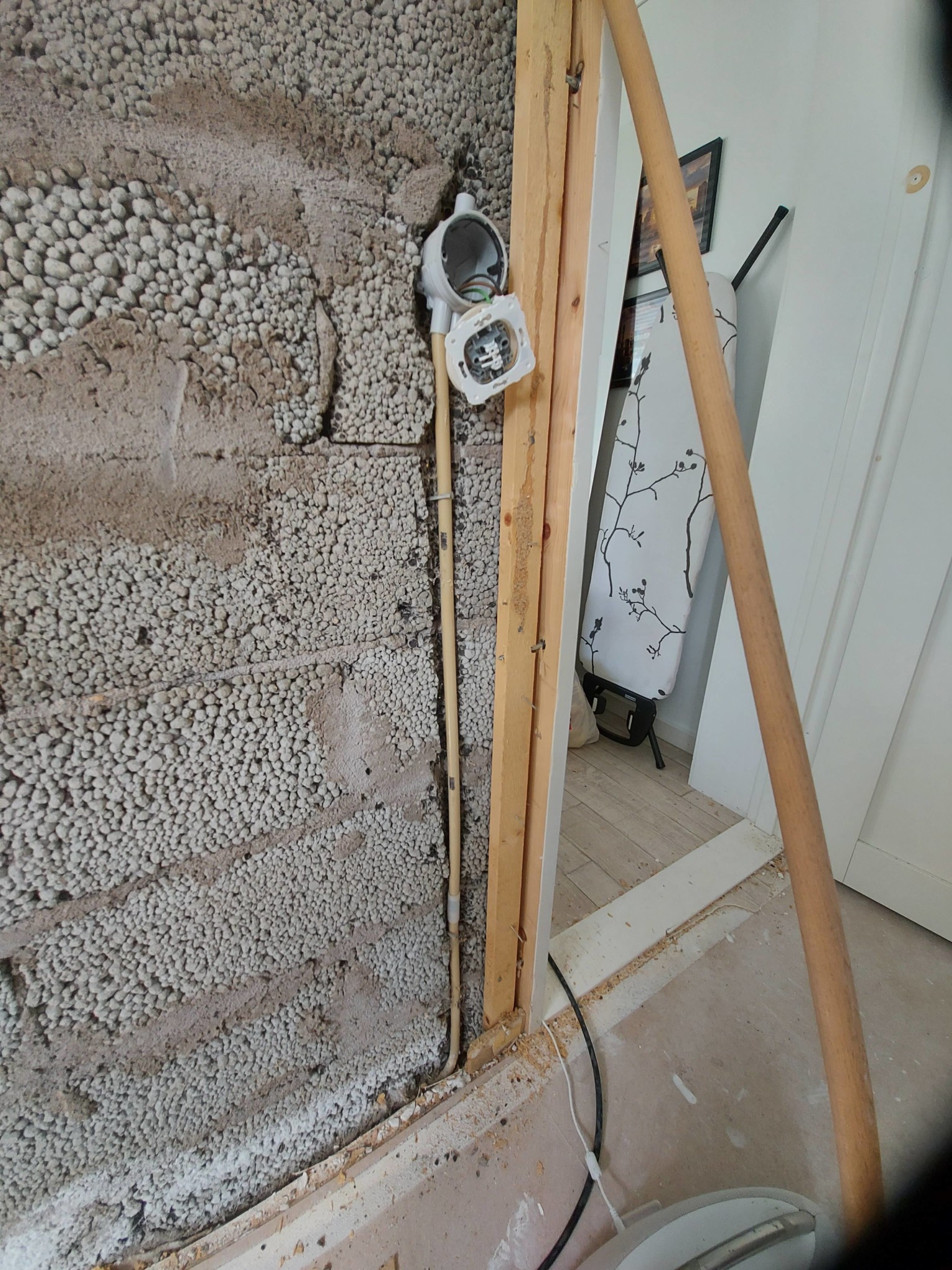
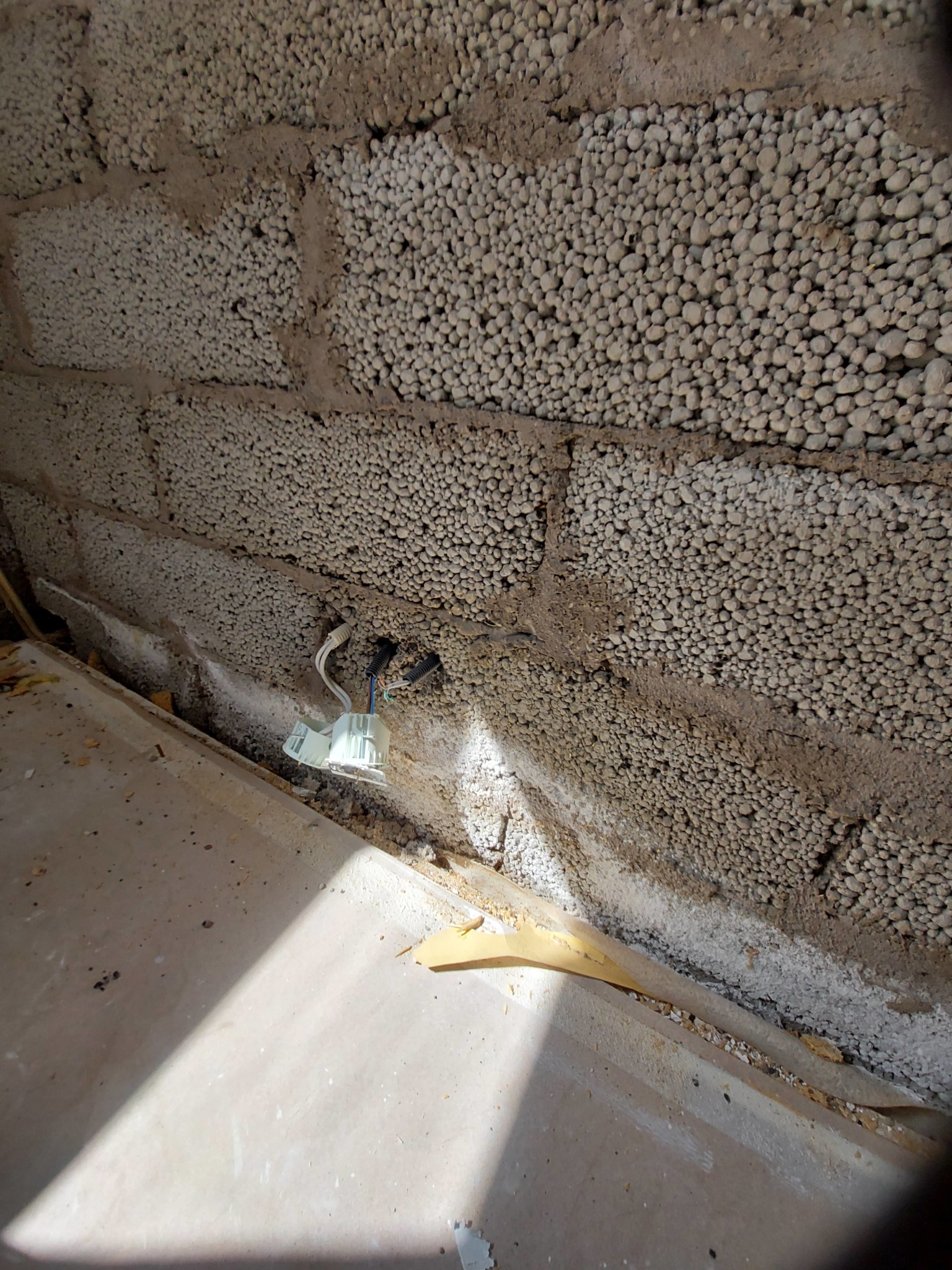
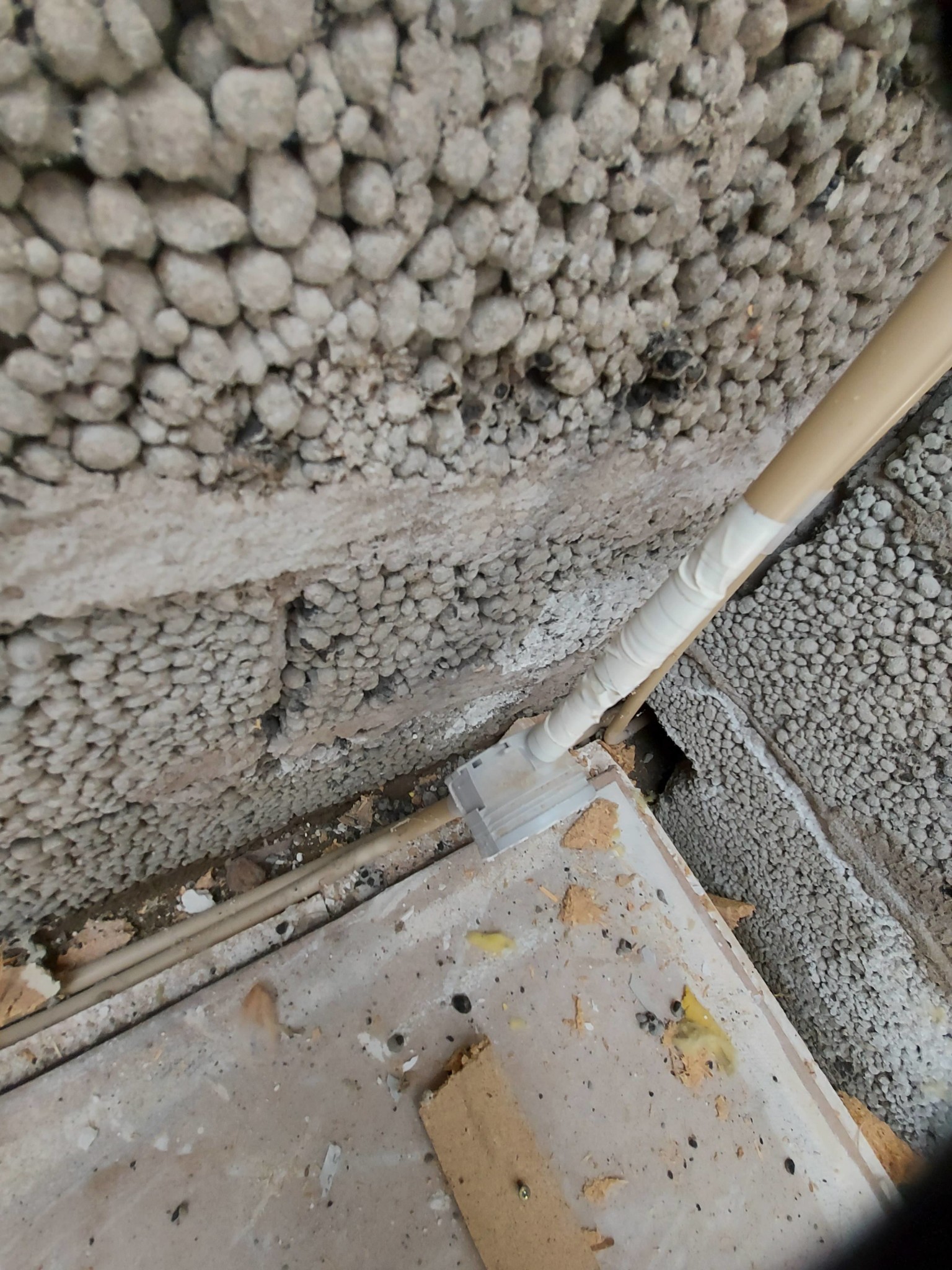
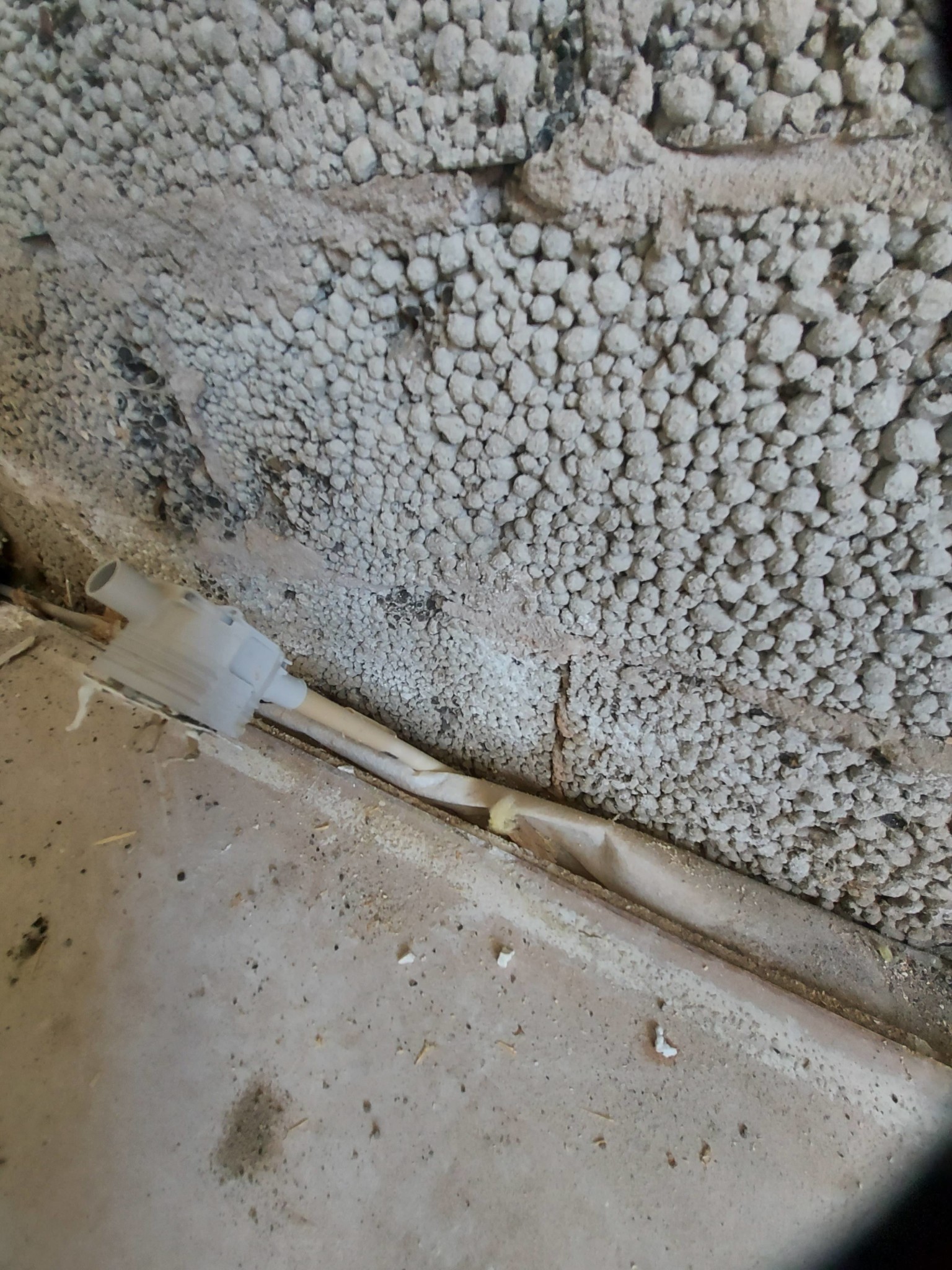
Also, I have a question about possible interior plastering of the cinder blocks. What do I do with electrical cables and outlets? Should they be fixed in the plaster and should I lay plaster over the cables to the light switch?
Other "electrical boxes"/ outlets:
Sorry for the long post with many different scattered questions.. I hope at least someone here has input/experience/knowledge about any of this.. (Furthermore, there are likely to be questions about insulation and drainage materials as soon as I manage to dig out the foundation outside the room)
Personally, I would never even consider installing new panels in any form. Plastered walls with lime paint and tiles on the floor, it can be as uninsulated as it wants, but at least you have control over the walls.
Personally, I would never even consider putting in new boards of any kind. Plastered walls with lime paint and tiles on the floor, it can be as uninsulated as it likes, but at least you're aware of the walls.
No, the idea is, as mentioned, ventilated floors (I already have that under the laundry room section and it seems quite sensible from a moisture damage risk perspective). Unfortunately, I don't have a large vault to dig money from.
The best would probably be not to have any organic material at all in the floor construction (alternatively, I think there are wall-to-wall carpets that "breathe" and are suitable for concrete floors in basements, though I don't know if you should lay them directly on the concrete or if you should first put tiles on the concrete... Or if it will even be livable during the winter months?)
Who even came up with the idea of converting basements into living spaces, with insulation and all that it entails?
The best might be to not have any organic material at all in the floor construction (alternatively, I think there are wall-to-wall carpets that "breathe" and are suitable for concrete floors in basements, but I don't know if you should lay them directly on the concrete or if you should first lay tiles on the concrete... Or if it'll even be habitable during the winter months?)
Deck mats or astroturf or whatever they are called. Works great. I have them in most of the basement. Both painted and unpainted concrete underneath.
Much warmer than tiles, and in case of flooding or similar, just pull them out and let them dry.
Deck rugs or astroturf or whatever they're called. Work great. Have it in most parts of the basement. Both painted and unpainted concrete underneath.
Much warmer than tiles, in case of flooding or the like, just pull it out and let it dry.
Thanks a thousand for that! Probably leaning strongly towards something like that instead of vented floors, as it saves loads of time but especially money I don't have. Will at least give it a try this winter.
Regarding floods, something like that should absolutely not happen again haha
Jokes aside, the flood in question has never been a significant risk, and what mainly led to it (back in 2012) were the heaviest rainfalls in living memory + inadequate drainage.
Anyway, really nice to save time and money on the project. So maybe there'll be something other than work during the vacation
I renovated a basement with similar conditions to yours, though slightly older, so there wasn't recessed electricity in it. I had vinyl flooring and chipboard wardrobes, etc., that smelled of mold. The end result was new plaster on the walls (had to sand off plastic paint on the exterior walls) and these were painted with lime paint. Lime paint is wonderful because no mold can grow on it due to its chemistry, and it's completely vapor-permeable, so any moisture is easily vented out, regardless of where it comes from. We put down tiles on the floor. In the summer, we ran a dehumidifier there because being cooler, the relative humidity would otherwise become too high in the summer when the warm outside air contains a lot of moisture.
The result was very good. No more mold smell.
Vi vill skicka notiser för ämnen du bevakar och händelser som berör dig.




Skrot-Karlsson said:
This is how the (visible) corner of the house looks from the outside. A fairly thin layer of larger gravel over some kind of cover/ground cloth and underneath that a finely packed soil (which feels damp even quite long after it has rained). Would it be better with gravel further down, rather than having that soil (which I suppose would be classified as "clay-like")?






Stefan N said:
