I have a tendency to overanalyze most things... Buuuut...
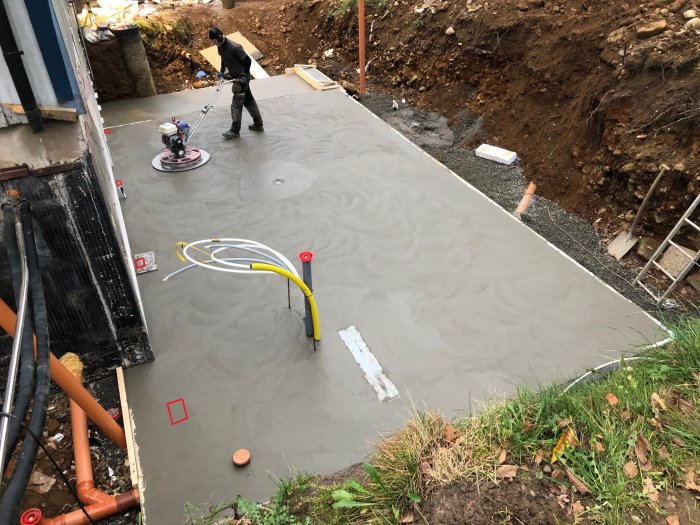
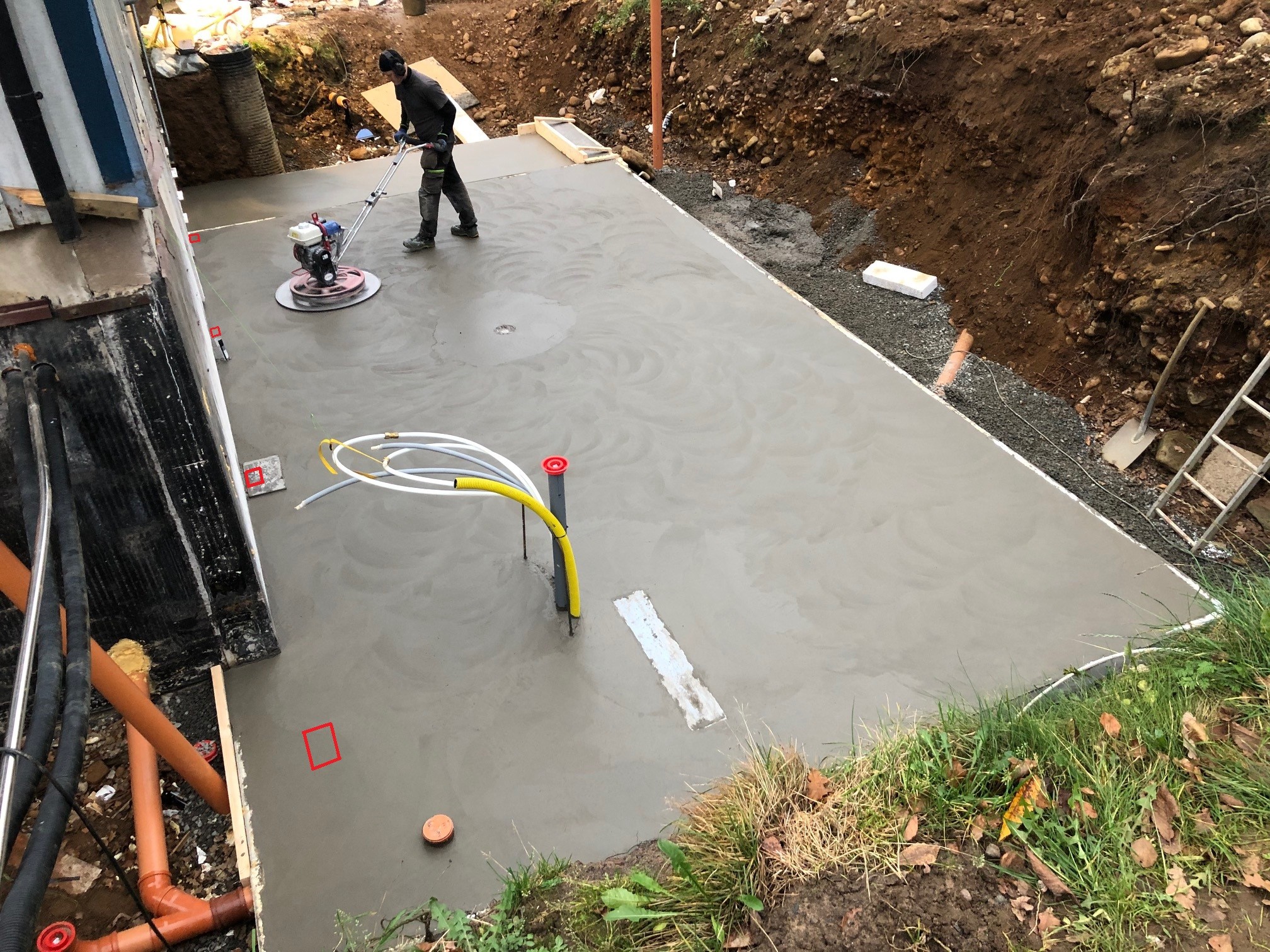
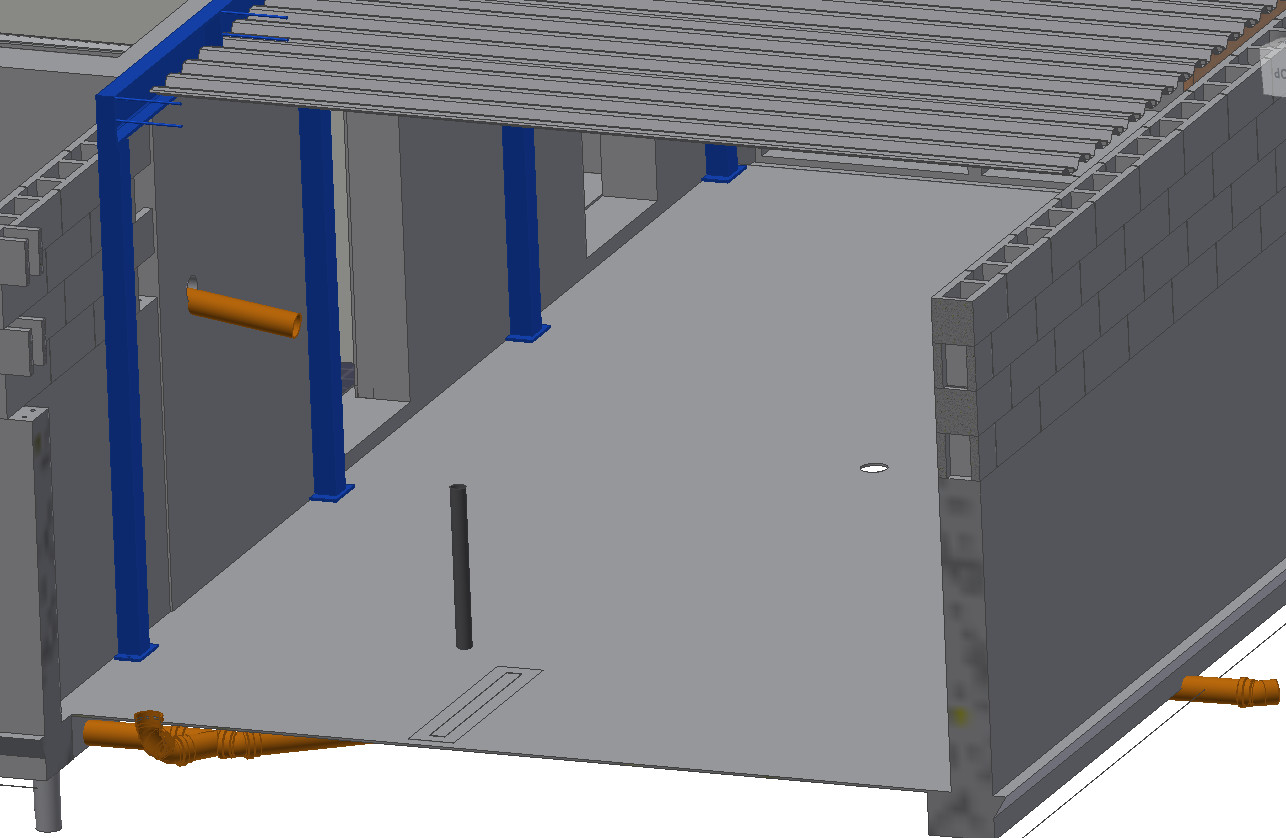
I will have a UPE as storage for Peva composite sheets in a project where I'm creating a basement spa under the garage, and this UPE beam will be supported by four 100x100 VKR pipes. Of the four point loads, one is particularly large (around 65kN) as it also supports half of the ridge beam on the garage roof above. All points are reinforced in the slab after calculation by the engineer, and for this point, we have also cast a 30mm steel plate into the concrete slab.
To the question...
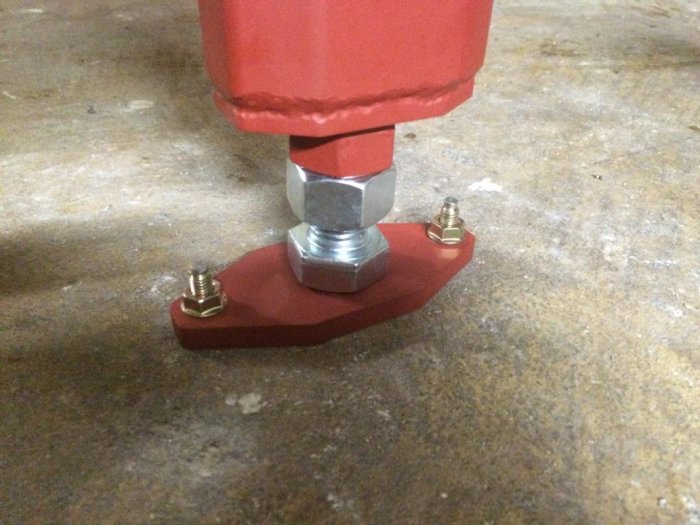
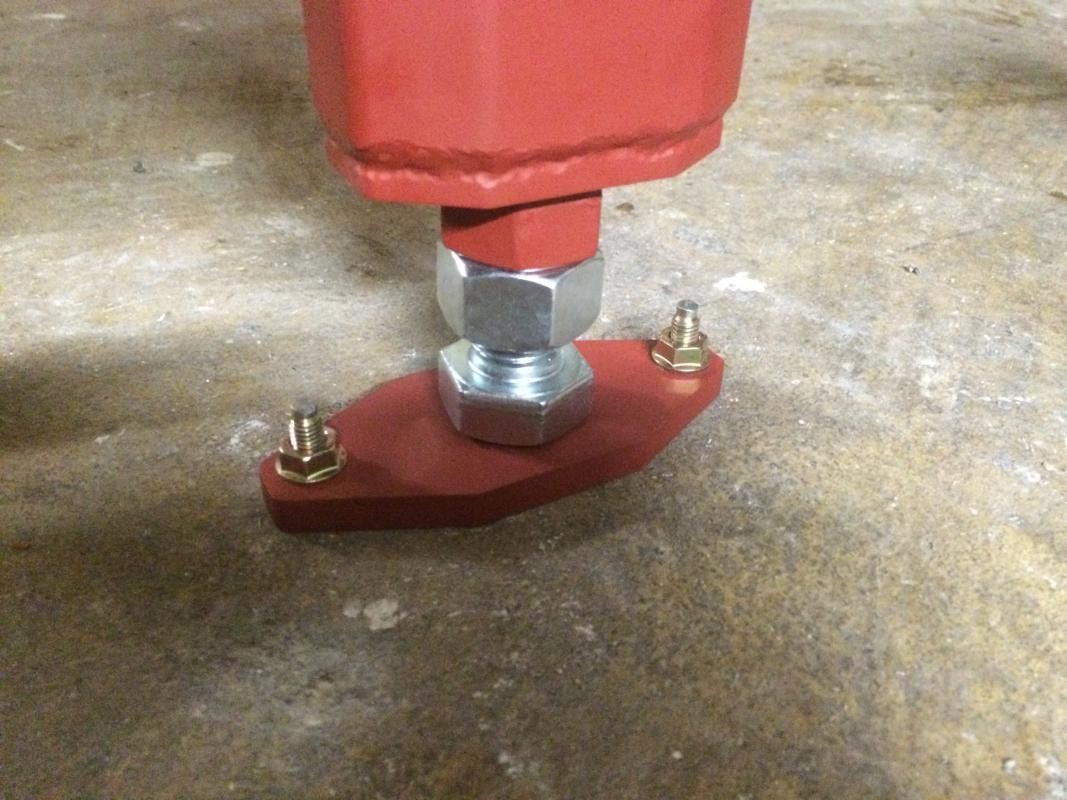
I have seen, and even in one case done it myself, that it is common to have a column transition into a thicker threaded rod or screw, and this is primarily to achieve a flexible mounting point and a centered load transfer, I think? In my case, it was to be able to prestress a relocated support of an existing beam in a smooth way.
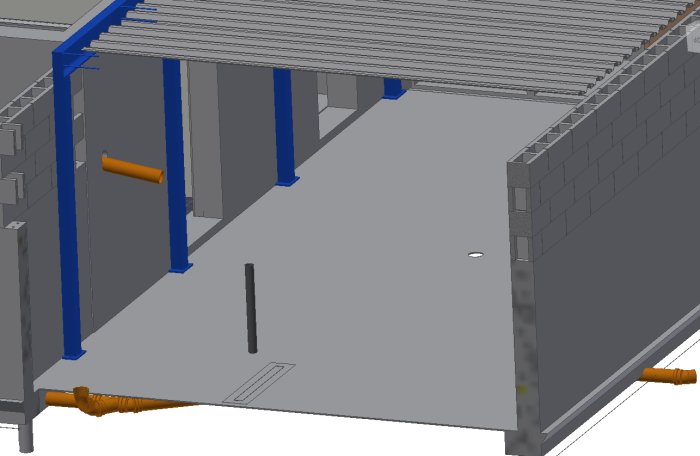
Doing so seems advantageous in my case because I can prefabricate the entire beam and its legs in my workshop, and I can also ensure I get a weld all the way around, compared to welding on-site and inevitably leaving the surface against the wall open.
Does anyone have an opinion on whether one method is better or worse apart from labor time/cost?
Or will it be equally good no matter how I do it?
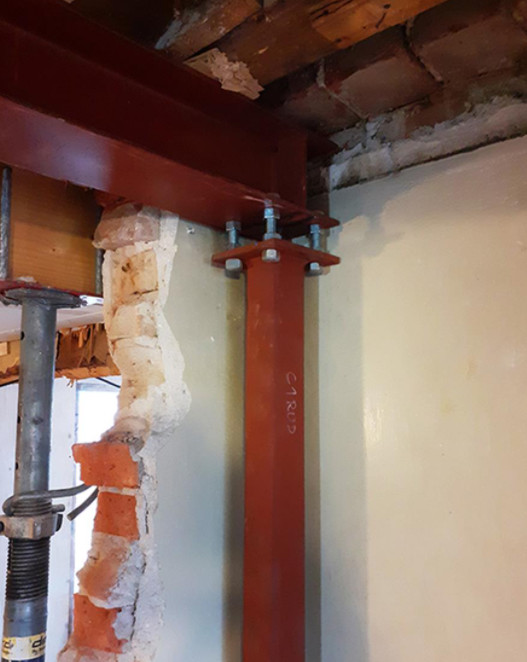
Pictures of my existing column base with such a screw inside the house, as well as the slab with the embedded steel plate, and a CAD of how I primarily intend to do it with completely conventional welded feet.
Here is a version where they've even used 4 screws to get more transfer points, but it feels like overkill in my case since I already have 4 points supporting the beam, and it is being cast together with the floor slab?
I completely understand the method and will apply it to certain additional point loads on my old concrete slab.
In this new slab that the question pertains to, however, the most loaded point is equipped with an embedded steel plate in the concrete, which I intend to weld. But as you describe, it's still possible to raise it with a center screw and grout underneath. It is only a question of compressive loads.
Do you still think this is the best solution?
Click here to reply
Vi vill skicka notiser för ämnen du bevakar och händelser som berör dig.