
Hello,
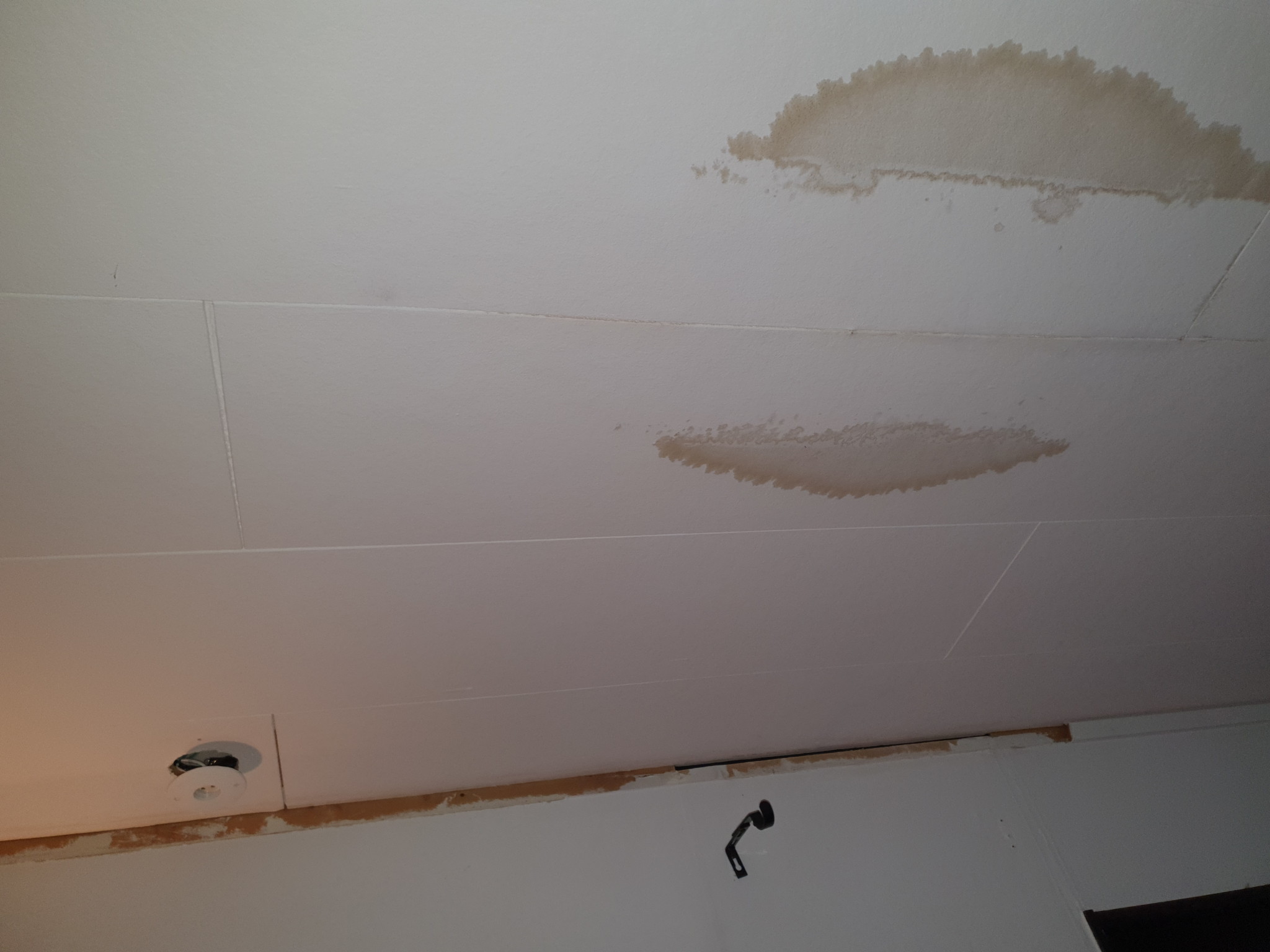
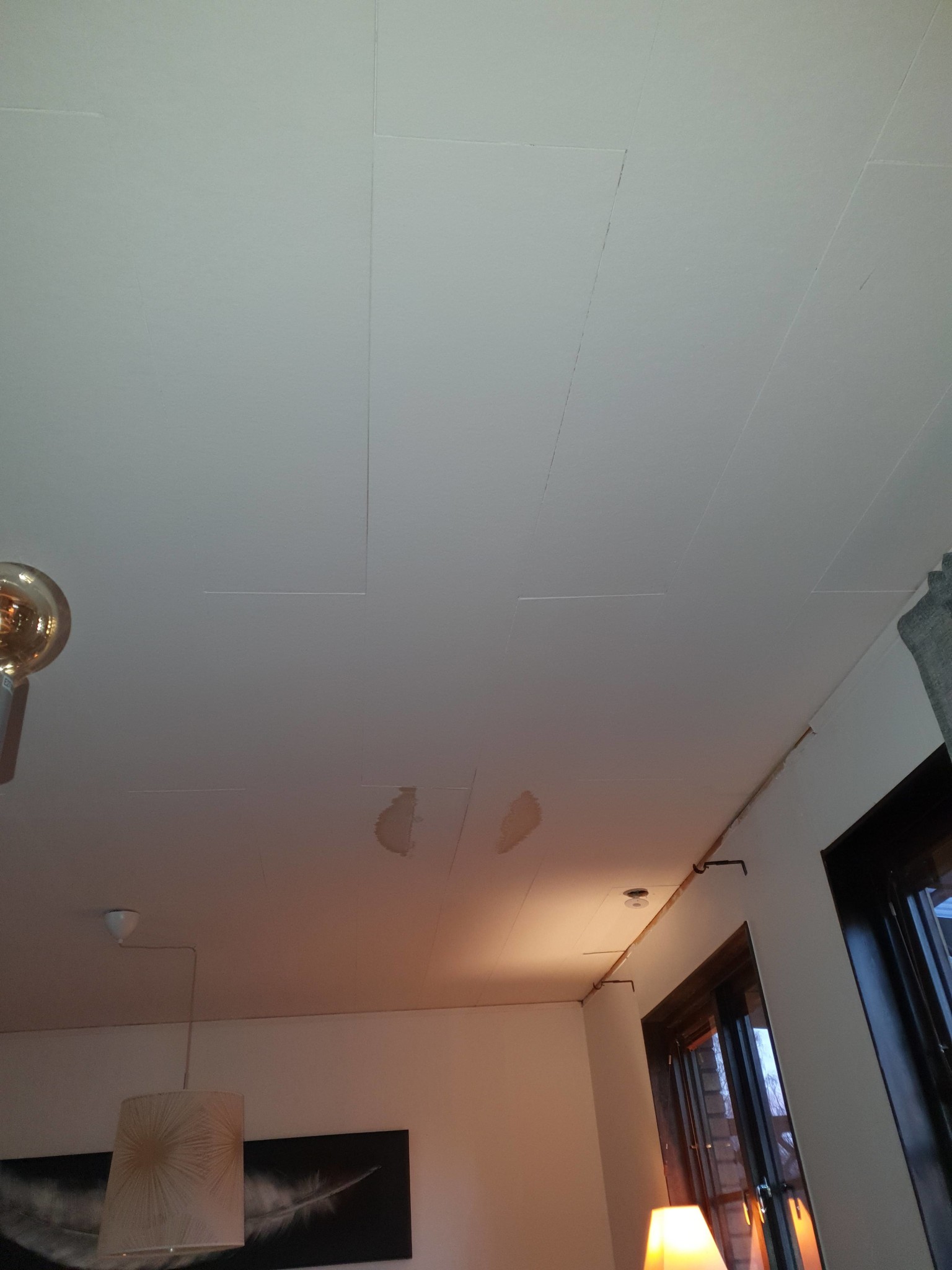
Does anyone know how to remove these ceiling panels that seem to be from the 70s-80s? I removed the molding, but the panels were not nailed there. I got water damage yesterday and would like to remove the damaged panels to see if there's anything else that needs replacing. The two damaged panels are sagging where they meet, there is a high risk that all or parts of the ceiling might collapse. Another problem is that they're no longer available to purchase .
.
See the attached pictures, the house was built in 1974.
Does anyone know how to remove these ceiling panels that seem to be from the 70s-80s? I removed the molding, but the panels were not nailed there. I got water damage yesterday and would like to remove the damaged panels to see if there's anything else that needs replacing. The two damaged panels are sagging where they meet, there is a high risk that all or parts of the ceiling might collapse. Another problem is that they're no longer available to purchase
.See the attached pictures, the house was built in 1974.




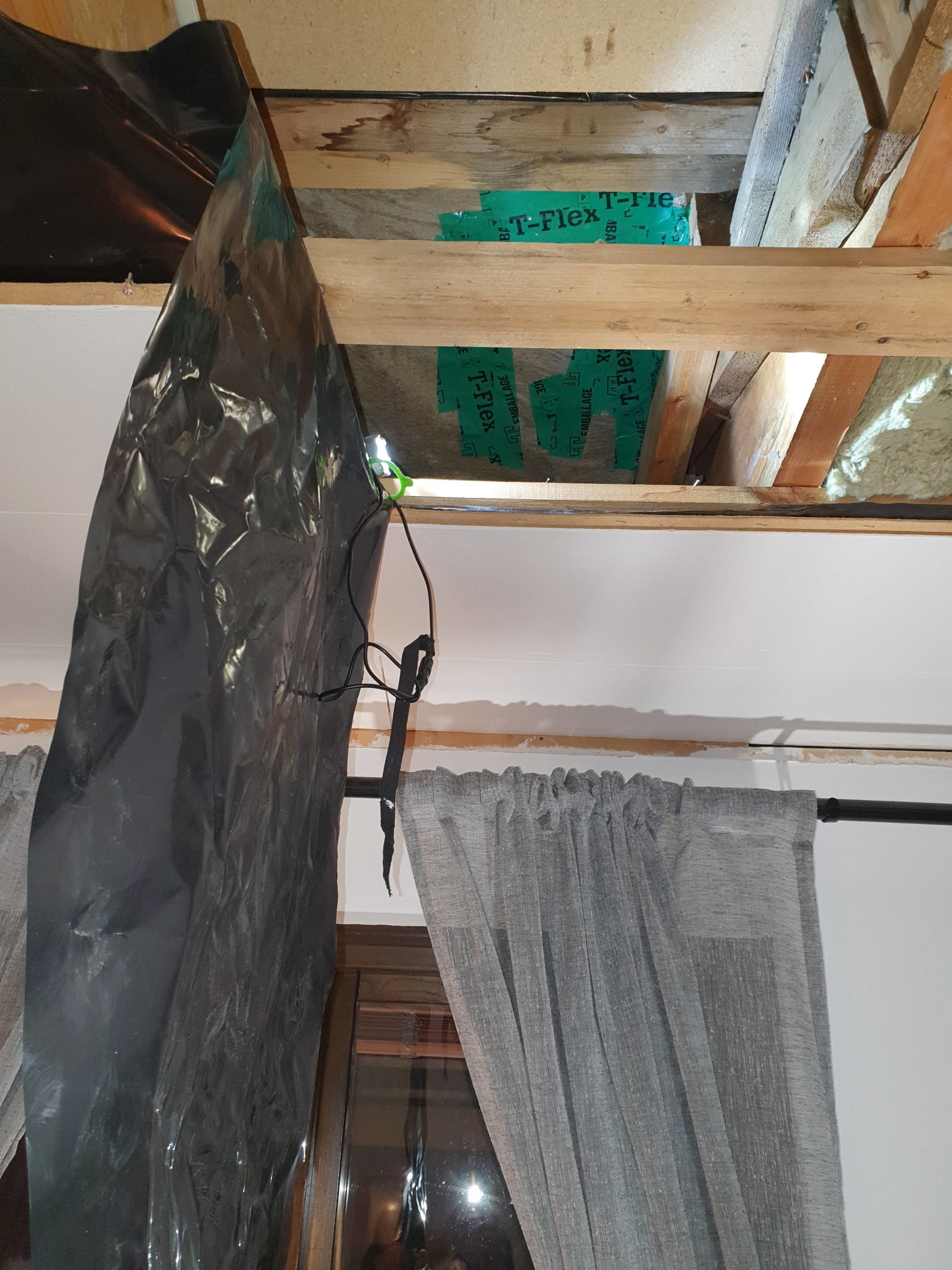

It has leaked in there, but it's not the actual outer roof, rather the wooden structure under the balcony/roof, a house with 1.5 stories with a sloped roof. I thought if it becomes condensation, it will settle between the insulation and the "tape".
What I have done is tape together a water-repellent paper that was there from the start.
The sealing is done on the outside.
What I have done is tape together a water-repellent paper that was there from the start.
The sealing is done on the outside.
Click here to reply