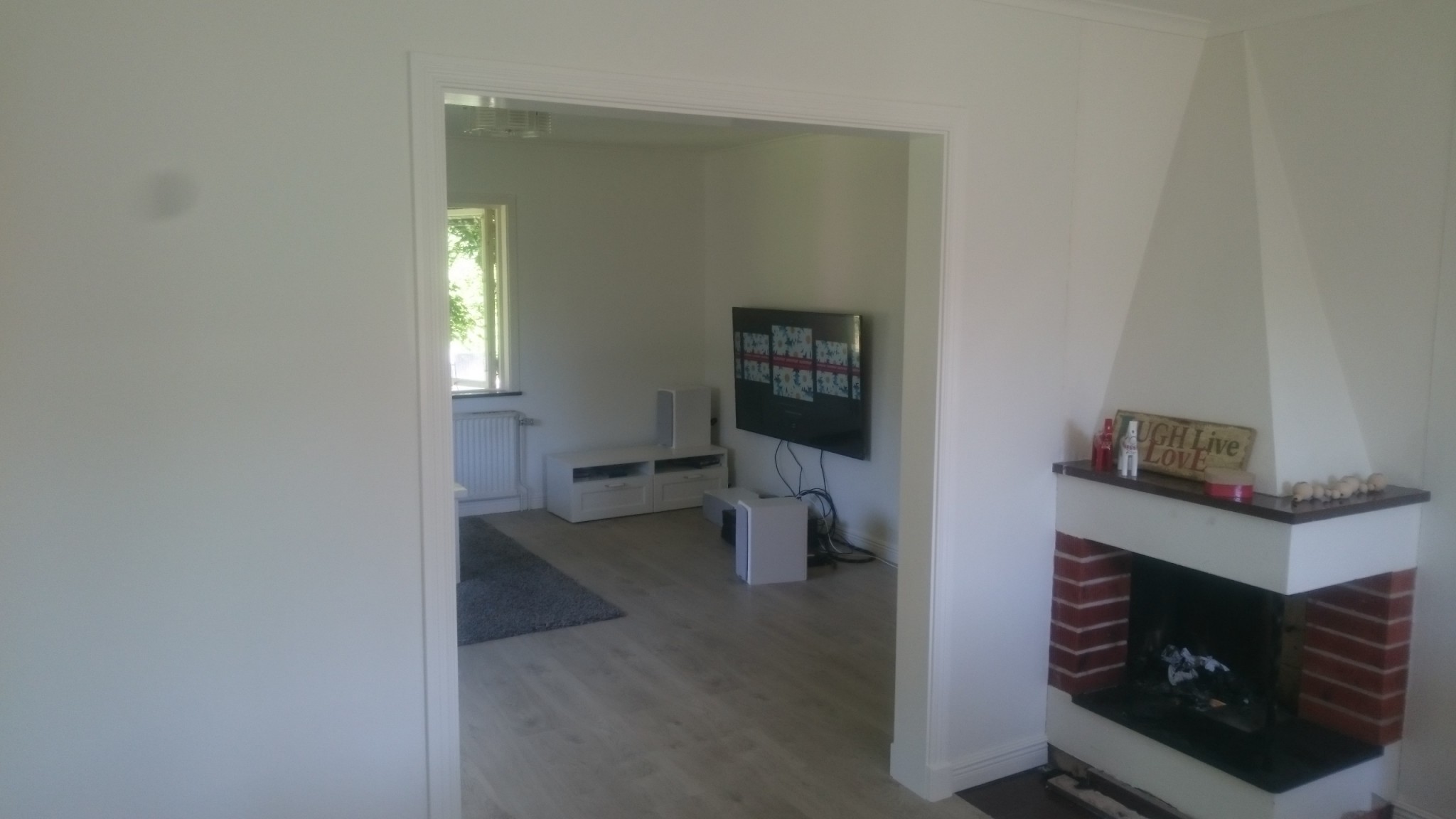
At the bottom of our fireplace, there was a spark guard in the form of a long rectangular stone along the two sides.

Now we have removed the stones and, of course, the bricks behind are visible. The hole is about 5cm deep, 8cm high, and 60-70cm long.

Which mortar should we use to fill the cavities and is there anything extra we should consider? The goal is for it to be as smooth as the rest of the fireplace without a stone spark guard.

See at the bottom in the corner.
Corner view of a living room with a triangular white and red brick fireplace. The protective stones at the base are removed, exposing brickwork.
 
Claes Sörmland
Polish with the same type of mortar as the rest of the stove. When is it from? 50s-60s? If so, it's probably something similar to ordinary plaster mix C. 50 mm is quite a lot to build in terms of plaster, so apply it in several layers. Since it is indoors, you won't have any issues with durability.

For it to look nice, the aggregate must be of a similar grain size. Despite this, it might be difficult to make the transition to the plaster surface above seamless. I guess a professional would have knocked down the plaster above and plastered the whole thing as one surface.
 
Click here to reply
Vi vill skicka notiser för ämnen du bevakar och händelser som berör dig.