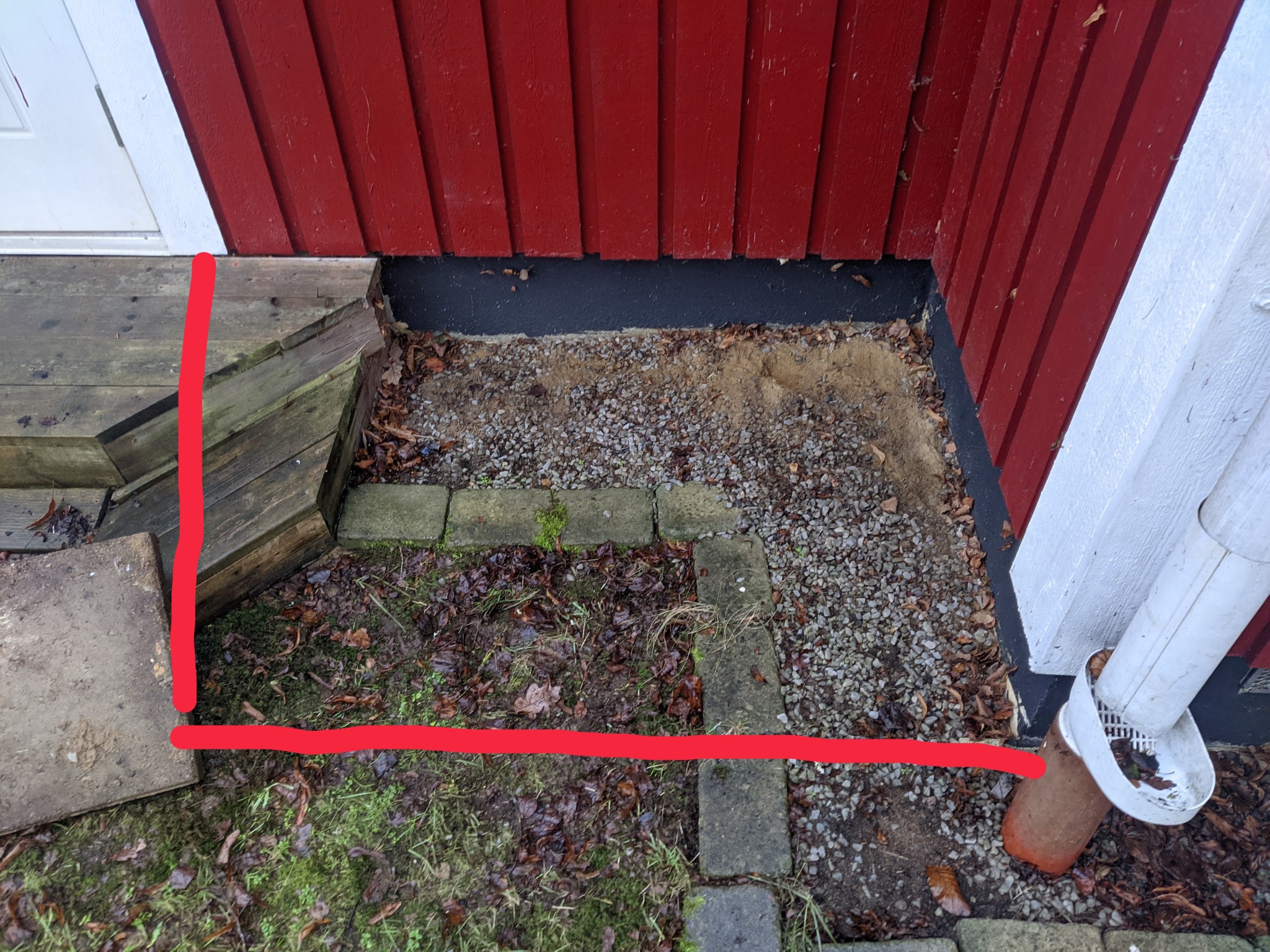
Will install a Mitsubishi Ecodan outdoor unit (weight approx. 111kg). Since I have a spare pile of old garden slabs, I thought about using them. Should be enough to dig out 40-50cm, lay gravel, some form of mat against weeds, sand, and finally slabs. I have a downspout right next to it where the condensate water goes out into.
Seen that some cast a slab but I'm not very experienced with that. Are there any disadvantages to using slabs instead? Easier sinking? More weeds?
What I can imagine might happen is possibly that if condensate is not drained away, the ice can shift the tiles so that the outdoor unit no longer stands level or the weight is not distributed evenly and it starts to rattle. However, if you can prevent freezing all the way with the help of a heating coil, it should be avoidable, I think.
Just (this summer for the new LVVP) made a combo.
Dug out about 10cm, added gravel, then 30x30 concrete garden tiles, built a frame around these and added thin reinforcement mesh, then lightweight concrete.
After the LVVP was in place, created a slope away from the house and placed a heating cable underneath to ensure no ice lumps form from below.
Works wonderfully.
Thanks, then there are probably no major problems. Took a little extra look around the neighborhood on my morning walk today. Most seem to have placed theirs directly on the paving on the ground.
What type of soil do you have? How long has it been there without anyone digging?
Then you probably shouldn't lay single but ballast that stays in place.
Aha okay. Right next to the house there's already single and sand, haven't dug so don't know how deep. Just need to dig a little in the lawn. I don't think anyone has touched it in at least 20 years.
Went out today and did some more measuring and tested the slabs.
The dimensions of the outdoor unit are:
W: 1050mm
H: 1020mm
D: 480mm
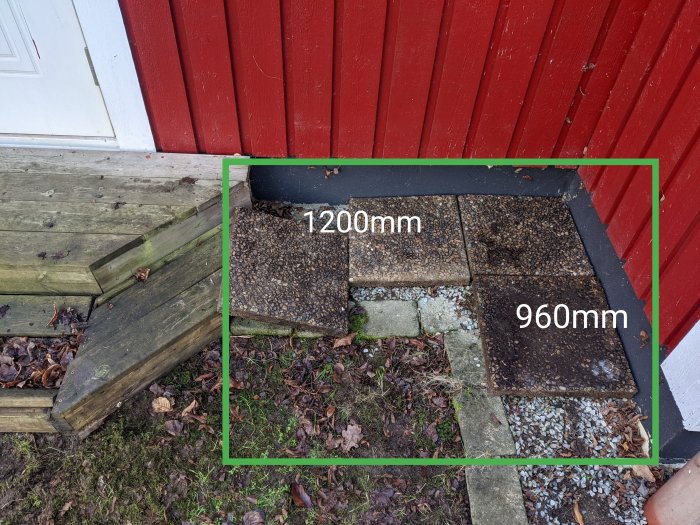
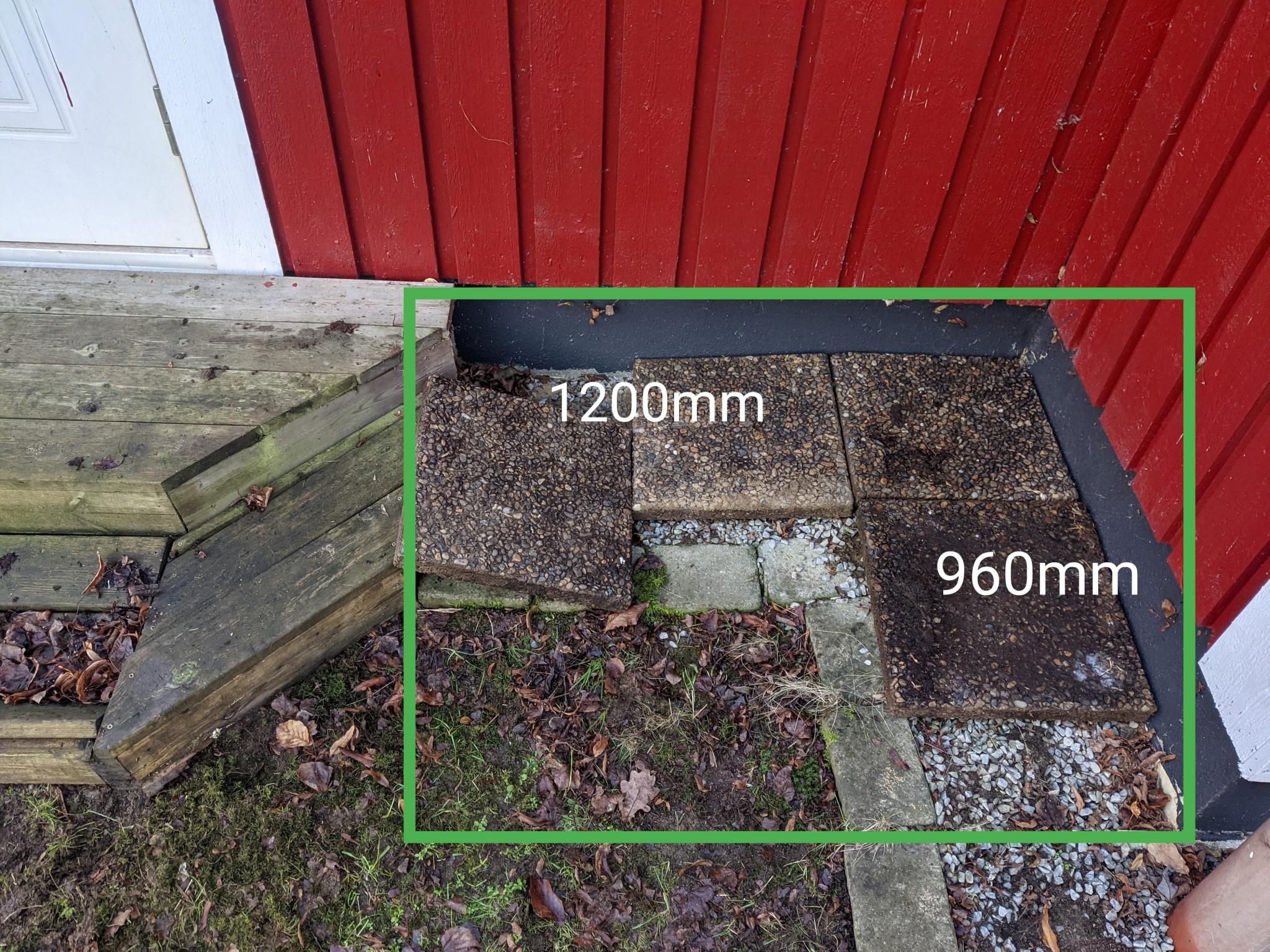
The slabs are standard 400x400mm. So 3 pieces would be 1200mm wide, which is just about possible with three. You can splice them, but that's a hassle. For the height, I have 960mm, so the slabs would need to be split. But the split pieces can be placed at the back, as it should be 400mm from the wall to the air intake of the outdoor unit as I understand.
Damn, maybe it would be easier just to pour concrete.
Don't complicate it, place the outdoor unit on a couple of garden slabs or leca blocks. If you cast, it will be harder the day you need to drain, replace the heat pump, or just get rid of wastewater from the pump.
After a year or so, you might need to adjust, then you can just place leveling bricks underneath if the heat pump stand's feet can't be adjusted enough.
Then you probably shouldn't use gravel but macadam that stays in place.
It will probably work with any kind of gravel under an outdoor unit. If you want it really "still" you would choose neither gravel nor macadam but a gravel with 0 fraction so that it is possible to compact or tamp it down.
Don't complicate things, place the outdoor unit on a couple of garden slabs or lecasten. If you cast, it will be more difficult the day you need to drain, replace the heat pump, or just get rid of the wastewater from the pump. After a year or so, you might need to adjust, then it's just a matter of placing shimming plates underneath if the heat pump stand's feet cannot be adjusted enough.
True, in that way there is an advantage with slabs. But I will probably do as in the picture above but add half a slab to the width (total 1400mm) to have some margin. You'd preferably want to lay the slabs with a slope towards the lawn so rainwater runs out.
What type of soil do you have? How long has it been there without being dug?
Then you probably shouldn't use gravel but macadam which stays in place.
What is the difference, according to you, between gravel and macadam?
A little copy and paste from sellers of macadam.
"ABOUT MACADAM 4-8 MM
It is a rock material used as drainage material and for driveways and gravel paths. We offer Macadam in a variety of sizes/fractions.
Macadam 4-8 is used, for example, as a surface layer for garden paths, courtyards, garden paths, anti-slip treatment, and in flower beds but also as drainage material around house foundations."
The Swedish Academy doesn't quite agree with you.
In its dictionary, SAOB, you can read more.
[link]
singel - "coll.: rounded small stones (flint stones or small rounded stones or shingle stones)"
makadam - "coll.: crushed stone of 2 to 5 cm in cross-section used primarily for hardening road surfaces; also about road surfaces that are covered with such stone."
Where exactly do they disagree?
Vi vill skicka notiser för ämnen du bevakar och händelser som berör dig.

lunnabo said: