3,916 views ·
21 replies
4k views
21 replies
Can the base beam in the crawl space handle the point load?
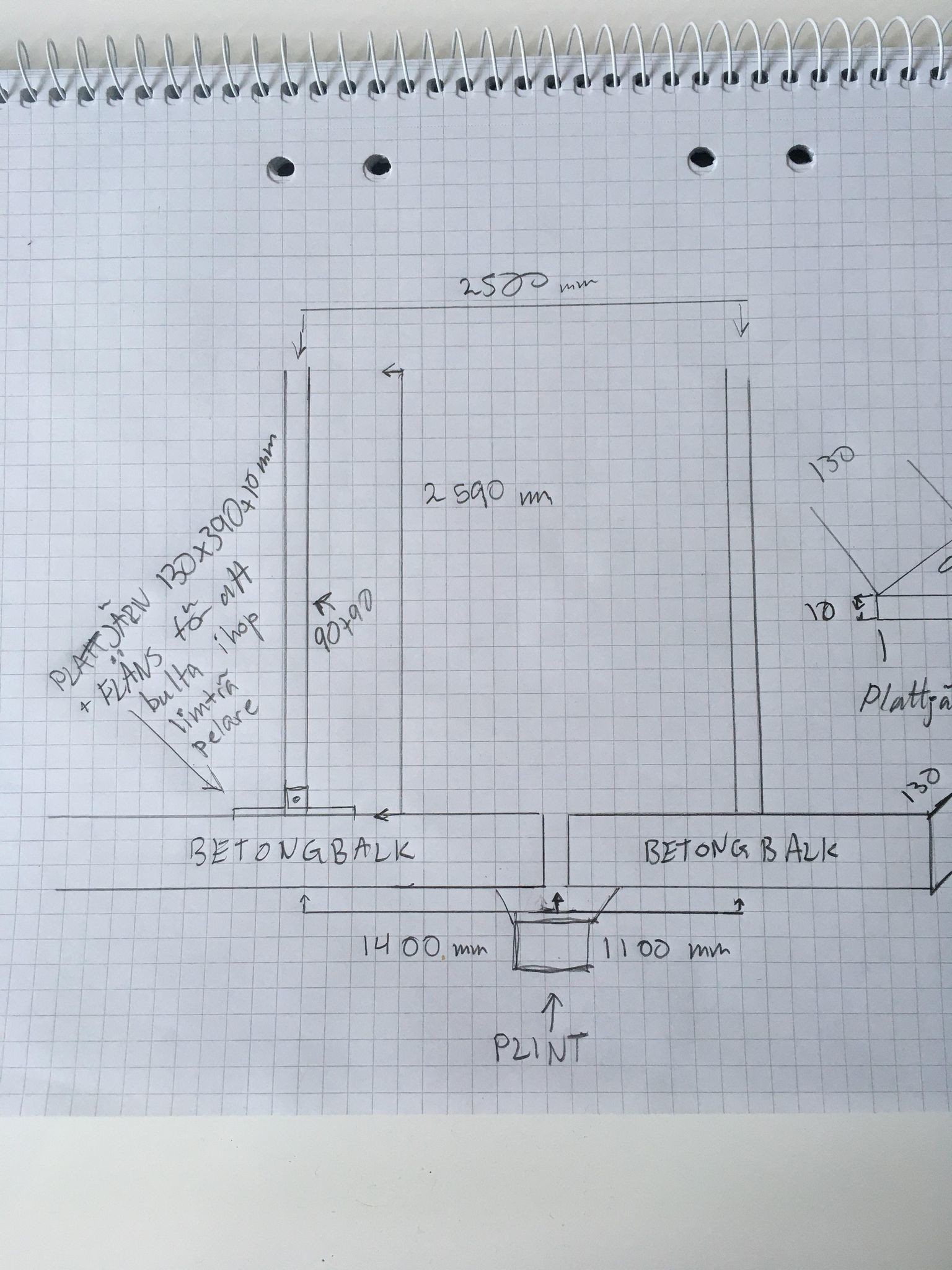
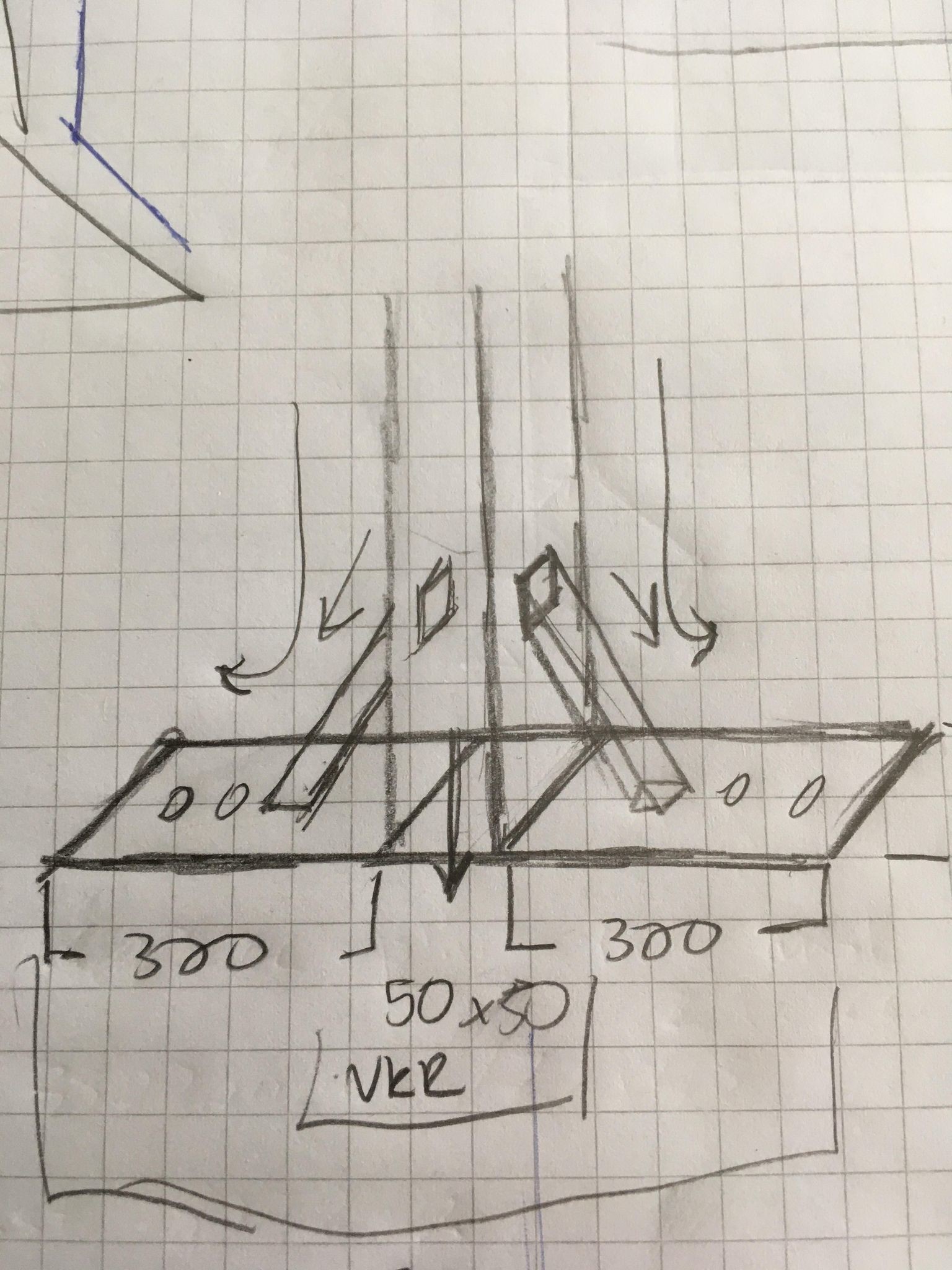
Have a load-bearing wall in the kitchen and I'm just quickly wondering if the base beam in the crawl space that the heart wall stands on can handle the point loads. The base beam is 130x490 concrete, unfortunately the columns won't hit any post. Can put large feet on the columns if it would help to spread out the forces. Do you think the base beam will handle these point loads?
Glulam 90×90 GL30h Utilization 36%, Support reaction 22.440 kN Minimum bearing length (external) 13 mm
Glulam 90×225 GL30c Utilization 87%, Deformation 8 mm (L/305) Support reactions 22.440 kN & 22.440 kN Minimum bearing length (external) 57 mm
Glulam 90×90 GL30h Utilization 36%, Support reaction 22.440 kN Minimum bearing length (external) 13 mm
Glulam 90×225 GL30c Utilization 87%, Deformation 8 mm (L/305) Support reactions 22.440 kN & 22.440 kN Minimum bearing length (external) 57 mm
Is the base beam laid on pillars? You might need to sketch it out if you want to get any answers....
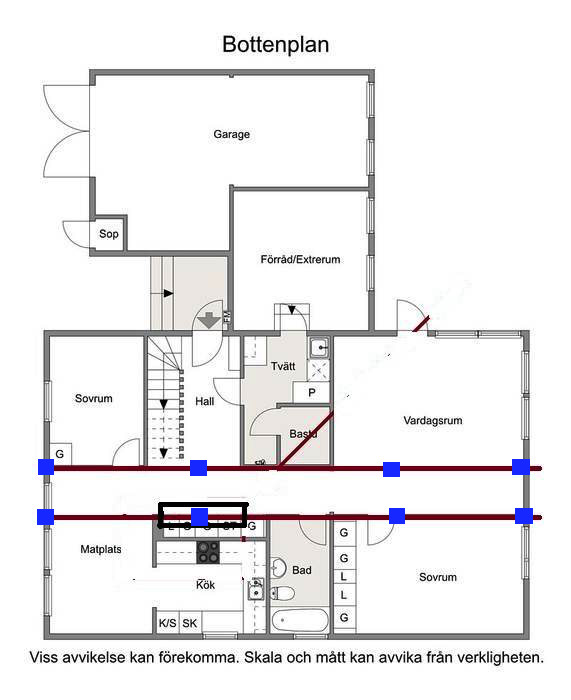
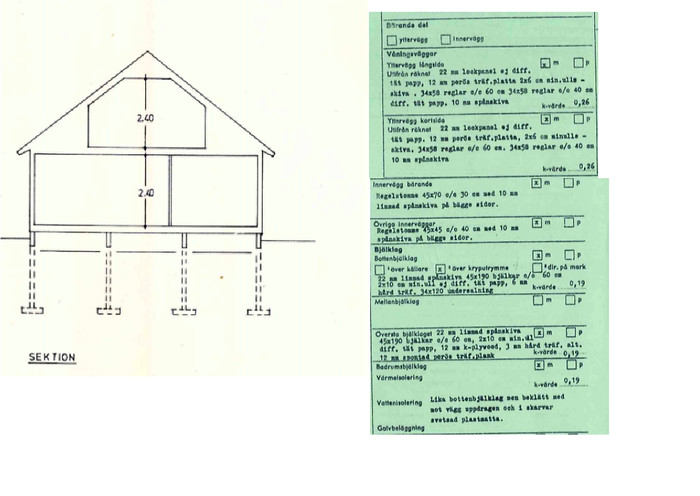

I have deleted the duplicate thread under floor plans. Everything essential from that thread seems to be here in this thread as well.
/moderator
/moderator

Do you mean that the columns will land directly on the concrete beam? Or are you placing the columns on top of the floor structure? (I assume there's a wooden floor structure across the concrete beam)
It's impossible to calculate without knowing how the beams are reinforced, but I find it very hard to see that there would be any problem, those are quite hefty beams. I wouldn't be worried but wait for a response from someone more experienced.
It's impossible to calculate without knowing how the beams are reinforced, but I find it very hard to see that there would be any problem, those are quite hefty beams. I wouldn't be worried but wait for a response from someone more experienced.
The floor structure is clearly resting on the foundation beams! And the pillars should stand on a concrete foundation. Yes, it feels like they should be able to handle the forces from two pillars, can also make large feet on the pillars to help distribute the forces!
Reinforced concrete standard 1970s!
Grateful for a response if there is anyone else out there!
Reinforced concrete standard 1970s!
Grateful for a response if there is anyone else out there!
Since the columns come down on each side of the plinth (if I have interpreted it correctly) and the concrete beams are jointed over the plinth, there are no tensile stresses at the top of the concrete beam over the support. In practice, this means that the two point loads are distributed on each beam. As mentioned, it is not possible to answer without knowing how much tensile reinforcement is at the bottom of the beams.
Yes, that might be an option. There might also be something in the building permit documents with the municipality. But really, I think it's overkill to calculate this, it's probably not an issue. However, I don't dare to say anything guaranteed (I'm a newly graduated civil engineer and have limited experience with concrete).
All it says in the building permit documents: Concrete quality. Nothing more 
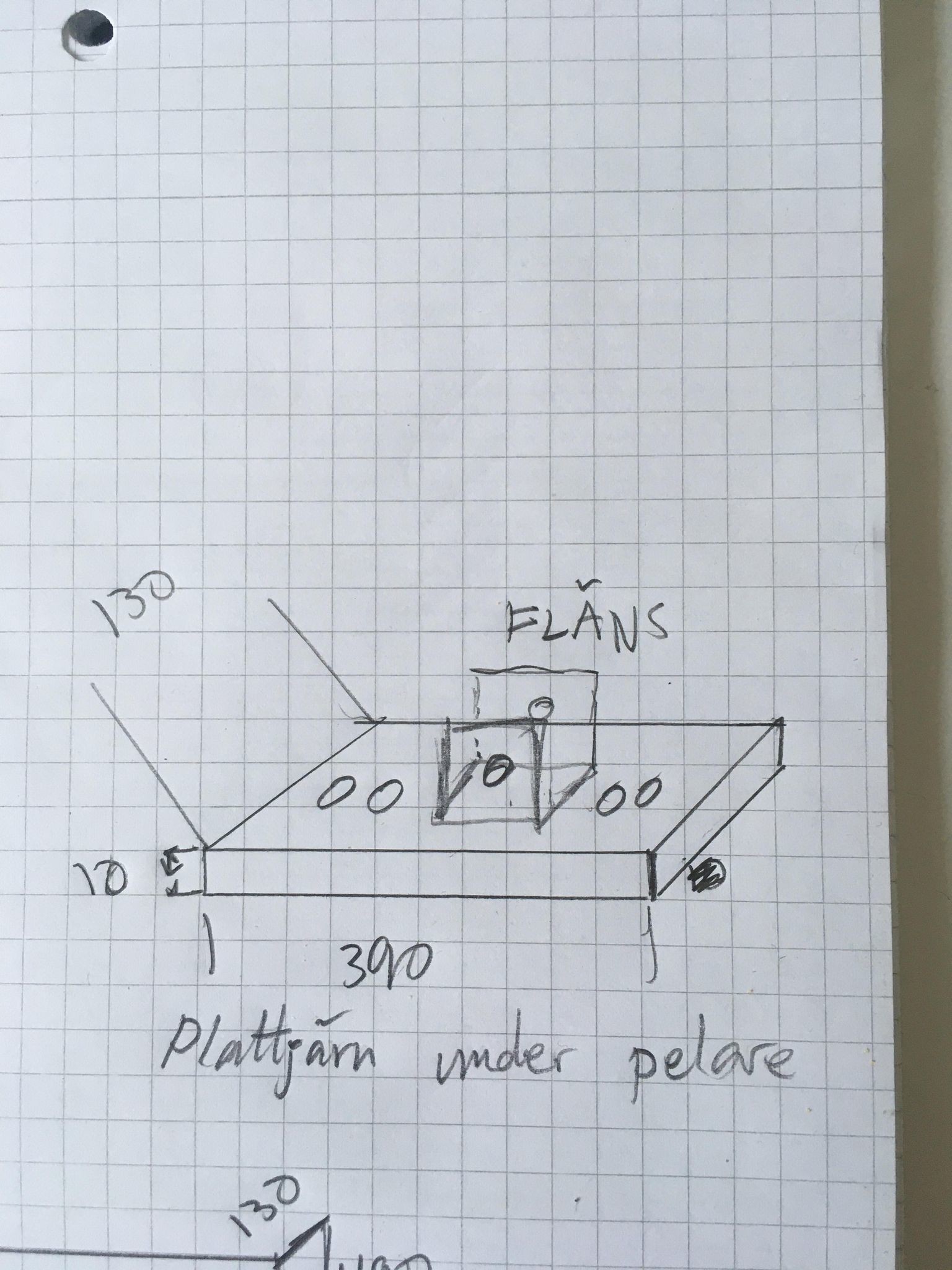
If I also manufacture large steel feet that are the width of the concrete beam and 300mm long and drive in expanders, one should have secured even more.
If I also manufacture large steel feet that are the width of the concrete beam and 300mm long and drive in expanders, one should have secured even more.
Yes, it is the same load that comes down on the concrete beams, it's just that the load comes down more concentrated. So trying to distribute the load over a larger part of the beam might be a good idea.
Feel free to upload some dimensioned plans and sections, it makes it easier to determine the loads. It doesn’t seem like the plan and section completely correspond. The heart wall and foundation beam are not aligned as in the plan. The distance between the plinths is also missing.
It is a substantial beam, so it is surely not a problem. You also don’t need to make the base plate unnecessarily large, make it as wide as the beam and long enough to fit two concrete screws.
It is a substantial beam, so it is surely not a problem. You also don’t need to make the base plate unnecessarily large, make it as wide as the beam and long enough to fit two concrete screws.
B bossespecial said:Feel free to upload some dimensioned plans and sections so it is easier to determine the loads. It doesn't quite look like the plan and section match completely. There, the heart wall and foundation beam are not aligned with each other as on the plan. The distance between pillars is also missing. It is a substantial beam, so there are certainly no problems. You also don't need to make the baseplate unnecessarily large, make it as wide as the beam and long enough to fit two concrete screws.
Don't know if this is enough but take a lookB bossespecial said:Feel free to upload some dimensioned plans and sections so it is easier to determine the loads. It doesn't quite look like the plan and section match completely. There, the heart wall and foundation beam are not aligned with each other as on the plan. The distance between pillars is also missing. It is a substantial beam, so there are certainly no problems. You also don't need to make the baseplate unnecessarily large, make it as wide as the beam and long enough to fit two concrete screws.