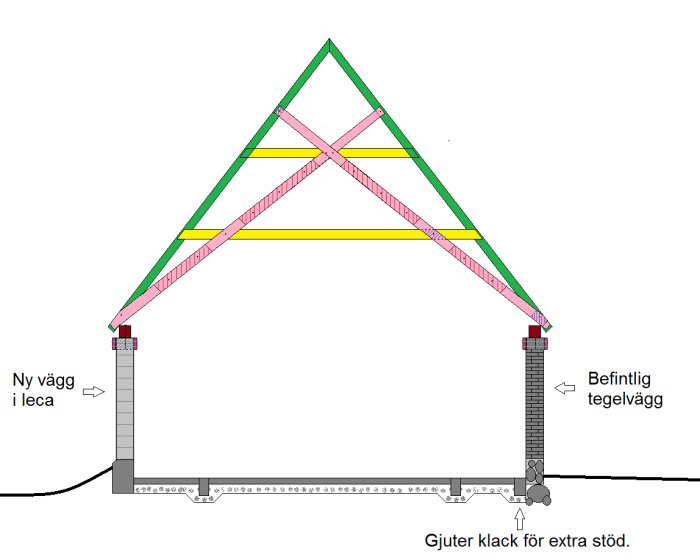
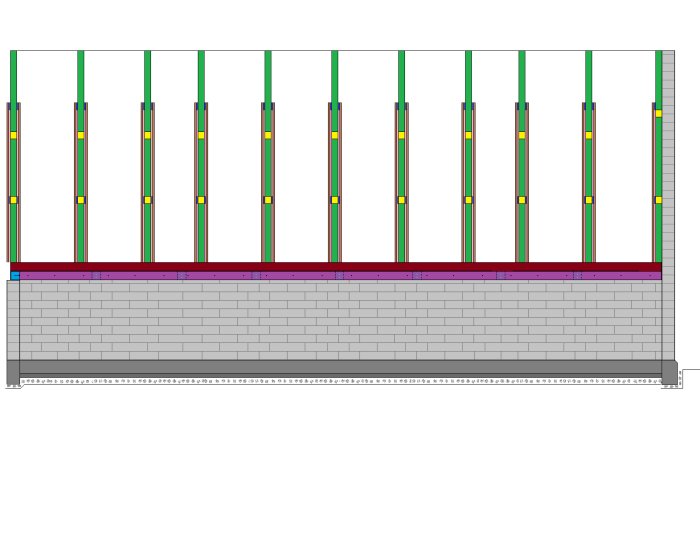
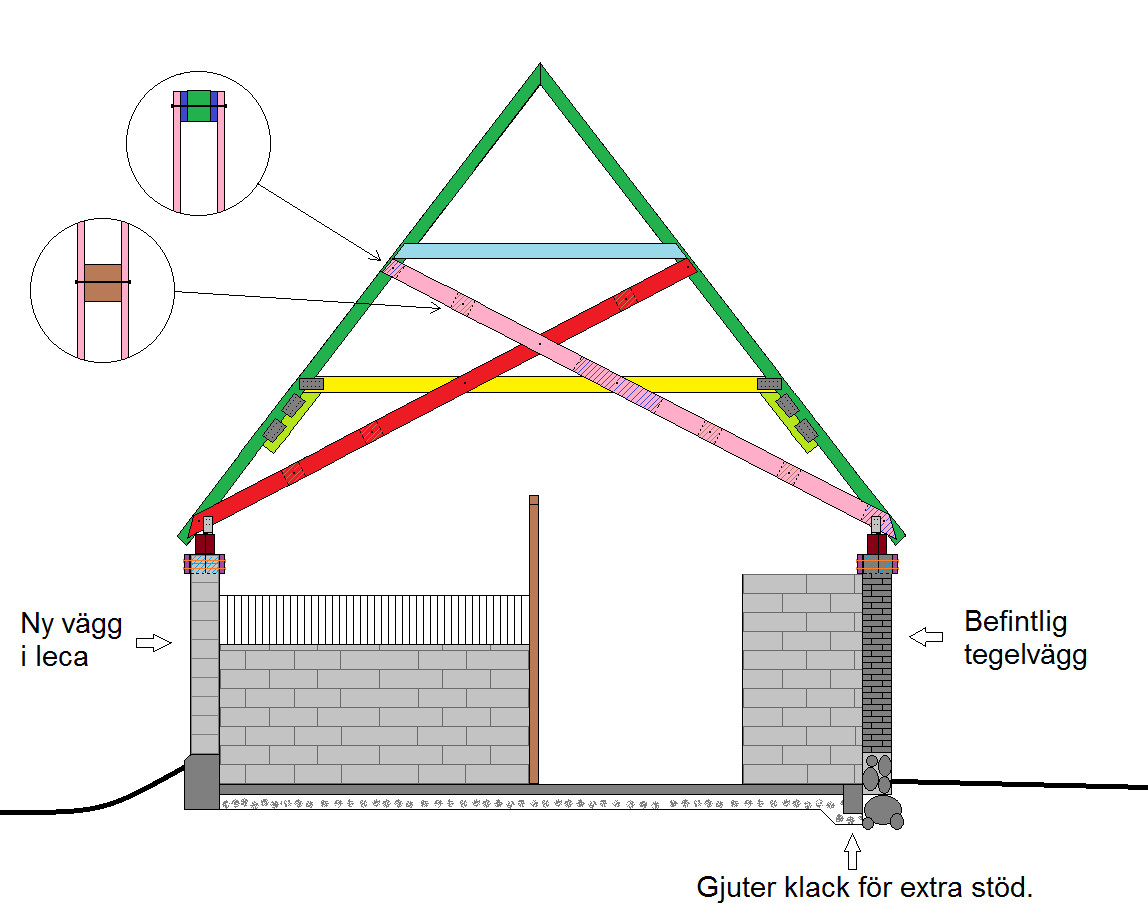
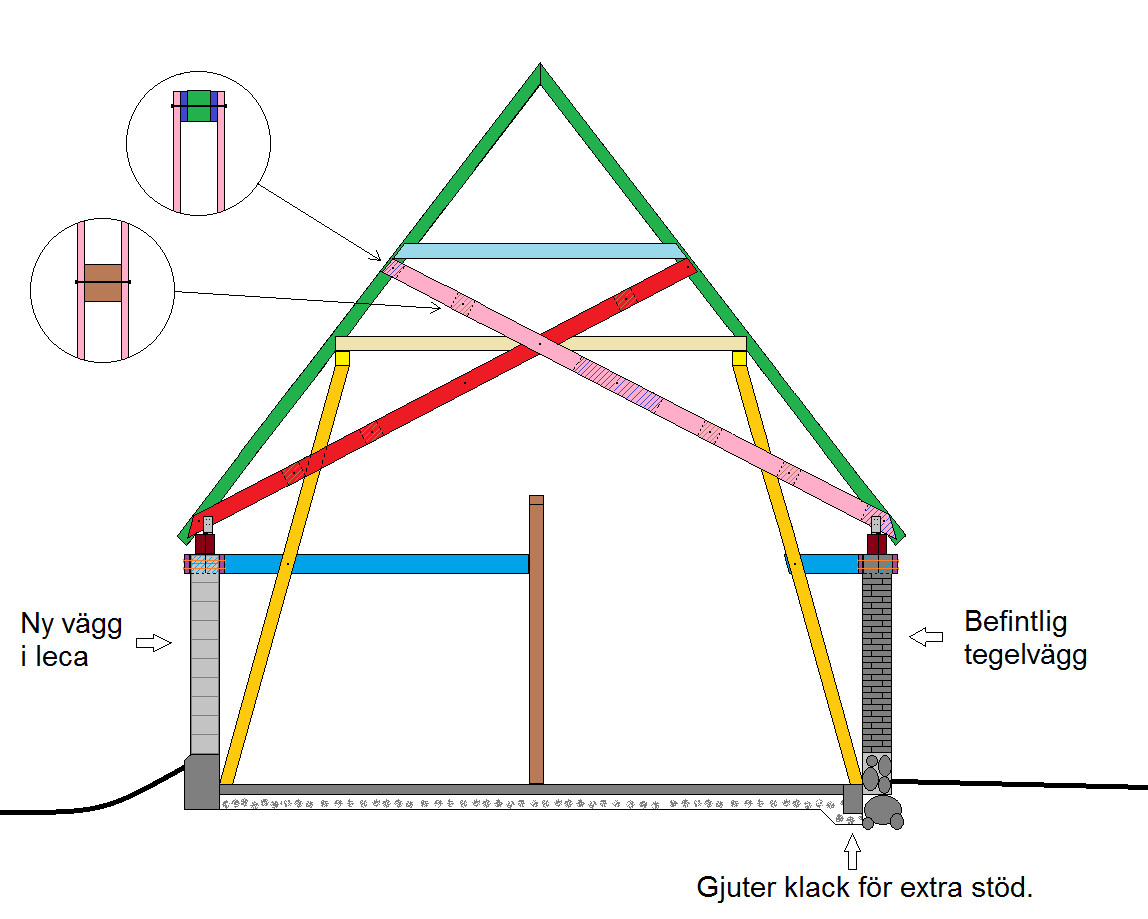
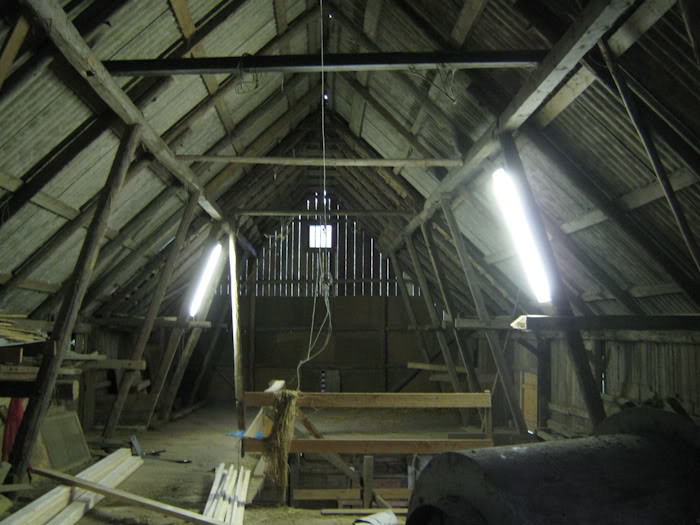
Talked to a guy who is a bricklayer/carpenter and owns a farm in the area himself. He thought it sounded good but wanted to reinforce it somewhat according to the picture.
Is this a good and stable solution? Is it safe and will it withstand storms?
I think that looks reasonable, it's not an entirely uncommon construction.
Perhaps one could move down the upper point of the pink a bit, roughly where the yellow meets the roof.
Then one can also add another from the ridge to the point where the pink crosses each other, in that there will only be tension, so it works well with round iron if desired.
Your latest suggestion is good but doesn't add much more than the previous one, however, you lose simplicity in performing it in a smooth and efficient way now that you are working with existing parts. One wants simple lines without intersections and not too coarse dimensions then the type you drew earlier fits well and will be more than sufficient. Just put care into the execution and especially watch out for what mycke_nu mentions with the attachment, the adaptation to the frame on top of the wall.
The next important thing is to ensure that the roof doesn't fly away.
Anchor the rafters and wall plate securely into the walls. It's not enough to just attach to the top blocks.
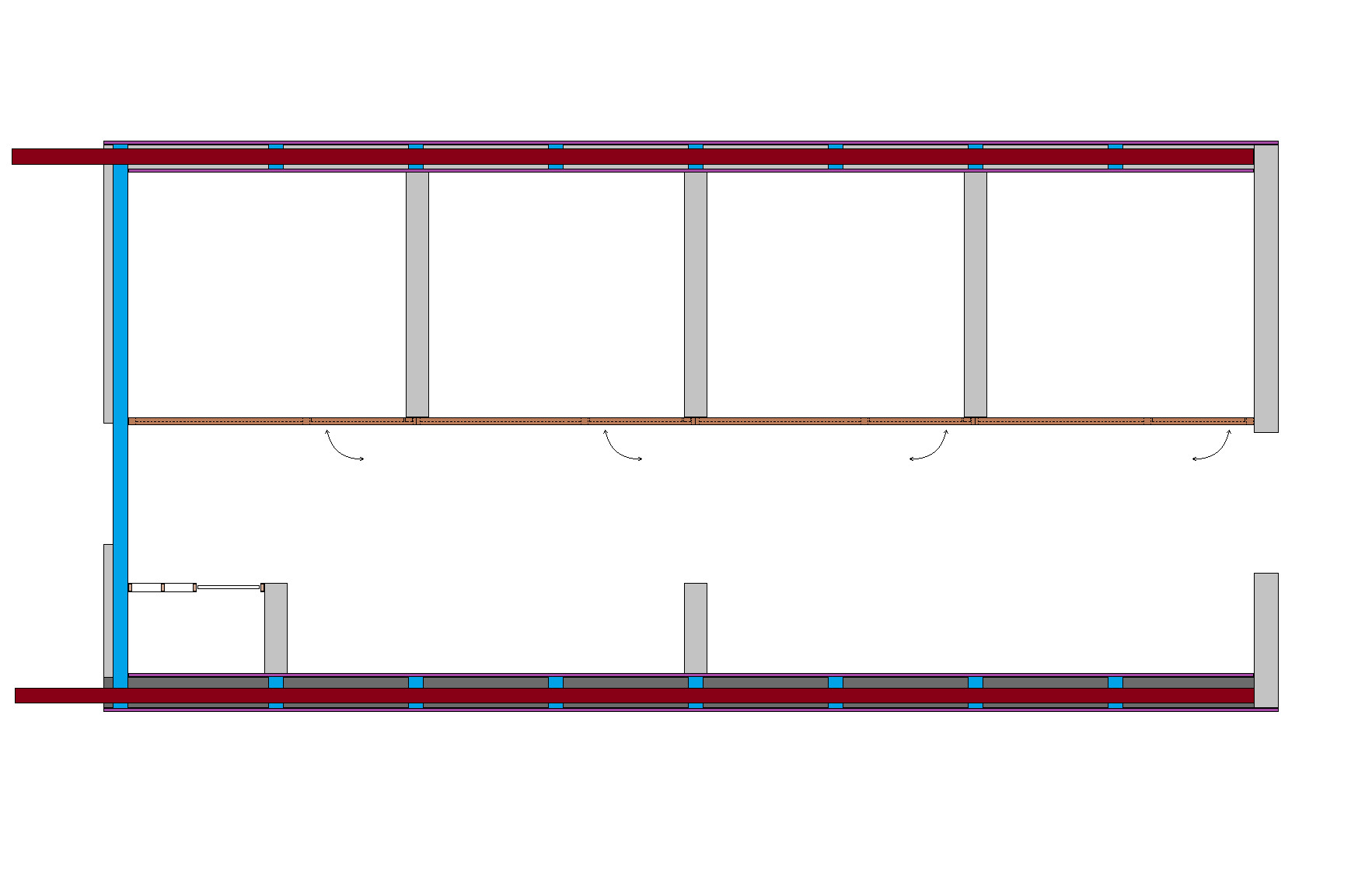
Another thing to consider is the stability of the masonry walls. Install a cross wall, or two, somewhere in the middle of the building and reinforce it with the outer wall. Otherwise, there is a risk that the Lecawall might collapse inward or outward under high wind loads.
The cross wall doesn't need to go all the way through the building, but at least a meter in to provide the outer wall with sufficient stability.
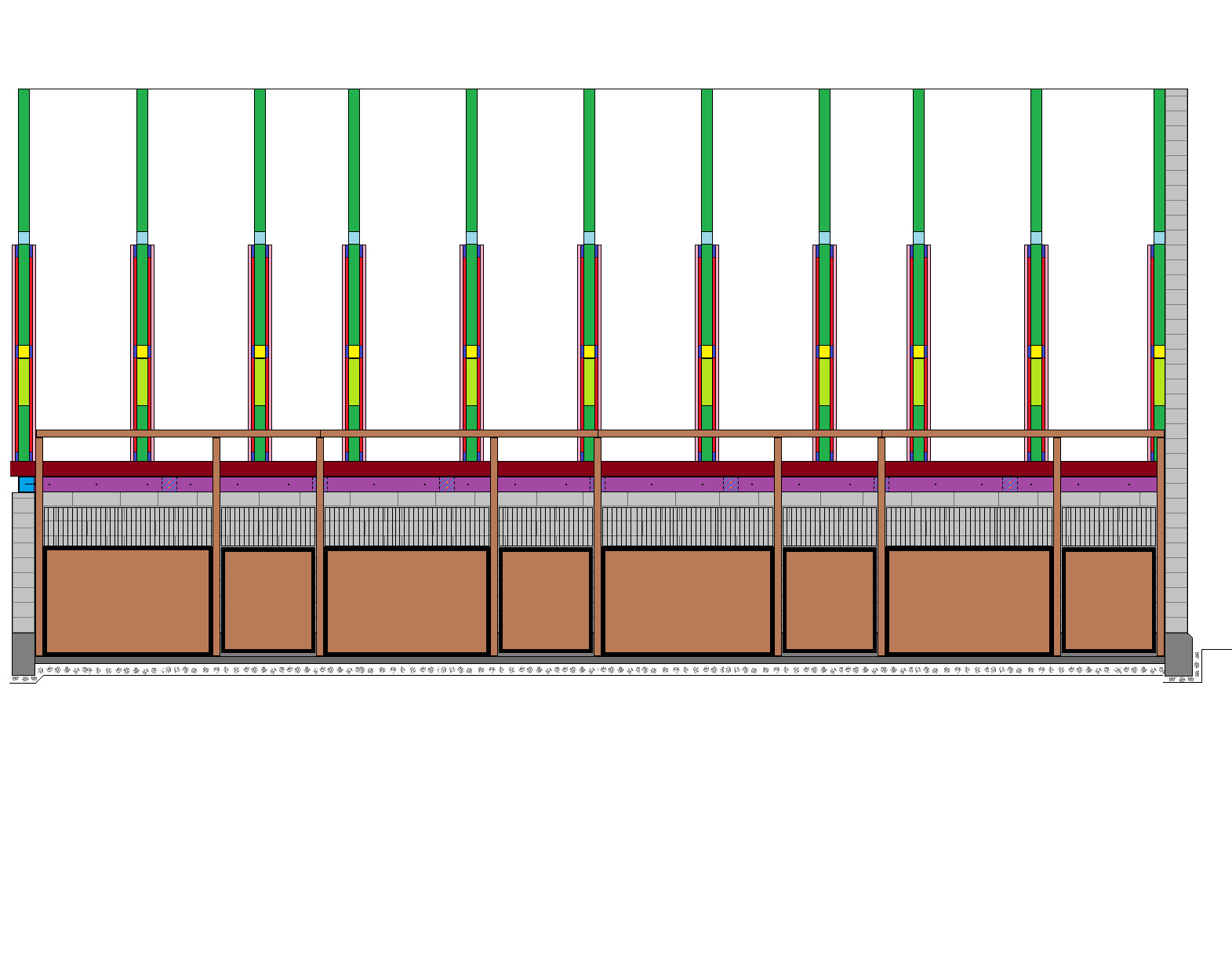
The lecawall for stability on the opposite side of stalls is a risk of injury when handling horses. An alternative is an external wind column, such as HEA beam. Often, a brace is mounted from, for example, a tie beam down to the wall/concrete floor/stall wall made of materials like shell blocks. After this, the floor structure is removed.
However, the brace obstructs the stable aisle.
Discuss dimensions, fastening, etc., with a structural engineer if you plan to do it yourself. If you hire a construction company, choose one with experience in similar work.
For a "warm" stable, insulation of the outer roof and additional heating is required to maintain the heat balance during parts of the year. It's better to let the stable climate follow the outdoor climate and possibly frost-protect the water installations.
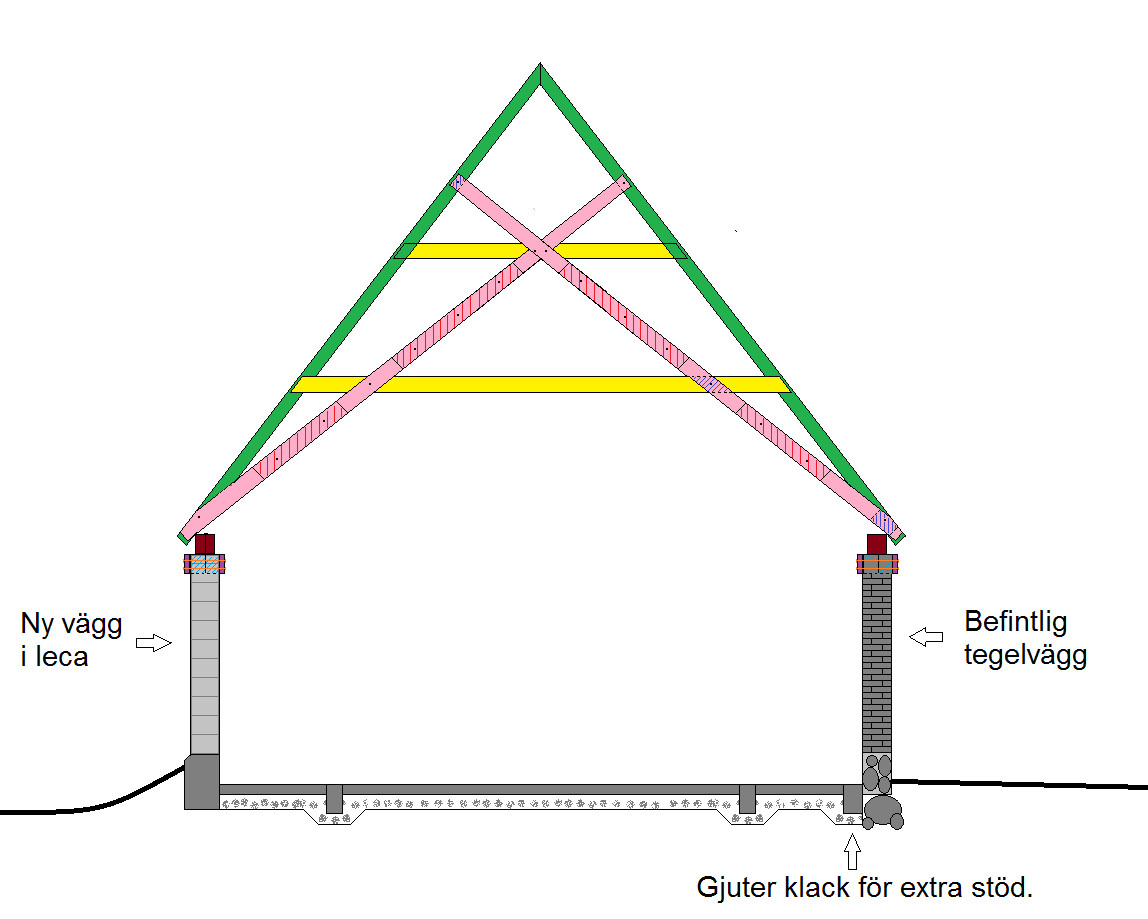
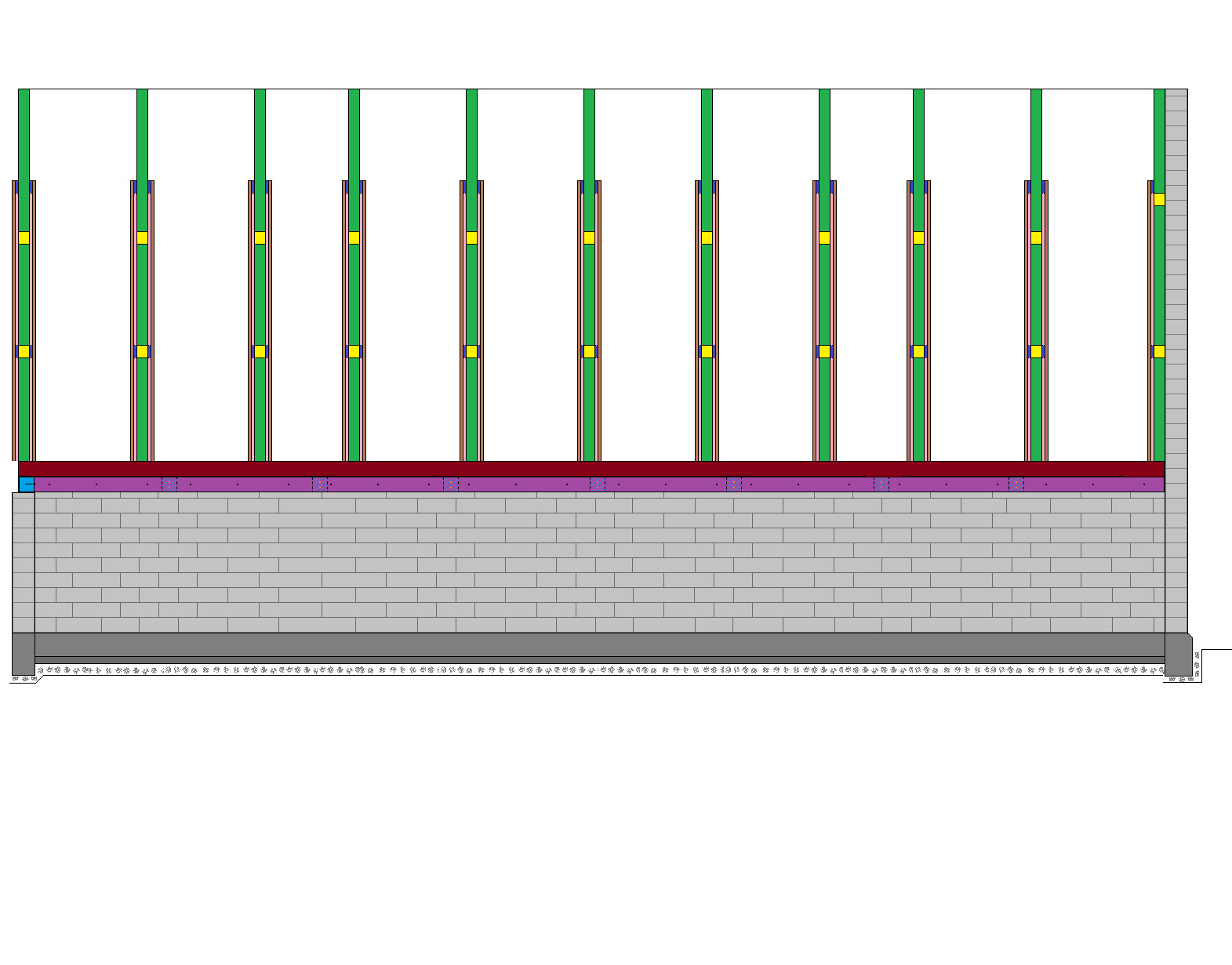
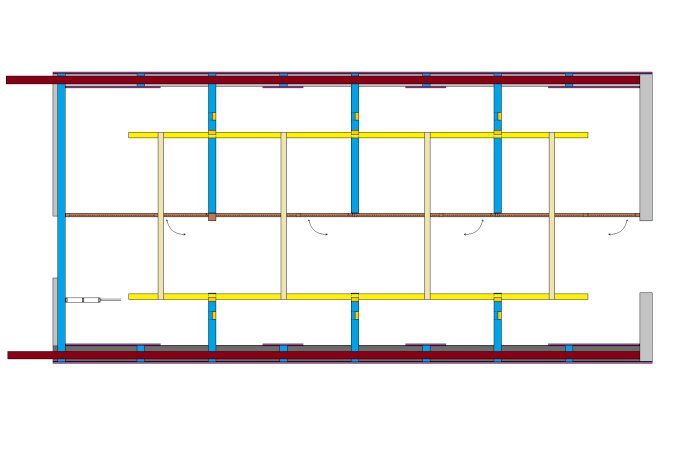
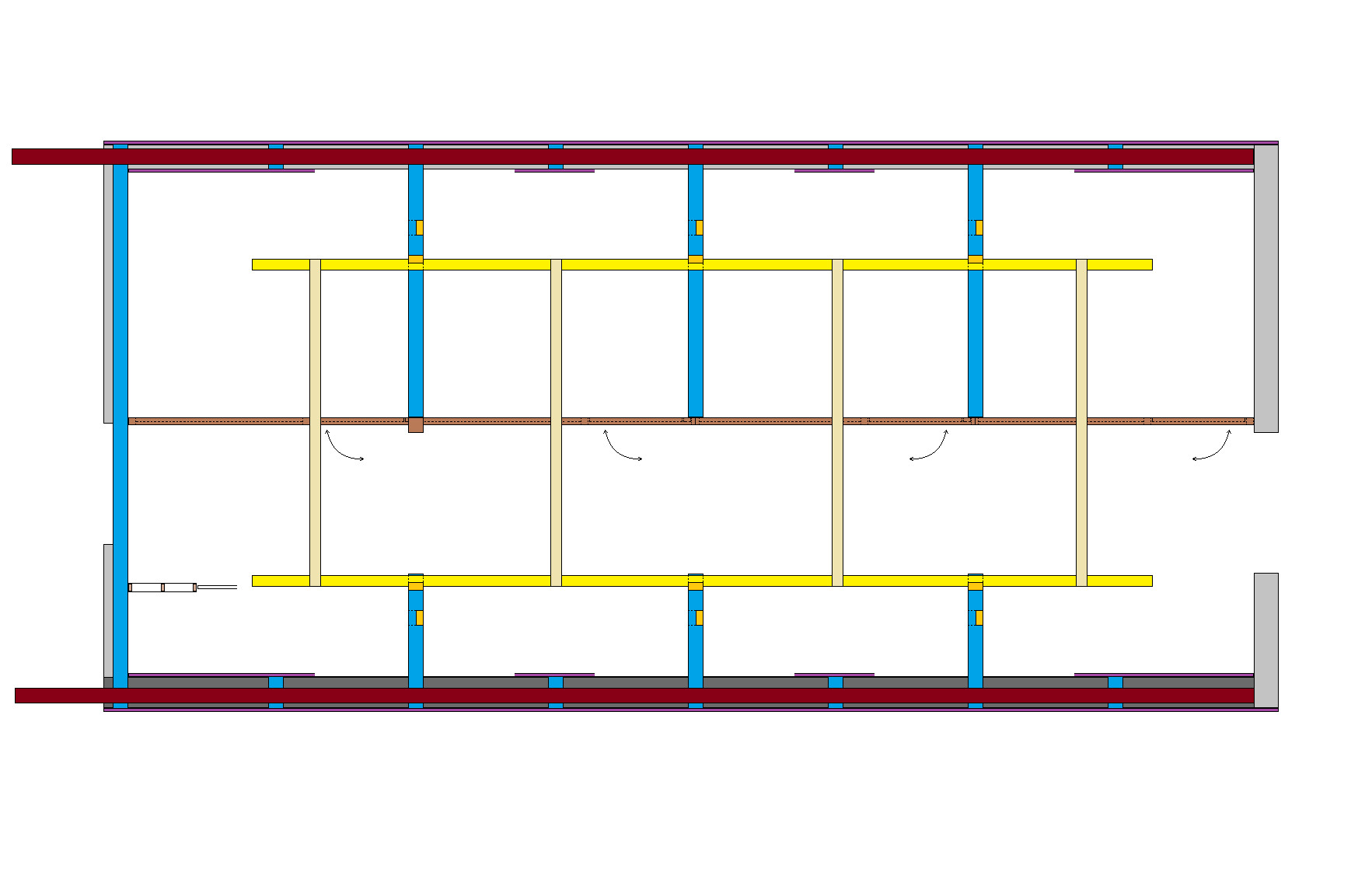
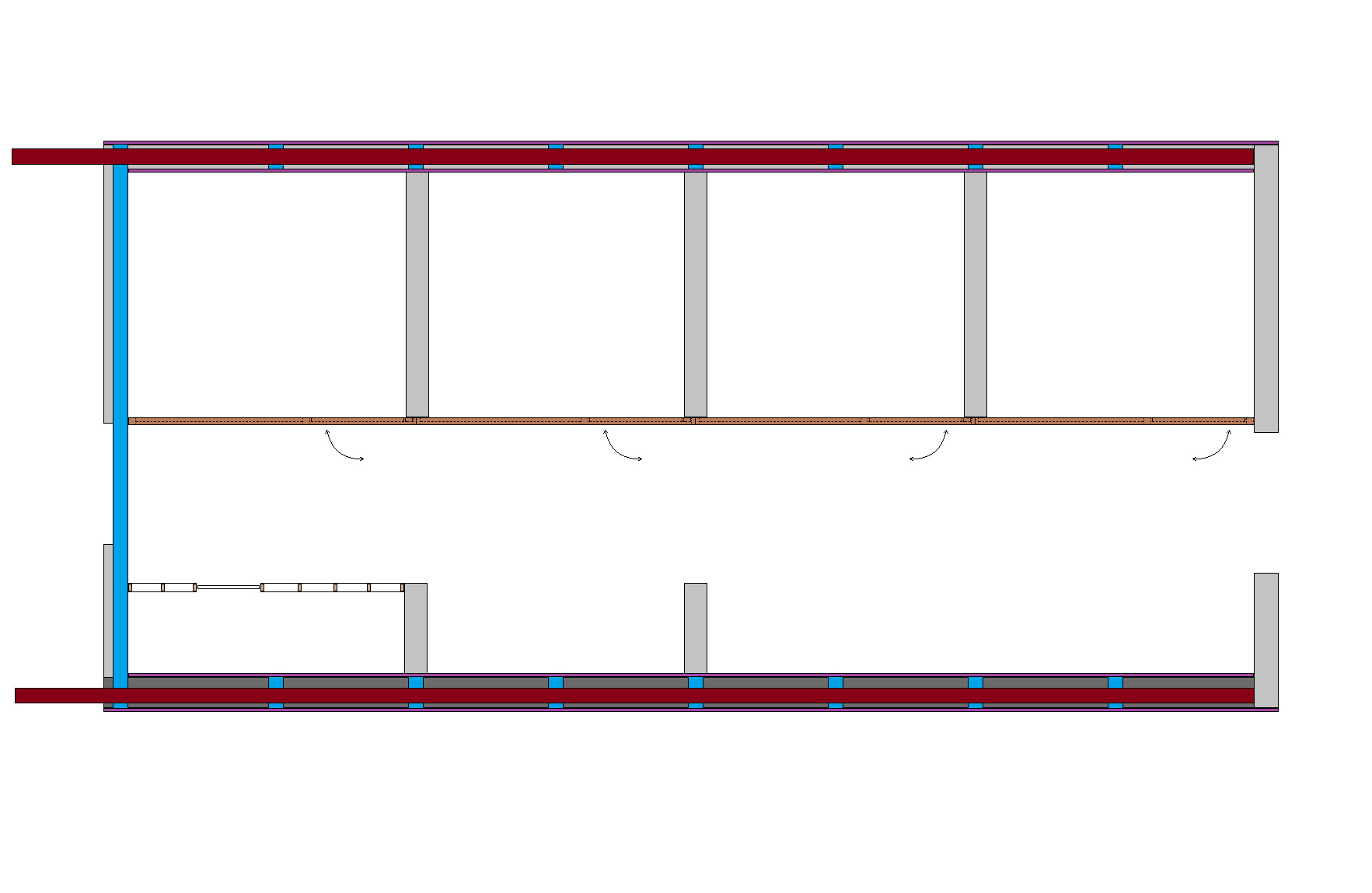
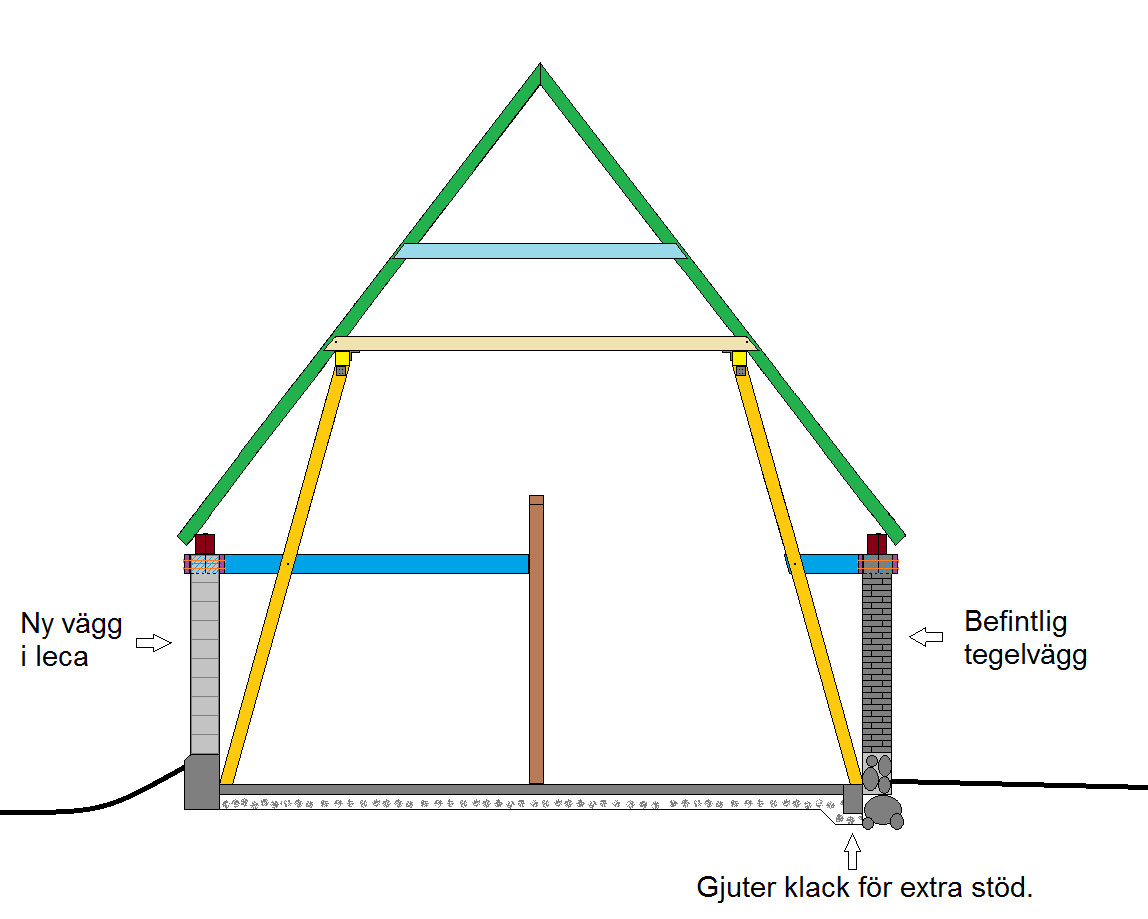
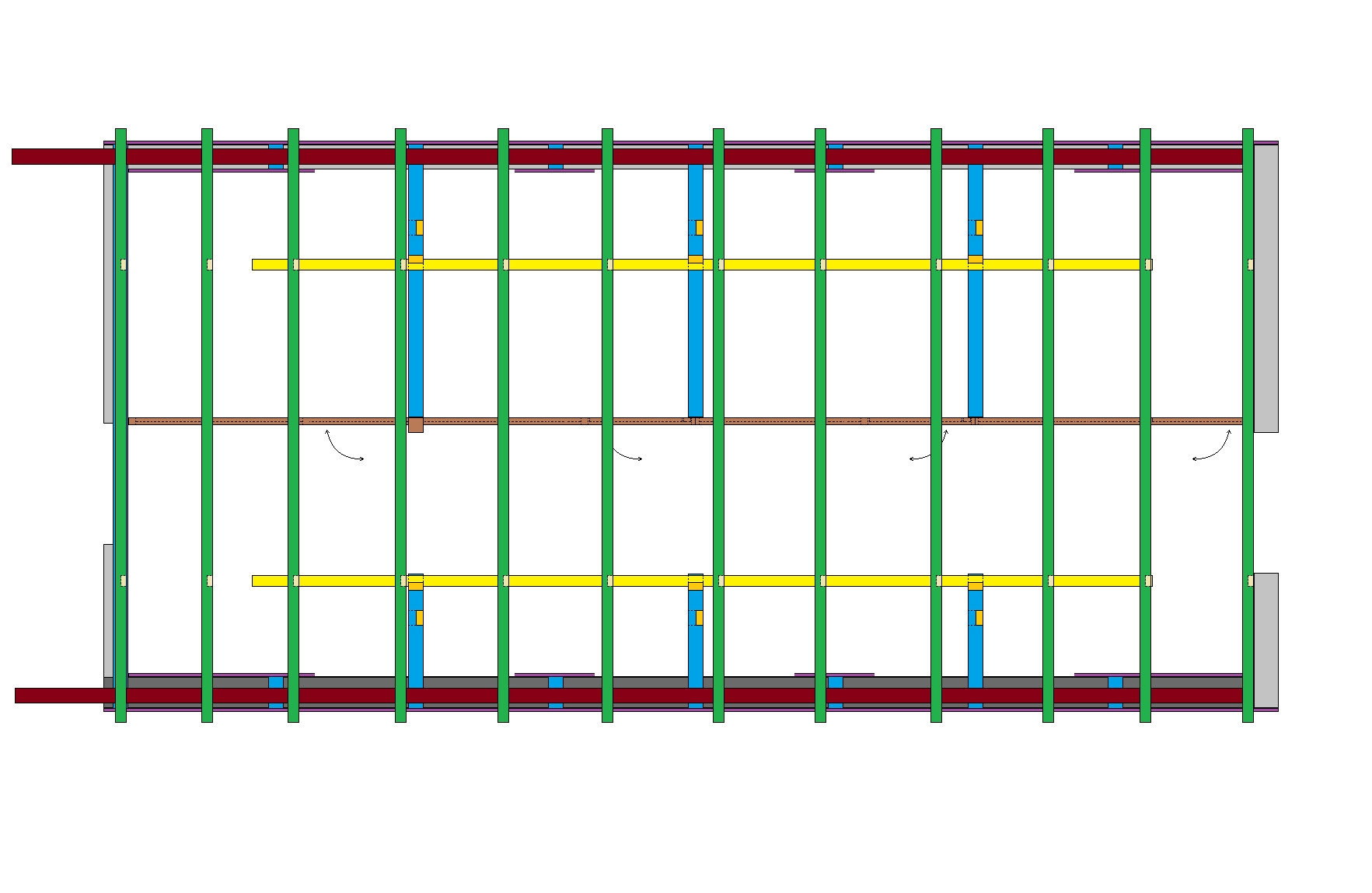
Okay, do you mean like this? See pictures...
I have plenty of rough lumber after the other barn is demolished. So it won't be more expensive, but it just has to be good. Is this better?
In #12 you were at home regarding trusses and then you've worked on the stability of walls etc. How do you think you'll be able to reasonably do as in #21 and even less with the latest cobweb. Personally, I don't understand what you're trying to achieve with these.
For my part, I don't understand what you are trying to achieve with these.
I thought I had it under control until post #22 came and then I started to worry if my construction would hold.
As I said, I've never done this before so I'll just be satisfied if the beams disappear so we can have a stable and that it holds up against storms, possible snow, and horse kicks.
No, I understand your caution, it's good but after all, it's about finding clean simple approaches with what you have to start from. So if you get advice and help from some local carpenters or generally handy people on these kinds of constructions, it will surely be good.
I don't know how low the ceiling was before, but if you have a really low ceiling, it may be that the pink and red beams you have in the first picture in post #23 are not high enough. If you get a meticulous inspector, they might have comments if it's too low between the slants and the floor towards the wall. I know someone who had to remove a crown molding (a board placed on the slant) because the ceiling height was too low by 2cm towards the wall due to it.
I don't think it matters, but you might be unlucky. Maybe it's not a problem here at all.
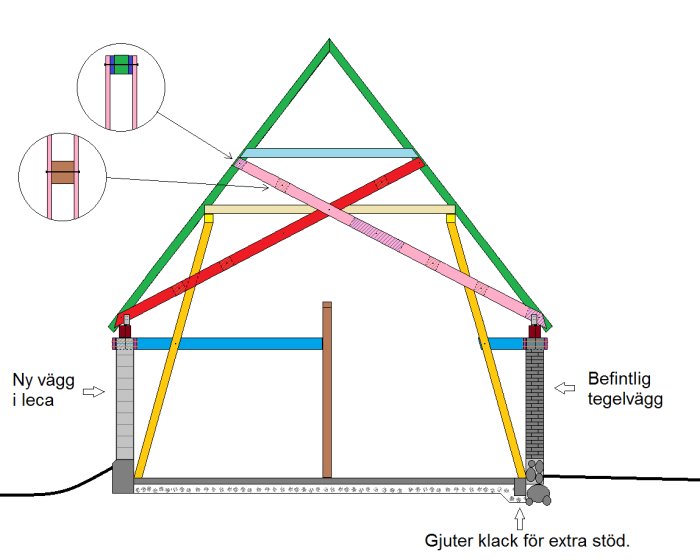
Almost like in #23. Skip pink and red braces.
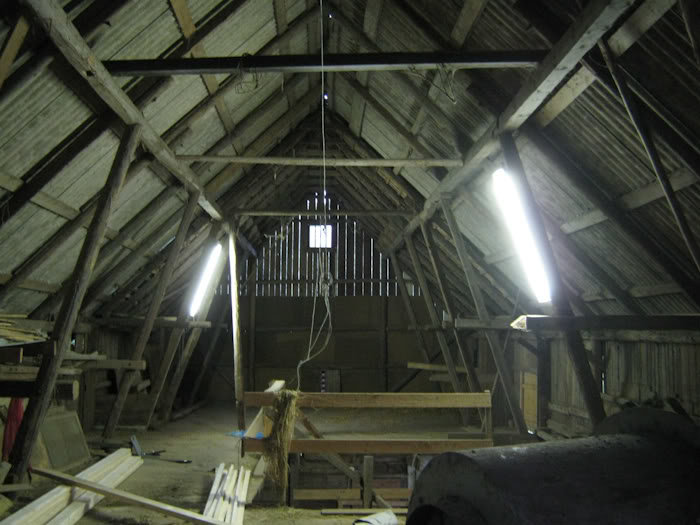
Support at the ridge beam as the photo shows and center braces over box wall of e.g. concrete block, as the photo shows.
Lowest ceiling height for stables is 1.5 times the withers height. Then there is also a minimum measurement if you have a pony. Don't remember it but check on the SJV website.
Almost like in #23. Skip pink and red braces.
Support at the tie beam as the photo shows and center braces over the box wall using something like a scale block, as the photo shows.
Minimum ceiling height for a stable is 1.5 times the withers height. There is also a minimum measurement if you have a pony. I don't remember it, but check the SJV website.