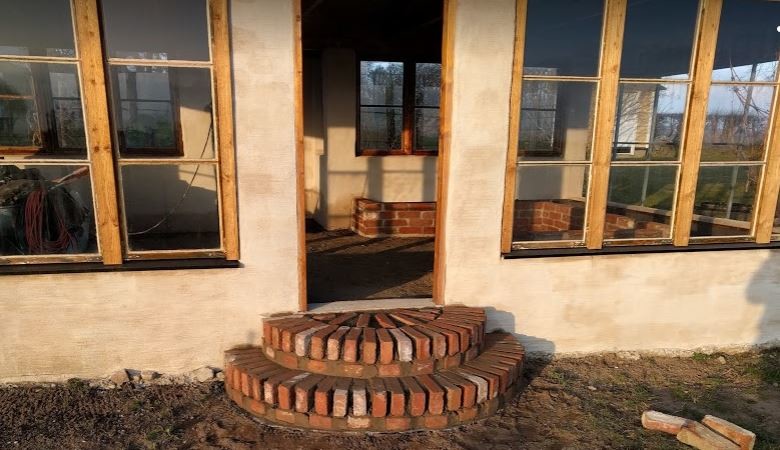
I'm in the process of building a conservatory/greenhouse (paper roof, many windows, but uninsulated) and soon it will be time to work on the doors.
Of course, I want to have light coming through the doors, which complicates things a bit when I think about the construction itself. I've previously built storage doors without windows, using braces on the inside in a "Z" shape to make the construction stable, but I can't do that now because I want to allow as much light as possible.
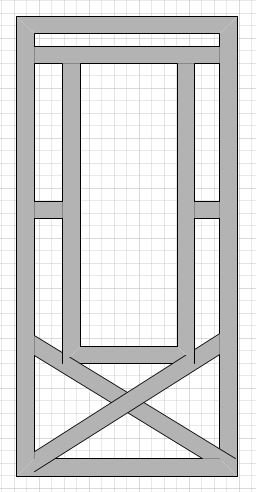
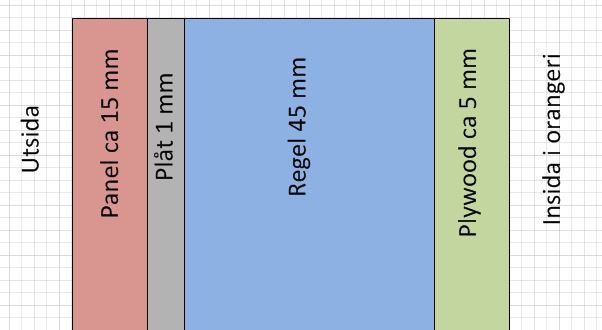
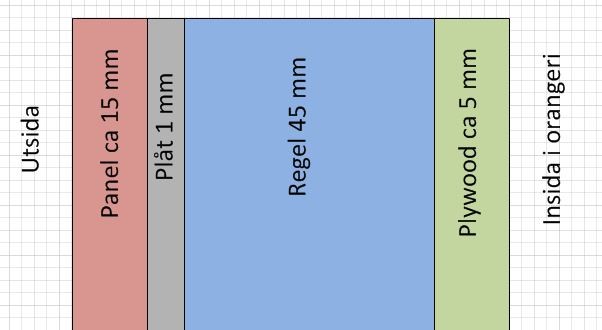
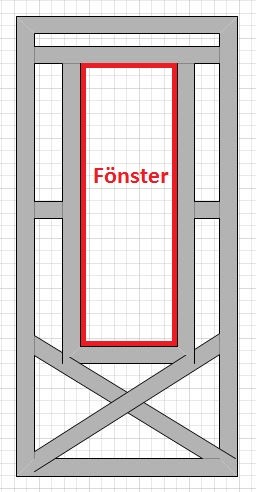
I'm considering making the door with a 45x70 frame, where the braces are placed width-wise so the door will be 45 mm thick (plus paneling as mentioned below). The dimensions of the window are preliminary, so just consider it a thought. Grilles, etc., will be installed on the window.
But the problem, as I see it, is avoiding the door from "sagging." There won't be direct stability, and I wondered if this could be solved with the help of a metal sheet (1-2 mm?) which I would screw onto the framework, obviously cutting an opening where the window will be. Then I would clad the metal sheet on the outside with paneling, the type of which I haven't decided yet... On the inside, I would cover it with thin plywood or similar to make it smooth.
The door will weigh quite a bit, and I’ll need sturdy hinges, but I think it would be fun to make the door myself, plus a similar ready-made door would cost a lot since it’s custom-sized.
Any spontaneous thoughts? Could I do it differently and achieve the same stability, or will the metal not help to make the door stable? If metal is the right way to go, is 1 mm enough? Or 2?
Modern doors usually have a layer of sheet metal on each side to prevent them from warping. Much thinner than 1 mm but on both sides. I don't think it's a good idea to have it on just one side. There's a risk that the door might bend. I have built an exterior door without sheet metal. Paneling on one side and plywood on the other. Foam insulation in the middle and everything glued with polyurethane glue. I'm hesitant about doing this again for an exterior door, but for an unheated space, it's another matter. It's not perfectly flat, but it holds its shape.
Thanks for the tip! Yes, it is possible to have thinner sheet metal on both sides instead... I don't know where to get the sheet metal, but the local sheet metal shop probably has it or can arrange it!
I was considering sheet metal as I mentioned, but that adds some weight! Of course, I want the door to be as thin as possible, but at the same time minimize the risk of it sagging! And already the door (with my construction) is unfortunately fairly thick...
If you use glue, the plywood and panel are excellent for preventing the door from sagging. What the metal sheet adds is that it helps keep the door flatter.
Haven't gotten around to building the door yet, but it's almost time...
I think I'll skip the metal sheeting I mentioned and rely on just using screw-glued plywood as you recommended. What thickness do you think is needed? It seems like the standard thickness that XL Bygg has in stock is 12 mm. But is that okay?
And regarding the corners of the frame itself - I was thinking of mitering these at 45 degrees, should be better than having them lap over. Is that right?
If they overlap, you can screw-glue the frame together more easily. If the corners are mitered, it becomes more difficult to get the screw to grip in exactly the right spot. With 12 mm plywood, the door becomes kick-proof. For stability, 4 mm is also sufficient if only the glue holds well.
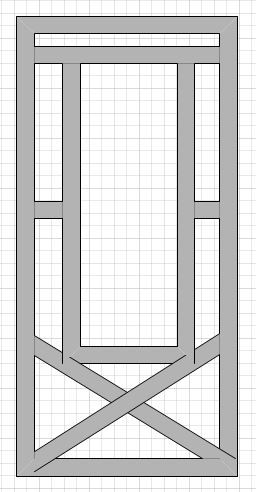
I would skip the cross that you have drawn in. Instead, I would have a horizontal piece at the bottom of the window, just as you have drawn at the top. A cross or Z is needed on simple plank doors because the boards can slide against each other. Plywood or a panel glued at the joints serves the same function as a cross or Z, but even better.
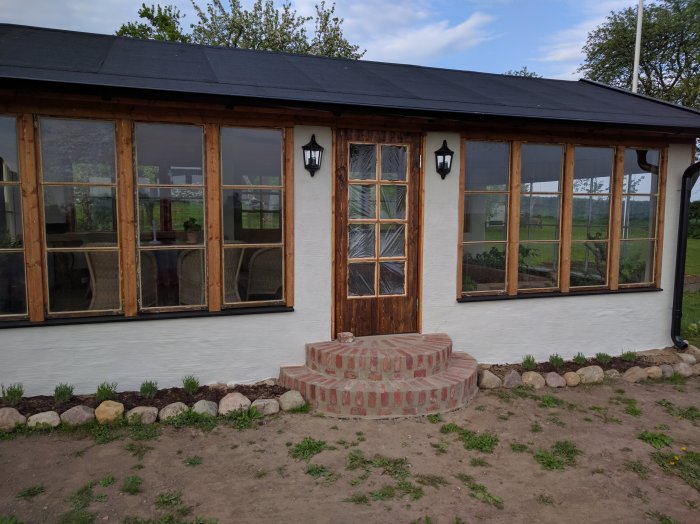
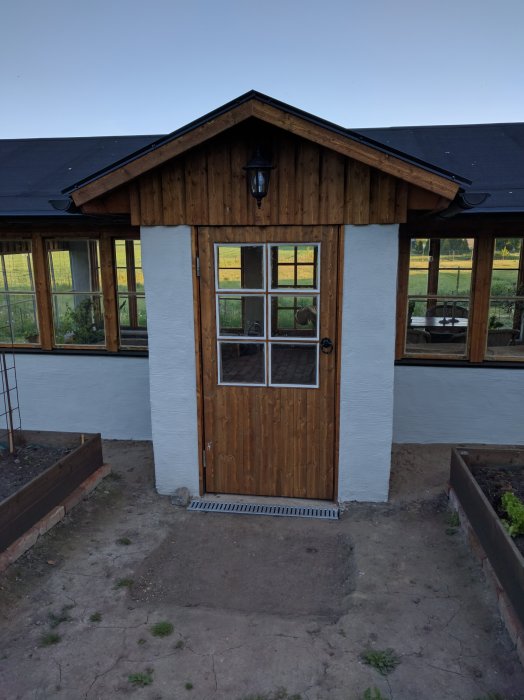
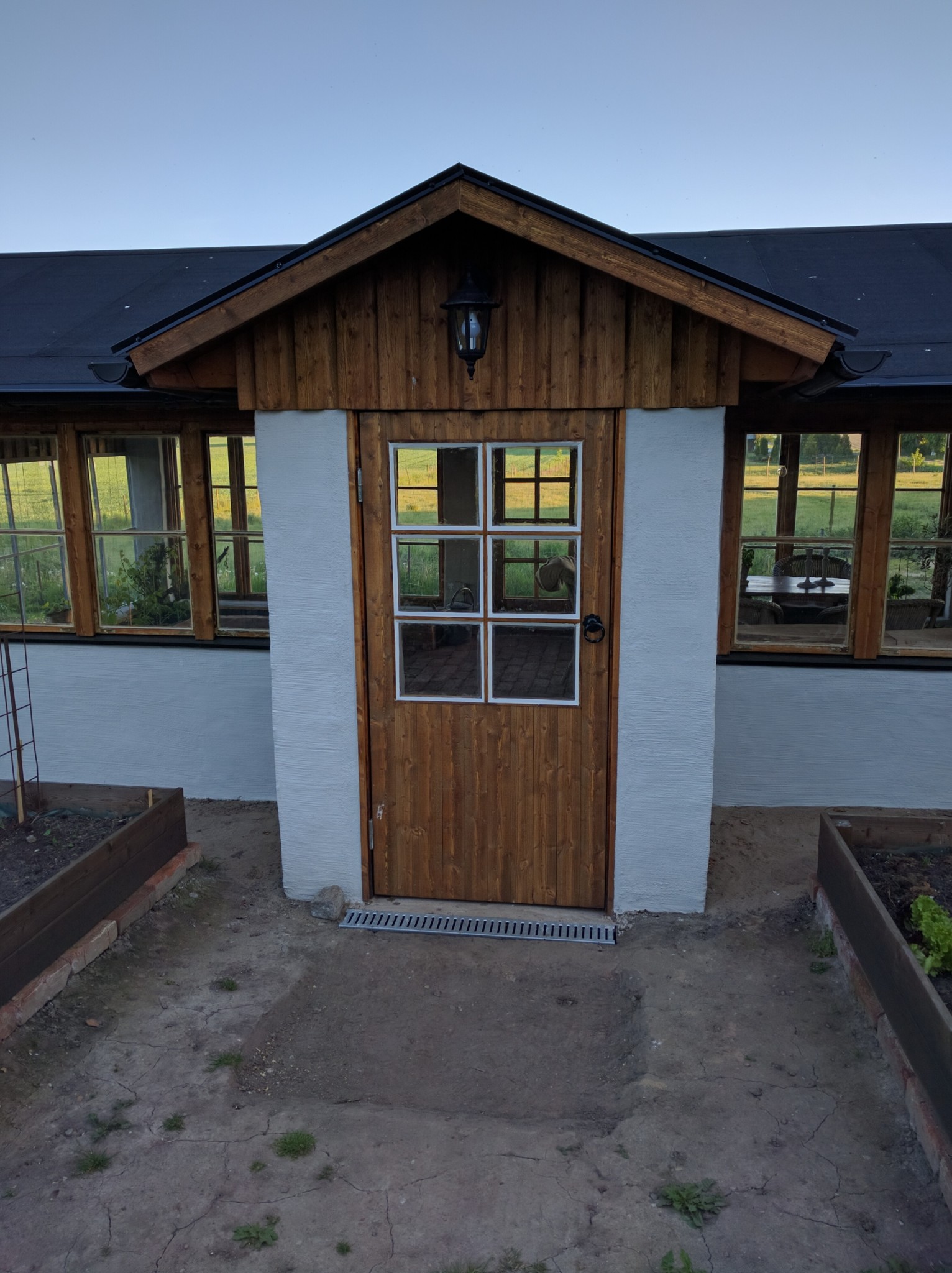
Here is the result for those who are curious. Chose 12 mm plywood on the inside, screwed and glued to a frame of 45x95. On the outside, dressed with boards that were planed down to 10 mm. The total thickness of the door was about 70 mm. Feels stable and will likely hold up for the purpose. The cost was about 1000 SEK per door, including glass, and I had quite a bit of plywood left over for other projects!
Very nice — and not just the doors! I believe your construction is stable enough, you probably won't need to redo them anytime soon, if at all.
//Ronnie
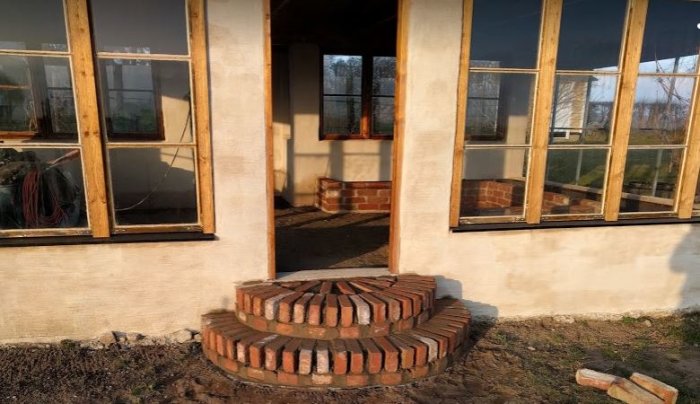
Yes, I am pleased with the result! I have been thinking about posting a thread with some info on how I built the "house" itself. They are reused windows from the main house, about 100 years old, and inside there's recycled brick, etc.
Yes, I am happy with the result! I've been thinking about posting a thread with some info on how I built the actual "house". It uses recycled windows from the main house, about 100 years old, and inside there's recycled brick, etc.
A thread will probably pop up here eventually!
Yes, post a thread, it looks really nice!
Vi vill skicka notiser för ämnen du bevakar och händelser som berör dig.