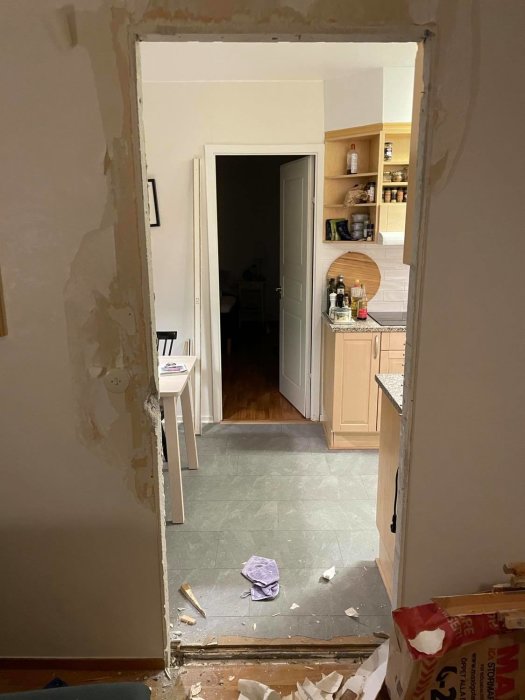
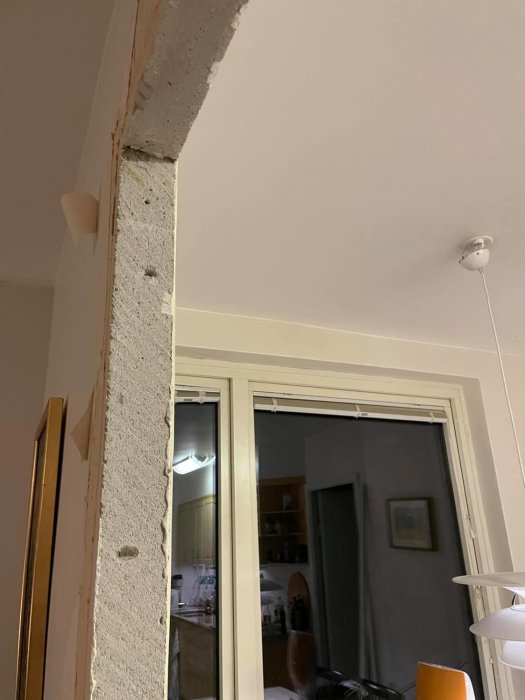
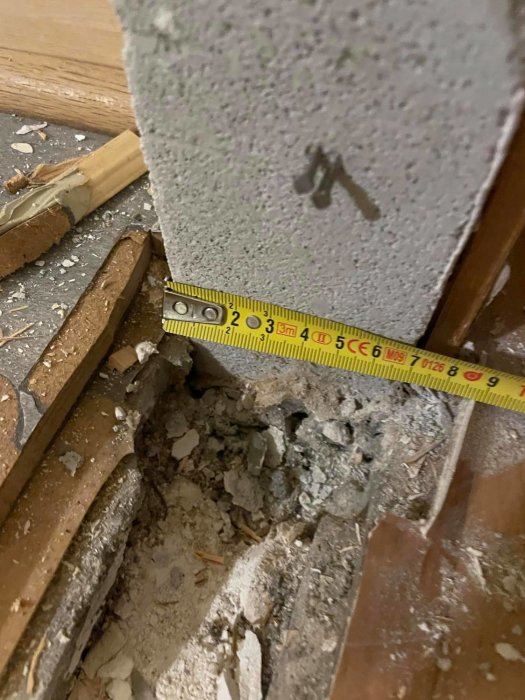
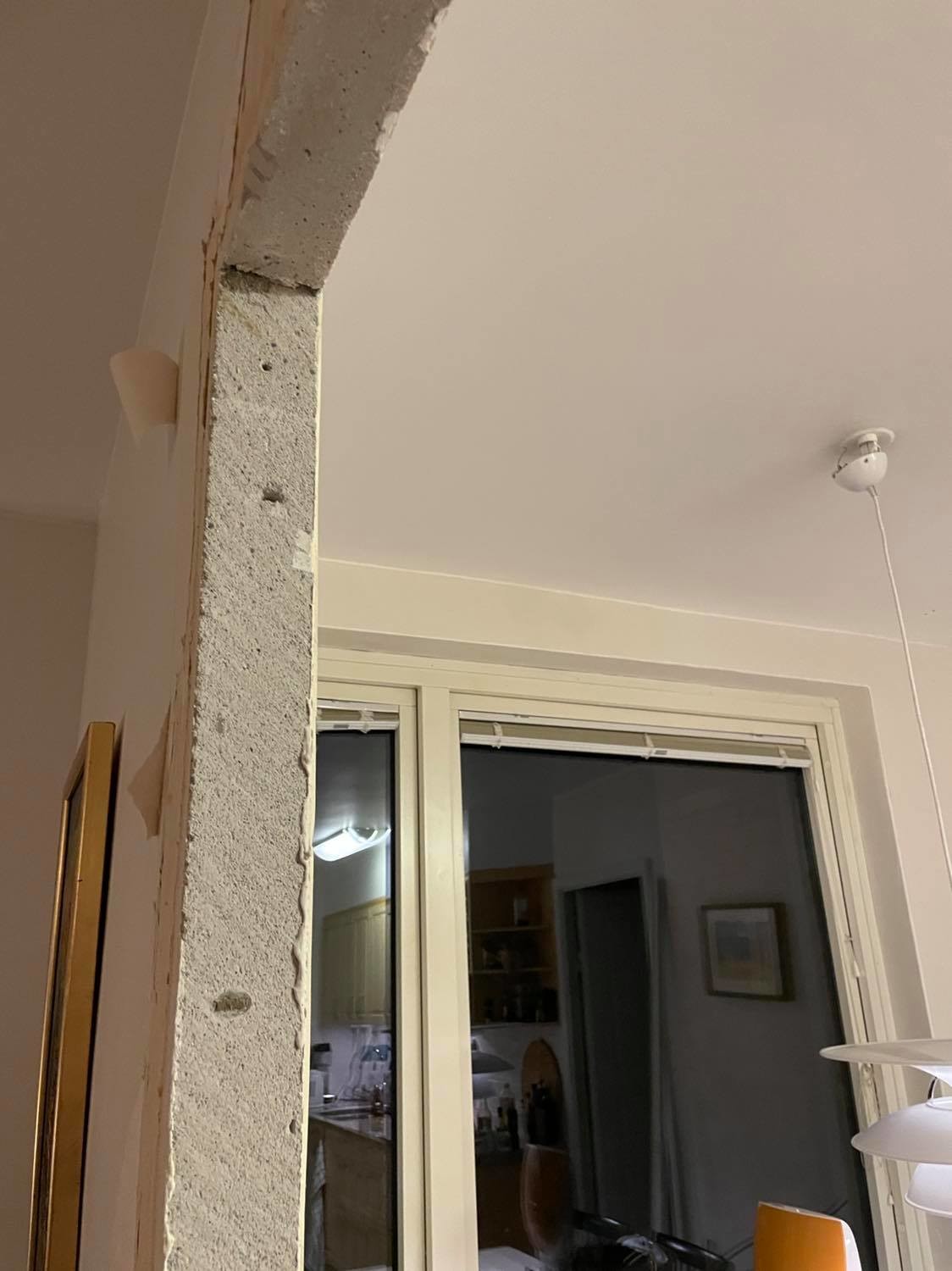
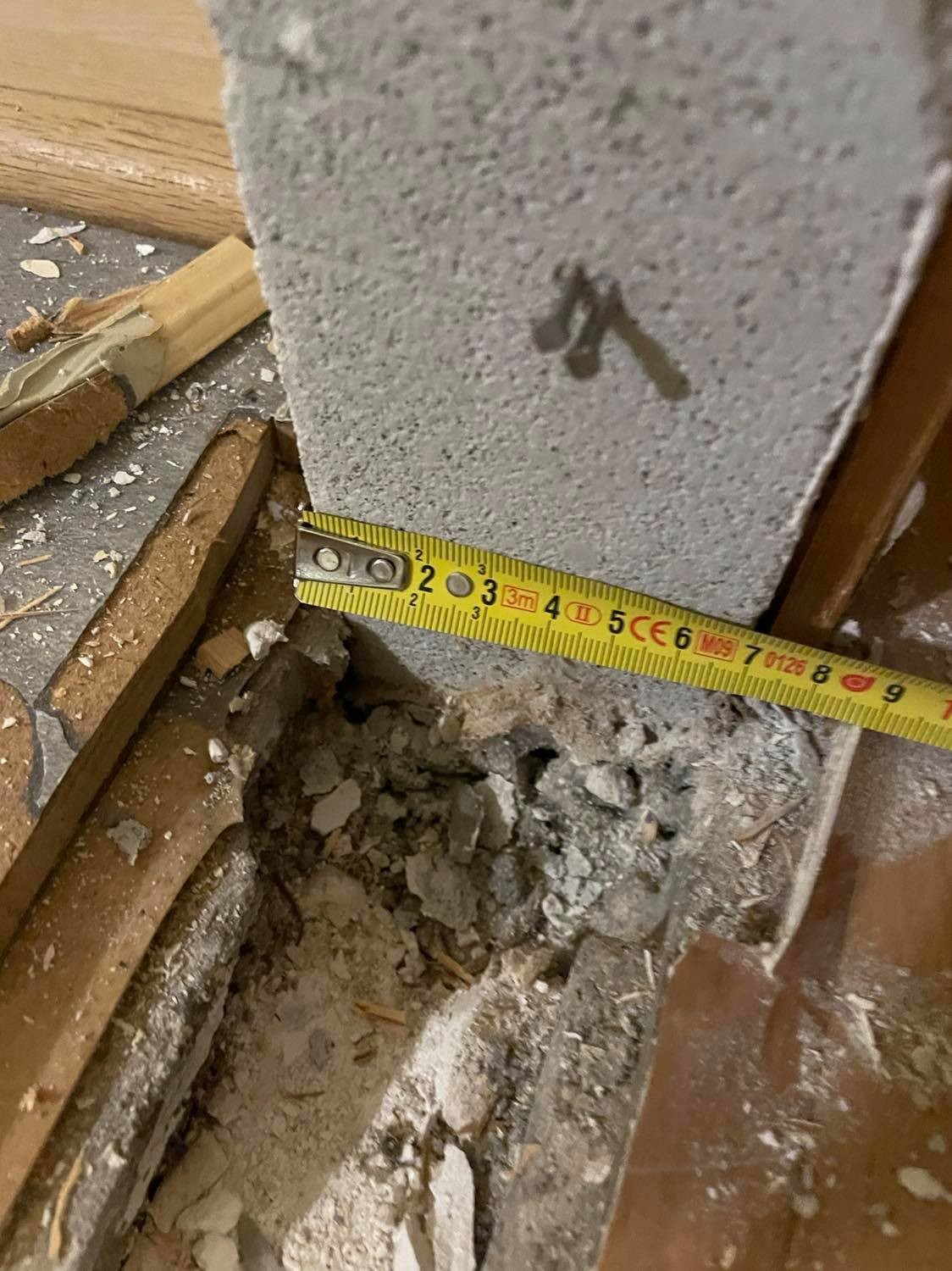
I have an opening of 60cm in an interior wall (lightweight concrete/siporex) where a built-in wardrobe previously stood. The wall that needs to be extended by 60cm is 72mm deep, and it seems that concrete blocks/leca blocks or lightweight concrete slabs have a minimum depth of 75mm. However, I have found ytong which has lightweight concrete slabs with a depth of 50mm, which allows for plastering/spackling, but it seems a bit too flimsy?
My question is if there are other better alternatives?
Long time ago, so he's probably finished, maybe he'll answer. There are thicknesses for both Leca and Ytong from 50X200X600 and upwards in thickness if that's what you were wondering about.
Thank you jonaserik. I assume I have a similar question as the original poster and thus I am hijacking the thread.
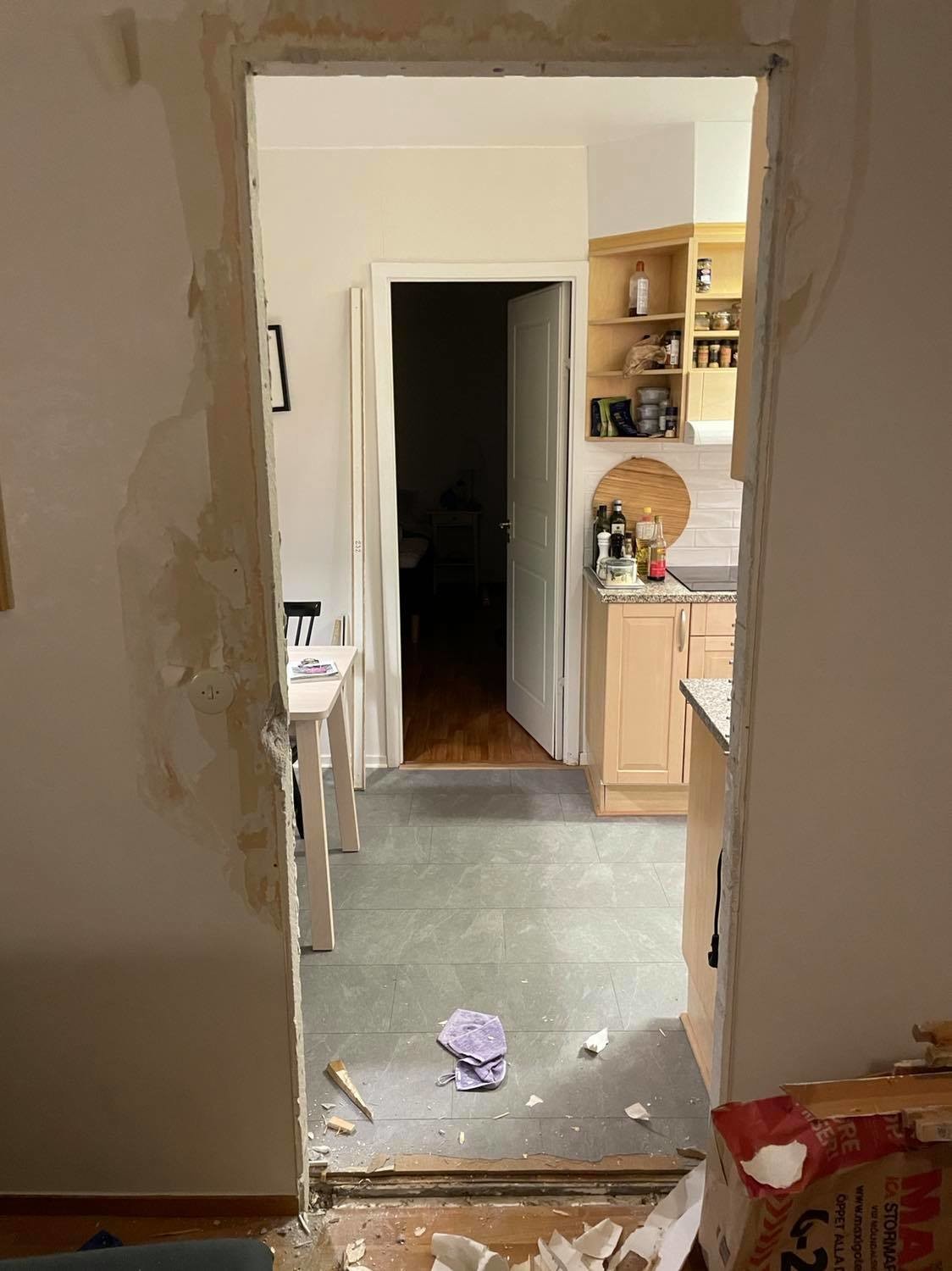
We are going to close up a door opening. After knocking on the wall, we assumed that it was a timber frame wall, but when we removed the earlier door, it turned out to be light concrete (apartment built in the 60s). The original plan was to set new timber frames and plaster, but after reading on the forum, it turns out that it has poor compatibility with a high risk of cracking when done against a concrete wall. Is the best option in my case to build with 50mm blocks, or is there another better solution? Steel frames?
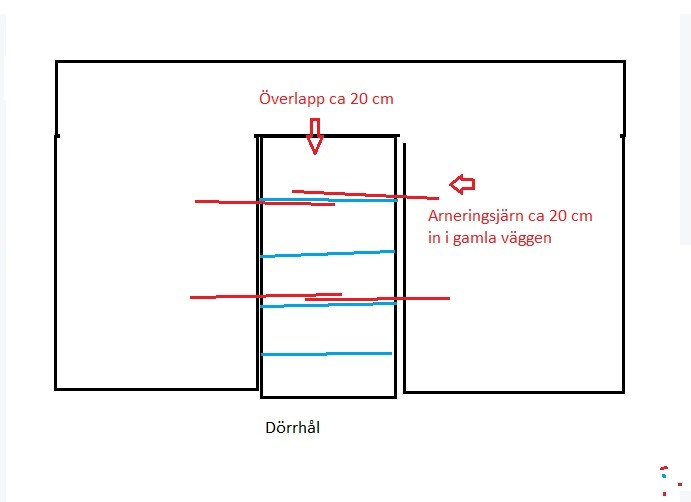
Yep, 50 mm + plaster is what fits there. Then you should drill in e.g. 6 or 8 mm rebar at every 3rd layer. It's not possible to get a whole bar over the hole now, so you will have to put in shorter pieces. I will get back with a sketch.
Quickly put together a sketch, just the basic principle, you can also put iron in every layer, making it much stronger so the risk of cracking is minimized as much as possible, it's towards the sides where the risk is greatest.
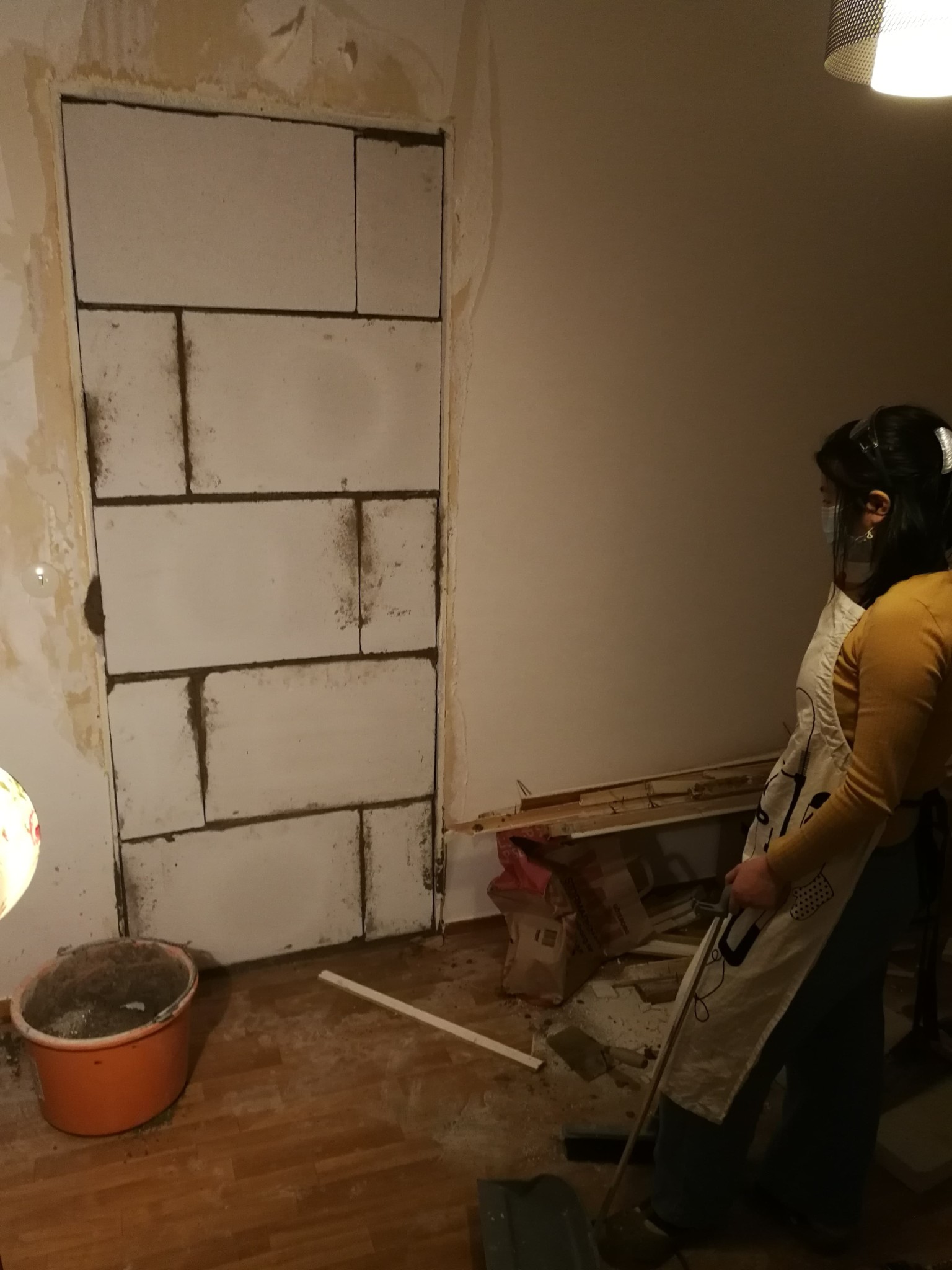
It wasn't easy to brick, I think we mixed the mortar too hard. Reinforcement was placed at each level to ensure a good anchoring to the wall. The next step will be plastering.