
5,401 views ·
8 replies
5k views
8 replies
Brick structure - black nail heads on the inner wall. Which boards?
Hello,
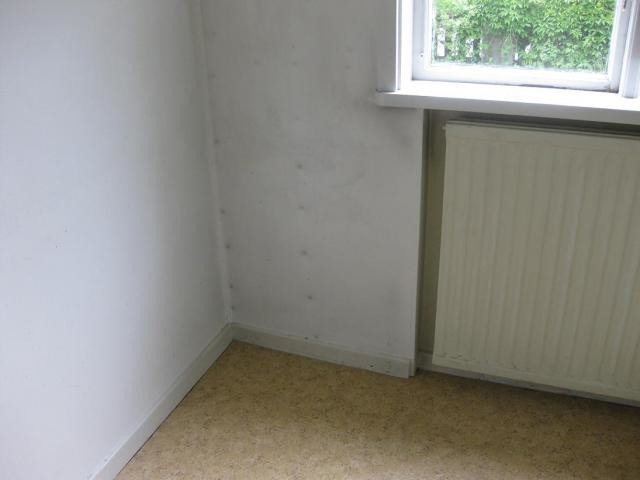
I've just bought a house with a brick frame. The walls have black smudges throughout, particularly towards the ceiling but elsewhere as well. I assumed this might be from the fireplace, oil heating in the basement if the ventilation was wrong, or candles. Probably nothing strange about it (or is there?!). But what I'm a bit worried about is that there's a black spot over almost all the nail heads in the wall panels that are against the outer wall. I assume these have drawn cold from the brick frame. Is it likely that the cold nail heads have caused the wallpaper over them to attract more soot than the rest of the wall? Or is it as bad as it could be mold and moisture problems? Should I remove the panels or can I just wallpaper over (possibly with 6 mm repair gypsum over)?
I'm also wondering what the right way is - i.e., how to deal with panels when you have a brick frame to avoid issues (you can always plaster, but I want wallpaper inside)? Can you use panels with organic materials? Should they be placed directly against the brick or with an air gap? If an air gap - should there be studs of non-organic material?
I've attached a picture to illustrate my question.
I've just bought a house with a brick frame. The walls have black smudges throughout, particularly towards the ceiling but elsewhere as well. I assumed this might be from the fireplace, oil heating in the basement if the ventilation was wrong, or candles. Probably nothing strange about it (or is there?!). But what I'm a bit worried about is that there's a black spot over almost all the nail heads in the wall panels that are against the outer wall. I assume these have drawn cold from the brick frame. Is it likely that the cold nail heads have caused the wallpaper over them to attract more soot than the rest of the wall? Or is it as bad as it could be mold and moisture problems? Should I remove the panels or can I just wallpaper over (possibly with 6 mm repair gypsum over)?
I'm also wondering what the right way is - i.e., how to deal with panels when you have a brick frame to avoid issues (you can always plaster, but I want wallpaper inside)? Can you use panels with organic materials? Should they be placed directly against the brick or with an air gap? If an air gap - should there be studs of non-organic material?
I've attached a picture to illustrate my question.

Hi Jaso!
Tricky questions that I think can only be answered by removing a board with special black nail heads.
Isn't there a place that isn't so visible?
Or maybe someone has encountered the same thing?
Wouldn't cover it with either plaster or wallpaper until I knew what it was. You might be building in a simple problem that then becomes a big one! :eek:
Please let me know what it is when you've figured it out!
Johan
Tricky questions that I think can only be answered by removing a board with special black nail heads.
Isn't there a place that isn't so visible?
Or maybe someone has encountered the same thing?
Wouldn't cover it with either plaster or wallpaper until I knew what it was. You might be building in a simple problem that then becomes a big one! :eek:
Please let me know what it is when you've figured it out!
Johan
You might be right that I may have to tear down to find out, but I still hope this isn't a unique case on the forum and that someone recognizes the situation from the picture.
The problem as I see it now is that I can't find answers on how I should set up panels if I were to do it correctly.
It would be very interesting if someone on the forum with a brick structure would share how they put up panels for wallpapering and to hide electrical cables. Maybe there's even a carpenter on the forum who can explain how she/he would put up panels if they came to a house with a brick structure?
I will report back if I find the answer elsewhere or tear down a panel.
The problem as I see it now is that I can't find answers on how I should set up panels if I were to do it correctly.
It would be very interesting if someone on the forum with a brick structure would share how they put up panels for wallpapering and to hide electrical cables. Maybe there's even a carpenter on the forum who can explain how she/he would put up panels if they came to a house with a brick structure?
I will report back if I find the answer elsewhere or tear down a panel.
It is indeed true that the cold from the nail heads has attracted dirt. The phenomenon is called thermodiffusion and causes particles (dirt) to be drawn to colder surfaces. Possible moisture from condensation on the nail heads can also contribute to this.
That said, it doesn't mean that cozy things can't grow on the paper at the back of the plasterboard. Organic materials directly against a cold exterior brick wall are a risk factor. However, nothing happens if moisture isn't present. You should try to look at an electrical outlet or a window sill and see if you can figure out what's behind there.
That said, it doesn't mean that cozy things can't grow on the paper at the back of the plasterboard. Organic materials directly against a cold exterior brick wall are a risk factor. However, nothing happens if moisture isn't present. You should try to look at an electrical outlet or a window sill and see if you can figure out what's behind there.
It's nice to hear that at least there is an explanation that theoretically means it could be okay with my walls. This is exactly the explanation I have been pondering myself but didn't know was a "term," so to speak.Krawk said:
Fuzzy growth was a pretty cruel way to put it, exactly what I don't want to think aboutThat doesn't mean that things can't grow on the paper on the back of the plasterboard. Organic materials directly against a cold outer brick wall are a risk factor. However, nothing happens if moisture doesn't get in.
You should try to take a look at an electrical outlet or a window frame and see if you can figure out what is behind.
 . Great idea to start by trying to get an impression through electrical outlets and window frames.
What would you recommend for boards if replacing all the boards against the outer walls?
Plaster.
A sheet material on the interior wall should not be wet on the backside. (Is it additionally insulated?)
It doesn't seem to be a problem as it looks now?
If there's moisture in the wall, it should be addressed and not hidden.
Edit:
One must look at the entire construction and not just the innermost layer. Stone walls are not entirely without problems to deal with, and there are various opinions on how it should be done.
The extremes are that you either let the wall breathe (in and out) and use materials insensitive to moisture, or you build an inner wall according to cavity wall principles with diffusion-tight plastic, etc.
Ultimately, the problem is that if the brick is wet at a depth where it freezes, there is a risk of it bursting apart.
A sheet material on the interior wall should not be wet on the backside. (Is it additionally insulated?)
It doesn't seem to be a problem as it looks now?
If there's moisture in the wall, it should be addressed and not hidden.
Edit:
One must look at the entire construction and not just the innermost layer. Stone walls are not entirely without problems to deal with, and there are various opinions on how it should be done.
The extremes are that you either let the wall breathe (in and out) and use materials insensitive to moisture, or you build an inner wall according to cavity wall principles with diffusion-tight plastic, etc.
Ultimately, the problem is that if the brick is wet at a depth where it freezes, there is a risk of it bursting apart.
Last edited:
For various reasons, I have been busy with life's mysteries, and therefore the renovation hasn't progressed at the pace I once dreamed of accomplishing . But now it's time for a report and acknowledgment to those of you who had significant doubts about my additional insulation.
The previous owner who did the additional insulation was a civil engineer, so I could have wallpapered and forgotten my doubts about the construction and still realized that, as a paper pusher, I can't reasonably override a civil engineer's judgment. But it nagged at the back of my mind, so I ended up tearing out a section to see how it looked. And it was not pretty.
My wall is built as follows, from the outside in:
Plaster.
Brick wall - one brick thick (about 10-15 cm?).
Plaster.
Old wallpaper.
Wooden studs, 45x70, nailed directly to the wall.
Fiberglass boards between the studs directly against the wall.
Chipboard.
Wallpaper.
What has happened is that the warm air met the cold wall, causing moisture to condense. As a result, there was significant black mold growth on both the old wallpaper and the insulation. In some places, it almost looks like someone went wild with a spray can.
My plan at the moment is to just fill the nail holes in the wall, smooth out the wall with plaster where needed, and then wallpaper directly over it. The only question is how poorly the brick wall with one brick thickness insulates... there is some concern.
. But now it's time for a report and acknowledgment to those of you who had significant doubts about my additional insulation.The previous owner who did the additional insulation was a civil engineer, so I could have wallpapered and forgotten my doubts about the construction and still realized that, as a paper pusher, I can't reasonably override a civil engineer's judgment. But it nagged at the back of my mind, so I ended up tearing out a section to see how it looked. And it was not pretty.
My wall is built as follows, from the outside in:
Plaster.
Brick wall - one brick thick (about 10-15 cm?).
Plaster.
Old wallpaper.
Wooden studs, 45x70, nailed directly to the wall.
Fiberglass boards between the studs directly against the wall.
Chipboard.
Wallpaper.
What has happened is that the warm air met the cold wall, causing moisture to condense. As a result, there was significant black mold growth on both the old wallpaper and the insulation. In some places, it almost looks like someone went wild with a spray can.
My plan at the moment is to just fill the nail holes in the wall, smooth out the wall with plaster where needed, and then wallpaper directly over it. The only question is how poorly the brick wall with one brick thickness insulates... there is some concern.

Last edited:
Well, it's a better plan (health-wise) than the current one but worse economically. If you can, insulate on the outside; if not, then you'll have to rebuild the wall from the inside as you would build regular brick walls, with an air gap between the brick and the inner wall. But you do need some sort of insulation, as a brick doesn't insulate particularly well, especially not when it's wet as it often gets in winter when it's cold.
I would try to deal with the previous owner regarding hidden defects and scare him in some way; it might be difficult to pass as a hidden defect considering the black spots on the wall and the phenomenon described above, which surely would have prompted you to conduct a more thorough investigation. But you can always scare them, and it might be worth a few thousand to a lawyer.
Whichever solution you choose, you're doing the right thing in tearing out the stuff. Better to have just the brick wall (even if it gets cold) than to have mold in the walls.
I have no possibility to build a proper construction from the inside in this old house. There would be so many specialized solutions against the existing floor joists and similar to get it perfect. In that case, external insulation it will be. Next on the list is FTX ventilation and triple-glazed windows, so unfortunately, facade insulation is a little further away financially. Perhaps the right time would be if I make a serious extension at some point to take the opportunity to add insulation to the facade and re-plaster the whole house.Gladh said:Well, it's a better plan (health-wise) than the current one but worse economically. If you can, insulate from the outside; if not, you'll need to rebuild the wall from the inside and build as you would with regular brick walls, with an air gap between the brick and the inner wall. But you need some kind of insulation, because a brick doesn't insulate much, especially not when it's wet as it often becomes in winter when it's cold.
Good tip about hidden defects. But precisely because everything in the house needs fixing and all installations at best are from the 60s, I chose a disclaimer clause since the seller lowered the price very well for it.I would try to deal with the previous owner about hidden defects and scare him in some way, it might be difficult to pass it off as a hidden defect considering the black spots on the wall and the phenomenon described above, which surely would have prompted you to conduct a more thorough investigation. But you can always scare him, it might be worth a few thousand for a lawyer.
Whichever solution you choose, you’re right to tear out the junk, better with just the brick wall (even if it gets cold) than to have mold in the walls.
Yes, health-wise, I feel this is the best. Additionally, as mentioned, I will install FTX ventilation and use as little negative pressure as possible in the house to avoid drawing air through the old framework. Mold in the walls and natural ventilation -> the previous owners were real tough guys d^_^b.
Click here to reply