
3,559 views ·
15 replies
4k views
15 replies
Drill holes in sanitary plastic
I have bought a simple separett for my small summer cottage. It is prepared for installation of both a ventilation via a fan out through the back of the toilet through the facade (wood) and for urine through the bottom of the toilet. Unfortunately, I can't use the conical elevation at the bottom because the drain I need to install the toilet over is about 30 cm further back. So I need to drill a hole in the plastic where it's not intended to be drilled. I have test-drilled in some plastic items with the drill I bought that can be adjusted to the required size, but the plastic always cracks in a star pattern around the drill hole. It is possible that the sanitary plastic won't behave that way, but I only have "one shot." Any tips on how to avoid this? Is there "cutting oil" for drilling in plastic? Or is it enough with the tension of, for example, covering the area with duct tape before drilling? Grateful for tips from those who have done something similar.
The issue isn't the urine itself. I plan to lead the urine down via a floor drain that was previously a shower floor drain to a two-chamber well next to the house where the urine will be handled. But it is not positioned in a way that fits where the manufacturer of the Separett prepared for the urine hose (they assume you will make a new opening through the floor or wall for the hose). So, I have to make a hole where the manufacturer did not intend for a hole to be.Åsa Lund said:
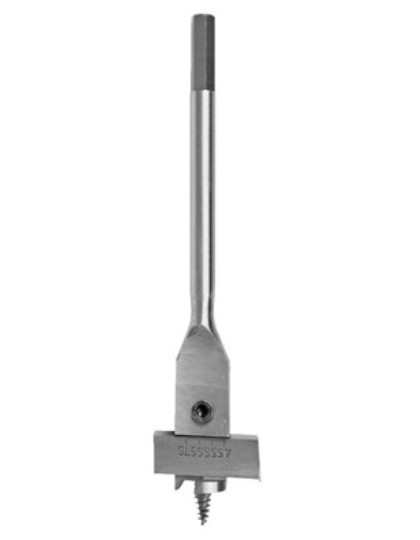
Yes, I've received excellent help here! I will use the step drill to make holes in the Separett itself, but I'll use the other adjustable drill for the pipe to ventilate through the wooden wall.T tgr_se said:
The step drill bit is great to drill with because it removes material gently. Feel free to use a screwdriver and run at low speed. Drill for a while until you get through the plastic. Be patient! Then take it easy until you reach the correct hole diameter. Make sure not to press too hard because you don't need to. Try drilling in something like a plastic cutting board or whatever you have available to get a feel for how the drill works.R Renoveringstjejen said:
As for the hole for ventilation, I would go for a hole saw instead. The adjustable bit works okay in solid wood but is not so pleasant if you have mixed materials like wood and drywall, etc.
Thanks for the tips!ClasseClas said:
The step drill is grateful to drill with because it works so gently. Feel free to use a screwdriver and run at low speed. Drill for a while until you get through the plastic. Be patient! Then take it easy until you reach the correct hole diameter. Make sure not to press too hard as it's not necessary. Feel free to test drilling in something like a plastic cutting board or whatever you have available to get a feel for how the drill works.
As for the hole for ventilation, I would opt for a hole saw instead. The adjustable drill works okay in solid wood but isn't so pleasant if you have a mix of wood and gypsum boards, etc.
It's the toilet in sanitary acrylic that I'm worried about. The drilling through the wall will be through a classic wood facade with planer shavings and fiberboard on the inside from the 60s - we're talking about doing some maintenance on a solid construction of the time that hasn't led to any mold or the like at all, rather than modernizing.
But if you see difficulties, describe them!
The problem is how to create a hole in the Separett itself. It doesn't have pre-made holes since the conditions for how you can lead out the urine vary. You might have bought a model with pre-made holes or perhaps someone you know took care of it.
It's solid wood/particle board throughout the wall, so I'll probably go for the adjustable one. But thanks for the tip!The step drill bit is grateful to drill with because it removes material so gently. Feel free to use a screwdriver and operate at a low speed. Drill for a while so you go through the plastic. Be patient! Then take it easy until you reach the right hole diameter. Make sure not to press too hard because it's unnecessary. Feel free to try drilling in, for example, a plastic cutting board or whatever you have available to get a sense of how the drill works.
As for the hole for ventilation, I would opt for a hole saw instead. The adjustable drill works okay in solid wood but is not as fun if you have mixed with wood and plasterboard, etc.
Checked prices on step drills. Does one really cost about 500 SEK? Unbelievable...The step drill is grateful to drill with because it removes material so gently. Feel free to use a screwdriver and run at low speed. Drill for a while so you get through the plastic. Be patient! Then take it easy until you reach the right hole diameter. Make sure not to press too hard because it’s not needed. Try drilling in, for example, a plastic cutting board or whatever you have available to get a feel for how the drill works.
As for the hole for ventilation, I would opt for a hole saw instead. The adjustable drill works ok in solid wood but is not as fun if you have a mix of wood and plasterboards, etc.

These might work too, 80kr
https://www.jula.se/catalog/verktyg...askiner/borr/borrsatser/borr-frassats-180009/
https://www.jula.se/catalog/verktyg...askiner/borr/borrsatser/borr-frassats-180009/