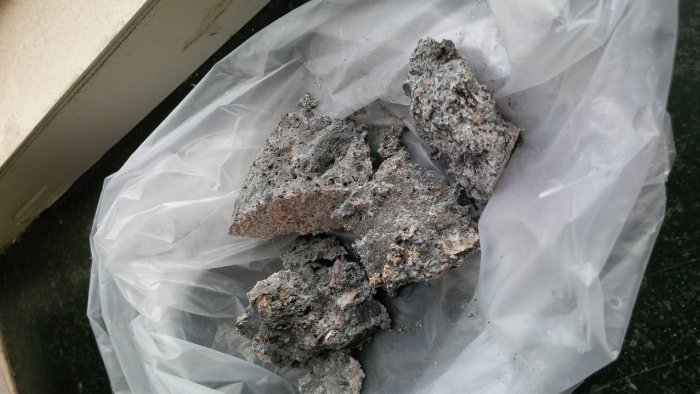
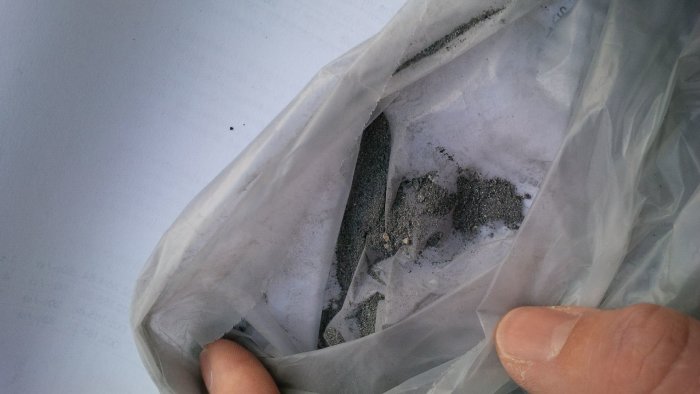
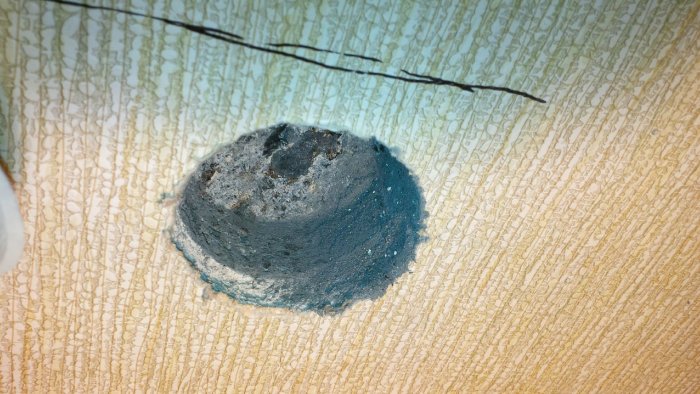
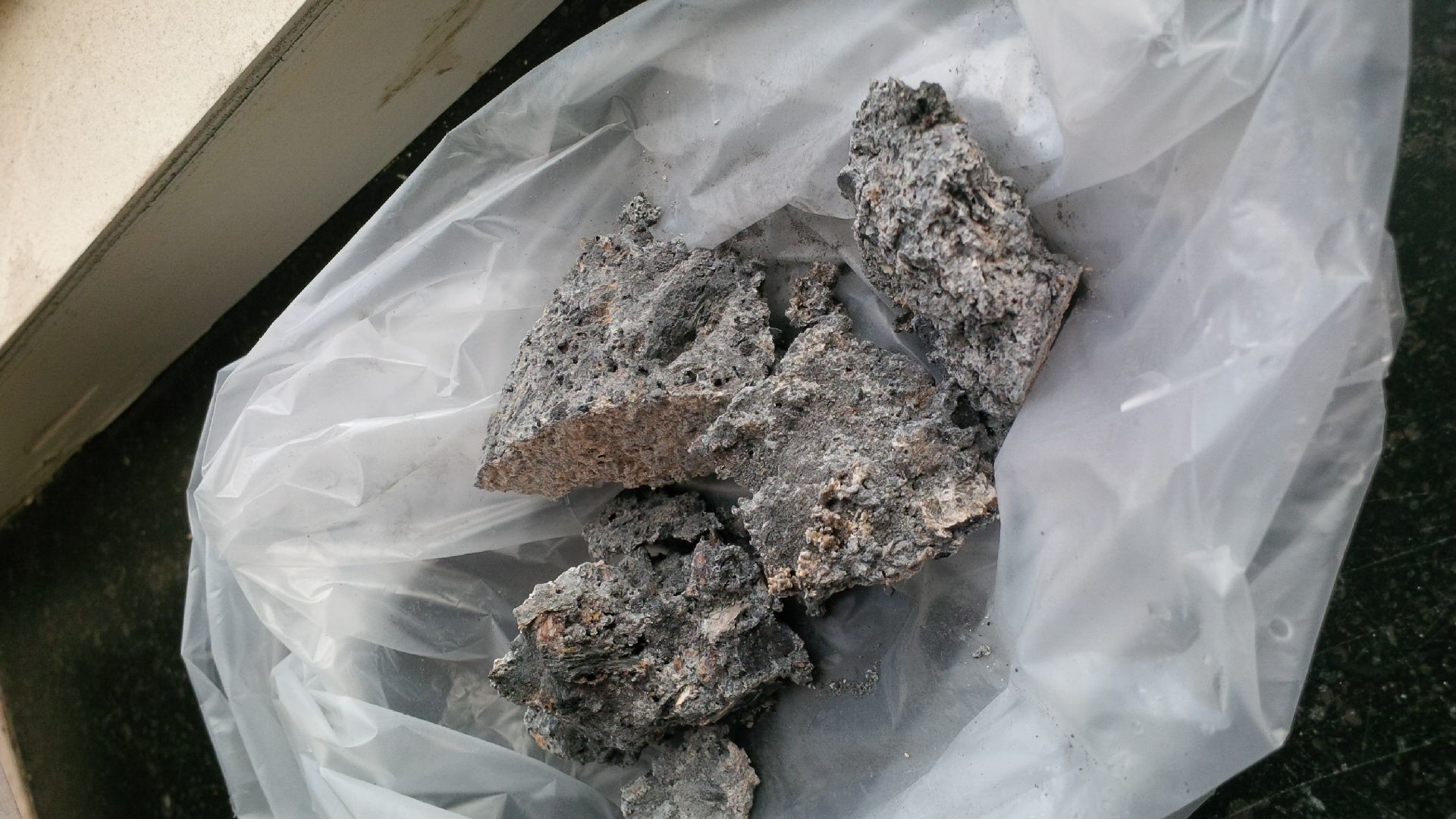
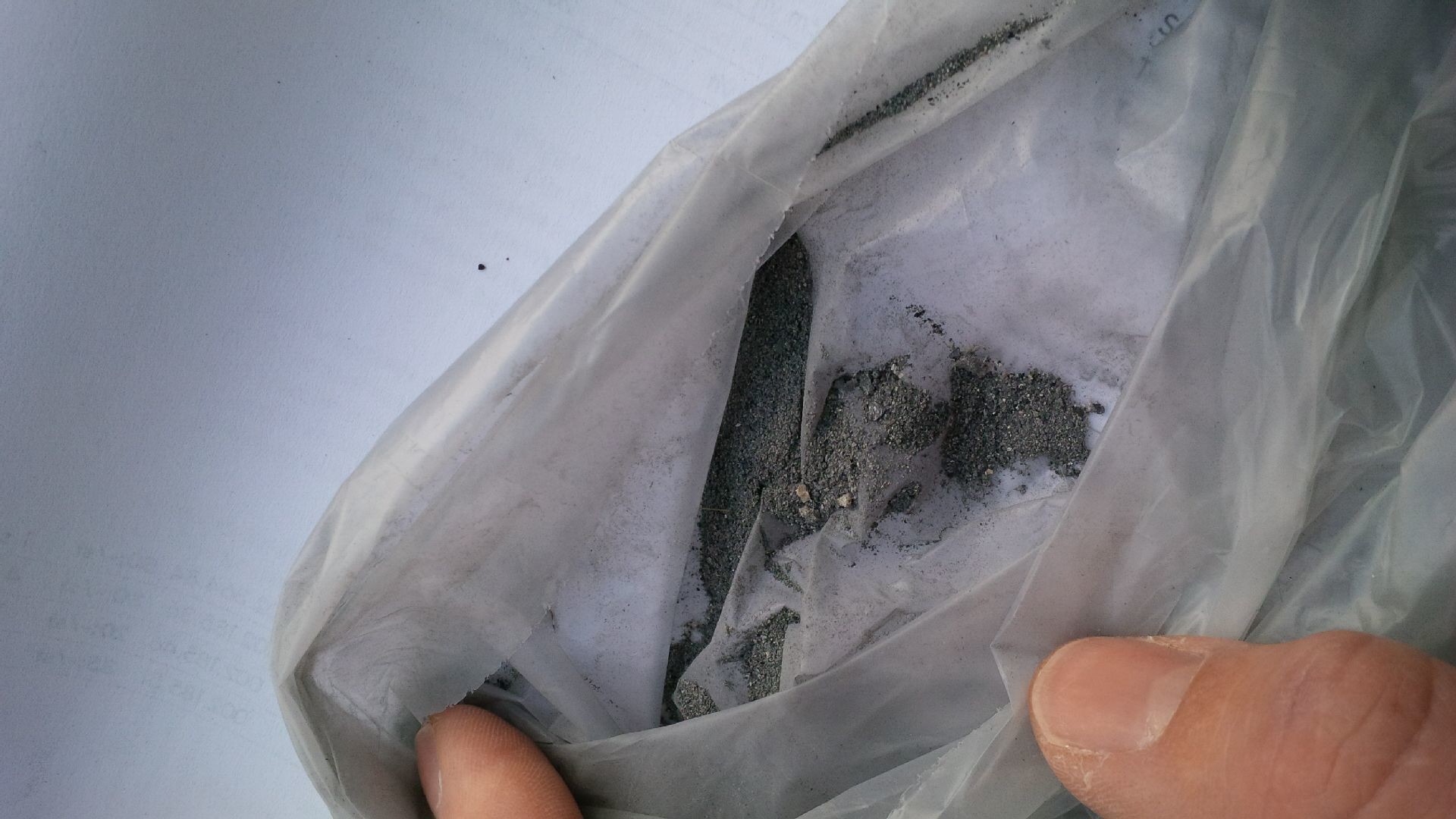
I have just drilled a socket hole in an interior wall (closet wall). Then I discovered that the drill dust was blue-black and the stone the wall is made of seems to be some form of lightweight concrete.
The wall is plastered and about 10cm thick with about 2cm of plaster before reaching the lightweight and bluish material.
This is an apartment in a building from 1937. I have read that blåbetong was used between 1929-1975 and now I wonder if someone can help me identify what my closet inner wall is made of:
It doesn't look like the blåbetong my house is built of, but there were many different variants. As SBH said, the variants I have seen have been more porous (and homogeneous in color and shape).
Why would you need to remediate just because it is blåbetong?
Blue concrete looks exactly like Siporex, the white kind, except it is blue-gray. Light, uniformly colored with pores in it, it just turns to powder if you crush it. It can be used as chalk if you want to draw a hopscotch grid on the asphalt.
It doesn't look like the blåbetong my house is made of, but there were many different variants. As SBH said, the variants I've seen have been more porous (and homogeneous in color and form).
Why would you need to decontaminate just because it's blåbetong?
Thank you, I live in a house built with blåbetong
Radon can be ventilated out. You need ventilation anyway. Currently waiting for the latest radon measurement, actually.
It sounded like TS was going to tear out the entire wall....
if one gets upset by either in their house, one might need to reconsider their risk analysis. There are plenty of things far more dangerous than both blåbetong and asbestos in our everyday life....
I (TS) don't necessarily mean that one must decontaminate, but one should be aware that there are inner walls made of blåbetong. Especially if you're going to rout and drill into it. So let's stick to material identification in this thread
It seems like the wall is built with 'slaggplatta' (thanks Rikard Gjersvold), but we'll see if more new information emerges.
You are probably thinking about asbestos with "especially if you're going to mill and drill into it". Blue concrete emits a weak radiation that is converted into radon (which is a gas). Dust from blue concrete is no worse than ordinary concrete dust, put on a face mask and vacuum afterwards and you're set...
Vi vill skicka notiser för ämnen du bevakar och händelser som berör dig.