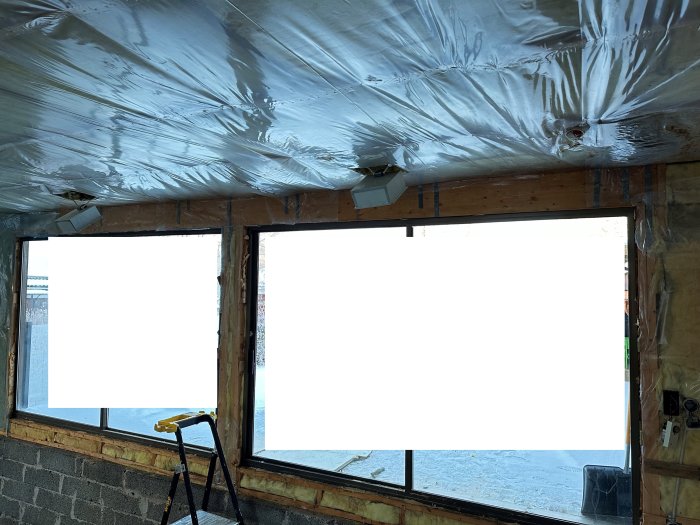
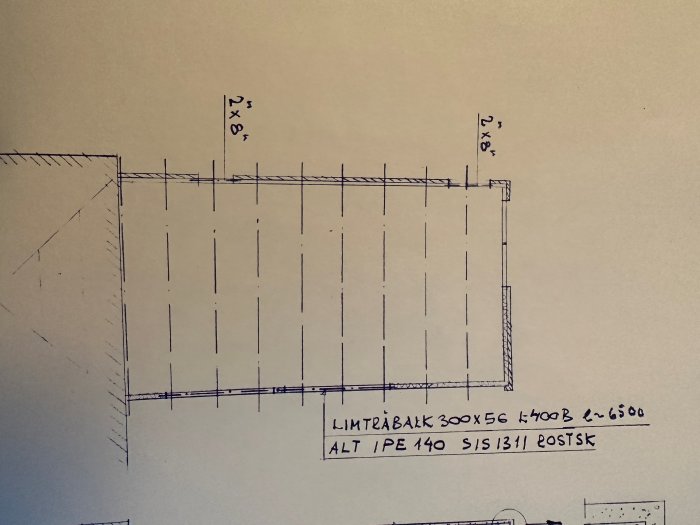
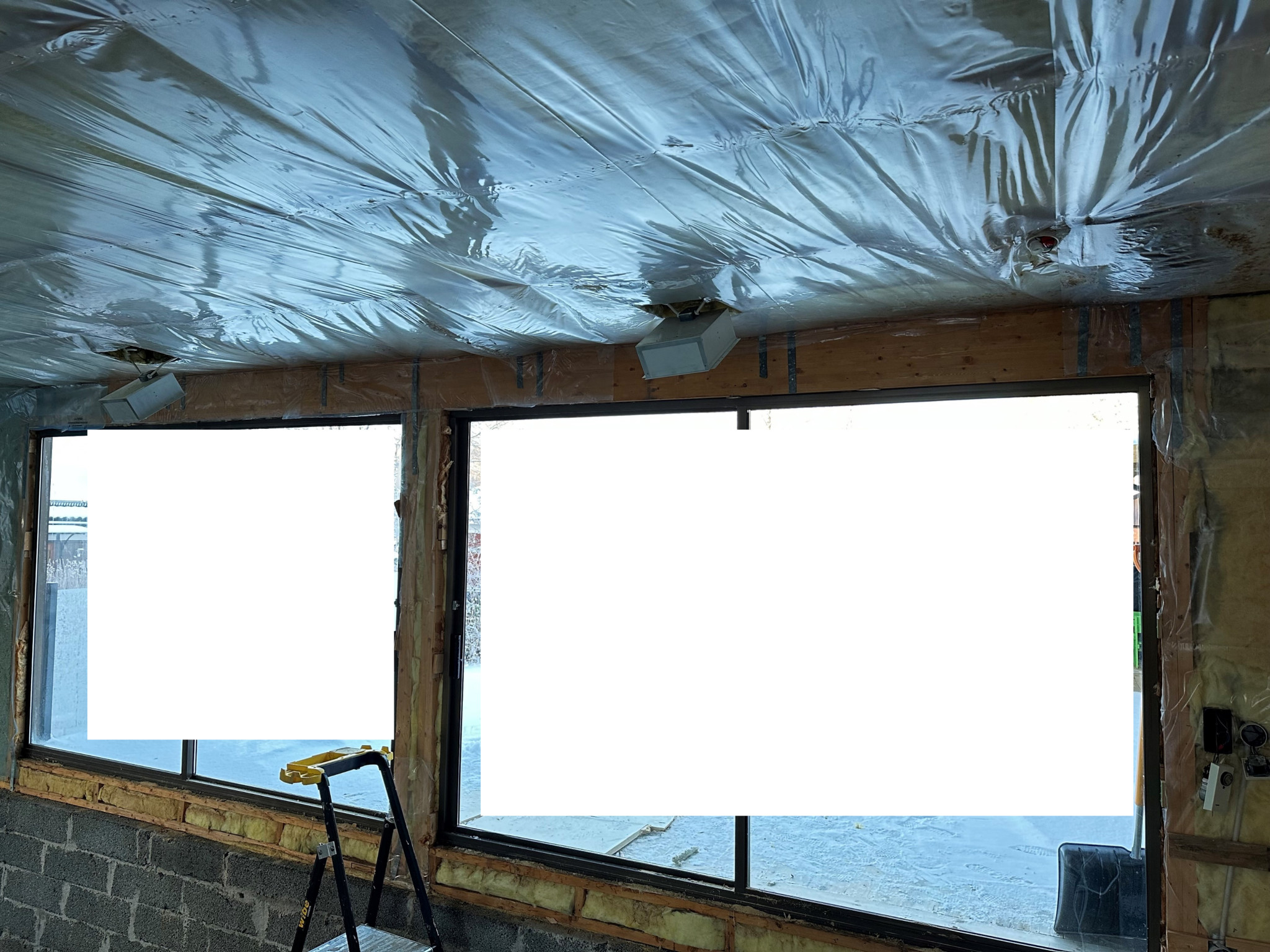
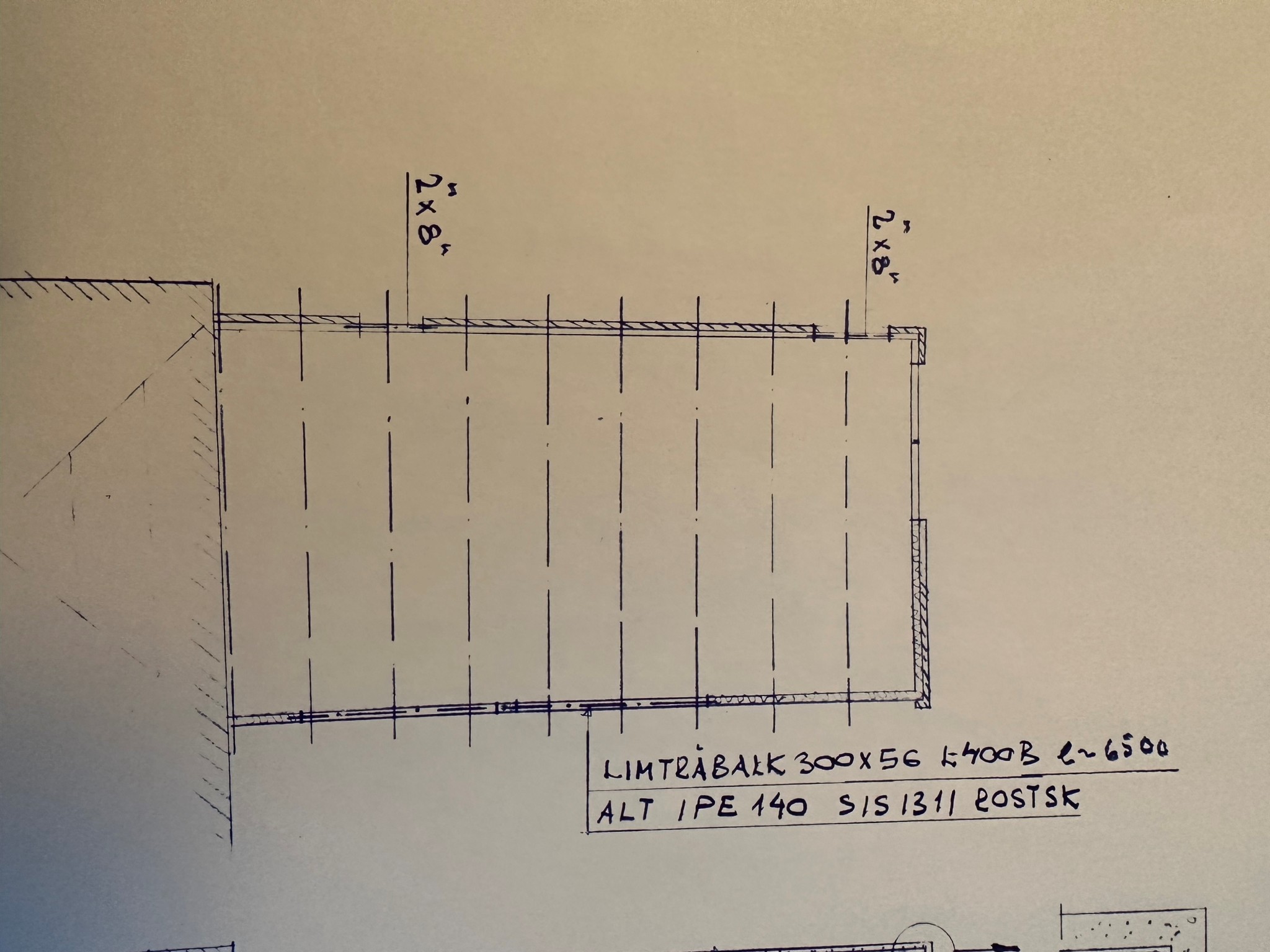
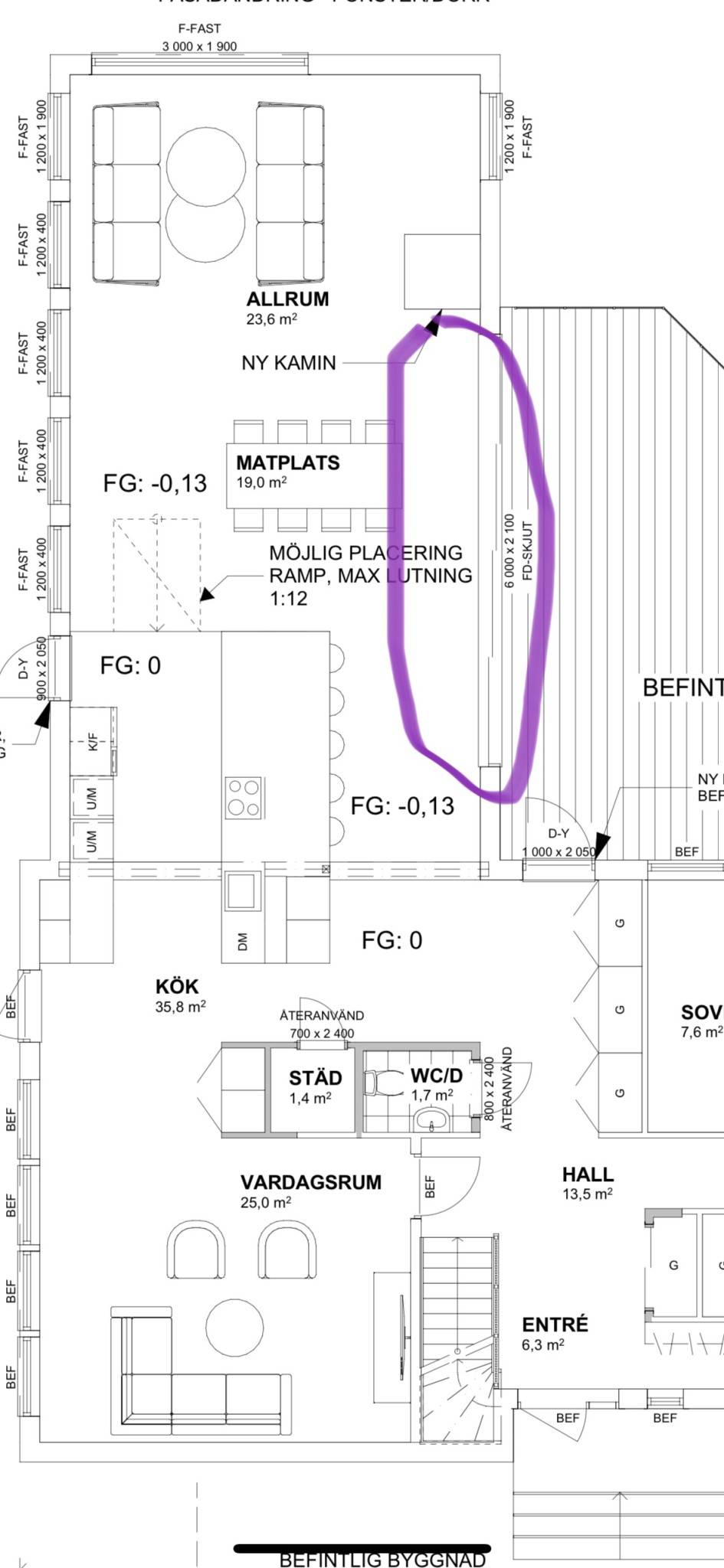
We are in the process of remodeling our home. Currently, we have two sliding sections that are 3 meters each with a post in the middle, and above both sections is a laminated beam with dimensions of 56mm*300mm and approximately 6500mm long. To better suit future needs and layout, we are interested in installing a 4-meter sliding section in the existing opening, a post, and then a fixed glass section of 2 meters. That is, we will have an opening of 4 meters - post - glass section of 2 meters, and I am doubtful that the current beam can support the 4-meter opening...
Since we will be adding 45mm of insulation on the inside, there will be some extra space. So I'm wondering if it is possible to reinforce the current beam with a stud (probably two studs on top of each other) or laminated veneer lumber with a thickness of 45mm next to the laminated beam (against the roof trusses). Does anyone have experience with such a solution? It would be nice to be able to reuse that beam that's already there... I welcome any input before I turn to a structural engineer. If reinforcement is not feasible, I would appreciate input on the dimension of the laminated beam. I think the maximum height is approximately 315mm-320mm above the sliding sections before the roof trusses come.
Below is the current design with two sliding sections and a post in the middle, as well as the laminated beam above.
Steel beam would definitely work. But in terms of labor and cost, it would be interesting to know if it's possible to reinforce with a parallel regel or kertobalk since there will be space for it.
In a sunroom I built a few years ago, with a sliding door section with a clearance of just over 4 meters, a laminated wood beam of 90x405 mm was installed to meet the requirements for allowable deflection.
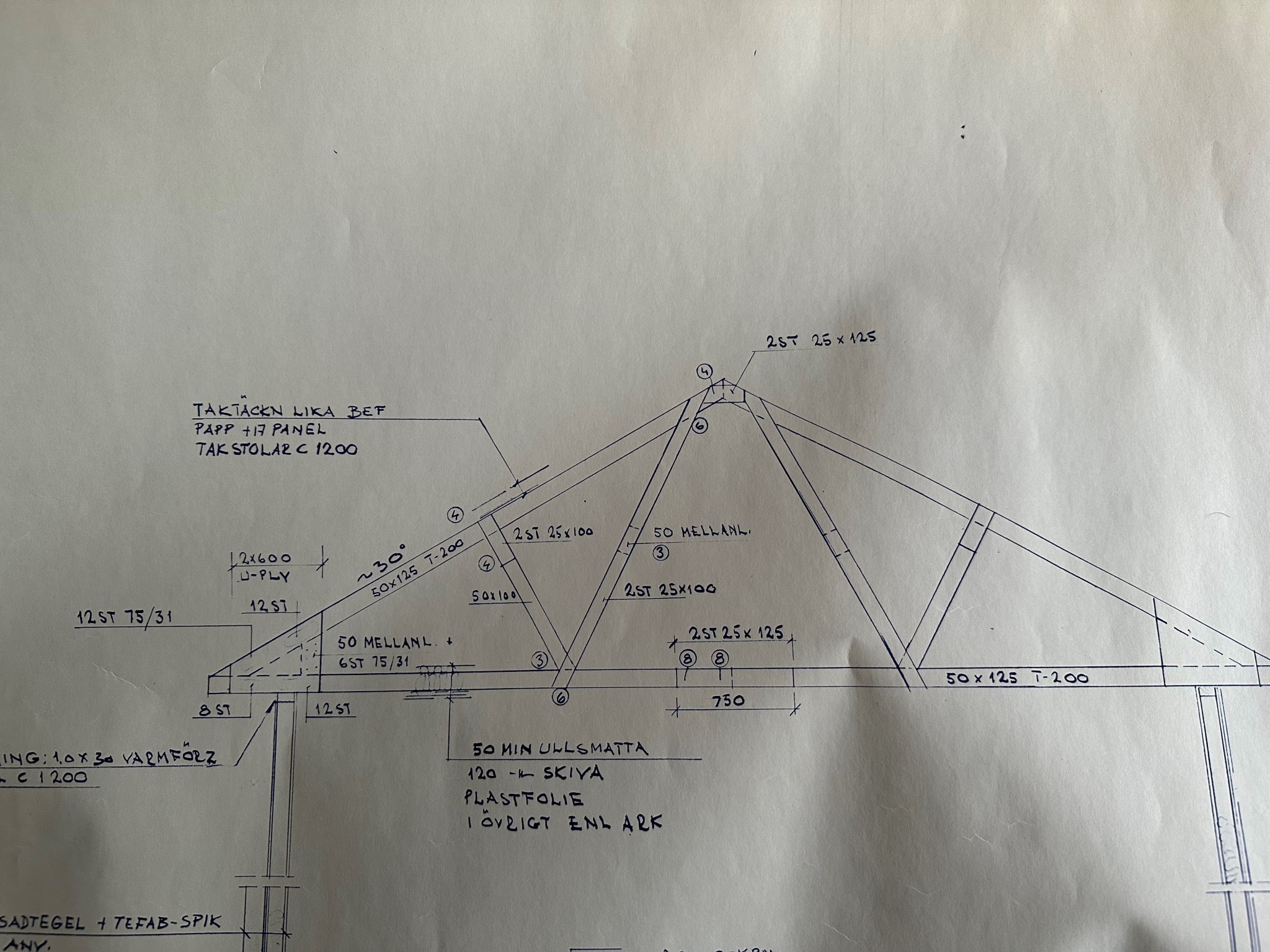
Are the current beams sized by a structural engineer? It really feels like it's the bare minimum with a 56x305. Unfortunately, steel is probably necessary if you don't want too much deflection with such a low construction height.
Are the current beams designed by an engineer? Really feels like the bare minimum with a 56x305. Unfortunately, steel is likely necessary if you don't want too much deflection with such a low construction height
It's an extension made in the late '70s. Convinced that some engineer was involved. Has held up since.
If you are going to use the existing beam, you need to add an additional LT56x270 or alternatively Kerto 45x220. The column will likely also need reinforcement. You also need to check how the foundation is constructed when moving the column.
If you're going to use the existing beam, you need to add an additional LT56x270 or Kerto 45x220. The column will likely also need to be reinforced. You also need to check how the foundation is constructed when moving the column.
Thanks for the response!
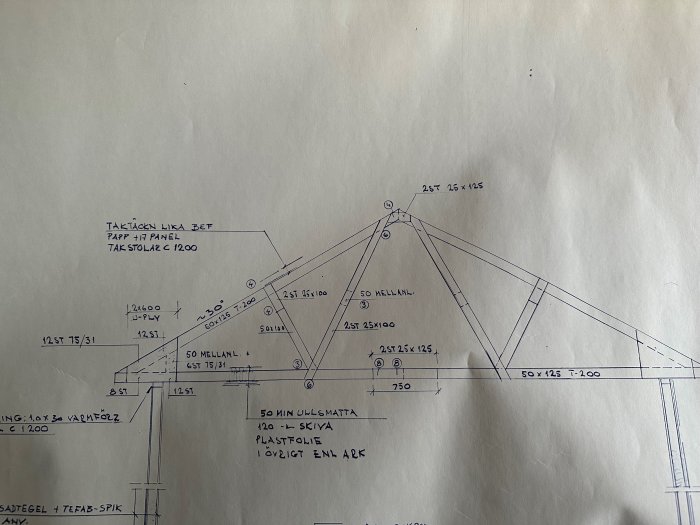
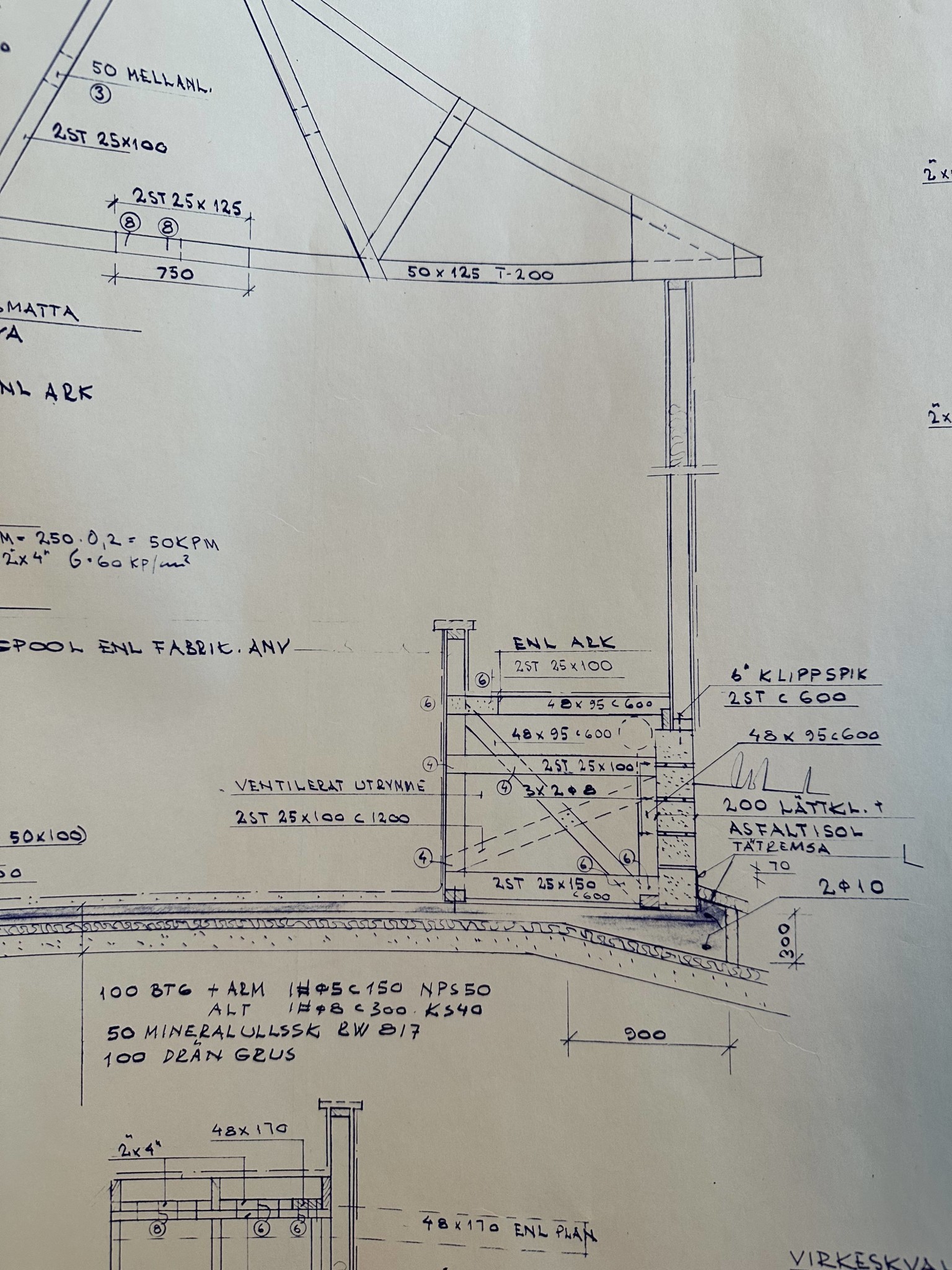
The foundation should be the same along the entire wall. Masonry at the bottom as seen in the first picture and according to the drawing in the picture below.
If we move the post, there will be a new one. Alternatively, two for each beam.
That is, a solution with a 6m sliding section and placing a post inside the section (probably all the posts for the laminated beam, but it's the middle post that bears the most load). Just like in the linked thread, the post will likely end up inside the built-up foundation wall. According to the drawing in a post above, the "sole" starts a little before the actual foundation wall (if the drawing, or rather the execution, can be trusted).
Question: Do you think the foundation needs to be reinforced to handle the load the posts are subjected to, or can the current slab/sole manage it?
As additional info, there are plans to build up a wall with lecablock inside the foundation wall, but somewhat lower, to allow the upcoming floor joists to rest on that wall. So if the post ends up inside the foundation wall (i.e., on the new wall), the load should be somewhat distributed, if that makes any difference.
Another question is whether the placement of the laminated beam against the rafters has any significance, i.e., if the laminated beam ends up slightly further into the building.
Best regards,
Henrik
Click here to reply
Vi vill skicka notiser för ämnen du bevakar och händelser som berör dig.