
Hello!
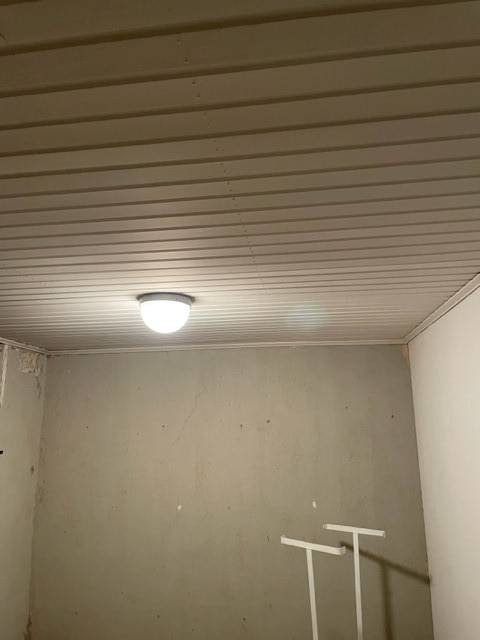
I am currently working on tearing down a room in the basement which will eventually become an office. The house was built in 1967. I have removed the textured wallpaper and the old carpet, and right now the room looks like in the pictures. How much of the old glue and wallpaper needs to be removed? Can I sand what's left and then knock the concrete to lay a layer of concrete, or how would you approach the project at its current stage? Is what I have removed from the floor enough, or do all glue residues and fuzz from the old carpet need to be removed? I haven't removed the wallpaper on the interior wall, which I suspect is gypsum; I'm thinking I can patch it up, but should that wallpaper be removed? What are our thoughts on the ceiling? Should I tear it down while I'm at it and go for something else...?
I understand that many of these questions are like "how long is a piece of string," but I'd love to get some wise opinions. Right now, I feel stuck and need some strength and inspiration...
I am currently working on tearing down a room in the basement which will eventually become an office. The house was built in 1967. I have removed the textured wallpaper and the old carpet, and right now the room looks like in the pictures. How much of the old glue and wallpaper needs to be removed? Can I sand what's left and then knock the concrete to lay a layer of concrete, or how would you approach the project at its current stage? Is what I have removed from the floor enough, or do all glue residues and fuzz from the old carpet need to be removed? I haven't removed the wallpaper on the interior wall, which I suspect is gypsum; I'm thinking I can patch it up, but should that wallpaper be removed? What are our thoughts on the ceiling? Should I tear it down while I'm at it and go for something else...?
I understand that many of these questions are like "how long is a piece of string," but I'd love to get some wise opinions. Right now, I feel stuck and need some strength and inspiration...
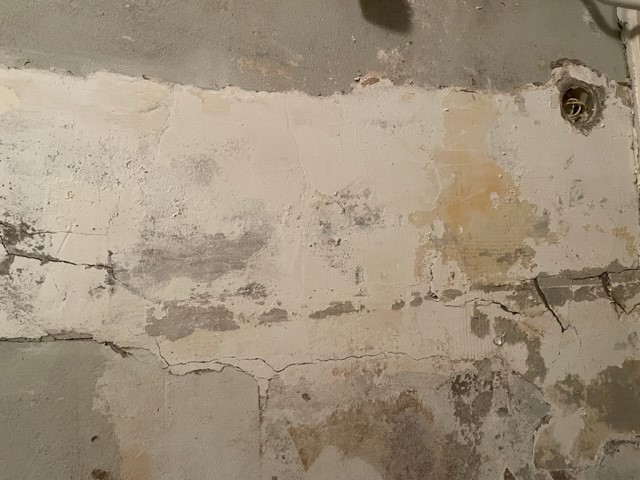
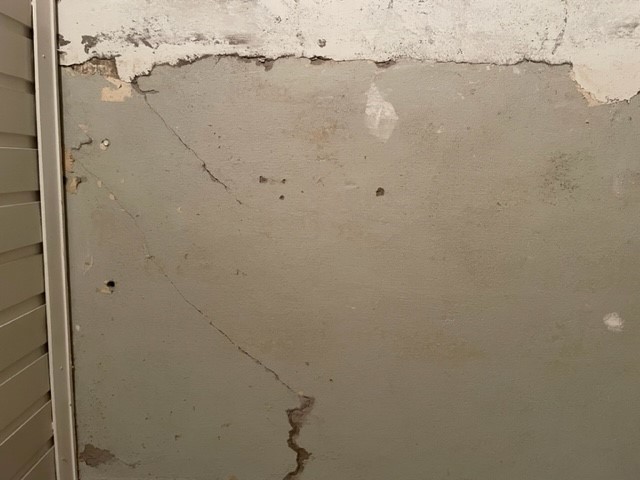
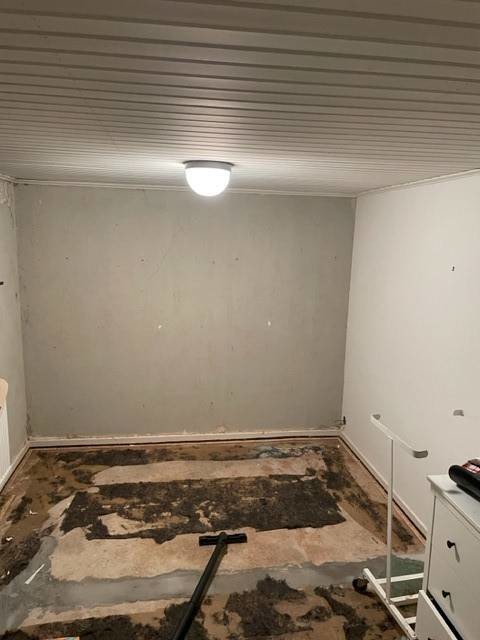
The best thing is, of course, to remove as much of the old remnants as possible (at least, that's what I think).
What type of flooring are you going to lay down?
Can't you just build up that ugly wall (steel studs) and put up drywall?
I would leave the ceiling as it is, it didn't look too bad!
What type of flooring are you going to lay down?
Can't you just build up that ugly wall (steel studs) and put up drywall?
I would leave the ceiling as it is, it didn't look too bad!
The question is when to be satisfied with removing as much as possible; there's a lot of time and little happening right now, but maybe I should go on for a few more hours.P Pickadollen said:The best thing, of course, is to remove as much of the old residues as possible (at least that's my reasoning).
What kind of flooring are you going to install?
Can't you just frame up the wall that's ugly (steel studs) and put drywall on it?
I would leave the ceiling as it is, it doesn't look too bad!
Which wall do you mean? Is it wise to do that on an exterior basement wall? Thinking about moisture. In the room next door, the floor has lifted due to moisture, so it must be something that allows a lot of moisture through while still providing a good working feel, suggestions?

I meant the wall that is peeling - hard to understand if it's the outer wall. The other walls, if they are not too bad, you can leave them as they are (with minor repairs where needed).M MrCtoyouson said:Yes, the question is when to be satisfied with removing as much as possible, it’s a lot of time and little is happening right now, but maybe I should push on for a few more hours.
Which wall do you mean? Is it wise to do that on an outer wall in a basement? Thinking about moisture. In the room next to it, the floor has buckled due to moisture, so it must be something that lets through a lot of moisture while still giving a good working feel, any suggestions?
Hence non-organic materials (because of moisture); steel studs and drywall. Using wood battens on an outer wall is asking for trouble.
You can (should?) leave some space at the floor and ceiling for a bit of ventilation.
You can also do it very seriously and cover the walls and floor with Platonmatta for ventilation. Then you can lay particle board on the Platonmatta and then a click flooring on top of that (or carpet - it will be a bit warmer and dampen sound better).
Now you've given me new things to think about,P Pickadollen said:I meant the wall with releases - hard to understand if it's the exterior wall. The other walls, if they are not too bad, you can leave as they are (with minor repairs where needed).
Therefore, non-organic materials (due to moisture); steel studs and gypsum. Using wood studs on an exterior wall is to create problems.
You can (should?) leave a space at the floor and ceiling to get some ventilation.
You can do it very seriously as well and cover the walls and floor with platonmatta too - to get ventilation. Then you can lay chipboard on the platonmatta and then click flooring on top of that (or carpet - it will be a bit warmer and dampen sound better)
Interesting, I'll read up on platonmatta, what makes it more serious? Work time, cost or something else?P Pickadollen said:I meant the wall with releases - hard to understand if it's the exterior wall. The other walls, if they are not too bad, you can leave as they are (with minor repairs where needed).
Therefore, non-organic materials (due to moisture); steel studs and gypsum. Using wood studs on an exterior wall is to create problems.
You can (should?) leave a space at the floor and ceiling to get some ventilation.
You can do it very seriously as well and cover the walls and floor with platonmatta too - to get ventilation. Then you can lay chipboard on the platonmatta and then click flooring on top of that (or carpet - it will be a bit warmer and dampen sound better)
There are better descriptions here than I can manage to write in text
https://www.japeventgolv.se/japeven...MIy9KGkc-f-wIVXQCiAx1L4ggpEAMYASAAEgLM0_D_BwE
https://www.japeventgolv.se/japeven...MIy9KGkc-f-wIVXQCiAx1L4ggpEAMYASAAEgLM0_D_BwE

Isn't there a risk of asbestos in the glue on the floor? If it's from '67, it's before they stopped using it in building materials.
I'm in the same situation as you, except in my basement, a pantry and a laundry room will become two bedrooms!
I'm in the same situation as you, except in my basement, a pantry and a laundry room will become two bedrooms!

There are breathable wall-to-wall carpets intended for basements that can be laid directly on the concrete floor. Needle felt is a classic, but apparently, there are also more "regular" wall-to-wall carpets nowadays. If it's going to be an office, however, needle felt can be good so that the office chair can rollM MrCtoyouson said:
I have had to lay floor protection even on needle felt for it to roll well. Fortunately, we don't have much moisture under there, otherwise, it could get really "cozy" under the floor protection, which doesn't let through moisture. In our previous house, we actually had untreated wood paneling on the basement walls. It was studded out and even had some insulation behind. It was installed by the previous owner and I don't know how they did it, but there was no mold and the wood evened out the climate in the basement really well. Half the basement looked like a sauna, and all inspectors called it a risk construction that must be removed immediately, but we lived with it for fifteen years, and the previous owner had it even longer, so it couldn't have been that bad
Click here to reply