
4,660 views ·
22 replies
5k views
22 replies
Load-bearing wall? Shed roof

Hello!
We have a wall between the hallway and living room that we've heard has been taken down in other "identical" houses in the neighborhood. However, I thought I'd seek advice, as I'd rather ask too many questions than too few.
The construction year is 1967, and it's a two-story villa with a basement level with two transverse concrete walls and concrete slab floors. The wall that's free-hanging is marked in red.
My guess is that it's not load-bearing since the span is about 10 meters, which should be covered by a trussed roof, an assumption; there are no visible beams and no access to the "attic," and the wall does not continue into the bedroom.
Apologies for the quality of the drawing from the city planning office.
We have a wall between the hallway and living room that we've heard has been taken down in other "identical" houses in the neighborhood. However, I thought I'd seek advice, as I'd rather ask too many questions than too few.
The construction year is 1967, and it's a two-story villa with a basement level with two transverse concrete walls and concrete slab floors. The wall that's free-hanging is marked in red.
My guess is that it's not load-bearing since the span is about 10 meters, which should be covered by a trussed roof, an assumption; there are no visible beams and no access to the "attic," and the wall does not continue into the bedroom.
Apologies for the quality of the drawing from the city planning office.

Hello and welcome to the Byggahus forum!
There is much to suggest that the wall was not originally load-bearing. The roof solution with a flat shed roof essentially requires a truss rafter. Nor is this wall present in the adjoining bedroom. The only uncertainty concerns the fact that the snow loads (for obvious reasons) in most areas have been significantly increased since 1967. I would feel more comfortable if I knew the dimensions of the truss.
There is much to suggest that the wall was not originally load-bearing. The roof solution with a flat shed roof essentially requires a truss rafter. Nor is this wall present in the adjoining bedroom. The only uncertainty concerns the fact that the snow loads (for obvious reasons) in most areas have been significantly increased since 1967. I would feel more comfortable if I knew the dimensions of the truss.
Thank you so much! The house is in Enskede, I assume it hasn't been spared from the increase?J justusandersson said:Hello and welcome to the Byggahus forum!
Many indicators suggest that the wall was not originally load-bearing. The roof solution with a flat shed roof essentially requires a truss. In the adjacent bedroom, this wall is also not present. The only uncertainty concerns the fact that snow loads (for obvious reasons) in most areas have been significantly raised since 1967. I would feel more comfortable if I knew the dimensions of the truss.
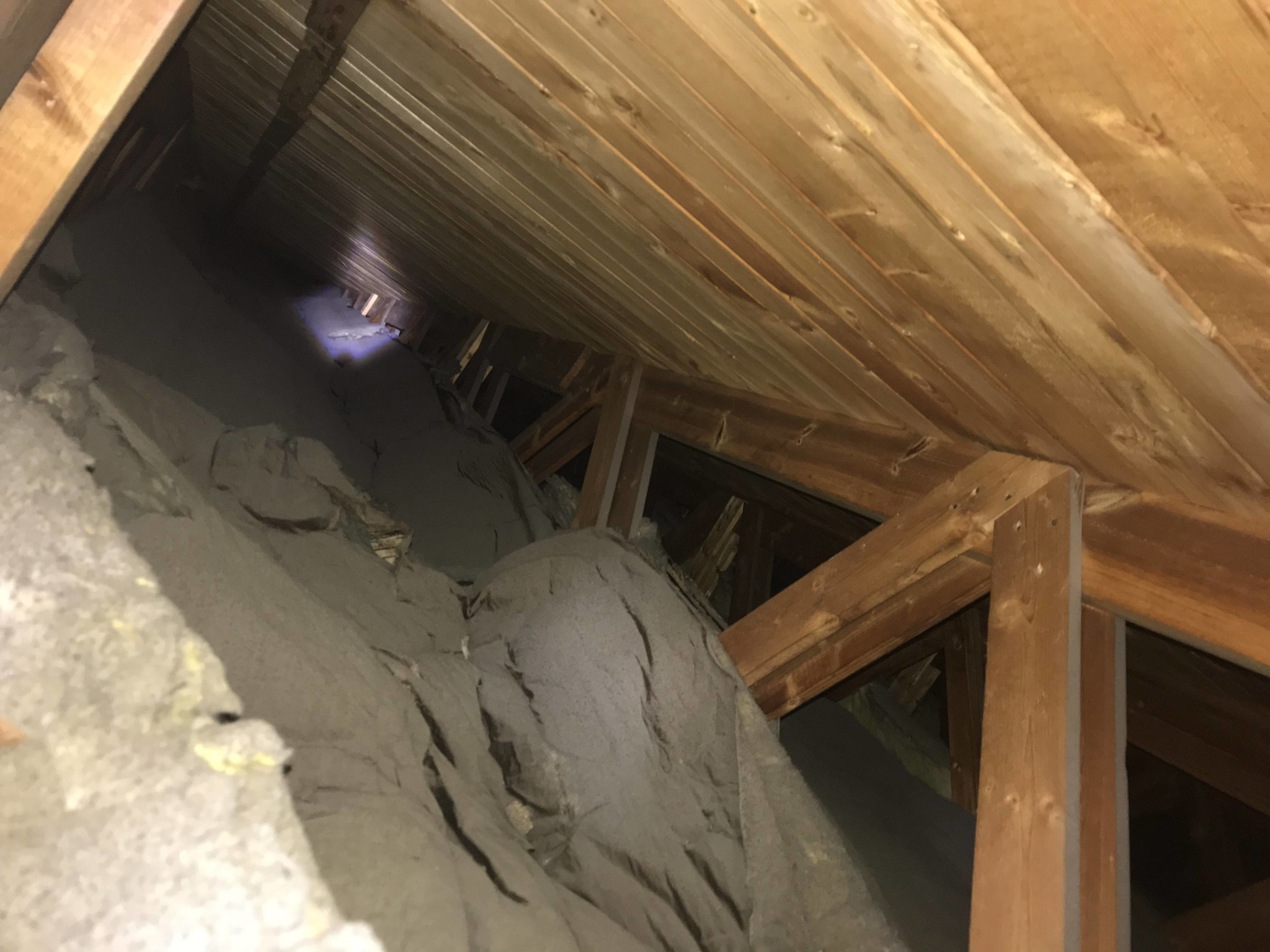
I found some more information and better drawings, but unfortunately no construction details about the truss. I do know, however, that there’s someone on the street who has made an opening for loose-fill insulation and might offer a look.
There seems to have been some hesitation about whether there should be load-bearing posts or not in the wall.

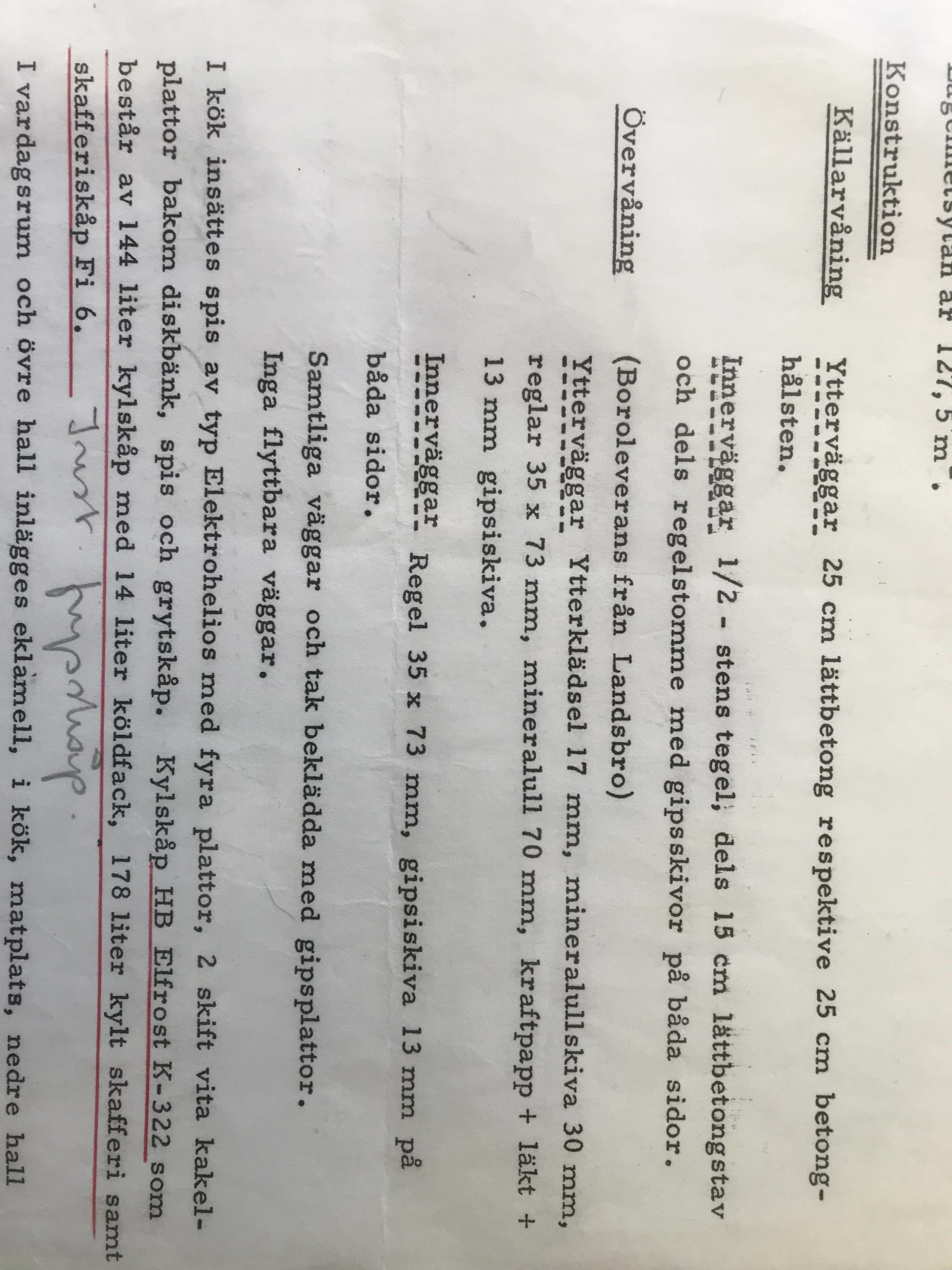
It's clear that no partition walls were originally intended to be load-bearing. However, the roof solution has less margin compared to those in older houses. I think there are three courses of action: 1) Try to get a look at the neighbor's. Measure the dimensions of the involved parts (there are probably three different types) and feel free to take some photos. 2) Install a laminated beam instead of the wall. 3) Take a chance and remove the wall. It's good to know that today, the snow load in the Stockholm area is calculated to be twice as high as in 1967.
Thank you very much, by next weekend I'll try to check off most of the list there. I'm planning to insulate with loose fill over time and am also considering a VTX, so I will need to open up a hatch. I'll try to find a neighbor with a hatch that I can take a look at, and I'll take the opportunity to take photos both there and at home when the hatch is open. I'll get back to you as soon as I have more information.J justusandersson said:Clearly, no interior walls were intended to be load-bearing from the start. However, the roof solution has weaker margins compared to those in older houses. I think there are three courses of action: 1) Try to get a look at the neighbor's place. Measure the dimensions of the components (there are probably three different types) and feel free to take some photos. 2) Install a glulam beam instead of the wall. 3) Take a chance and remove the wall. It's good to know that today, we calculate with twice as much snow load in the Stockholm area as in 1967.
The supports are 95x22, double. 115x45 on the bearing beam. CC 1100 between the trusses we measured.J justusandersson said:It's clear that no partition walls were originally intended to be load-bearing. However, the roof solution has less margin compared to those in older houses. I think there are three courses of action: 1) Try to get a look at the neighbor's place. Measure the dimensions of the components involved (there are probably three different types) and feel free to take some photos. 2) Install a glulam beam instead of the wall. 3) Take a chance and remove the wall. It's worth knowing that today it's estimated that the snow load in the Stockholm area is twice as high as in 1967.
It seems to be quite well dimensioned. There is currently a layer of felt on the roof.
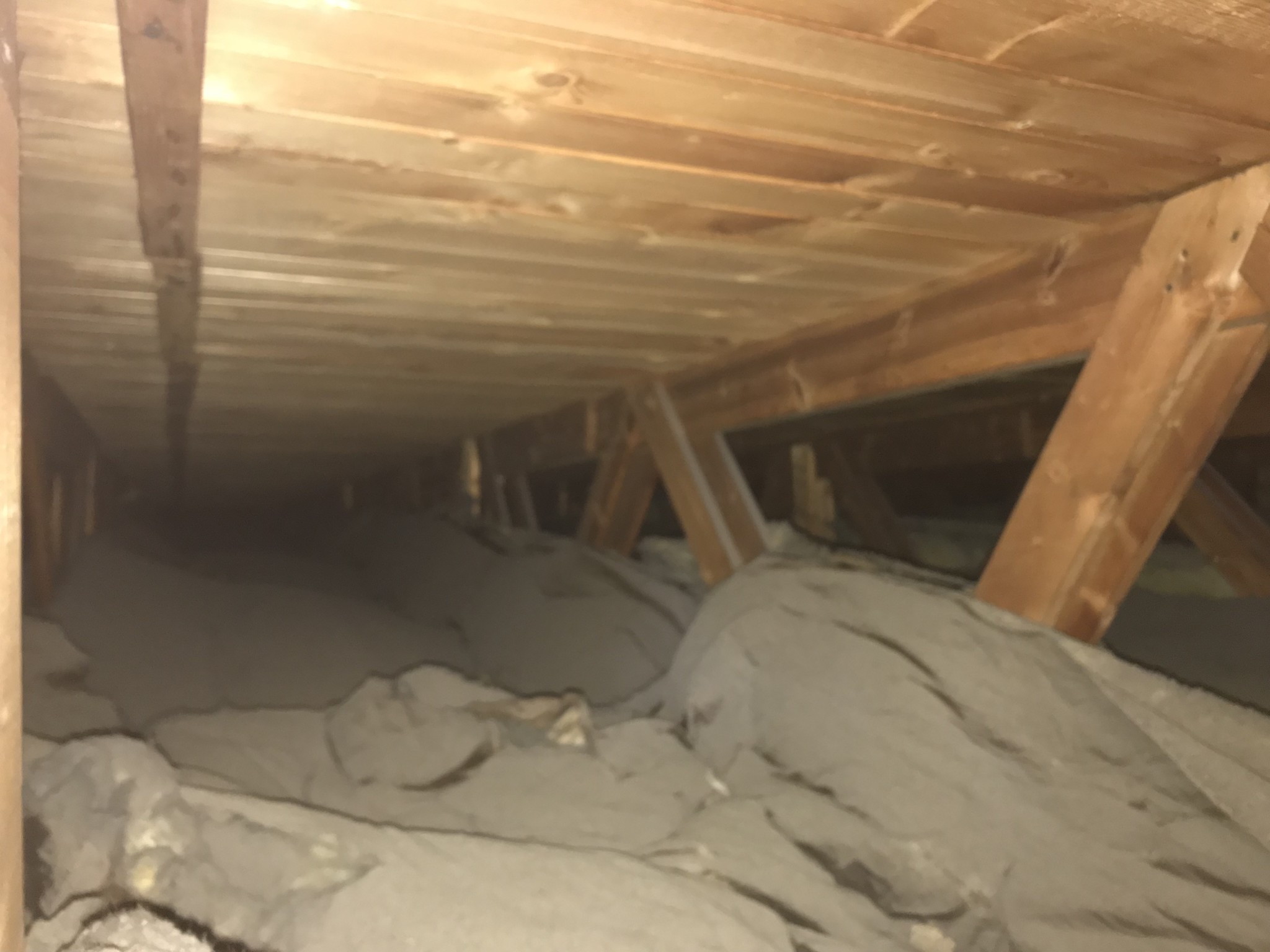

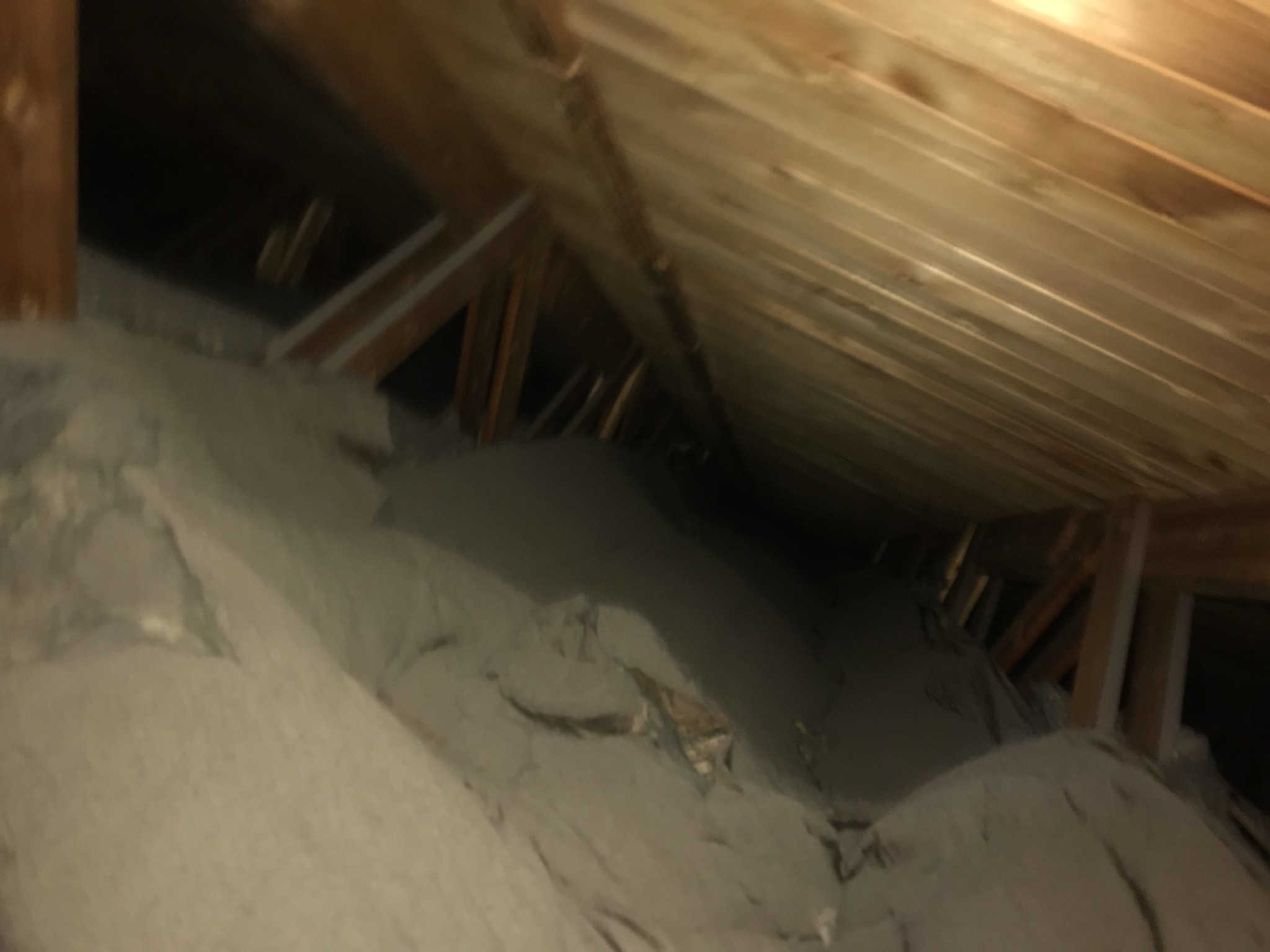
Impressive timber quality, especially in the upper frame. Long stretches of heart pine. Well built, but not obviously oversized. Difficult to give good advice. Personally, I think it will hold, but the test moment occurs during a snow-rich winter, usually on New Year's Day... Considering that the snow load requirements were set so low when the house was built, it would feel good to have insurance with a glulam beam.
Thank you so much for the quick response, my house-building friend from the north brought the Festool stack and wants something to saw now, so the timing was perfectJ justusandersson said:Impressive timber quality, especially in the upper frame. Core pine over long distances. Well-built but not obviously over-engineered. It's hard to give a good piece of advice. Personally, I believe it will hold, but the test moment occurs during a snow-rich winter, usually on New Year's Day... Considering that the snow load requirements were set so low when the house was built, it would feel good to have an insurance with a glued laminated timber beam.

1. The bedroom, as per the drawing, has no support, and the roof has held since '67. Thought experiment; if it hasn't collapsed, then theoretically the other trusses should also hold, as the trusses don't significantly relieve each other, do they?
2. In picture 2, it looks like there are vertical pillars going down, they would then support on the "other" transverse wall, but that is not relieved either between bedroom 1 & 2 (The pictures are taken from the balcony in the northern part of the drawing, overlooking the living room. Should the trusses then be considered as two spans?
3. If, as you say, you want to insure with a glued laminated timber beam, how dangerous are we talking in terms of dimensions?
I direct his attention to the decking for a short moment.
Robin
There is no risk of collapse anywhere. We are talking about a potentially extra large deflection. Have you checked the heights between the floor and ceiling in the bedroom? It's easy to do with a laser meter. Take two measurement series across the room parallel to the rafters.
An extra glulam beam should compensate for the increase in snow load requirements. I need the length of the opening (I can't find it in the previous material) to calculate a suitable dimension.
There are no problems with tearing down now, as it is snow-free!
An extra glulam beam should compensate for the increase in snow load requirements. I need the length of the opening (I can't find it in the previous material) to calculate a suitable dimension.
There are no problems with tearing down now, as it is snow-free!
Took two more. There is a vertical beam on what I assess to be the first and second transverse wall, seen from the north. Unfortunately, I can't see "around the corner" to how it looks above the bedrooms.
Three measurement points bedroom from wall to door, across the rafters
2379mm
2369mm
2389mm
Parallel, x 4
2380mm
2373mm
2384mm
2380mm
Four points from bedroom door to facade on the east of the design, through the hall.
2392mm
2376mm
2374mm
2379mm
Opening length
5275mm
Three measurement points bedroom from wall to door, across the rafters
2379mm
2369mm
2389mm
Parallel, x 4
2380mm
2373mm
2384mm
2380mm
Four points from bedroom door to facade on the east of the design, through the hall.
2392mm
2376mm
2374mm
2379mm
Opening length
5275mm
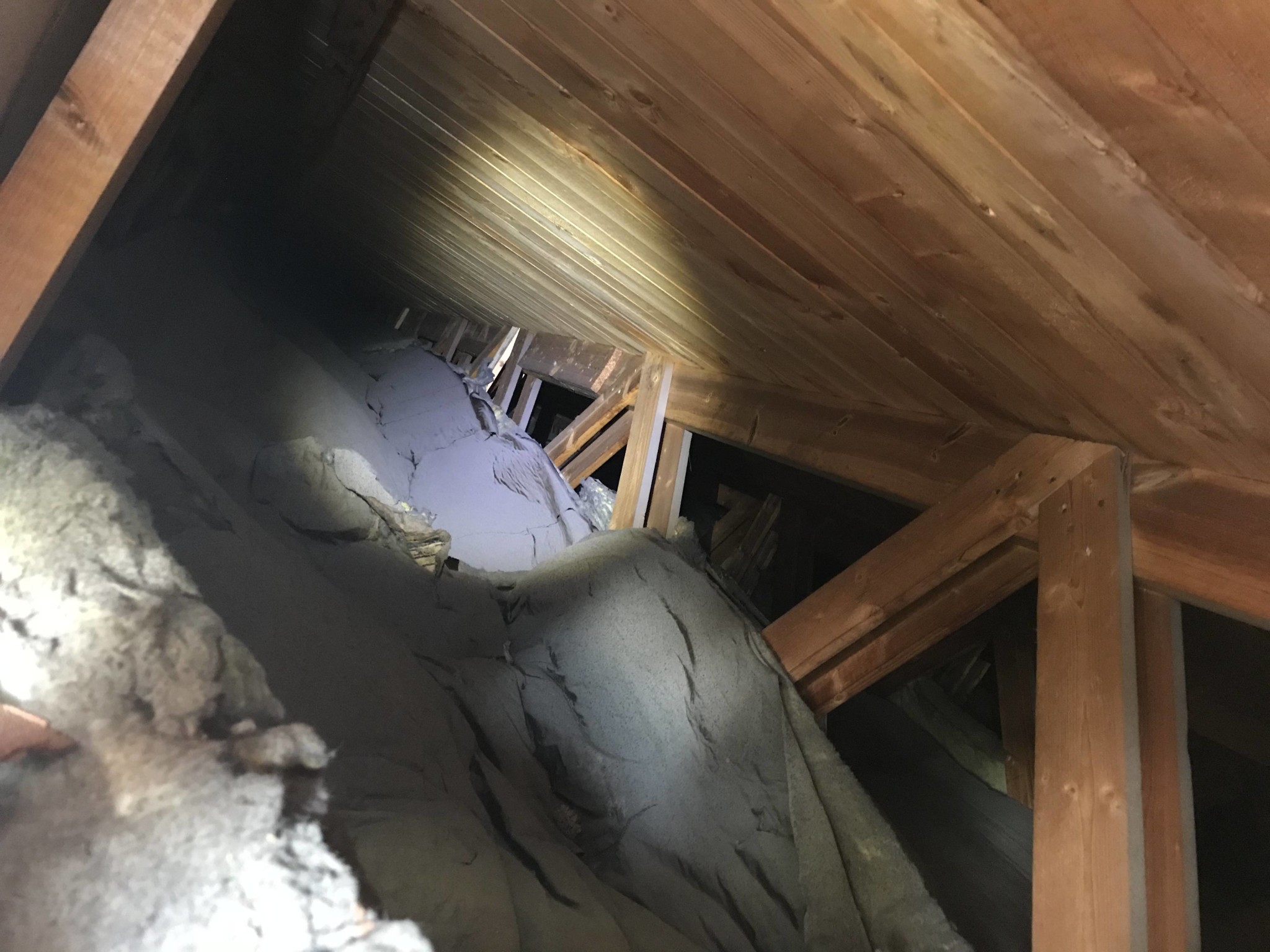
An appropriate dimension for a glulam beam is 90x360 mm. If you increase the width, you can decrease the height.
The variations in room height are relatively large considering there is no load to speak of at the moment. They should be considered permanent deformations. A bit too large to be typical construction negligence.
It's likely that there may be columns built into the walls. However, it's not worth the cost of tearing down the house to determine their existence...
The variations in room height are relatively large considering there is no load to speak of at the moment. They should be considered permanent deformations. A bit too large to be typical construction negligence.
It's likely that there may be columns built into the walls. However, it's not worth the cost of tearing down the house to determine their existence...
I the haste, I forgot that there is an additional partition wall in the current section. Therefore, I would like to change the dimension of a potential glulam beam to 90x315. I apologize sincerely.
Thank you, Justus! After much consideration, we've decided to take the safer approach and install a beam. Now we just need to think about how much of the wall we want to take down and if we want a post, to be able to choose a lower beam. So we will push the project forward a bit. We will also try to take a look at a neighbor's place where we know they've taken down the wall; we've heard they have a post but nothing about a beam :/J justusandersson said:
Is it feasible to attach two beams side by side using nail plates over a post? Easier to carry in.
Robin
It is of course fine to have a beam joint over a post. If it is a visible joint, you should not use metal straps, as it is not aesthetically pleasing. In such a case, the best option is a T-shaped metal bracket that simultaneously holds the beam ends to the post. This requires you to go to a blacksmith or mechanical workshop, but it will be much more attractive and durable.
I forgot to point out that if you place a pillar in the middle under the beam/beams, you can reduce the dimension to 90x180 mm.