
591 views ·
3 replies
591 views
3 replies
Avoid problems with double vapor barrier on exterior wall
Hello,
We live in a one-story house with a cold attic that was initially built as a summer house.
The insulation in the walls is 100mm, and in the attic, it's about 150mm.
We are currently in the middle of a renovation where we are putting up new drywall on the walls and will also be removing and installing paneling on the ceiling.
In connection with this, my thought was to install a new vapor barrier throughout the ceiling and walls.
Eventually, we also plan to add exterior insulation to the walls.
The problem is that there is already a vapor barrier/plastic behind the interior wood paneling on parts of the exterior walls.
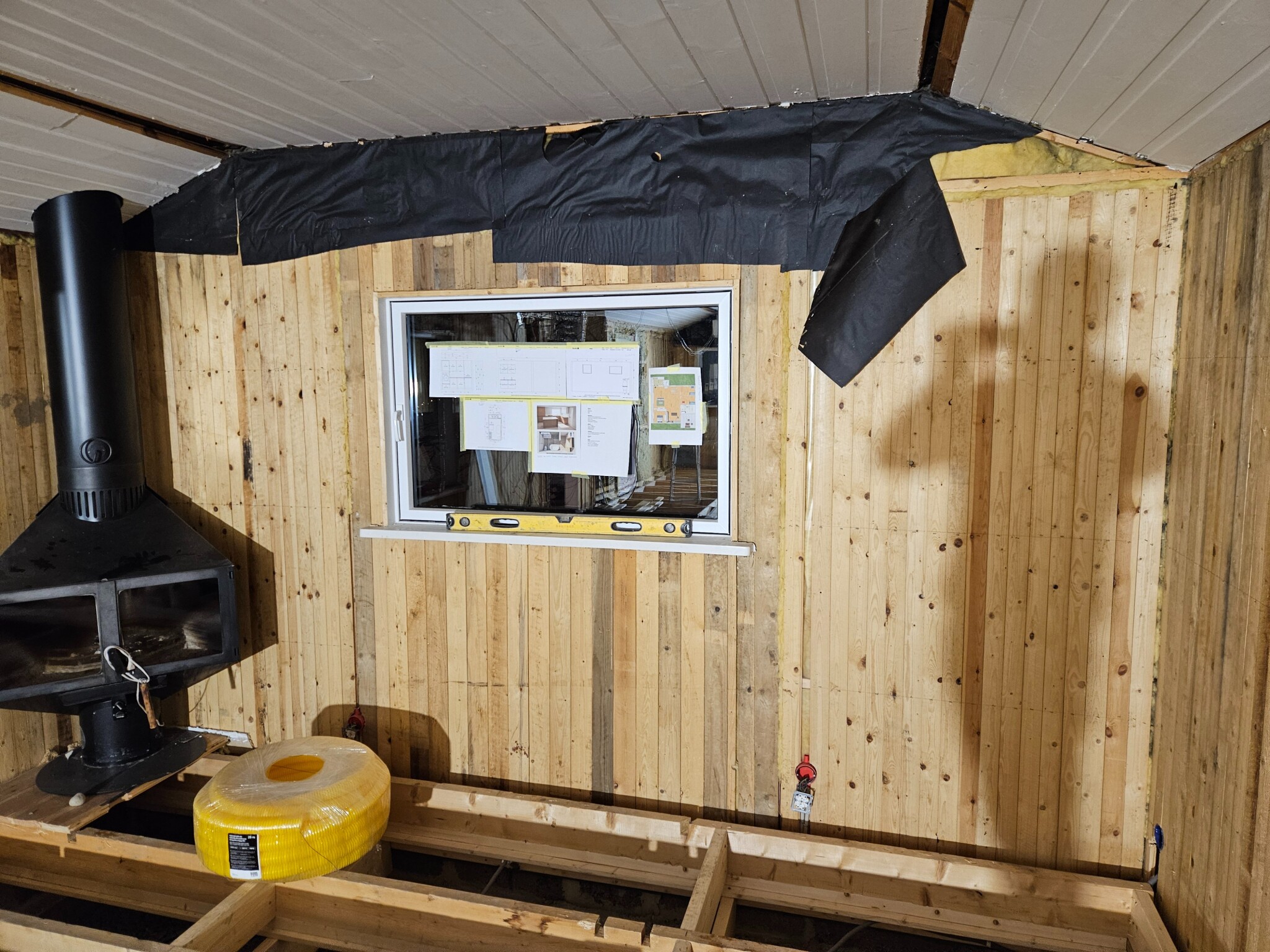
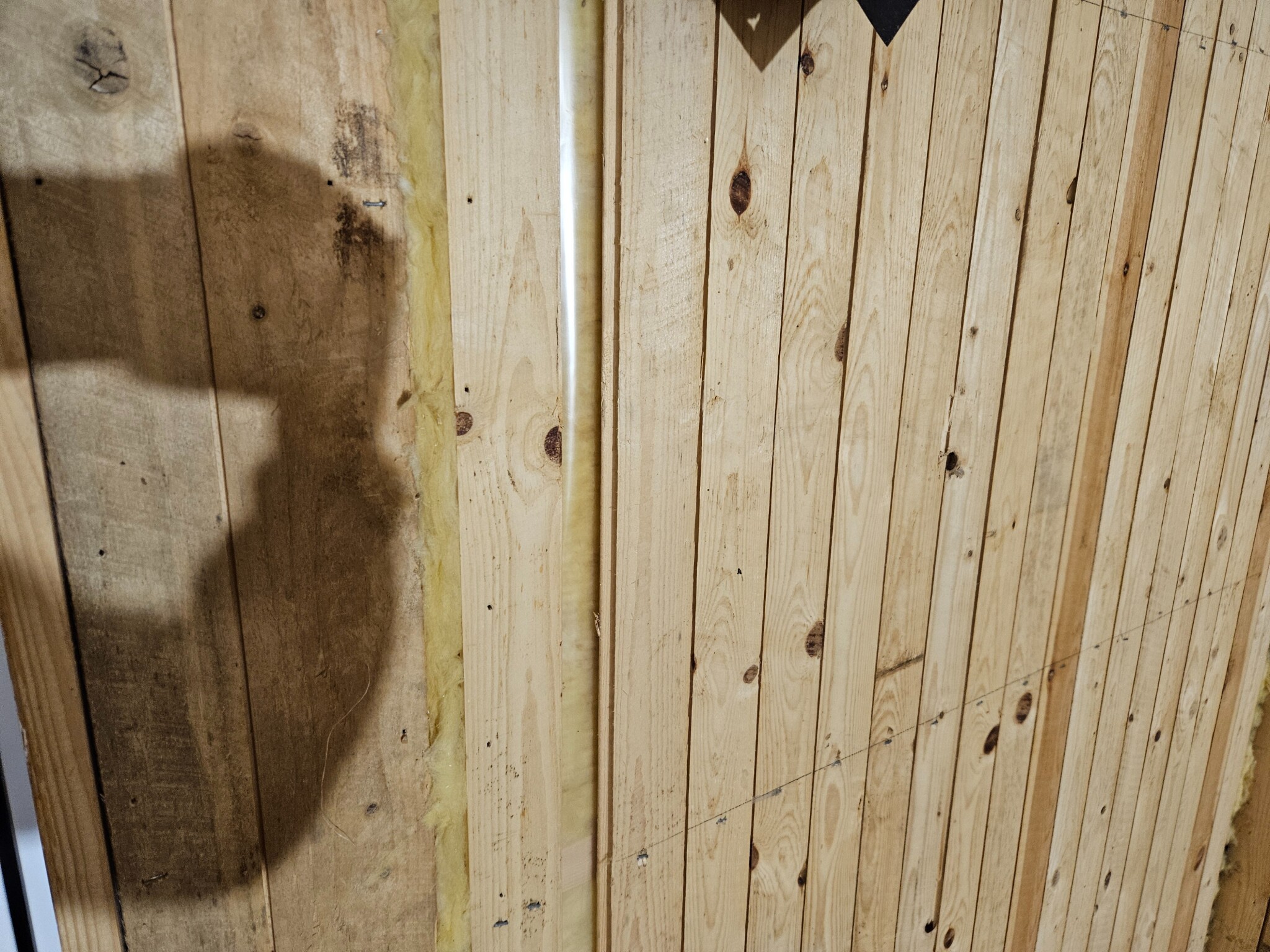
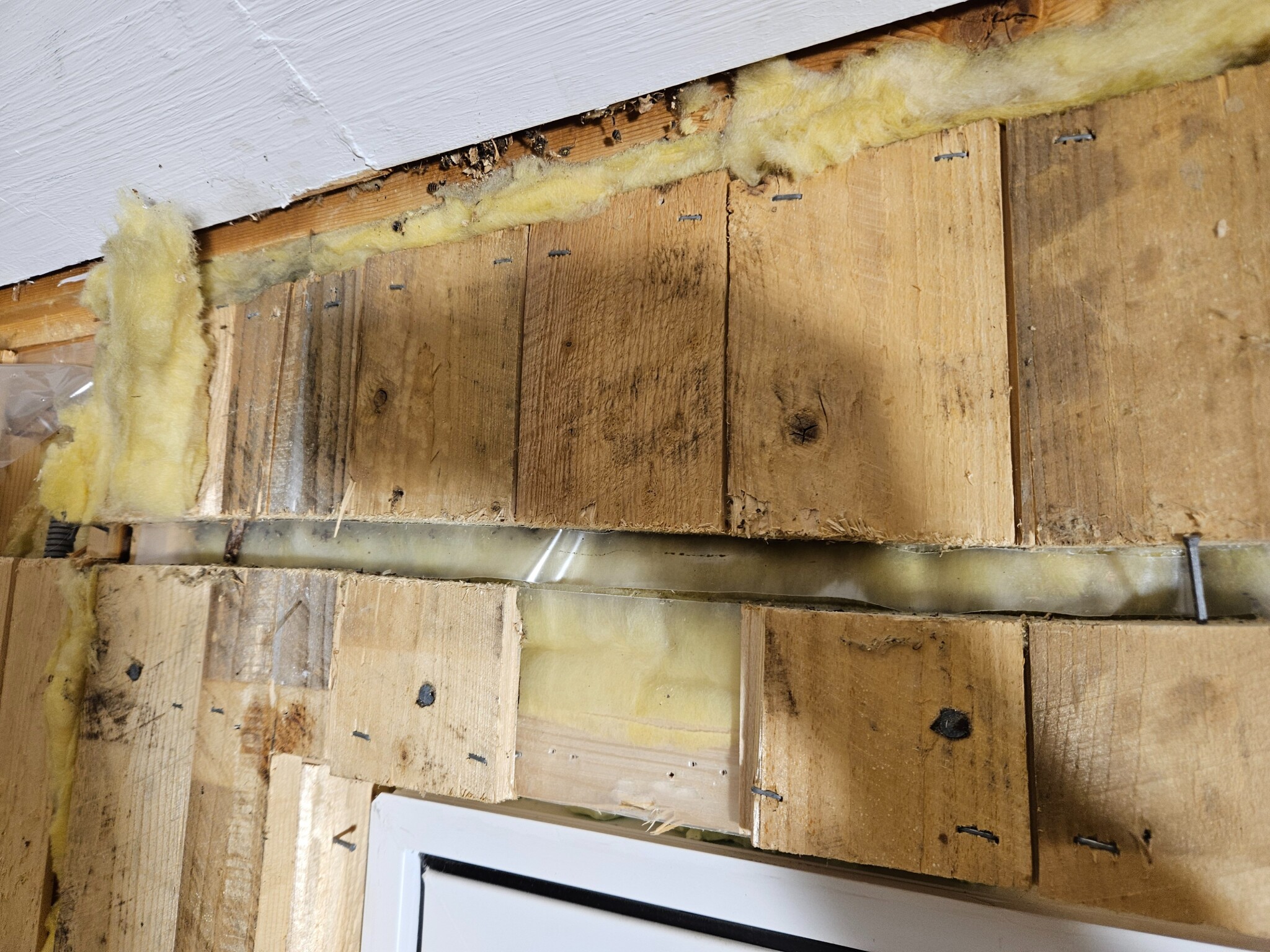
My spontaneous thought was to cut holes in the old plastic in several places to avoid the risk of trapping any moisture between the two layers of plastic. The plastic is already damaged and perforated in several places and does not extend all the way up to the ceiling (see picture). After that, the new plastic would be installed directly against the wood paneling and ceiling before the drywall goes up. Do you think this is a sensible solution, or do you see any major risks?
I would preferably avoid taking down the wood paneling on the wall unless absolutely necessary.
Best regards,
Gustav
We live in a one-story house with a cold attic that was initially built as a summer house.
The insulation in the walls is 100mm, and in the attic, it's about 150mm.
We are currently in the middle of a renovation where we are putting up new drywall on the walls and will also be removing and installing paneling on the ceiling.
In connection with this, my thought was to install a new vapor barrier throughout the ceiling and walls.
Eventually, we also plan to add exterior insulation to the walls.
The problem is that there is already a vapor barrier/plastic behind the interior wood paneling on parts of the exterior walls.
My spontaneous thought was to cut holes in the old plastic in several places to avoid the risk of trapping any moisture between the two layers of plastic. The plastic is already damaged and perforated in several places and does not extend all the way up to the ceiling (see picture). After that, the new plastic would be installed directly against the wood paneling and ceiling before the drywall goes up. Do you think this is a sensible solution, or do you see any major risks?
I would preferably avoid taking down the wood paneling on the wall unless absolutely necessary.
Best regards,
Gustav

Self-builder
· Stockholm
· 8 633 posts
If you already have plastic, shouldn't you need to put up new ones?S Stenens said:Hello,
We live in a single-story house with a cold attic, originally built as a summer house.
The insulation in the walls is 100mm and in the attic it is about 150mm.
We are currently in the middle of a renovation where we are putting new drywall on the walls and will also be taking down and putting up paneling in the ceiling.
In connection with this, my intention was to install a new vapor barrier across the entire ceiling and walls.
In the long term, we will also add insulation to the walls from the outside.
The problem is that there is already a vapor barrier/plastic behind the interior wood paneling on parts of the exterior walls.
My spontaneous thought was to cut holes in the old plastic in a number of places to avoid the risk of trapping any moisture between the two layers of plastic. The plastic is already damaged and perforated in several places and does not go all the way up to the ceiling (see picture). After that, the new plastic would be mounted directly against the wood paneling + ceiling before the drywall goes up. Do you think this is a reasonable solution or do you see any major risks?
I would prefer to avoid taking down the wood paneling on the wall if it is not absolutely necessary.
Best regards,
Gustav
But otherwise, this is one of the problems with "tight" houses. I belong to the group that prefers a vapor retarder because I don't believe that houses can be completely airtight over time. But with 150mm/100mm insulation, it doesn't feel like it's very sensitive if the existing plastic is perforated in a few places unless you have already seen problems, right?
I wouldn't install another vapor barrier; it feels like you might get worse damage from that.
Thanks for the reply.If you already have plastic, you shouldn't need to put up new one?
But otherwise, this is probably one of the problems with "tight" houses. I belong to the group that prefers a vapor barrier because I don't believe that houses over time can be completely airtight. But with 150mm/100mm insulation, it doesn't seem like it's very sensitive if the existing plastic is perforated in a few places if you haven't already seen problems, right?
I wouldn't put another vapor barrier, it feels like you might get worse damage from that.
It's mainly that I'm not really sure about the condition of this plastic, as there are a number of sockets and cable penetrations in the plastic. Hence the idea to install new plastic along the entire wall and ceiling to ensure it is OK before it is closed again.
Yes, with the existing insulation I have no problems, but I'm a little worried about how it might be with future additional insulation from the outside to maybe 200mm if the vapor barrier is too leaky.
Using a vapor barrier is clearly an option to ensure any moisture can migrate out. However, there is a lot of contradictory information about whether a vapor barrier is preferable when you have insulation that cannot handle moisture (glass wool in this case). Do you have any experience?
Self-builder
· Stockholm
· 8 633 posts
It seems like there are many schools of thought on this.S Stenens said:Thank you for the reply.
It’s mainly that I don't really know the condition of this plastic, as there are several sockets and cable penetrations in the plastic. Therefore, the idea was to install new plastic along the entire wall and ceiling to ensure it is OK before it is closed again.
Yes, with existing insulation I have no problems, but I am a bit worried about how it might be with future additional insulation from the outside to maybe 200mm if the vapor barrier is too leaky.
Using a vapor retarder is definitely an option to ensure that any moisture can migrate out. However, there is a lot of contradictory information about whether a vapor retarder is preferable when you have insulation that cannot handle moisture (in this case, fiberglass). Do you have any experience?
I have chosen to use a vapor retarder in the new installations I do in our house from the 70s since I can't ensure it’s 100% sealed, and I’d rather see that moisture can migrate out again.
It is built without any plastic with 70mm of rock wool in the walls and 95mm in the ceiling insulation, where I have added another 95mm.
Unfortunately, we have had problems in the attic, and I am sorting it out: But with double insulation, no plastic at all, and exhaust ventilation, it is probably too much moisture migration up to the attic. I’m trying to fix the ventilation this year, but in the worst case, I have to tear out all the insulation and "start over" in the attic, and then it will be a vapor retarder for my part.
But I wouldn't want to have double plastic considering I've seen many times how moisture easily gets trapped between plastic layers if, for example, you store timber a bit carelessly between two tarps, etc.
Click here to reply