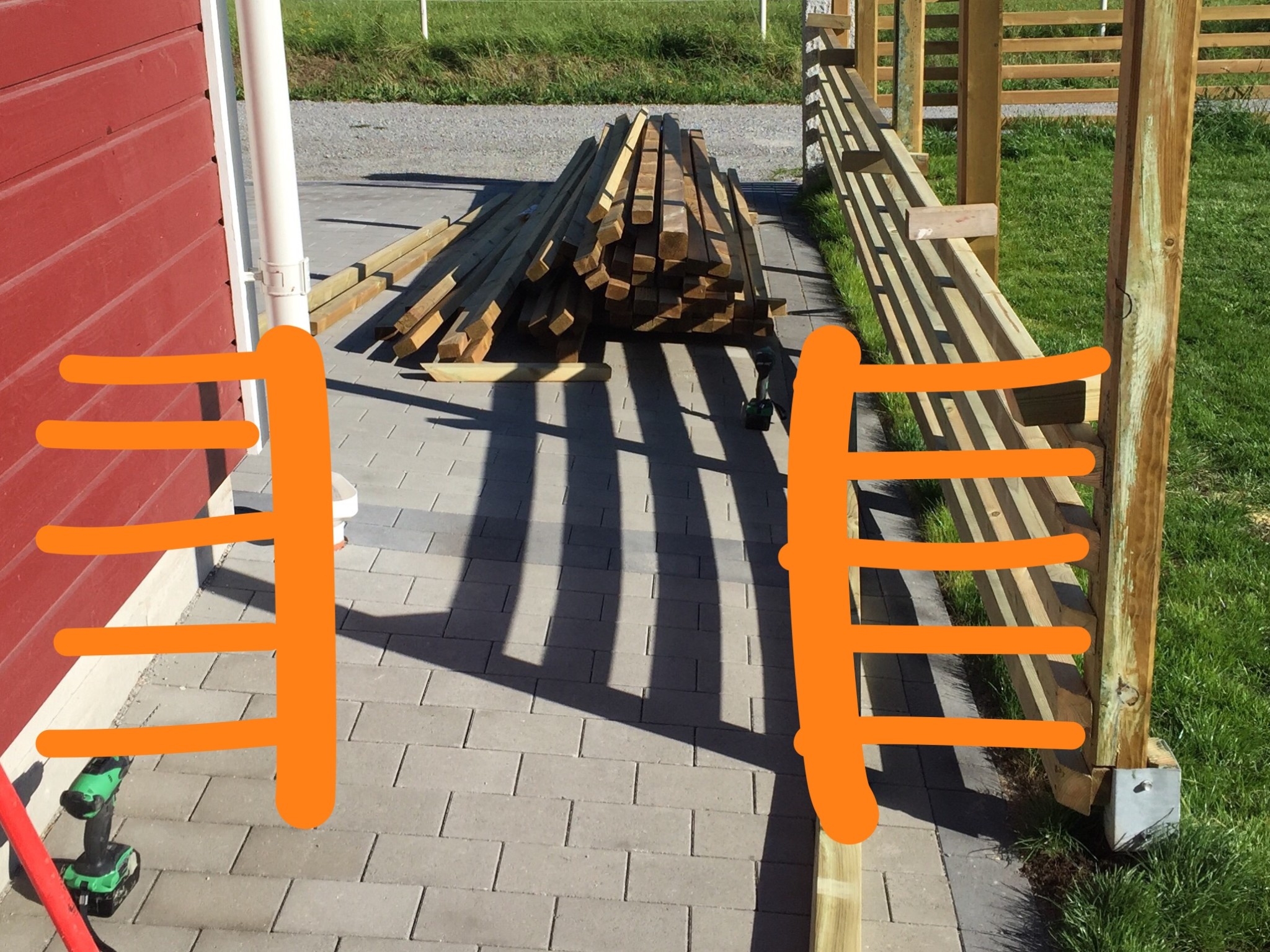
I am going to make a gate that goes over a stone path. I want to make it narrower than the path itself, partly because the gate doesn't need to be as wide as the path, but also because I think it looks better that way.
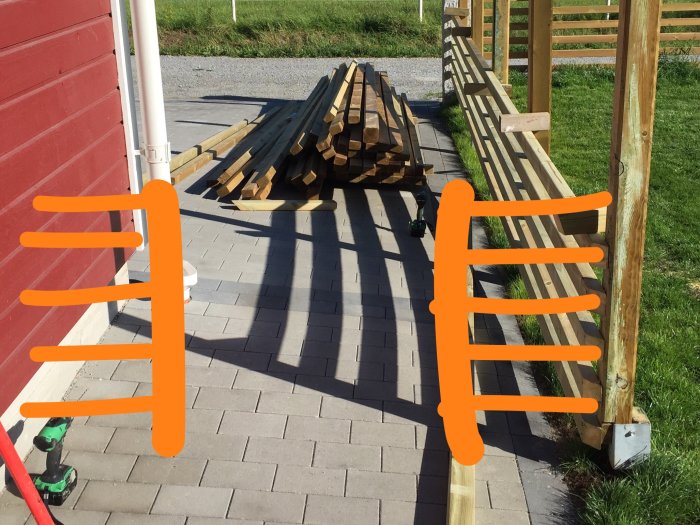
Now to the question. I have thought about doing it as in the picture below. I will place horizontal slats from a post by the garage to one gate post and horizontal slats from the other post to the other gate post. Ideally, I want to avoid making any impact on the stone path. But do I need to secure the gate posts in the ground in some way, or is it enough for them to be held in place by the horizontal slats?
I find it difficult to see how you will be able to manage stability without anchoring in the ground. The question might not be whether you should, but how you should anchor the posts?
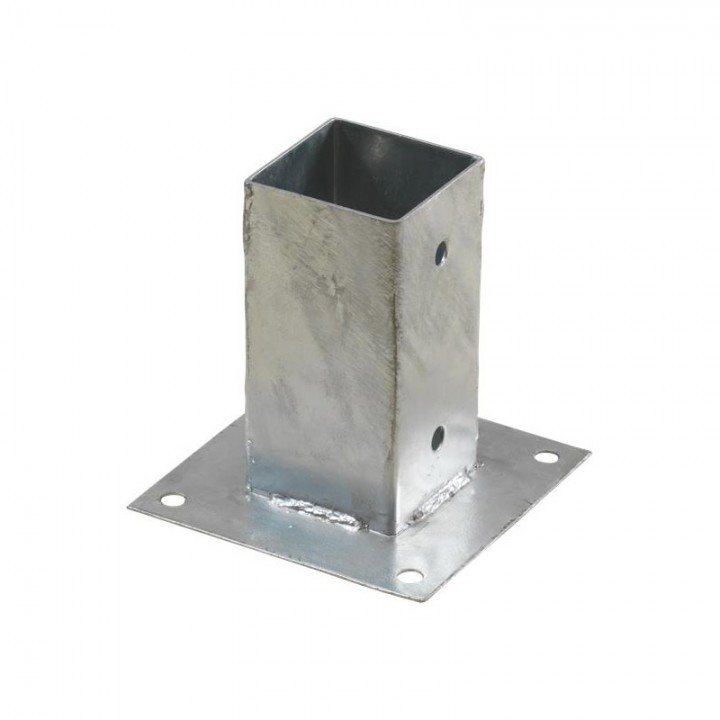
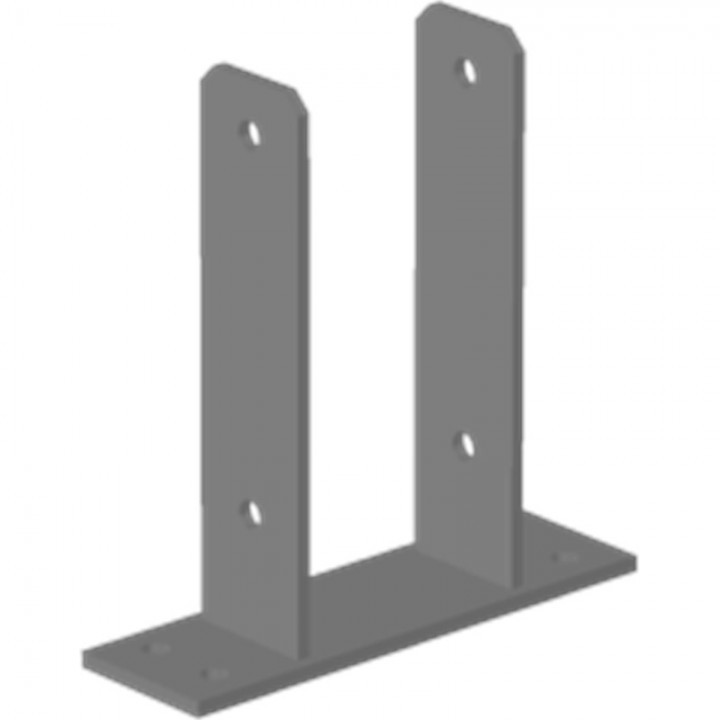
Yes, you need to anchor the gate posts in the ground somehow. You will never achieve stability otherwise. If you absolutely want to go with the construction you've drawn in the picture, I would suggest lifting some stone slabs and driving in a ground spike. It's not that much extra work, and it will give you stability. Otherwise, there is another type of post anchor that you can bolt to the paving stone.
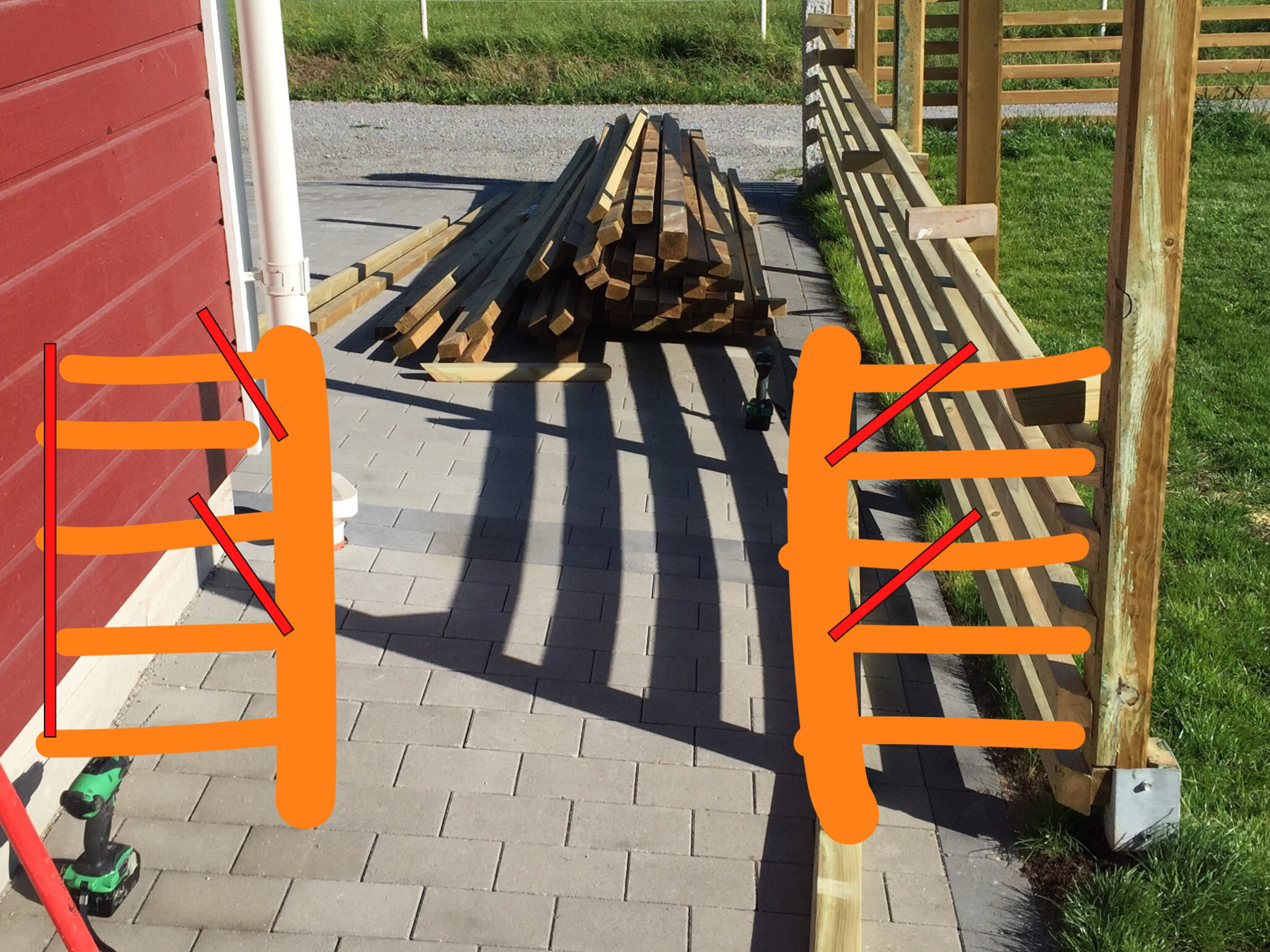
Since the gate won't be particularly wide and heavy, I think you can manage by mounting two diagonal braces between the post and the garage wall. I believe you'll get the best stability on that side, and it will be best to hang the gate there. Also, make sure to mount a vertical batten against the garage for the slats to be screwed into, so you're not just screwing the slats directly into the panel. On the other side, maybe a single diagonal brace in the middle will suffice, but I would probably put two there as well to keep it symmetrical.
Since the gate won't be particularly wide and heavy, I think you'll manage if you mount two diagonal braces between the post and the garage wall. I believe you'll get the best stability on that side, and it's best to hang the gate there.
Make sure to also mount a vertical batten against the garage that the slats can then be screwed into, so you don't just screw the slats directly into the cladding.
On the other side, maybe a single diagonal brace in the middle is enough, but I would probably put two there as well to make it symmetrical.
Ok, sounds like a good solution. Does that mean you avoid drilling into the stone?
Do you think you can show how you mean with the diagonal braces for the posts?
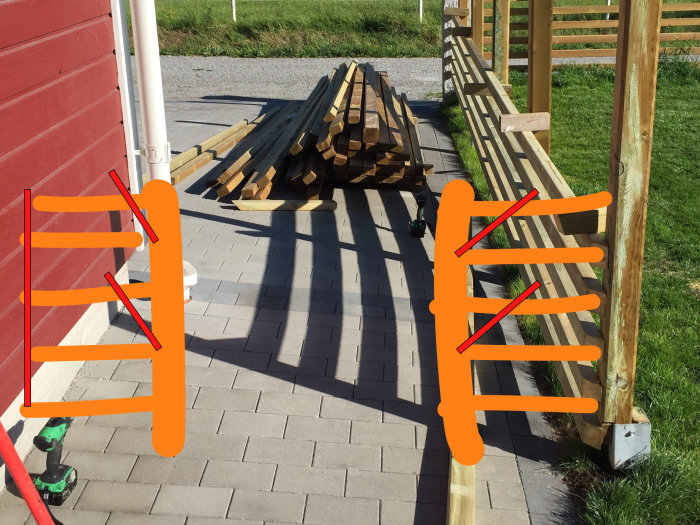
Not a nice picture, but you might understand the principle.
Either you settle for two diagonal braces, or you place diagonal braces at each slat. You will get a cavity then, but that may matter less?
It shouldn't be more than 2m between the garage wall and the existing fence. And you might want a gate about 1m wide? Then there will only be 50cm of fence on each side sticking out. It should be stable enough...
Another option is to place the gate directly against the post that is currently cast in the ground. Then build the fence from the garage wall and out and place two diagonal braces on it. But I would probably go with option one, and then place diagonal braces at each slat on both sides. I think that will also look the nicest.
You can also make the gate posts 2m high (or more) and then add a top rail from the fence corner post to the wall and attach the upper end of the gate posts to the top rail. However, something must also be added to the paving stone, but it can basically just be a drilled 10mm hole where you place a piece of metal pipe (e.g. rebar). Then you drill 10mm holes in the ends of the gate posts and place them on the metal pins. This solution becomes super stable.
Thanks for the illustration. Do you place the diagonal brace from the middle of the board above and then down towards the post?
You probably don't understand my bad illustration...
The idea is not to attach a diagonal brace between the board above and the post. Maybe it's wrong to call it a diagonal brace for that reason.
My idea was for you to mount boards at a 45-degree angle from the post and backward. On the garage side, you would then place the boards you painted, plus boards 45 degrees backward in line with your other boards. Are you with me? So when you come from that side, it's first full-width, then it narrows towards the gate at a 45-degree angle...
If you don't understand, I'll make a better illustration!
Per's idea is also an option if you want such a tall entrance.
I once had a cousin named Svante.
He tied a rope between the gateposts to be able to sit and swing.
One post fell over, and then Svante was no more.
They were real granite posts, but be careful!
Please, make sure everything is well anchored so it can't topple over small seven-year-olds!
You probably don't understand my lousy illustration... 😉
The idea is not to attach a brace between the beam above and the post. Maybe it's wrong to call it a brace for that reason.
My idea was to mount slats at a 45-degree angle from the post and backward. On the garage side, you place the slats you have painted, plus slats at a 45-degree angle backward in line with your other slats. Are you with me? So when you come from that side, it's first full width, then it narrows towards the gate at a 45-degree angle.....
If you don't understand, I'll make a better illustration!
Per's idea is also an option if you want such a high entrance.
Ok, but now I understand . The problem is that I took the photo from the inside. So it's the other side that is the front. It might not be so nice to attach braces to the front, which I would be forced to do on the opposite side of the garage.
I would prefer not to make a large gate with 2-meter gate posts. But maybe it's enough to drill rebar into the ground and place regular slats?
If you want it to be stable, you have three options.
1. Dig a solid hole, place down a concrete block, or cast.
2. Smaller/simpler ground anchoring (like fastening rebar in existing paving stones):
a) Side support in one or both directions according to the pictures above
b) Longer gate posts with a crossbar. Even if the posts are 2+ m, you can make the gate exactly as big as you want
Personally, I would go for 2 b). It will become very stable. It can even harmonize nicely with existing posts for the fence. Drilling a 10 mm hole in a paving stone is easy, no digging required.